
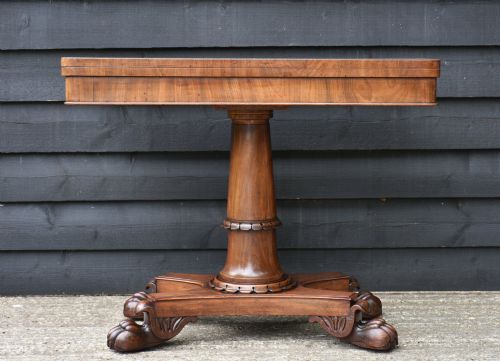
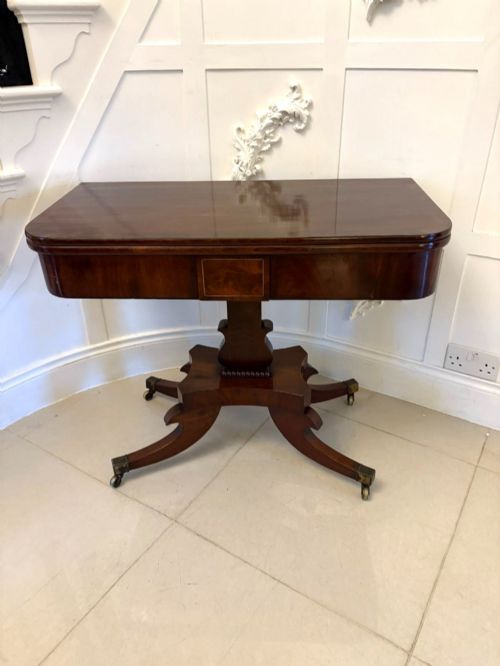
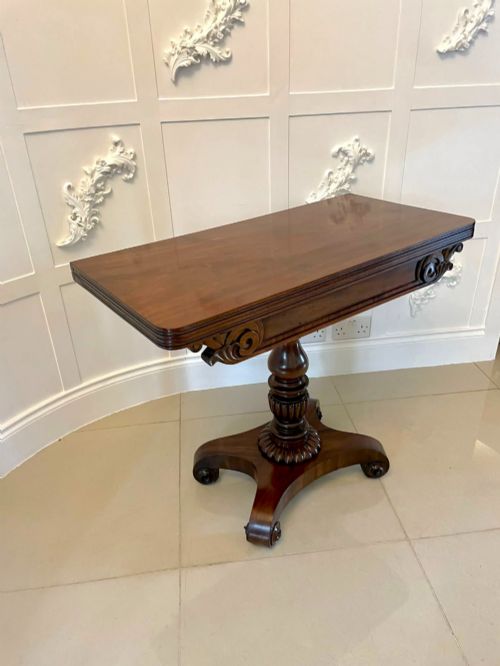
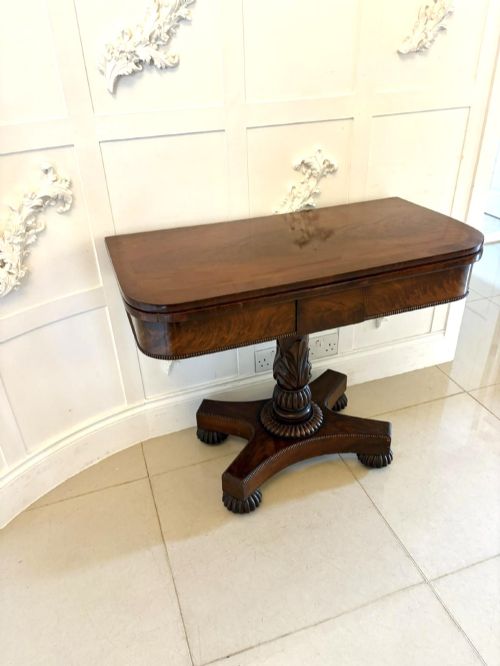

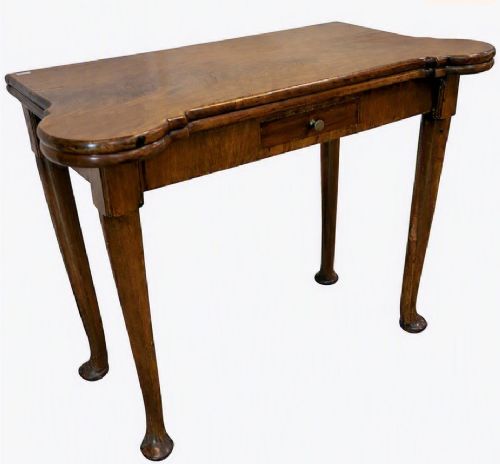
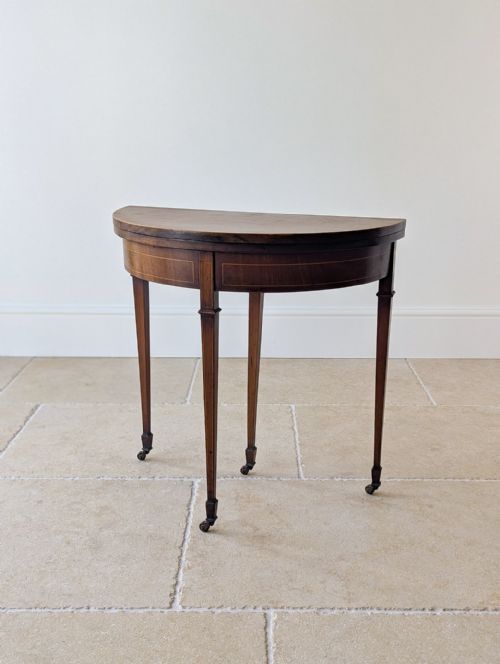
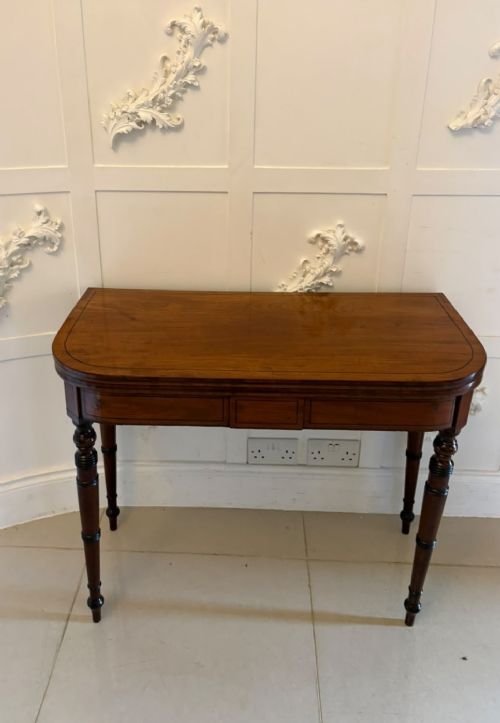
Mahogany Folding Console Table
Mahogany folding console tables bring flexible surface space and rich cabinet timber into a room, adapting from a slim wall console to a wide gaming or tea table.

Mahogany Folding Console Table
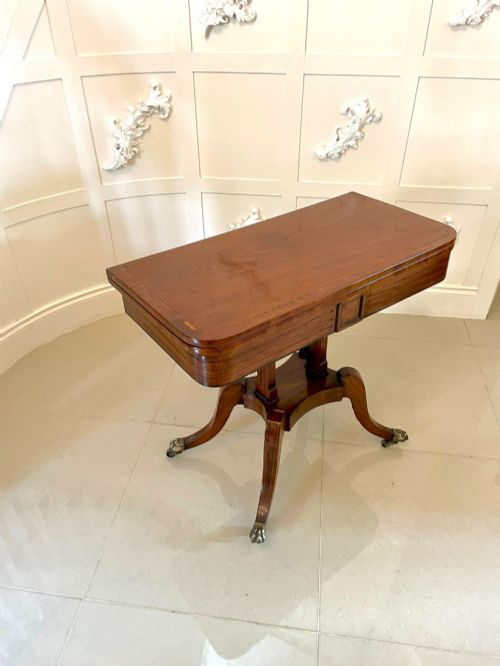
A mahogany folding console table is a dual-purpose piece of antique furniture designed to sit flat against a wall before opening out on a pivoting, concertina, or fold-over mechanism to reveal a larger surface for cards, tea, or writing.
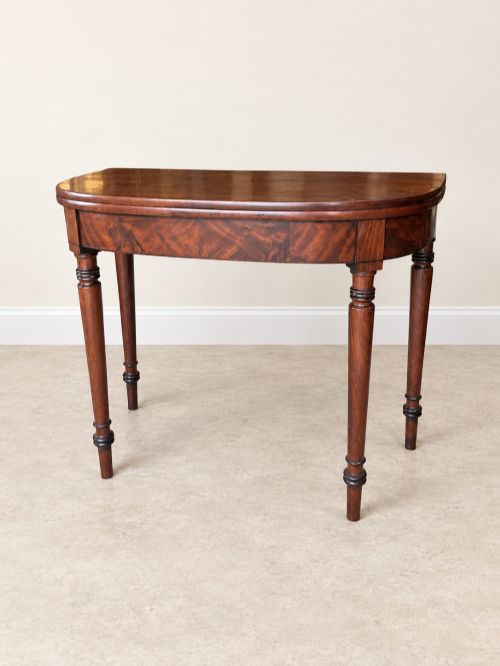
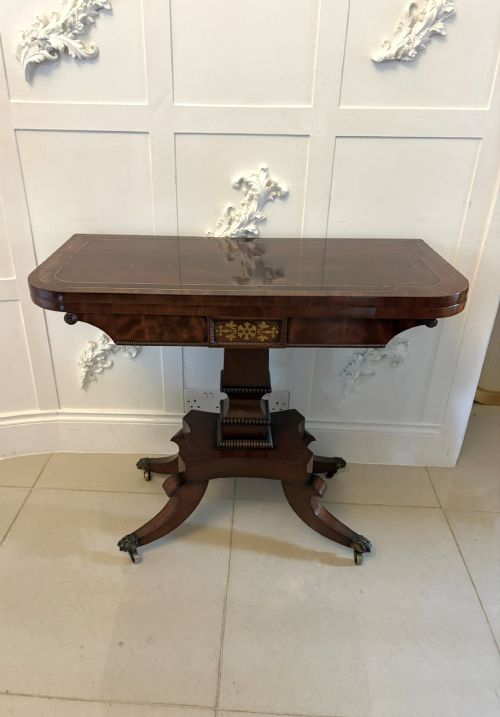
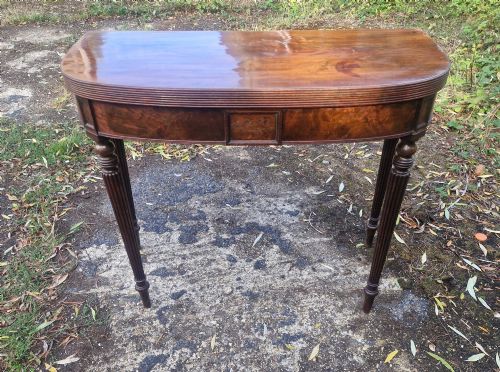
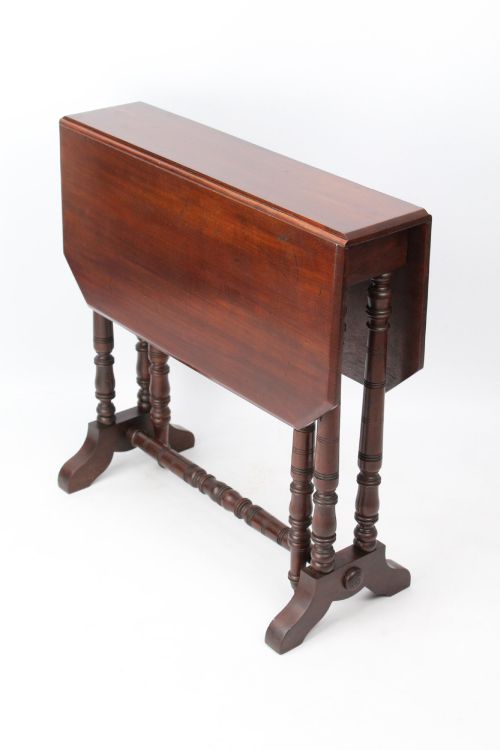
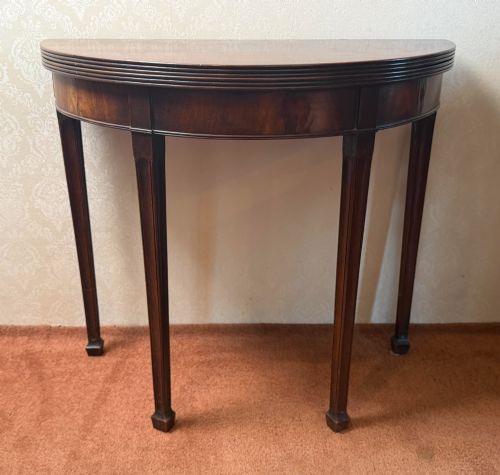
The versions most commonly met on this page span the eighteenth and nineteenth centuries, taking forms such as the demi-lune, D-shape, and rectangular card or tea table.
Makers across the Georgian, Regency, and Victorian periods adapted these folding designs to serve multiple domestic functions in drawing rooms and halls without occupying permanent floor space.
How they were made
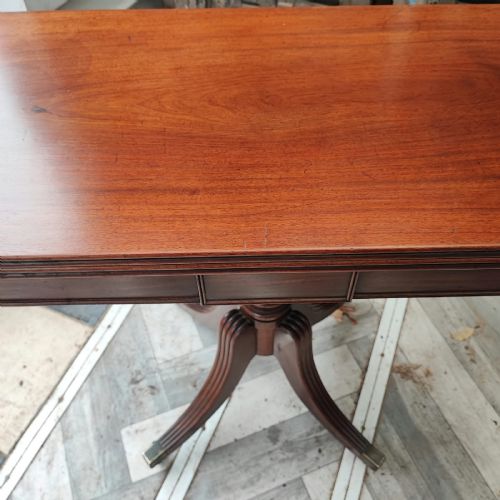
Cabinet makers built these tables using solid timber frames combined with finely grained veneers, frequently applying flame mahogany veneer to the top surfaces to catch the light.
Decoration relied heavily on contrasting woods and metals, incorporating satinwood inlay, boxwood stringing, and delicate brass inlay alongside hand-cut wooden joinery.
Internal folding actions required precise engineering, utilising concertina frames or pivoting rear legs to support the swinging leaf safely when opened.
The listings show periods ranging from the 18th century through the Victorian era, utilising solid mahogany, flame mahogany veneer, and brass inlay.
What varies in quality
Quality rests in the choice of cabinet timber and the selection of figured mahogany veneers, where striking grain patterns and warm, original patination elevate an ordinary board into a decorative centrepiece.
The crispness of inlay work and the precision of the folding mechanism demonstrate the maker's skill, separating standard production pieces from finer workshop commissions with sophisticated concertina actions.
The Mahogany Folding Console Table Glossary
- Demi-lune
- A half-moon shape used for console and card tables designed to stand flat against a wall.
- Concertina action
- An expanding frame mechanism that pulls outward to support a folding table top evenly on all four sides.
- Flame mahogany veneer
- A sliced timber finish displaying a flickering, flame-like grain pattern prized for its decorative impact on table tops.
- Patina
- The deep surface sheen and rich colour developed by aged timber through decades of handling and polishing.
- Stringing
- A narrow band of contrasting light wood inlaid into the darker mahogany surface for linear definition.
Mahogany Folding Console Table: Frequently Asked Questions
How were these tables used?
These tables stood against hallway or drawing room walls as decorative console surfaces when folded shut.
When guests arrived, they unfolded to hold tea services, card games, or writing materials before returning to their compact profile.
How do I tell a card table from a tea table?
Card tables often retain original green baize or felt playing surfaces concealed beneath the folding top.
Tea tables usually feature plain polished wood interiors designed to display porcelain and silver during evening gatherings.
Where should I place a folding console table?
They suit entrance halls, narrow corridors, or the back of a sofa where floor space is limited.
Opening them requires clearance behind the piece for the leaf and leg to swing outward smoothly.
How do I date a mahogany console table?
Georgian examples often display straight legs and restrained mahogany veneers with subtle stringing.
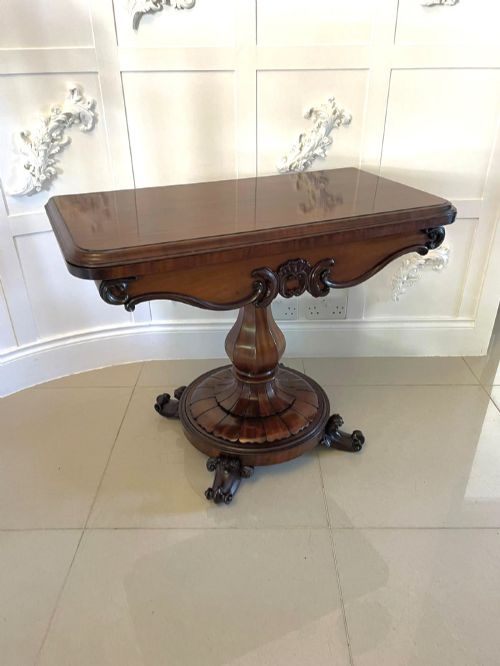
Regency and Victorian pieces introduce sabre legs, brass inlay, heavier pedestal bases, and highly figured flame mahogany tops.