


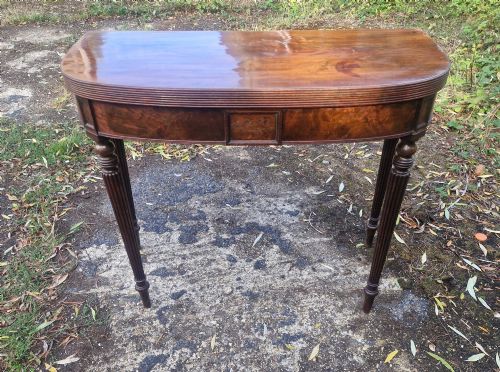
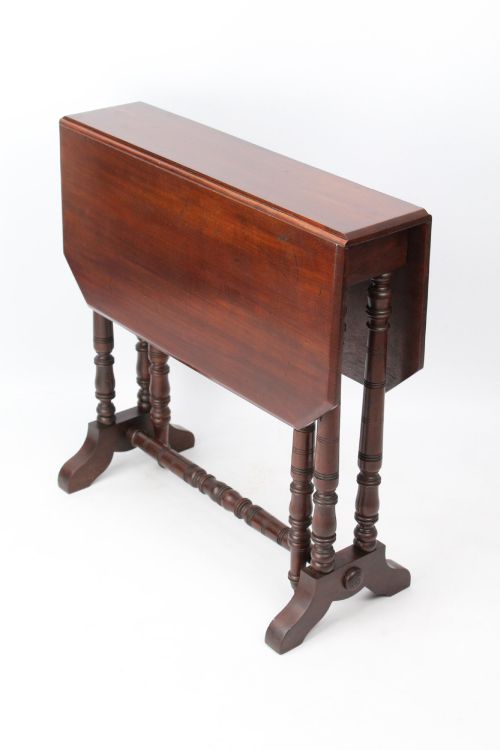
Mahogany Fold Table
A mahogany fold table offers ingenious versatility, transforming from a compact side piece into a generous surface for tea, cards or dining.
Mahogany Fold Table
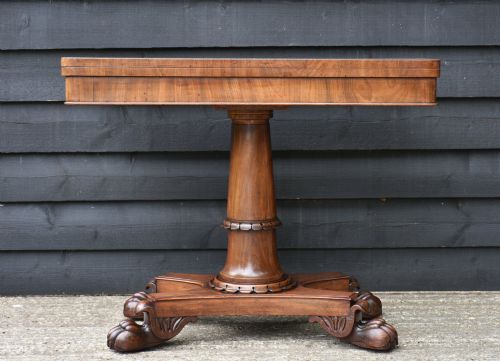
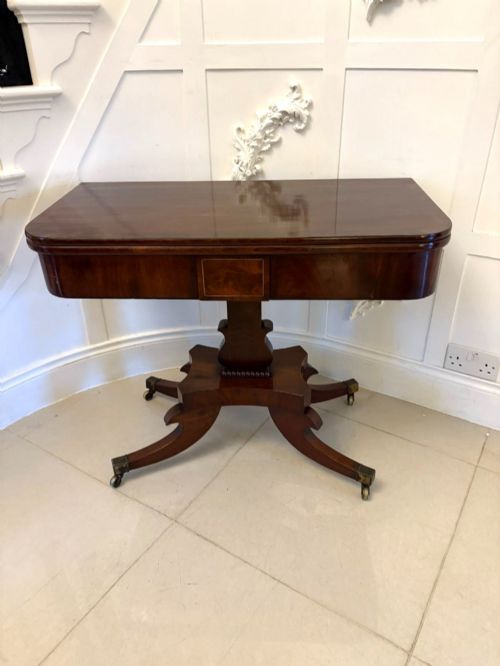
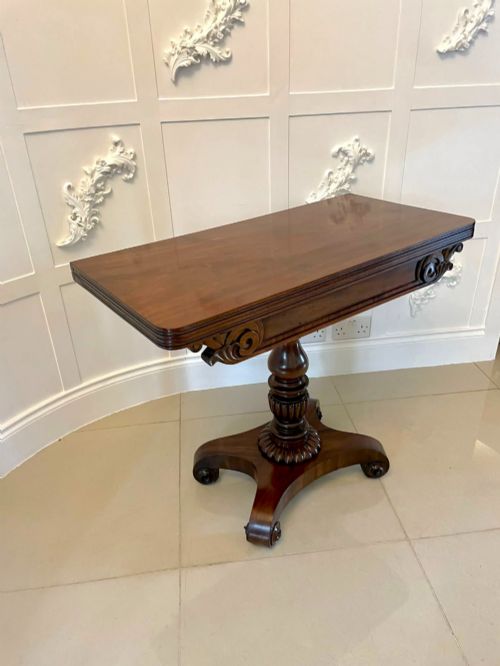
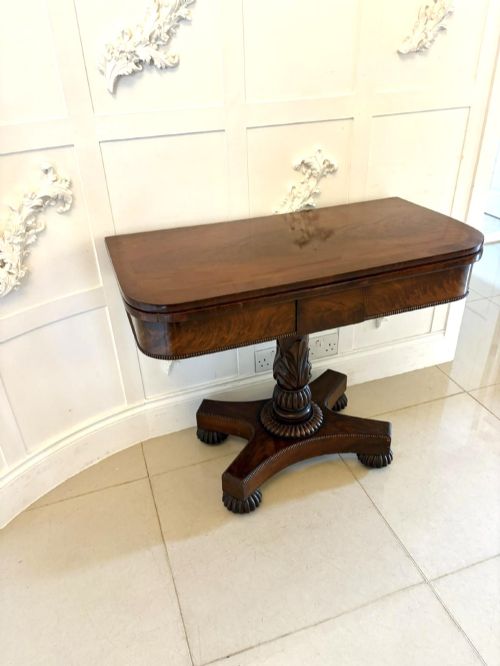
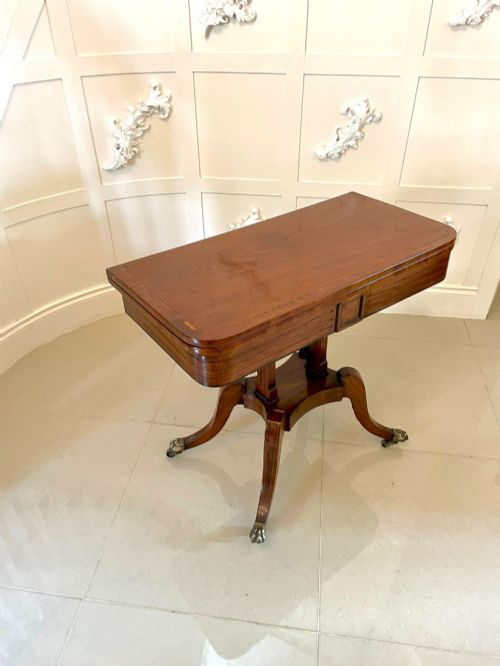
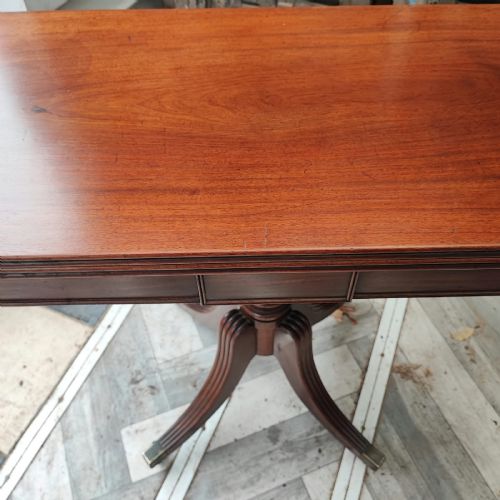
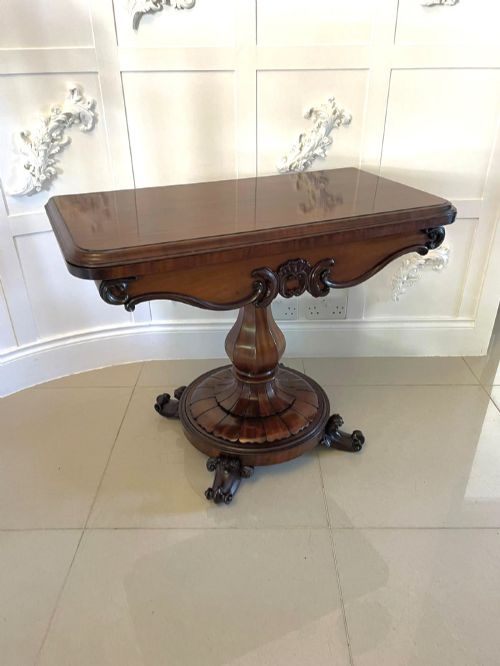
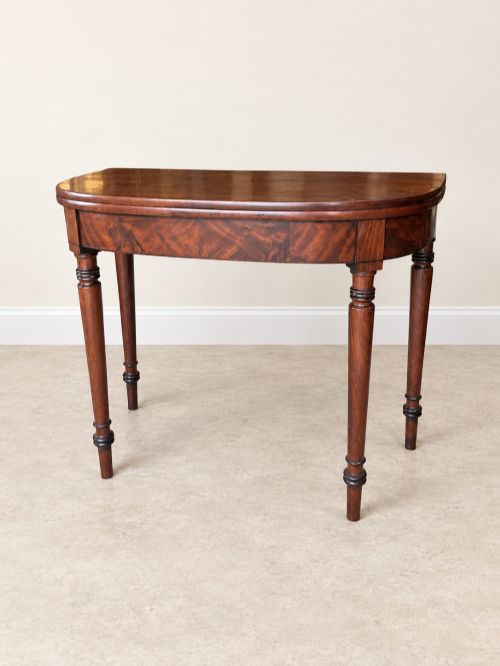
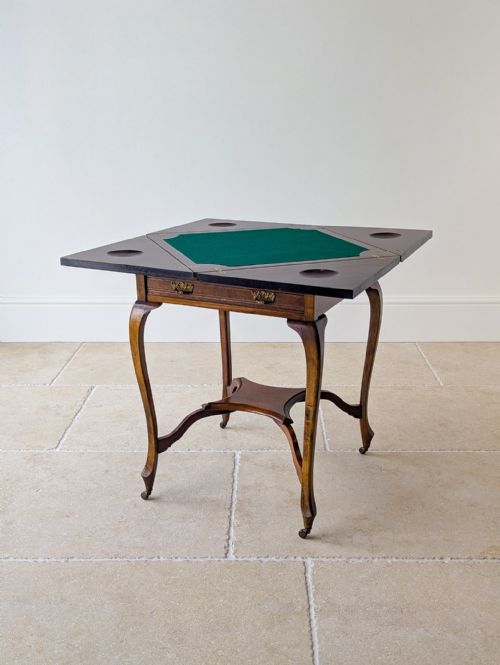
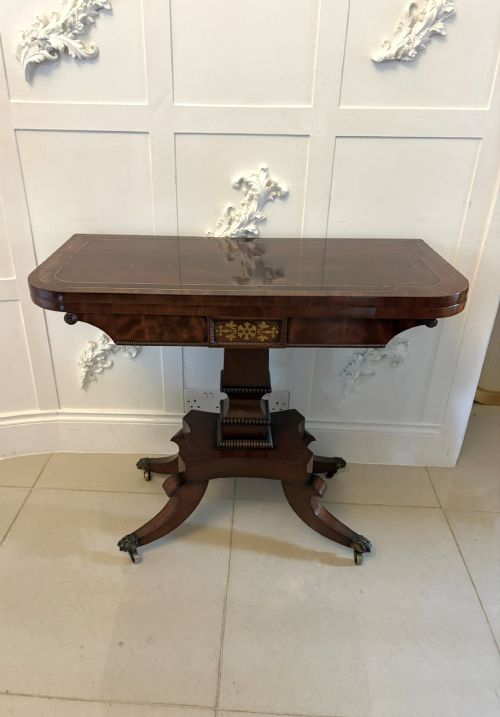
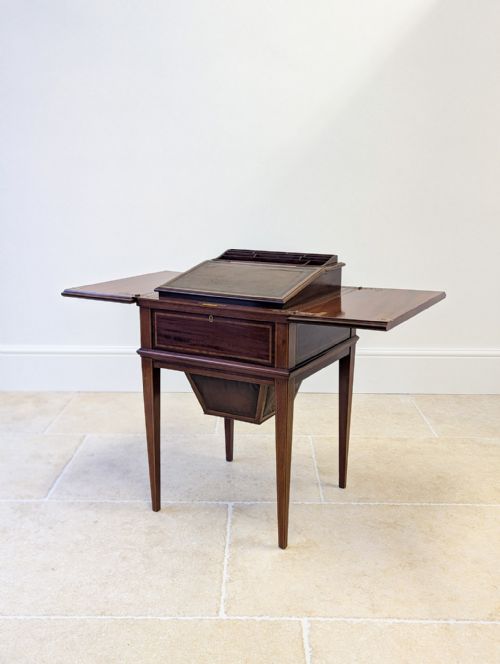
A mahogany fold table represents a staple of domestic adaptability across the eighteenth and nineteenth centuries, appearing frequently in Georgian, Regency and Victorian households. These pieces alter their footprint through hinged leaves, rotating tops or concertina actions, serving primarily as card tables, tea tables or console surfaces. Buyers on this page encounter numerous examples featuring demilune, rectangular or serpentine shapes designed to sit flat against a wall until needed.
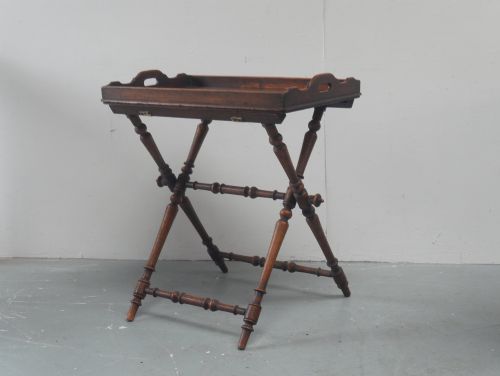
The selection spans formal Georgian card tables with swing-out legs to later Edwardian envelope tables and simple nineteenth-century butler trays on folding stands. Earlier iterations often employ clever pivoting mechanisms to support the opened leaf, while Victorian and Edwardian examples lean towards pedestal bases or occasional table formats. English country workshops and London cabinet makers alike produced these adaptable items for domestic entertainment and hospitality.
Assessing Craftsmanship
Quality rests upon the selection of the timber and the precision of the mechanisms that govern the folding action. Superior examples display symmetrical flame patterns or carefully matched veneer grains across the entire surface when opened, alongside tight, seamless joints in the concertina or pivoting frame. Finer execution shows in crisp hand-carved edge moulding, delicate stringing and robust internal hinges that bear weight evenly.
Lesser pieces may exhibit mismatched grain patterns, clumsy corner joints or replacement hinges that compromise the alignment of the top leaf. The depth of the timber's natural patina and the crispness of any inlay work distinguish workshop productions of high ambition from standard commercial output. A well-balanced stance on uneven floors and smooth operation of swing-out rear legs mark the difference between utility work and accomplished cabinet making.
Listings feature mahogany fold tables spanning the eighteenth century through the Edwardian period, incorporating brass inlay, satinwood stringing and baize linings.
Gillows·Giles Grendey·James Shoolbred & Co
The Mahogany Fold Table Glossary
- Demilune
- A half-moon shape characteristic of console and tea tables designed to stand flush against a wall. This form allows the piece to occupy minimal space until the hinged top unfolds into a full circle.
- Concertina action
- An expanding frame mechanism that extends outward when the top leaf opens, providing four supporting legs instead of a single pivoting rear leg. It represents a hallmark of better quality eighteenth-century card tables.
- Baize
- A coarse woollen fabric, traditionally green, used to line the playing surfaces of card and games tables. It provides a soft, non-slip texture for dealing cards.
- Crossbanding
- A border technique where thin strips of veneer are applied to the edges of a table top so that the grain runs perpendicular to the main panel. This frames the central wood and demonstrates careful decorative planning.
- Stringing
- Inlaid lines of contrasting light wood, such as boxwood, set into channels cut into the mahogany surface. It creates slender geometric borders around table edges and aprons.
Mahogany Fold Table: Frequently Asked Questions
How do I operate a concertina action card table?
The hinged top unfolds while the rear frame pulls outward like an expanding bellows to support the opened leaf from beneath.
This design distributes weight across four corners rather than relying on a single swing leg.
Were these tables used exclusively for cards?
Many models served multiple domestic functions, doubling as tea tables during afternoon hosting and writing desks when closed.
Interior wells often stored cards, counters or writing materials between uses.
How do I tell a Georgian table from a Victorian one?
Georgian pieces typically feature cleaner architectural lines, subtle stringing and lighter proportions with tapered or cabriole legs.
Victorian examples tend to be heavier, frequently utilising pedestal bases, bolder mouldings and richer, darker mahogany finishes.
Can I use a fold table for everyday dining?
Certain larger tea or dining formats accommodate meals when fully opened, though older joints require care with heavy loads.
Using heat mats and protective covers preserves the polished veneer and historic baize surfaces.