
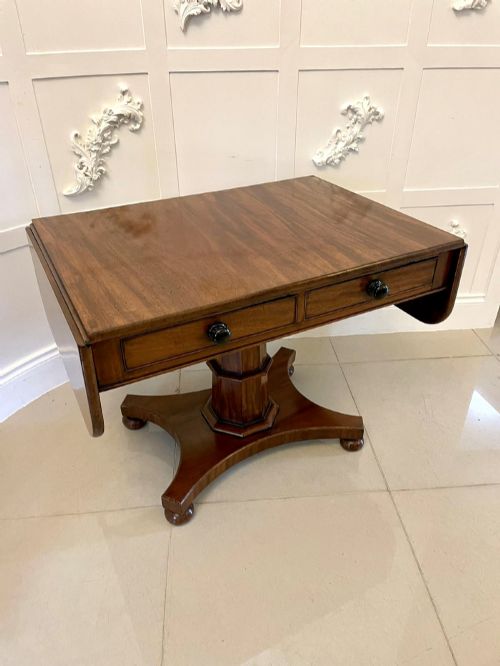
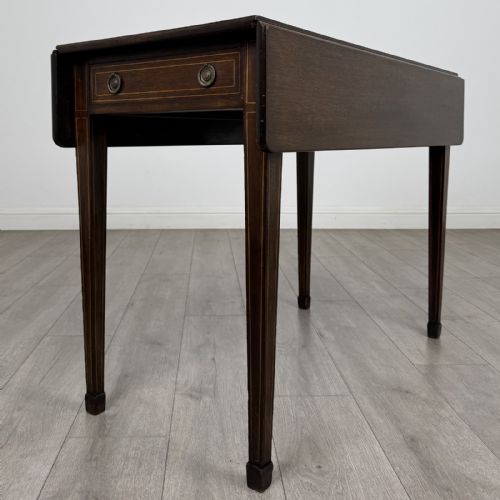
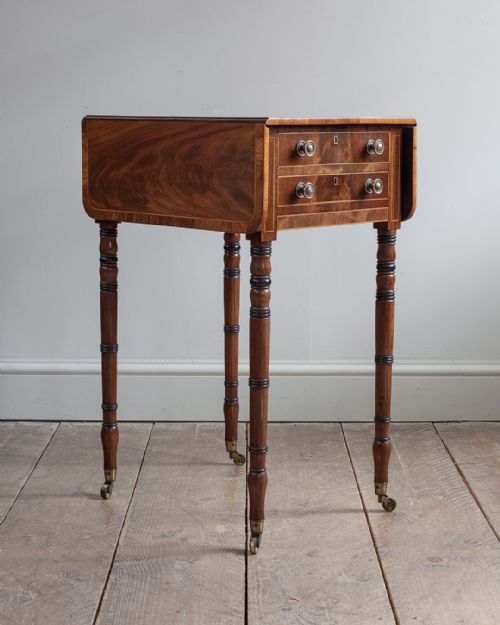
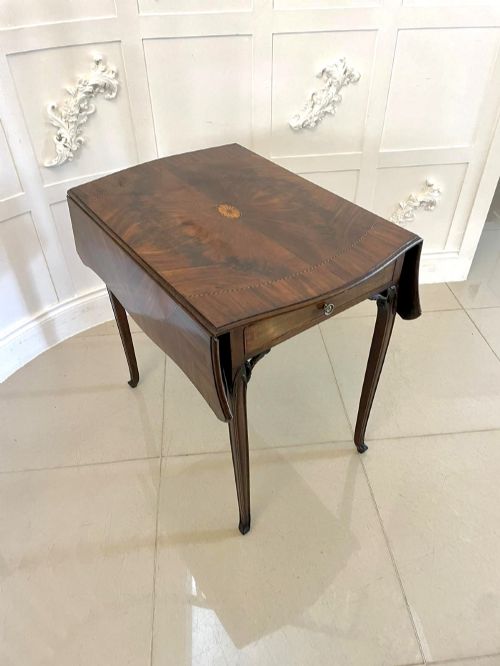


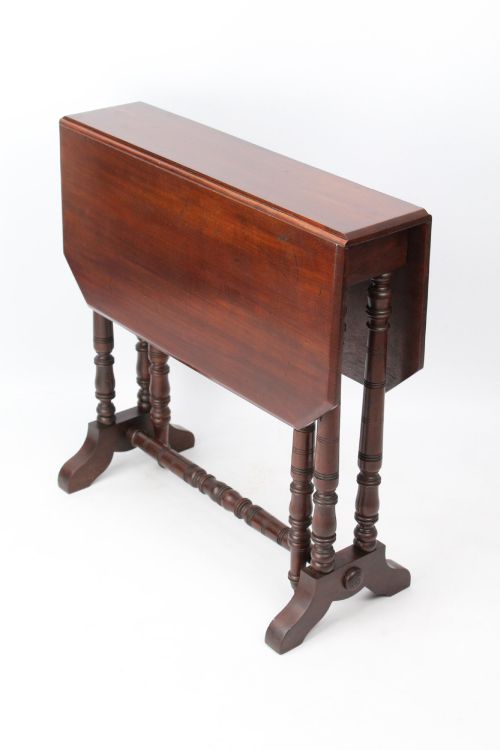
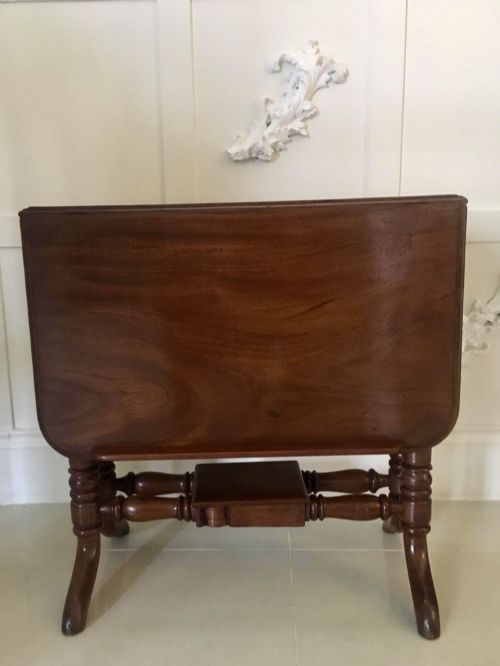
Mahogany Drop Leaf Side Table
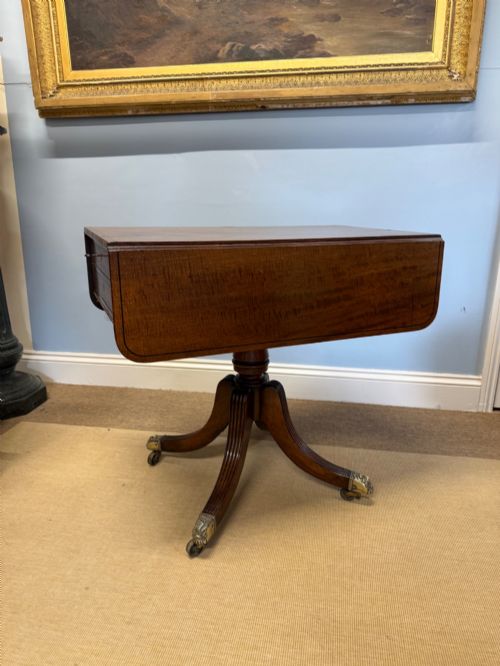
When you search for a mahogany drop leaf side table, you are looking at flexible timber furniture designed to expand when needed and fold away compactly.
Mahogany Drop Leaf Side Table
A mahogany drop leaf side table appears across multiple periods including the Georgian, Regency, Victorian, and Edwardian eras.
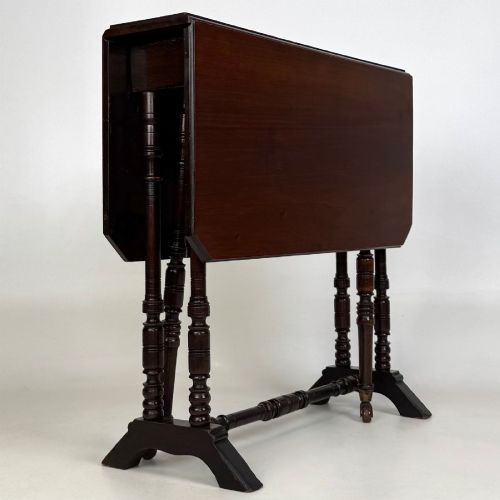
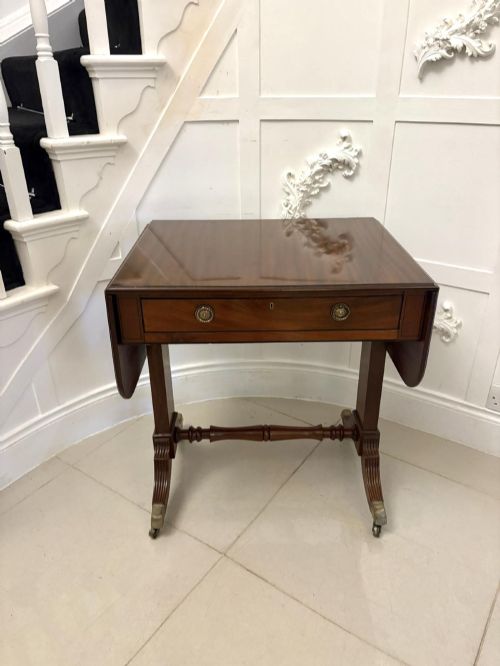
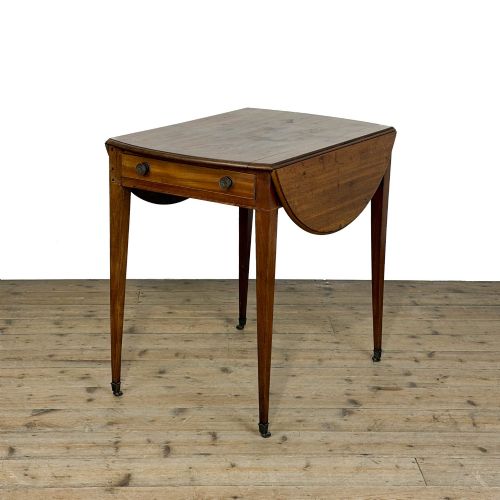
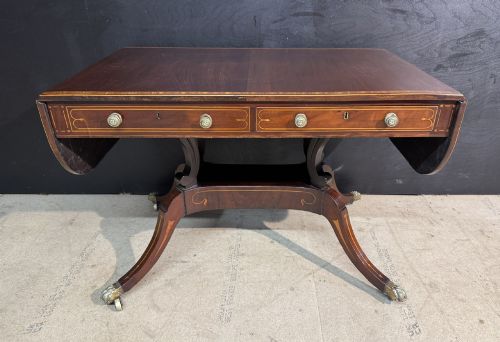
The material record shows forms ranging from Pembroke and sofa tables to spider leg tea tables, Sutherland tables, and bedside cabinets.
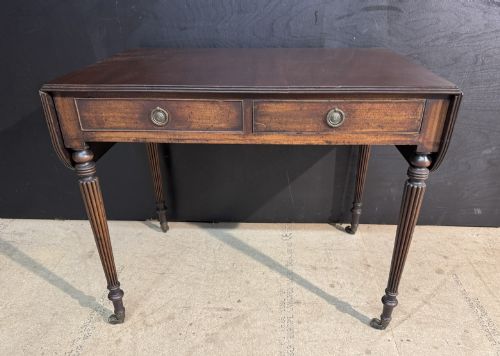
Makers adapted these folding designs for various domestic uses, incorporating drawers, writing surfaces, and drop leaves supported by hinged flaps or swinging legs.
Materials and construction methods
Cabinet makers utilised solid mahogany and figured veneers such as flame mahogany, often pairing them with secondary woods.
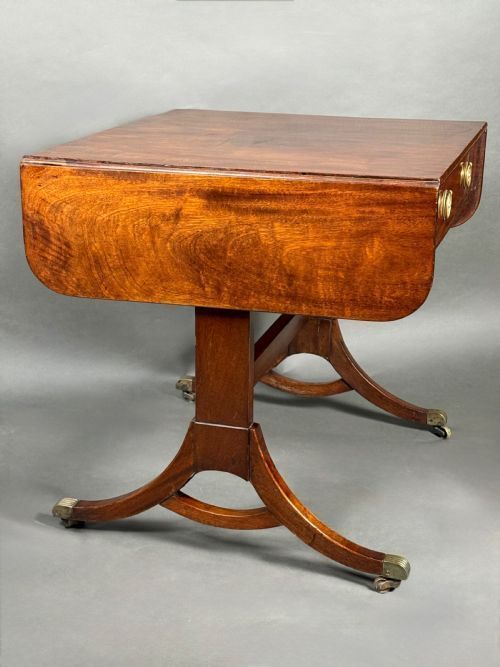
Structural elements rely on brass hardware for castors and hinges, alongside turned, reeded, or bamboo-style legs supporting the folding leaves.
Common decorative treatments include boxwood stringing, satinwood inlay, and contrasting partridge wood cross-banding.
Distinctions in construction and timber selection
The choice of timber creates a primary distinction, where highly figured flame mahogany and crisp cross-banding elevate a piece above plain stock.
Joinery execution defines durability, particularly in the precision of the leaf hinges, the movement of the drop-side flaps, and the snug fit of dovetailed drawers.
Gillows
The Mahogany Drop Leaf Side Table Glossary
- Pembroke table
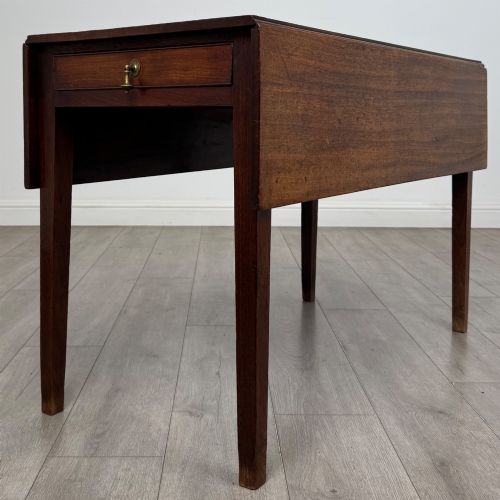
- A small rectangular table featuring two hinged drop leaves on opposing sides, frequently fitted with a single drawer.
- Sofa table
- A larger rectangular piece traditionally placed before a sofa, equipped with drop leaves and often twin pedestal supports.
- Sutherland table
- A narrow drop leaf table with exceptionally slender leaves that fold down almost vertically on either side.
- Cross banding
- A decorative border of veneer laid across the grain of the primary timber to frame the top surface.
- Spider leg table
- A lightweight occasional table supported by numerous exceptionally thin turned wooden legs.
Mahogany Drop Leaf Side Table: Frequently Asked Questions
What is a drop leaf table?
A drop leaf table is a piece of furniture featuring a fixed central section and hinged flaps on either side that lift up to expand the surface area. When the leaves are dropped down, the footprint of the table shrinks significantly for easy placement against a wall.
These versatile pieces served various functions throughout the eighteenth and nineteenth centuries, acting as work desks, tea tables, and occasional dining surfaces depending on the room they occupied.
How do I use a Pembroke table?
A Pembroke table is designed to sit compactly beside a wall or sofa until extra surface area is required. Raising one or both leaves allows the table to function as a writing desk or small serving station.
The inclusion of small drawers provides convenient storage for writing materials or sewing supplies, making these pieces adaptable for everyday domestic tasks.
How can I tell a Georgian table from a Regency one?
Georgian tables often display understated elegance with straight tapering legs and subtle stringing, reflecting the earlier classical revival tastes. Regency examples tend to feature bolder design elements, including heavier brass paw castors, reeded legs, and rich flame mahogany veneers influenced by classical antiquity.
Examining the construction details, timber characteristics, and secondary woods helps place a piece within its correct historical decade.
Where should I place a Sutherland table?
A Sutherland table fits well in narrow spaces such as hallways, landings, or beside armchairs due to its remarkably slim profile when the leaves are dropped. Opening the leaves creates a stable surface for lamps, books, or drinks.
Because of their lightweight construction and mobility, these tables transition easily between different rooms as daily requirements change.