
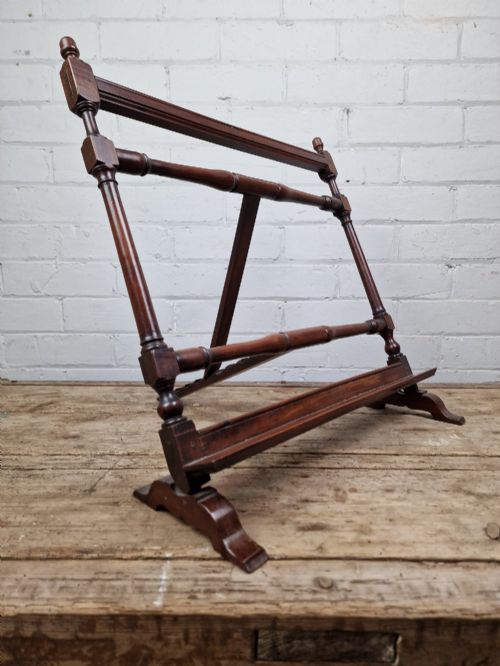


Mahogany Display Easel
A mahogany display easel holds your best pictures, plates, and folios with the quiet authority of timber grown deep in the Georgian and Victorian eras.
Mahogany Display Easel
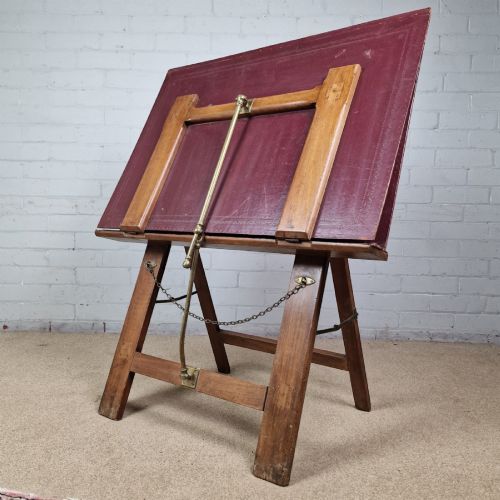
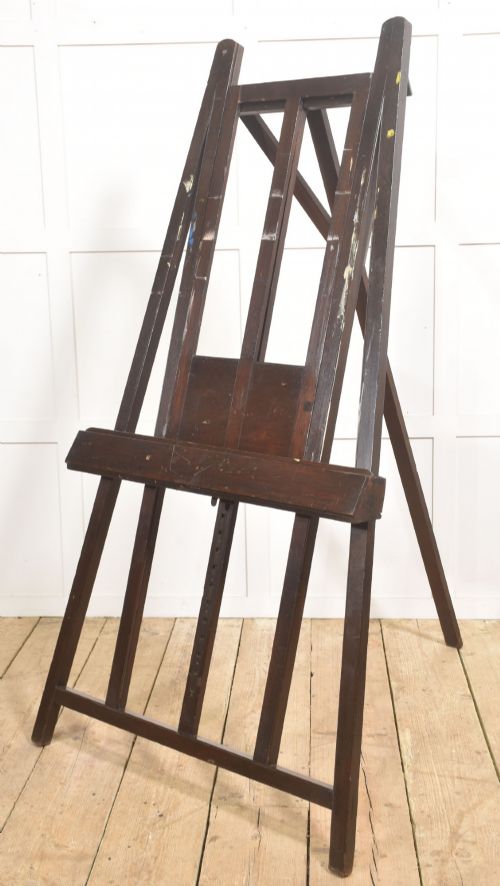
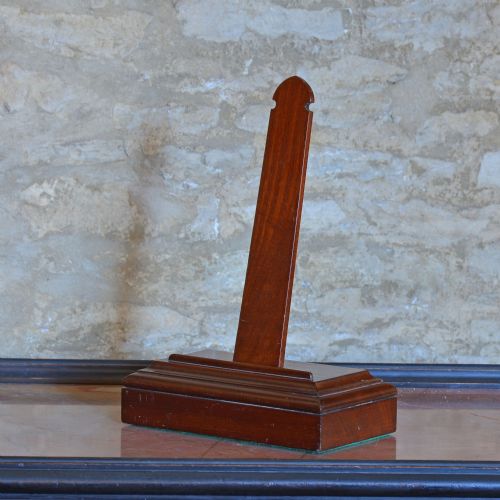
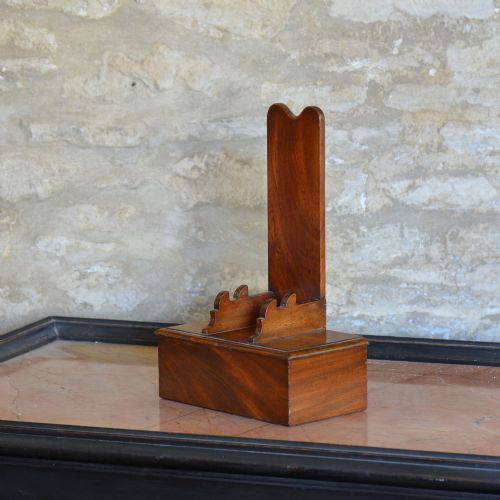
When you search for a mahogany display easel, you encounter a specialised piece of furniture designed to exhibit art, folios, plates, and books rather than simply store them. The examples here span studio workhorses, tabletop designs, folio stands, and architectural plate stands from the Georgian, Regency, William IV, and Victorian periods.
The version you are most likely to meet on this page is a nineteenth-century standing or table-top piece in dark hardwood. These range from heavy studio constructions to delicate stands featuring fretwork, brass fittings, and adjustable ledges intended to support pictures or heavy volumes at a proper viewing angle.
Origins stretch across English workshops of the early nineteenth century up to later Victorian iterations. Forms vary from simple folding plate holders to large studio easels and architectural picture racks designed to hold the day's working sketches or finished canvases.
How they were made
Makers built these pieces using solid mahogany and dark hardwoods selected for density and strength. Workshops reinforced moving joints and weight-bearing ledges with brass and metal hardware, allowing frames to tilt, raise, and fold without splitting the primary timber.
Surface finish depended on the period, utilising traditional polishing techniques that brought out the deep grain of the mahogany. Some late Victorian examples incorporated leather, felt, or painted details, alongside pierced fretwork panels cut by hand.
Some nineteenth-century makers added swan motifs to their easel designs, giving utilitarian studio timber a touch of unexpected avian elegance.
What varies in quality
Quality rests in the integrity of the timber selection and the precision of the mechanical adjustments. A superior stand uses dense, well-figured mahogany that remains stable under load, while lesser examples rely on softer woods or develop slackness in the hinges and pins.
Proportion and decorative restraint separate standard utility pieces from exceptional studio and display items. Well-executed turned columns, balanced weighted bases, and clean fretwork indicate a workshop that spent time on both function and appearance.
The Mahogany Display Easel Glossary
- Folio stand
- A piece of furniture with hinged A-frame sides designed to hold large portfolios, prints, and architectural drawings. These allow flat works to rest safely without bending.
- Studio easel
- A heavy, adjustable standing easel built to support a working artist's canvas. They often feature winding mechanisms and large bases for maximum stability.
- Plate stand
- A compact stand designed to display decorative trays, ceramics, or flat dishes upright. Many Georgian and Victorian examples use weighted bases to prevent tipping.
- Fretwork
- Openwork ornamentation cut through thin timber using a fretsaw. This technique appears on decorative Victorian and Regency display pieces to lighten heavy silhouettes.
Mahogany Display Easel: Frequently Asked Questions
What is a folio stand used for?
A folio stand holds large portfolios, loose prints, maps, and architectural drawings in an upright or slightly angled position. They allow artists and collectors to browse through stacked papers without damaging the corners.
In period settings, these stands sat in drawing rooms and libraries for casual viewing. Today, they serve the same purpose for contemporary prints and oversized books.
How do I date a mahogany easel?
Dating relies on construction methods, timber weight, and stylistic details typical of the Georgian, Regency, or Victorian eras. Hand-cut joinery and simpler lines generally point to earlier pieces.
Later Victorian examples often introduce more complex mechanical adjustments, brass hardware, and decorative fretwork or inlay. Comparing the wood density and turning style helps narrow the decade.
Can these hold heavy oil paintings?
Large studio easels and robust architectural frames are built to support heavy canvases and thick wooden panels. Their wide footprints and solid mahogany construction provide the necessary ballast.
Tabletop and smaller plate stands, however, are intended for lighter items like ceramics, folios, or framed watercolours. Check the depth of the ledge and the strength of the tilt mechanism before loading heavier art.
Where should I place a display easel?
Place an easel away from direct sunlight and sudden temperature shifts to protect the mahogany finish and prevent the timber from drying out. A stable floor away from heavy foot traffic ensures the piece remains secure.
These stands work best as focal points in a room, holding a rotating selection of artwork, plates, or open books at eye level.