


Floor Standing Painting Easel
A floor standing painting easel is a sturdy timber or metal framework designed to hold canvases upright for artists and display.
Floor Standing Painting Easel
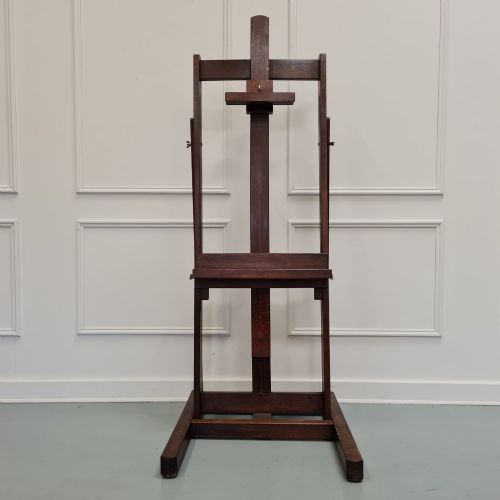
A floor standing painting easel offers the heavy-duty support required for serious studio work or grand domestic display. When you search for a floor standing painting easel, you encounter substantial pieces built to hold large canvases securely.
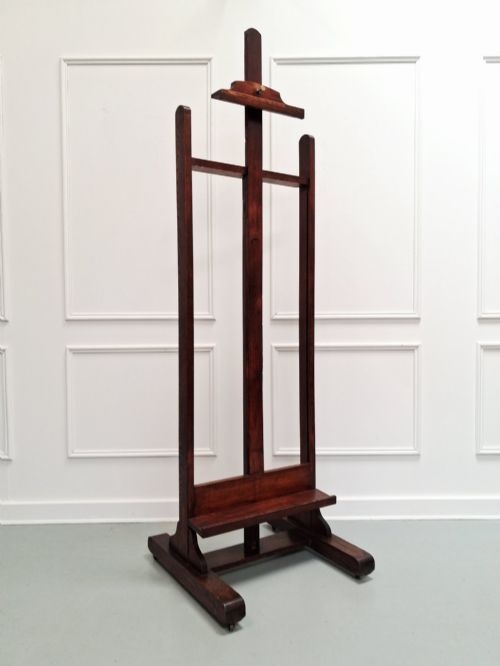
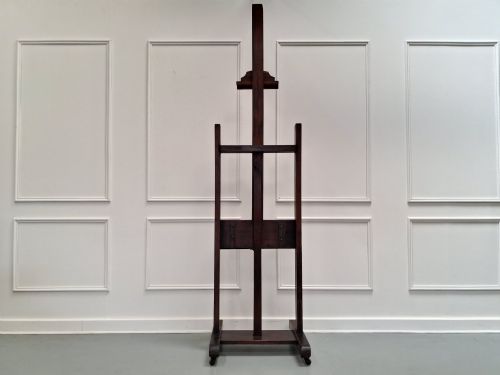
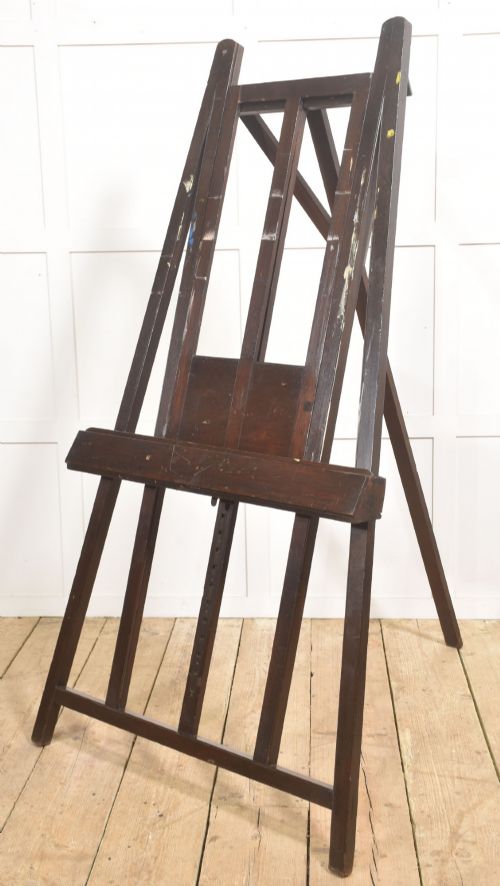
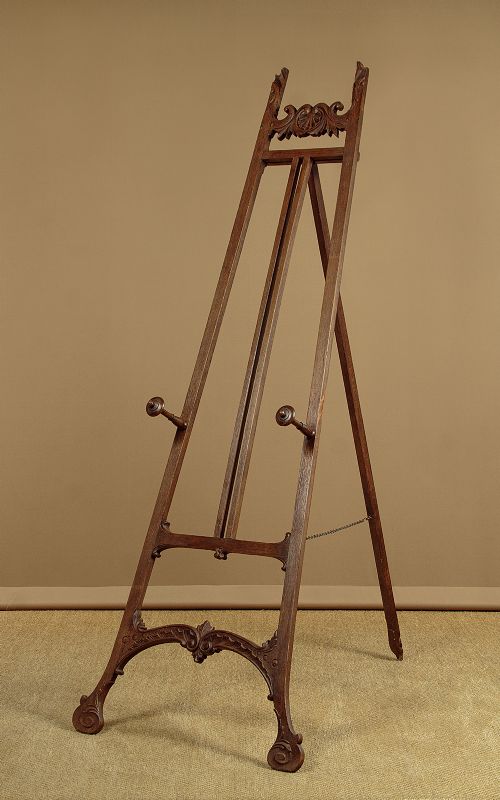
The selections available range from sturdy nineteenth-century oak artist studios to elegant French oak examples from nineteen-hundred and nineteen-thirty. You also find specialised forms including double-sided gallery pieces and carved display variants.
Most examples hail from the nineteenth century and the early twentieth century, utilising robust timbers like oak and mahogany. These functional studio tools combine practical height adjustments with striking decorative presence.
How they were made
Cabinetmakers and joiners constructed these frames primarily from dense hardwoods such as oak, mahogany, and pitch pine. These woods provided the necessary weight and rigidity to prevent tipping during heavy use.
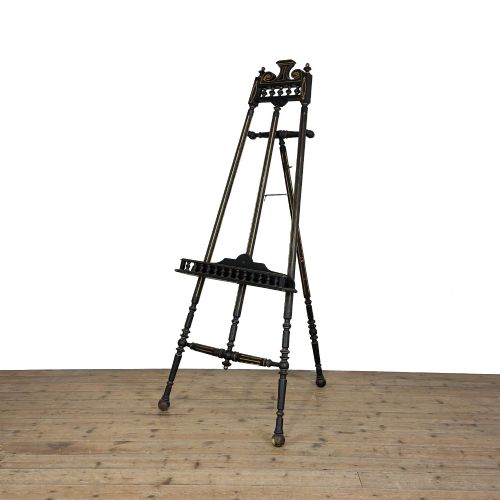
Metal mechanisms, brass fittings, and iron components were integrated to allow smooth height adjustments and tilting movements. Decorative touches like ivory inlay, ebonised finishes, and carved swan motifs appear on finer gallery models.
Look closely for the carved swan design hiding among the nineteenth-century studio timber.
What varies in quality
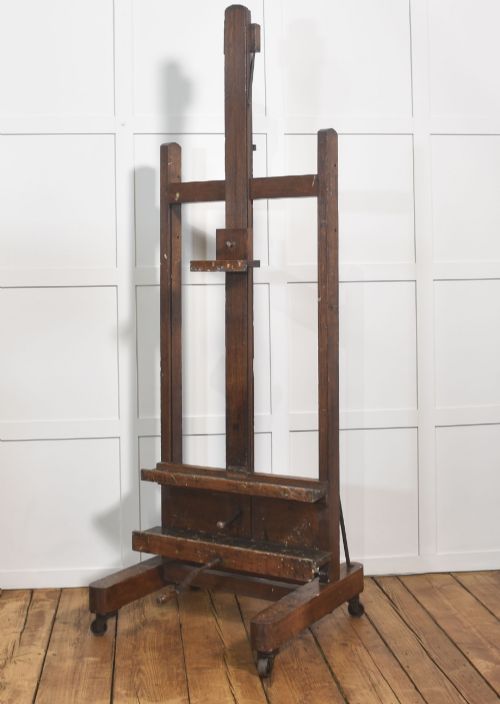
The mechanical ingenuity of the adjusting apparatus separates standard studio workhorses from superior gallery pieces. Smoothly operating brass cranks and robust ratchets indicate higher manufacturing ambition.
Timber selection and decorative ambition dictate the upper tier of the range, evidenced by ebonised wood, gold leaf accents, and intricate carved detailing rather than plain utilitarian construction.
The Floor Standing Painting Easel Glossary
- Studio easel
- A heavy, adjustable wooden frame designed to hold large canvases upright while an artist paints. These pieces prioritize stability and mechanical adjustment over delicate ornamentation.
- Gallery easel
- A sophisticated display stand utilised to exhibit finished paintings to prospective buyers. These often feature double-sided viewing surfaces or refined decorative details.
- Ebonised wood
- Timber treated with chemical stains or dark finishes to imitate costly ebony. This dark treatment was particularly popular during the Victorian and Aesthetic Movement periods.
- Pitch pine
- A resinous softwood utilised in French workshop construction around nineteen-hundred. It offers durability and a distinct grain pattern.
Floor Standing Painting Easel: Frequently Asked Questions
How do I adjust a vintage easel?
Most vintage pieces rely on wooden pegs, metal ratchets, or winding handles connected to internal tracks. These mechanisms raise and lower the central shelf supporting the canvas.
Careful handling ensures the old timber and brass hardware move smoothly along their original grooves without binding.
Are these easels suitable for small rooms?
Floor standing painting easels possess a considerable footprint and substantial weight to prevent tipping over. They require adequate floor space and clearance to display properly.
Smaller display variations exist, but traditional studio models demand an open corner or dedicated wall space.
How do I date an antique easel?
Dating relies upon examining the timber species, construction methods, and mechanical brass or iron hardware. Victorian and nineteenth-century examples often display deep patination and hand-turned wooden knobs.
Stylistic clues such as Aesthetic Movement ebonising or Edwardian carving help narrow the manufacturing decade.