
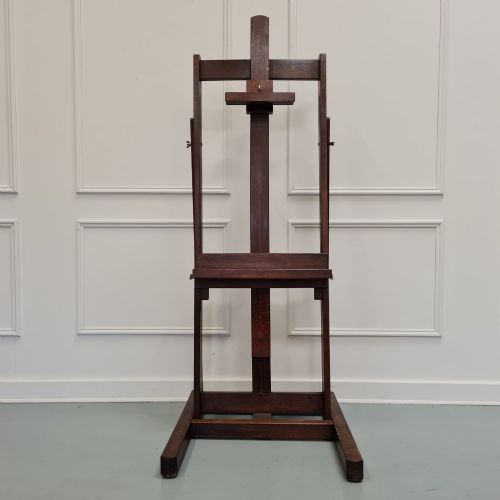
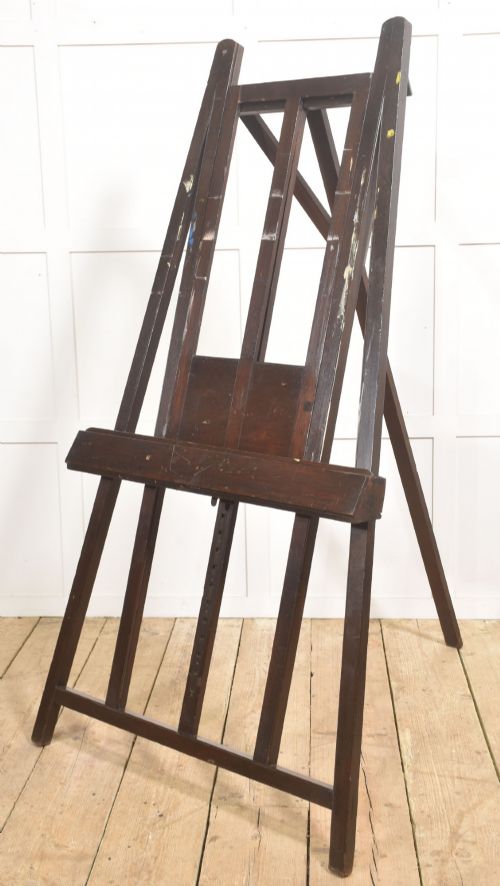


Adjustable Floor Easel Stand
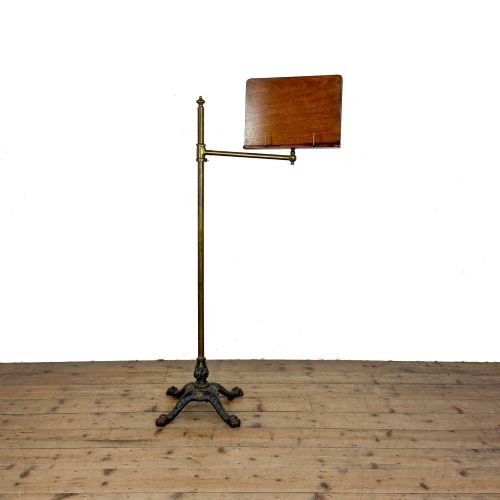
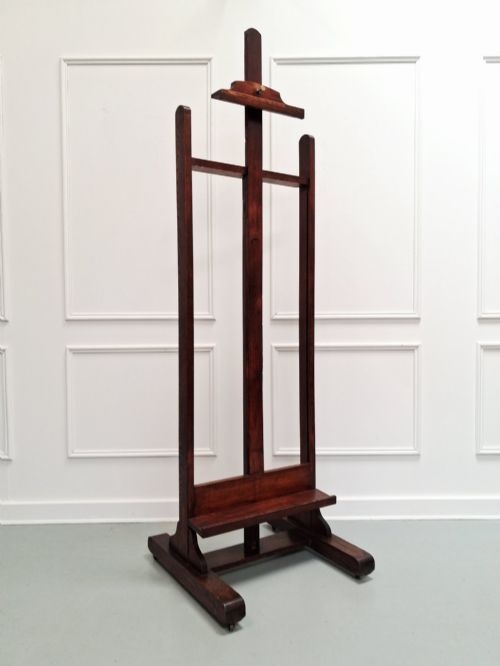
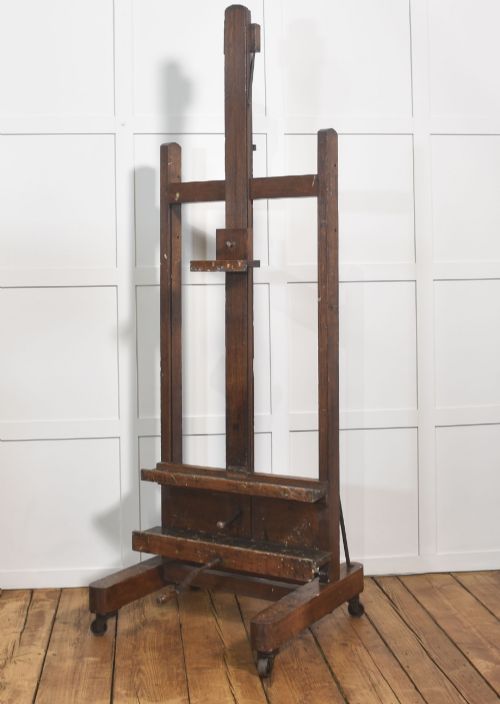
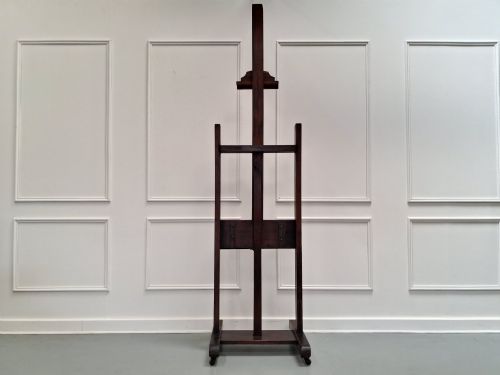
These adjustable floor easel stand pieces are practical studio furniture designed to hold canvases, books, and music sheets at working heights.
Adjustable Floor Easel Stand
An adjustable floor easel stand provides a sturdy vertical support for artists, musicians, and readers in studios and parlours. When searching for this equipment, a buyer encounters robust studio furniture tailored for holding paintings, folios, or heavy volumes.
The selections available here lean heavily towards nineteenth-century examples and turn-of-the-century French interpretations. Pieces span from grand studio proportions down to domestic reading stands and music tables.
Forms range from simple single-masted wooden frames to double-sided gallery displays and elaborate mechanical reading desks. Oak and mahogany dominate the offerings, supplemented by pitch pine and functional metal mechanisms.
How they were made
Cabinetmakers and metalworkers built these items using dense hardwoods like oak, mahogany, and pitch pine, paired with robust brass and iron hardware. The integration of metal winding handles, ratchets, and adjustable screws allowed heavy frames to tilt and rise with precision.
Joinery techniques relied on sturdy frame construction to bear the weight of large canvases and folio volumes safely. Turned wooden columns, cast iron bases, and brass fittings provided the necessary mechanical strength for daily studio use.
Listings feature items built from oak, mahogany, pitch pine, brass, and cast iron across the nineteenth and early twentieth centuries.
What varies in quality
Superior examples distinguish themselves through the smoothness and reliability of their mechanical adjustment systems. Fine brass ratchets, smooth screw threads, and solid locking pins indicate a higher grade of manufacture intended for serious studio work.
Timber selection and secondary detailing also separate standard utility items from finer workshop pieces. Well-figured oak, rich mahogany, and neatly turned decorative elements show greater care by the original maker.
The Adjustable Floor Easel Stand Glossary
- Studio easel
- A large, heavy floor-standing frame designed to support canvases during painting and display. These often incorporate heavy bases or wheels for mobility.
- Reading stand
- A piece of furniture featuring an adjustable slope to hold books or papers at a comfortable reading angle. They frequently include small ledges to keep pages secure.
- Gallery easel
- A display stand featuring wide ledges or double-sided display surfaces intended for showing finished artworks to viewers. These pieces often lack the tilting mechanisms required strictly for painting work.
- Ratchet mechanism
- A notched metal bar and catch used to secure the sliding middle section of an easel at various heights. This device prevents the shelf holding the canvas from slipping downwards under weight.
Adjustable Floor Easel Stand: Frequently Asked Questions
How do I adjust the height on these stands?
Most of these pieces utilise sliding centre masts controlled by wooden pegs, brass thumbscrews, or metal ratchets. Operators simply loosen the locking mechanism, slide the shelf to the desired level, and tighten it securely.
Heavier studio examples often employ a winding handle connected to internal cords or gears to raise massive canvases without manual lifting.
Can I use an artist easel for reading or display?
These tall stands accommodate far more than canvas paintings because their adjustable ledges easily support large books, framed photographs, or heavy mirrors. Reading stands and music tables specifically cater to seated tasks.
Studio models offer enough depth on their lower trays to hold thick folios securely for presentation in a room.
How do I date an antique wooden easel?
Dating relies heavily on identifying the timber types, joinery methods, and the style of turning on the central columns. Victorian and Georgian pieces frequently feature hand-cut joints, rich mahogany patination, or heavy brass winding gear.
Later nineteenth-century and early twentieth-century examples often display machine-milled oak or pitch pine with simpler, utilitarian iron fittings.
Are these stands stable enough for heavy canvases?
Original studio versions were engineered specifically to bear the weight of large, wet oil paintings and heavy wooden stretchers. Their broad feet, cast iron bases, or wide tripod legs prevent tipping during vigorous painting sessions.
Smaller domestic reading stands and lighter decorative models suit lighter display duties rather than heavy professional work.