
Mahogany Desk Carvers
Mahogany desk carvers combine sturdy seating with substantial armrests, offering a practical workspace seat built to last generations.
Mahogany Desk Carvers
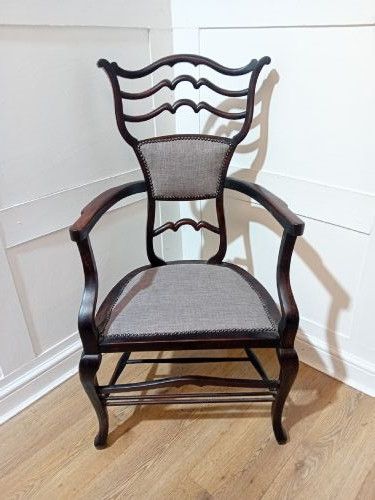
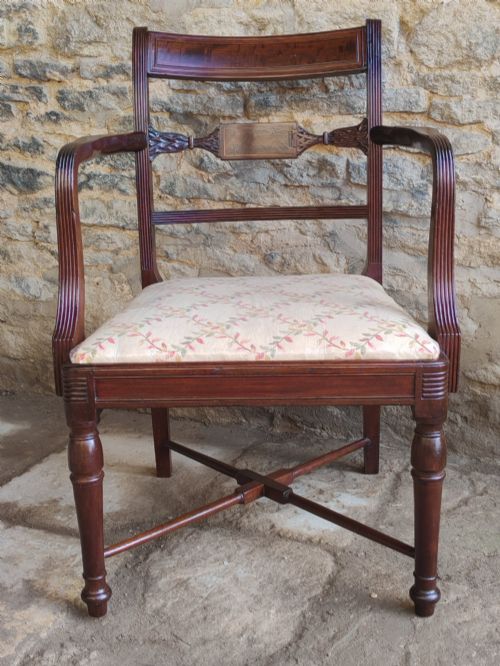
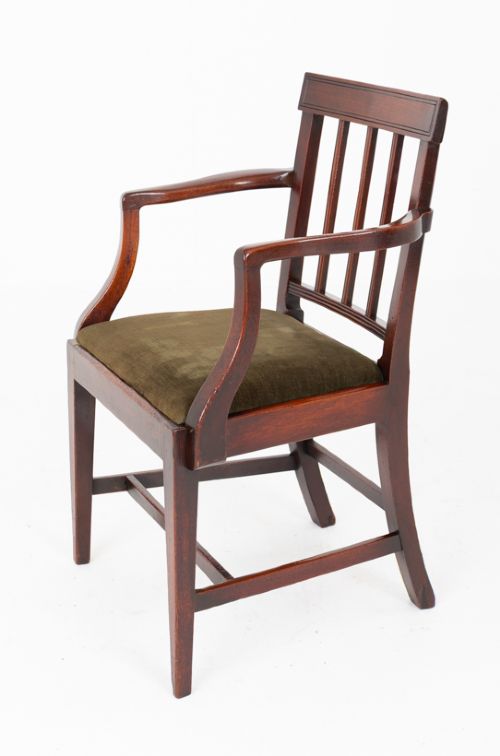
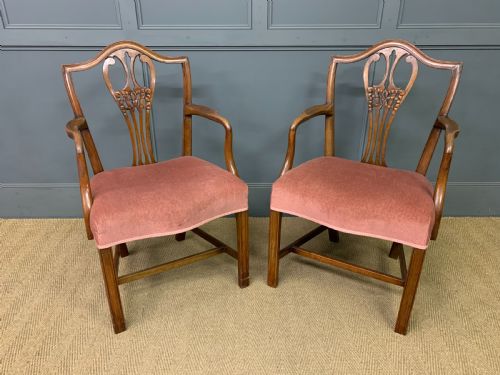
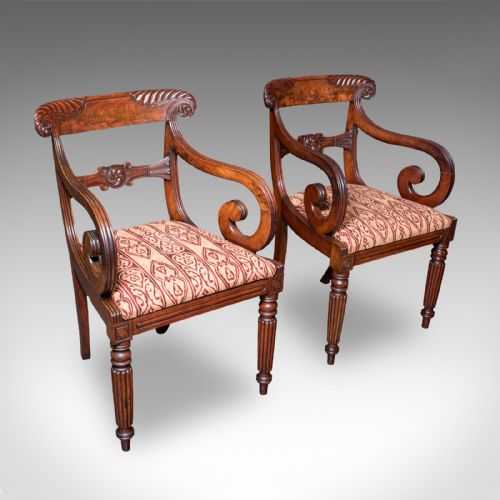
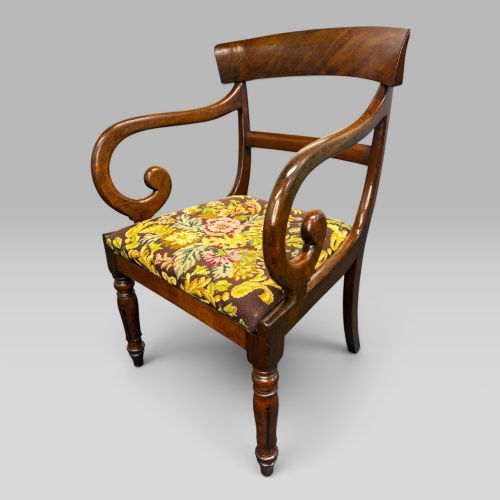
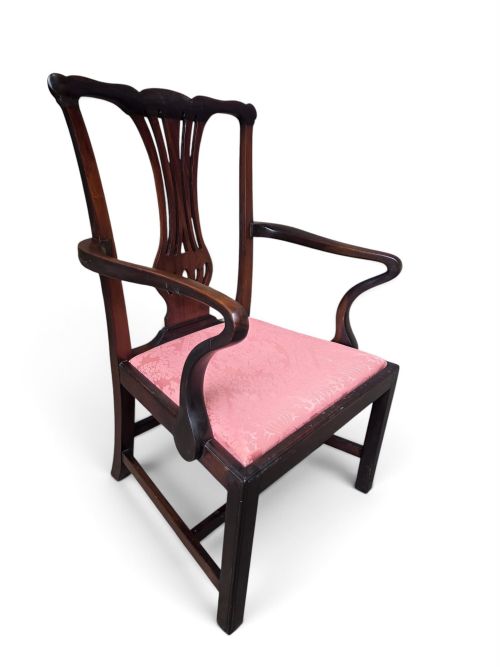
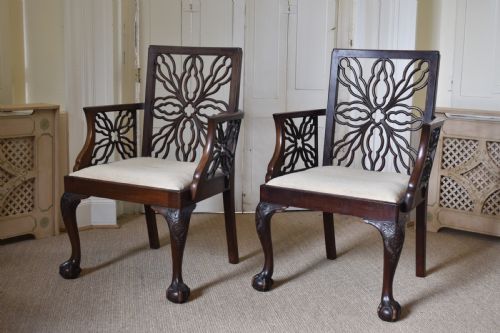
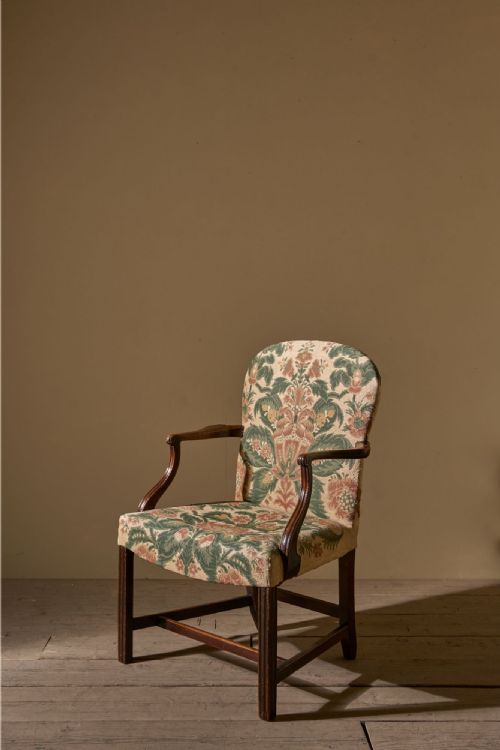
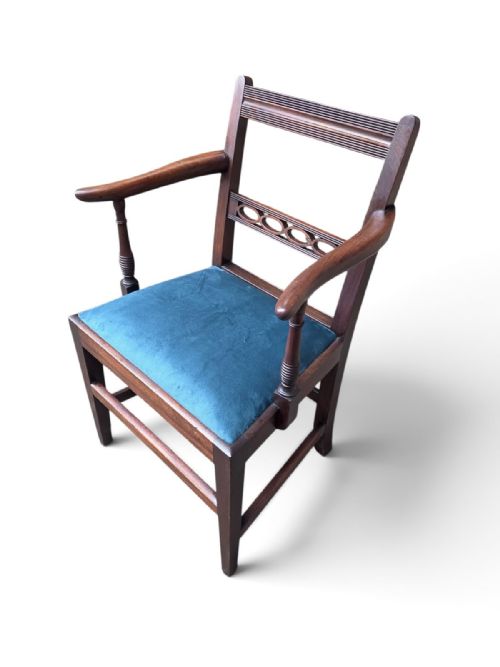
Mahogany desk carvers are sturdy armchairs designed for writing tables and studies, drawing on forms from the eighteenth and nineteenth centuries. Buyers searching this phrase encounter elbow chairs, library seats, and office carvers built during the Georgian, Regency, and Victorian periods.
The selection ranges from genuine eighteenth-century Chippendale pieces to later nineteenth-century revivals and early twentieth-century copies. Most examples on this page date from the Georgian and Victorian eras, reflecting the domestic demand for heavy timber office seating.
These seats frequently double as dining carvers or reception chairs, distinguished by generous armrests meant to accommodate formal clothing. Regional variations and revival styles appear alongside period originals, offering distinct proportions and carving details.
Materials and construction
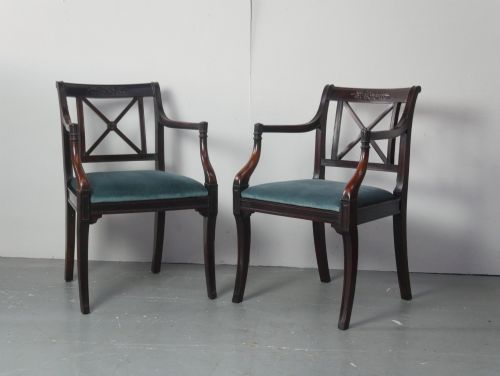
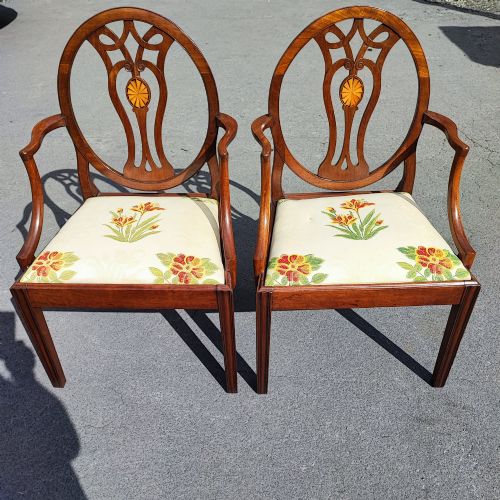
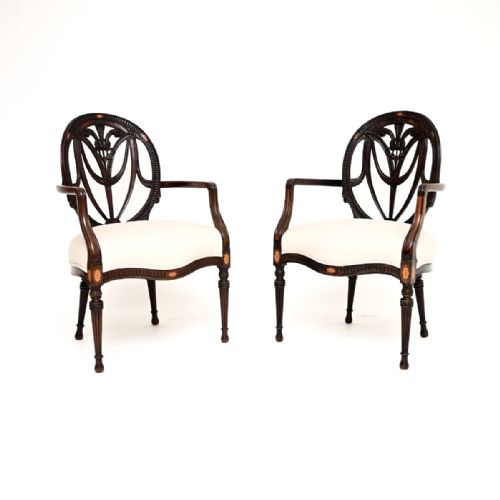
Cabinetmakers built these carvers primarily using solid mahogany, complemented by decorative secondary timbers such as satinwood and rosewood inlay. Frames rely on traditional joinery techniques, featuring pegged mortise and tenon joints to withstand daily movement at a desk.
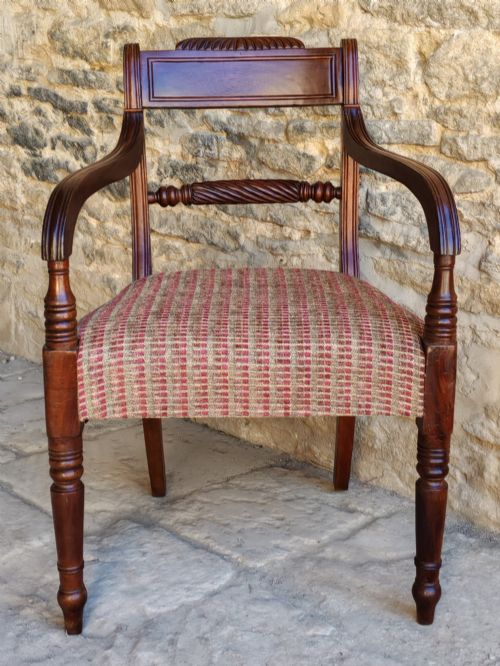
Upholstery materials vary from period fabric, velvet, and tapestry to drop-in leather seats and woven cane panels. Brass accents and carved wooden motifs, including ropebacks and lyre designs, finish the structural framework.
Gentlemen of the past clearly insisted on comfortable elbows while managing their correspondence.
What sets individual pieces apart
Quality rests in the crispness of the timber carving and the architectural balance of the arm supports and legs. Superior examples display thoughtful proportions, tightly fitted joinery, and dense, well-figured mahogany grain that deepens with age.
Later revivals often employ machine-cut ornamentation, whereas finer period pieces rely on hand-carved details executed by skilled hands. The choice of secondary woods and the condition of original upholstery webbing also distinguish workshop standards.
Alfred Allen of Birmingham·Gillows
The Mahogany Desk Carvers Glossary
- Carver chair
- An armchair, usually designed with open arms to match a set of single dining or desk chairs. These seats offer wider proportions than standard chairs.
- Elbow chair
- Another term for an armchair, often used in historical inventories to describe seating with supportive armrests for a desk or morning room. They provide a comfortable resting place for arms during writing.
- Chippendale style
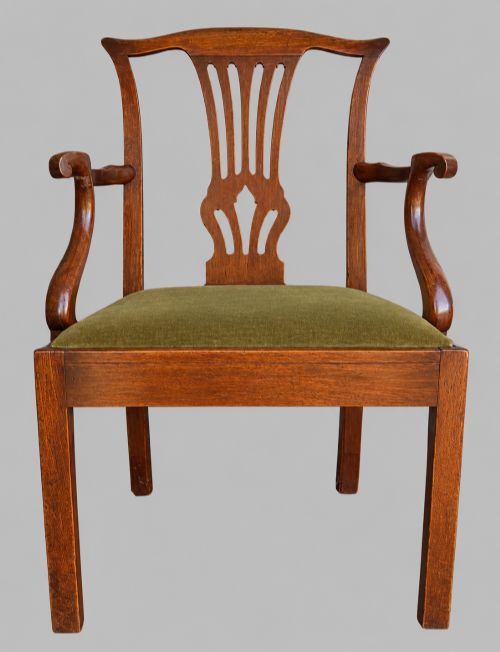
- A decorative aesthetic drawing from the designs of Thomas Chippendale, characterised by carved ribbon backs, interlaced splats, and cabriole legs. This style remains prominent in eighteenth-century and revival seating.
- Ropeback
- A chair back featuring carved wooden rails twisted to resemble looped rope. This decorative motif appears frequently on Regency and nineteenth-century examples.
- Drop-in seat
- An upholstered frame that drops neatly into a rebated wooden seat rail without permanent fixings. This construction method allows easier reupholstery over time.
Mahogany Desk Carvers: Frequently Asked Questions
What is a mahogany desk carver?
A mahogany desk carver is an armchair featuring wooden armrests, built specifically for use at a writing table or library desk. These pieces combine sturdy timber frames with supportive seating heights suitable for working environments.
They originate mostly from the Georgian, Regency, and Victorian eras, utilising dense mahogany and traditional joinery. Many double as reception or dining carvers depending on their original domestic context.
How do I identify a Georgian carver?
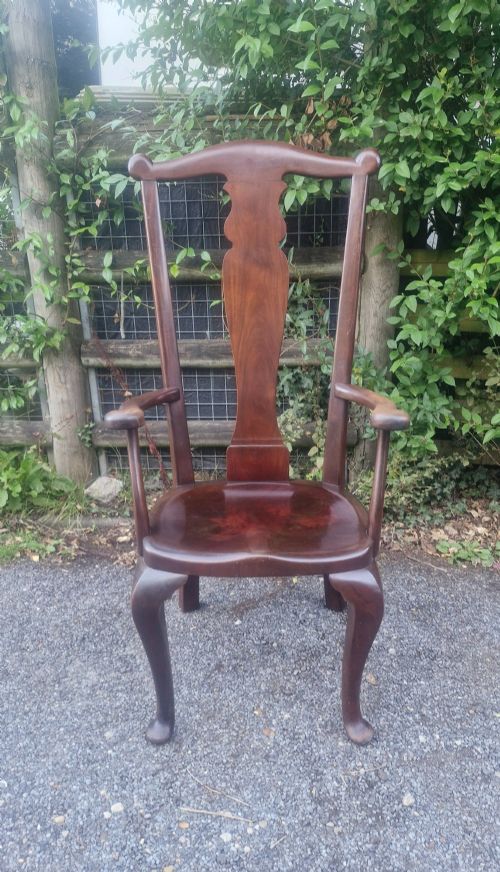
Georgian carvers typically exhibit restrained proportions, hand-carved mahogany splats, and sturdy cabriole or straight legs. They date from the eighteenth to early nineteenth centuries and show traditional peg construction.
Later Victorian revivals often copy these eighteenth-century forms but use heavier framing and machine-cut detailing. Examining the timber grain and underside construction helps clarify the true age of the piece.
Were these chairs used only for desks?
While frequently placed at writing tables, these armchairs served various roles in historic interiors, including morning rooms, libraries, and dining spaces. Their supportive armrests made them versatile seating options for reading or receiving visitors.
As a result, surviving examples often retain different upholstery finishes, ranging from cane and leather to velvet and tapestry fabric.
How should I care for antique mahogany timber?
Antique mahogany benefits from regular dusting with a dry, soft cloth and occasional treatment with traditional beeswax to nourish the dry grain. Avoid placing timber furniture near direct heat sources or strong sunlight to prevent warping and fading.
Keeping indoor humidity stable protects the glued joints and prevents the solid wood from splitting over decades of daily use.