


Neoclassical Occasional Chairs
Neoclassical occasional chairs are formal seating forms drawn from classical antiquity, offering refined proportions and architectural lines.
Neoclassical Occasional Chairs
Neoclassical occasional chairs combine classical restraint with domestic function, appearing across eighteenth-century Georgian, Regency, and nineteenth-century revival periods. These forms include salon chairs, armchairs, side chairs, and bedroom chairs designed for light seating rather than heavy parlour use.
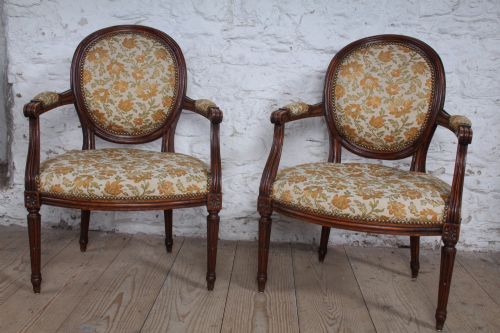
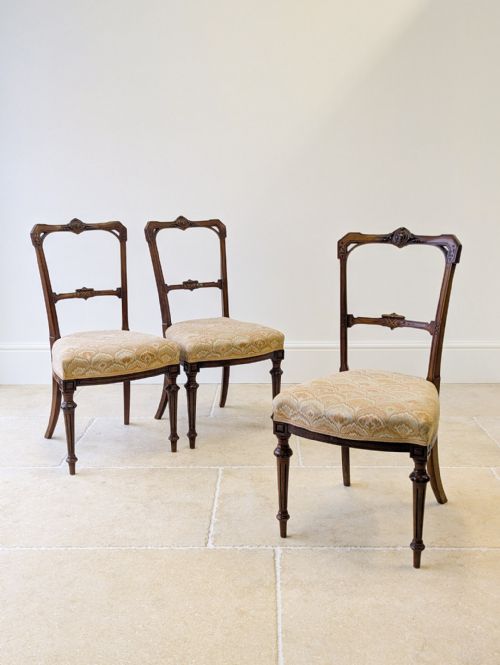
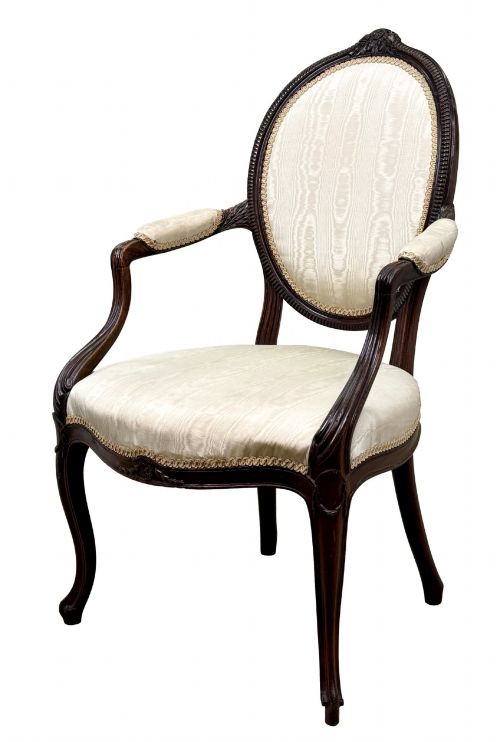
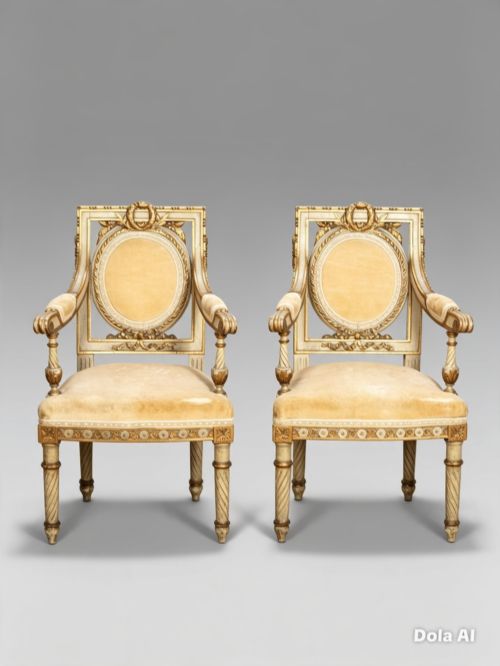
The examples gathered here span from eighteenth-century Georgian Hepplewhite pieces to nineteenth-century French giltwood and walnut variants, alongside twentieth-century revivals. Buyers encounter French Napoleonic era designs, Louis XVI style bedroom chairs, and Victorian neoclassical salon seats.
Makers and designers drew upon Sheraton revival idioms and French neoclassical vocabularies, creating seating with distinct architectural dignity. Each piece reflects the enduring appeal of classical motifs translated into domestic furniture across multiple decades.
Materials and construction methods
Carpenters shaped these chairs from dense hardwoods such as mahogany, walnut, and ebonised timber, providing a stable frame for carving and gilding. Giltwood and painted finishes appear frequently on French models, adding surface decorative layers to the wooden core.
Upholstery fabric, textile, and traditional stuffing materials complete the seats, supported by brass details where specified. Hand-carved elements demonstrate the manual skill applied to shield-back armchairs and open-arm salon seating.
The listings here include mahogany, walnut, and giltwood pieces spanning the eighteenth, nineteenth, and early twentieth centuries.
Differentiating quality across the range
The refinement of carved ornament and the crispness of classical detailing separate standard production from superior examples. Crisp acanthus leaves, fluted legs, and well-proportioned shield backs indicate greater artisan attention during manufacture.
Material selection also dictates overall merit, particularly the choice of dense, figured mahogany or walnut compared to plainer woods. Original surface treatments, such as untouched gilding or period paintwork, preserve the historical integrity of the piece.
The Neoclassical Occasional Chairs Glossary
- Neoclassical Revival
- A late nineteenth-century movement that revived classical Greek and Roman design principles. It draws heavily on eighteenth-century precedents for its decorative vocabulary.
- Giltwood
- Wood that has been coated with a thin layer of gold leaf or powder. This finish appears frequently on formal French salon chairs.
- Shield Back
- A chair back shaped in the outline of a heraldic shield, popularised by designers like Hepplewhite. It provides structural support while displaying delicate pierced carving.
- Salon Chair
- A light, decorative chair intended for reception rooms rather than heavy daily lounging. These pieces prioritise elegant silhouettes and upholstery.
- Open-Arm Chair
- An armchair with un-upholstered wooden or gilded armrests supported by shaped uprights. This form allows for lighter visual proportions in formal rooms.
Neoclassical Occasional Chairs: Frequently Asked Questions
Where did people use occasional chairs?
These chairs served in reception rooms, salons, and bedrooms where extra seating was needed for guests. They were moved easily to converse or listen to music.
Unlike heavy dining or library armchairs, their lighter frames suited domestic social spaces.
How do I identify a revival piece?
Revival pieces from the late nineteenth or early twentieth century imitate eighteenth-century forms such as Louis XVI or Sheraton styles. Closer inspection of timber ageing, tool marks, and construction joints reveals the actual manufacturing period.
Makers of the revival eras often combined historical motifs with contemporary joinery techniques.
Are these chairs comfortable for daily use?
Most occasional chairs are upright and firm, designed for formal posture rather than lounging. Their padding and open arms support short periods of sitting during conversation.
Buyers placing them in modern homes often use them as accent pieces in corners or dressing rooms.