

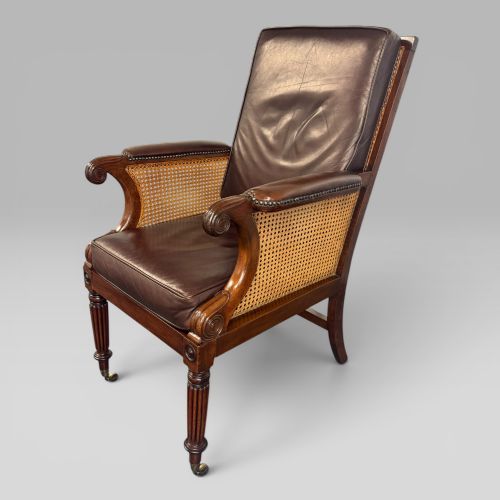
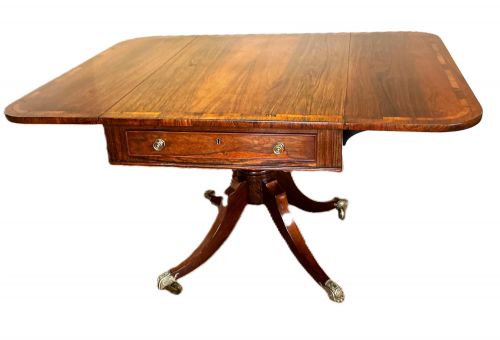


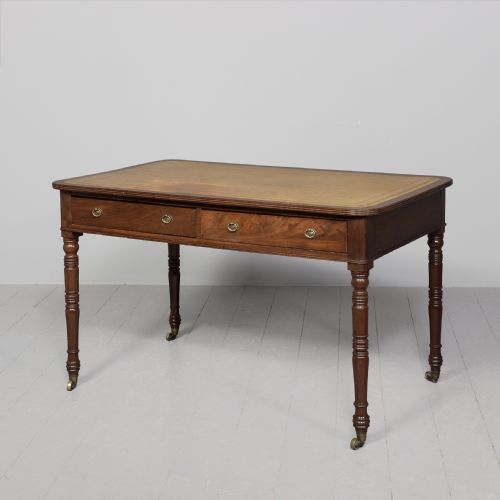


Mahogany Desk Brass Castors
Mahogany desk brass castors bring together dense timber and tactile metal feet, offering writing surfaces built to last through centuries.
Mahogany Desk Brass Castors
When searching for mahogany desk brass castors, buyers encounter a variety of writing surfaces, sofa tables, and library tables originating from Georgian, Regency, Victorian, and Edwardian periods. These pieces serve practical work spaces whilst displaying the rich grain of solid timber.
The most common forms on this page include writing tables, drum tables, and kidney-shaped desks fitted with metal wheels for mobility. Cabinet makers built these pieces to function centrally within a room or against a wall.
Period examples range from simple George III work tables to ornate Victorian and Edwardian writing desks. Each style reflects the domestic requirements of its era, combining utility with fine cabinet making.
Construction and materials
Workshops utilised dense tropical hardwoods, notably solid and veneered mahogany, frequently accented with boxwood inlay and secondary timbers such as satinwood. Craftsmen selected timber for its rich figure and durability, preparing surfaces through hand polishing.
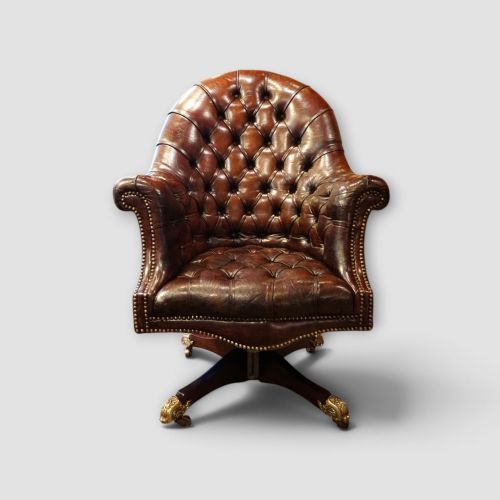
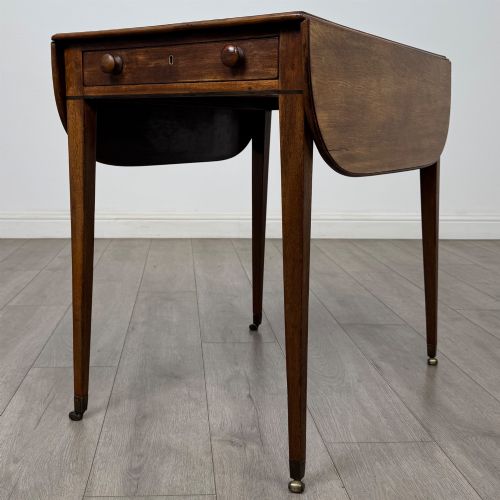
Metal components such as brass castors were screwed directly into the base of table legs or chair terminals to allow smooth movement across carpets and wooden floors. These copper alloy fittings provided both structural protection and decorative contrast.
Many a Victorian library table hides a secret stash of dummy drawers designed solely to keep the circular drum perfectly symmetrical.
Assessing quality and craftsmanship
Superior examples demonstrate precision in joinery, such as tightly cut dovetails within drawer construction and seamless matching of mahogany veneers across table tops. Lesser items rely on simpler joints and thinner surface timbers.
The sophistication of secondary details, including finely cast brass wheels, crisp boxwood stringing, and well-turned pedestals, separates standard production pieces from master cabinet maker output.
Andrew Thomson And Sons·W Williamson And Sons·Gillows
The Mahogany Desk Brass Castors Glossary
- Mahogany
- A durable tropical hardwood known for its deep reddish-brown colour and stable grain, heavily utilised in British cabinet making throughout the Georgian and Victorian eras.
- Brass castors
- Small swivel wheels made from a copper and zinc alloy, attached to the feet of heavy furniture to facilitate easy movement.
- Drum table
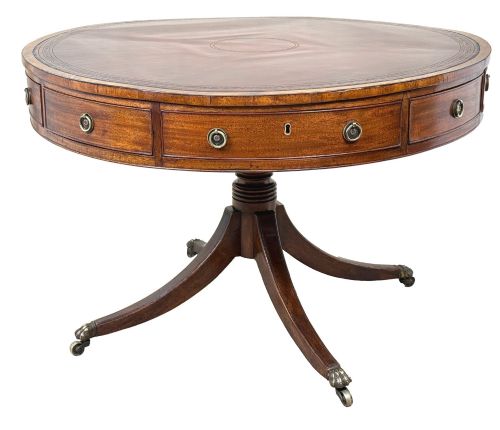
- A circular library or writing table featuring a deep top fitted with alternating real and dummy drawers, typically mounted on a central pillar.
- Sofa table
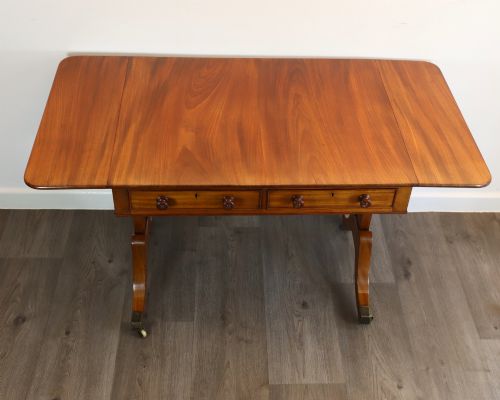
- A rectangular drop-leaf table designed during the Regency period to sit in front of a sofa, equipped with two drawers and end-supports.
- Inlay
- A decorative technique where contrasting materials like boxwood are inserted into recesses carved into the primary mahogany surface.
Mahogany Desk Brass Castors: Frequently Asked Questions
What is a drum table?
A drum table is a round writing or library table with a wide, drum-like top containing multiple drawers around the circumference. They often stand on a central pillar supported by carved legs.
These tables were designed to sit in the middle of a study or library rather than against a wall. The drawers allowed books, papers, and writing implements to be stored close to hand.
How do I care for mahogany?
Mahogany surfaces benefit from regular dusting with a soft, dry cloth and occasional application of traditional beeswax to nourish the timber. Avoid placing these pieces in direct sunlight or near heat sources to prevent the wood from drying out.
Keeping humidity levels stable in the room protects both the solid timber and the fine veneers from splitting. Gentle maintenance preserves the depth of the natural grain over decades.
Why do these tables have castors?
Castors allowed heavy mahogany furniture to be repositioned easily within large period rooms for cleaning, writing near a window, or entertaining. Metal wheels reduced friction against thick carpets and polished floorboards.
Most functional library tables and desks incorporated these fittings as a standard feature of high-end British cabinet making. They ensure the furniture remains adaptable to different room layouts.
How do I identify a Regency desk?
Regency desks and tables typically display classical restraint, featuring dark mahogany, reeded edges, and restrained brass mounts. They often draw inspiration from ancient Greek and Roman furniture forms.
Look for robust proportions, saber legs, and functional brass castors beneath pedestals. These markers distinguish the early nineteenth-century aesthetic from later Victorian revival styles.