



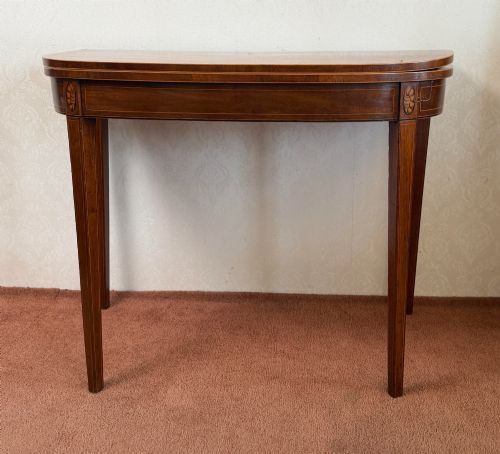
Mahogany Demilune Console
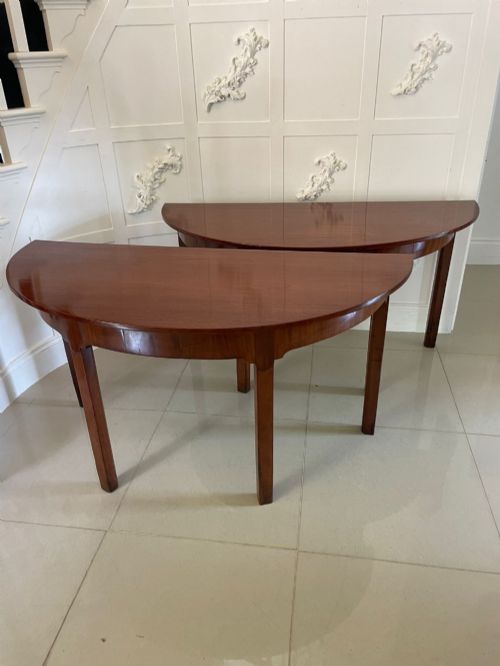
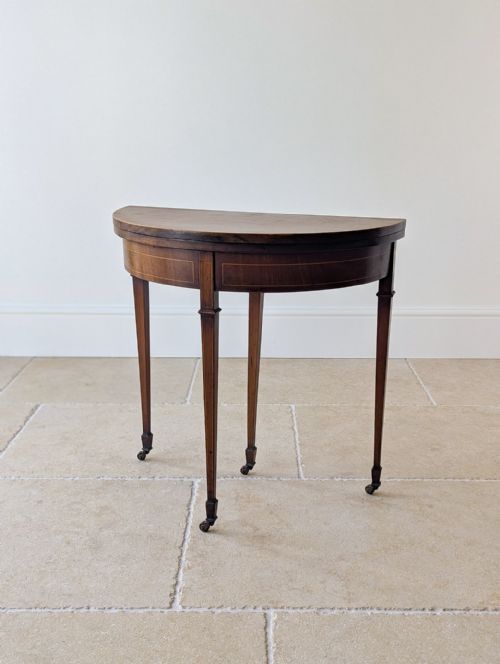
A mahogany demilune console is a half-round wall table designed to anchor a room with curved elegance and practical surface space.
Mahogany Demilune Console
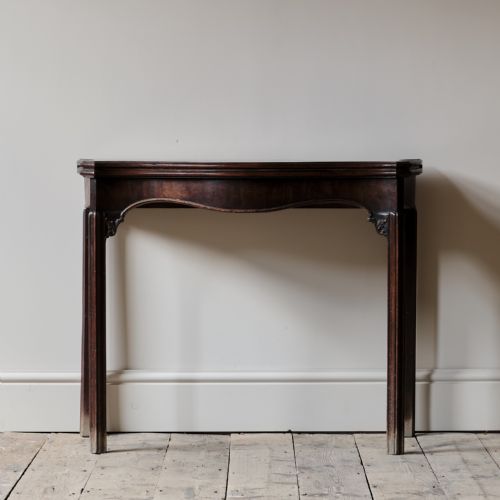
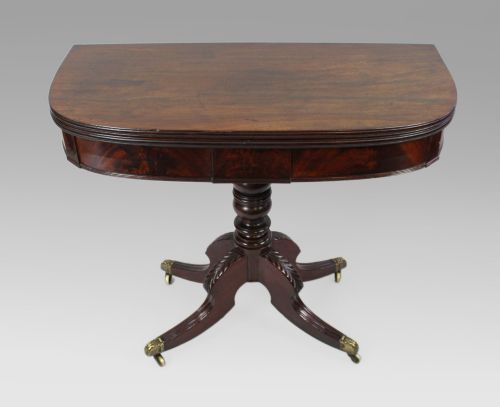
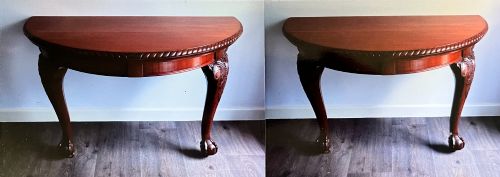
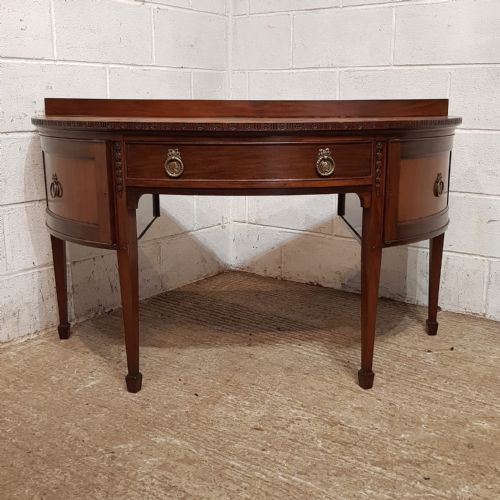
A mahogany demilune console is a half-circle wall table that appears across Georgian, Regency, Victorian, and Edwardian periods. The selection includes console tables, side tables, and convertible pieces designed for card, tea, or games use.
Most examples found on this page date from the eighteenth century through the early twentieth century, taking the form of single tables or matched pairs. Makers utilised the half-round footprint to fit narrow halls, formal reception rooms, and dining spaces.
Materials and construction
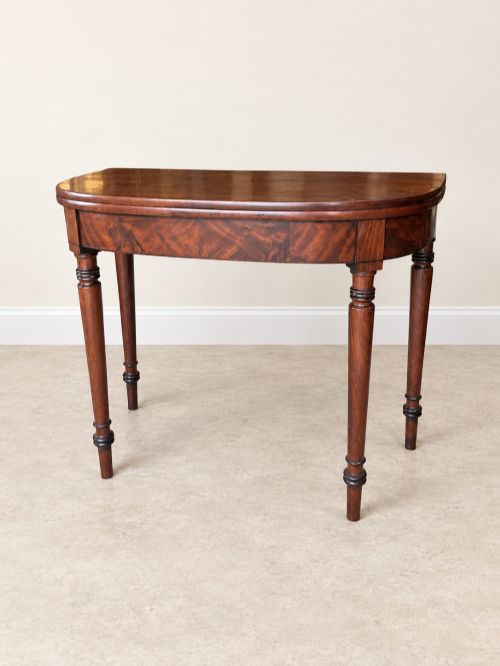
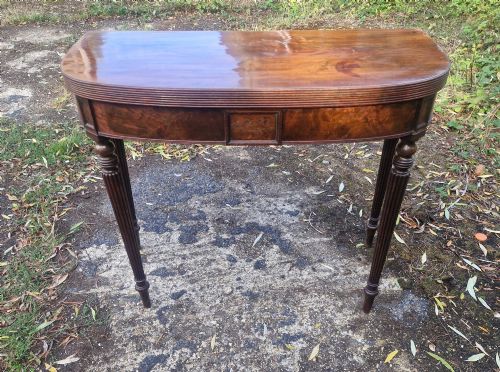
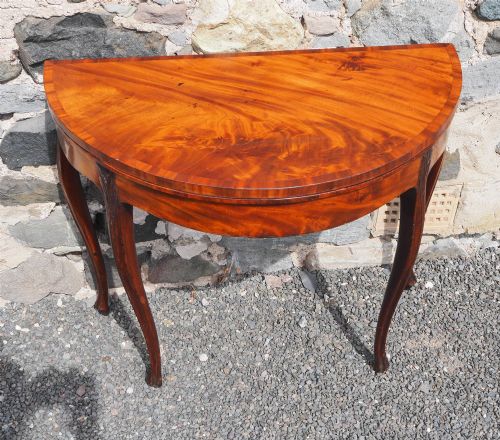
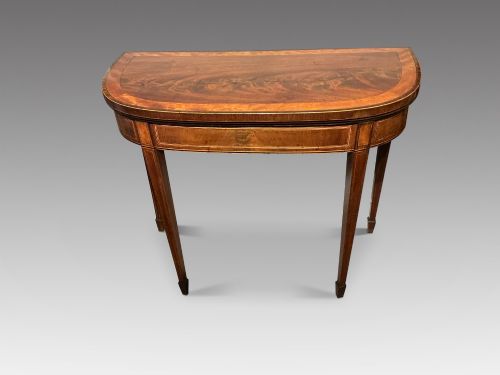
Cabinetmakers built these tables using solid timber frames paired with wood veneer surfaces, frequently highlighting flame mahogany veneer to create rich grain patterns across the semicircular top. Workshops incorporated contrasting timbers such as satinwood, boxwood, and brass for detailed inlay work.
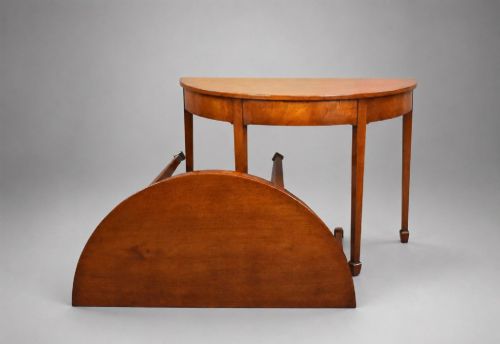
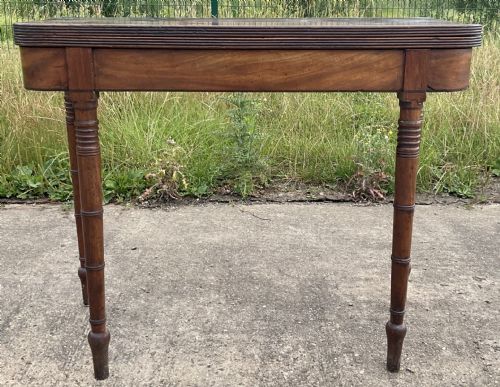
Structural elements include folding mechanisms for card and tea tables, supported by swing legs or hinged back gates. Legs range from straight tapered supports to reeded and turned styles reflecting Georgian, Sheraton, and Regency tastes.
Some eighteenth-century card tables hide secret compartments beneath their folding tops for storing forgotten playing cards.
Factors affecting quality
The standard of a mahogany demilune console rests upon the choice of timber figure on the top and the precision of any inlaid stringing. Finely figured Honduras mahogany and sharp boxwood inlay separate standard production pieces from higher quality workshop examples.
Construction fidelity in the folding and pivoting joints of card and tea tables dictates the integrity of the piece over time. Original brass hardware and well-preserved structural framing elevate the standing of an antique table.
Bruce & Burns of Edinburgh
The Mahogany Demilune Console Glossary
- Demilune
- A half-moon or semicircular shape utilised in the design of console and card tables to fit flat against a wall.
- Fold-over
- A hinged table top that opens outward to double its surface area, commonly found on card and tea tables.
- Stringing
- Thin lines of contrasting wood inlay, such as boxwood or satinwood, used to edge panels and legs.
- Flame mahogany
- A highly figured wood veneer displaying characteristic flame-like grain patterns across the table top.
Mahogany Demilune Console: Frequently Asked Questions
What is a demilune table used for?
A demilune table serves primarily as a decorative side or hall table placed flat against a wall to hold lamps, mirrors, or ornamental objects. Many period examples also function as convertible card, tea, or games tables with fold-over tops.
Because of their half-round shape, they occupy minimal floor space while offering a useful surface in narrower rooms and hallways.
How do I date a mahogany console table?
Dating relies on observing the leg style, timber selection, and construction methods characteristic of different eras. Georgian and Regency pieces often display hand-cut joinery and specific leg turnings, whereas Edwardian and later reproductions show twentieth-century manufacturing traits.
Comparing the secondary woods used underneath and the style of inlay helps place the table within eighteenth, nineteenth, or twentieth-century periods.
Are these tables sturdy enough for daily use?
Most period tables are structurally robust, though fold-over versions require care when opening and closing the top leaf. The hinged gate legs or pivoting mechanisms support the extended top during card or tea playing.
Placing them on level flooring and avoiding excess weight on unfolded leaves preserves the antique joints and overall stability.