



Mahogany Coffer Trunk
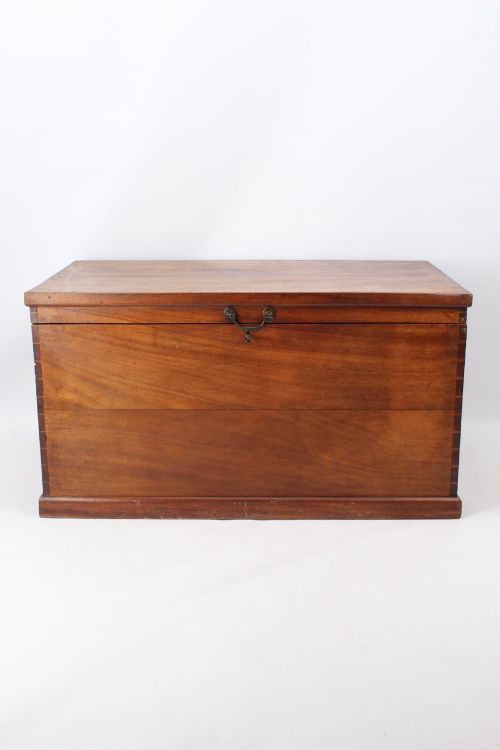
A mahogany coffer trunk brings heavy timber storage into a room, offering deep interior space built for travel, trade or household linen.
Mahogany Coffer Trunk
The phrase mahogany coffer trunk covers robust timber receptacles designed for holding clothing, silver, documents or travel gear across several centuries. You will most frequently meet 19th century examples, alongside Georgian pieces and earlier seventeenth century work.
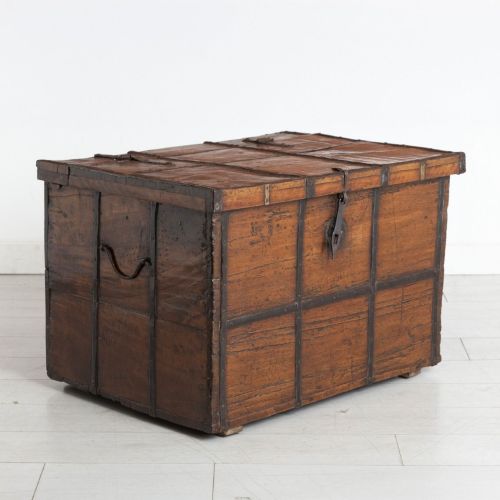
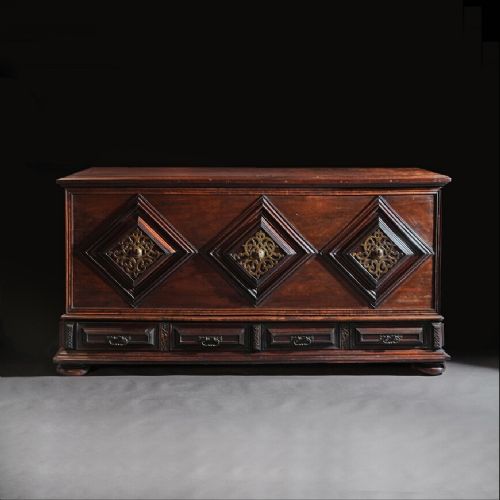
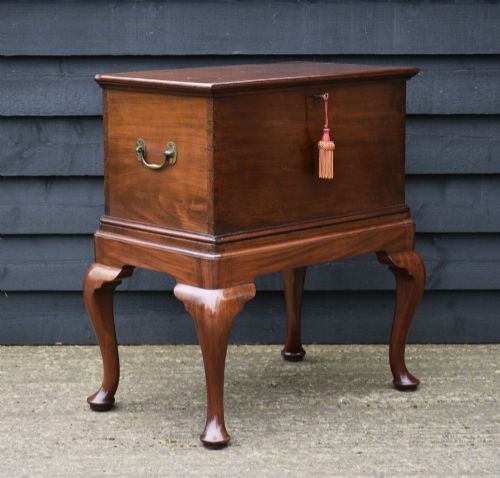
Forms vary from military campaign boxes and mule chests to Zanzibar traders chests and blanket boxes on stands. Many incorporate internal compartments, drop down fronts or drawers beneath the main lidded compartment.
Origins stretch from English workshops to Portuguese colonial outposts, China and Zanzibar, reflecting global trade routes and colonial expansion.
How they were made
Construction relies primarily on solid mahogany, sometimes paired with secondary timbers like pine, with hardwood or satinwood details. Metal components such as brass studs, iron binding, steel straps and zinc linings reinforce the heavy wood structures.
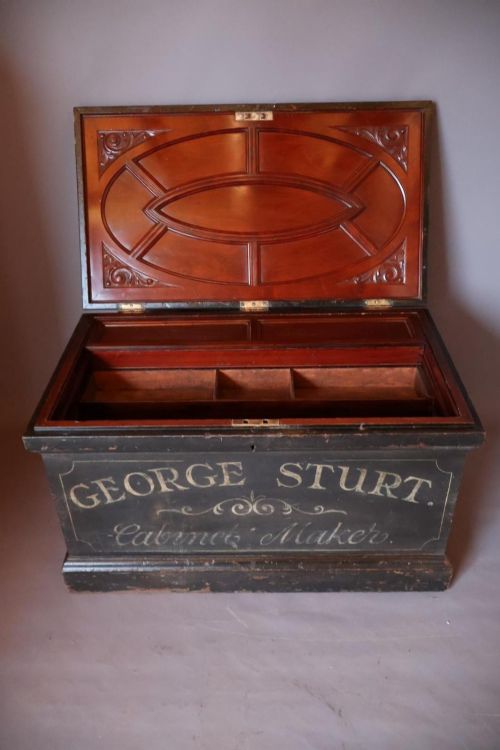
Joinery methods include panelled box construction, dovetailing and fitted internal partitions designed for specialised storage like tools, silver or uniforms.
Listings span from the 17th century through to 1900, incorporating materials such as brass, iron, zinc, pine and satinwood alongside solid mahogany.
What varies in quality
Quality rests upon the selection of timber, the crispness of brass or iron mountings, and the integrity of internal fittings such as drawers and secret compartments. Heavy iron binding, dovetail precision and untouched patination elevate certain military and trade pieces far above simple utilitarian boxes.
The Mahogany Coffer Trunk Glossary
- Campaign chest
- A portable trunk or chest made in sections with brass corners and recessed handles designed for military travel. These pieces dismantle easily for transport on horseback or ship.
- Mule chest
- A storage chest featuring one or more drawers beneath the main lidded compartment. The name derives from its hybrid nature, combining the drawer of a chest with the deep till of a coffer.
- Zanzibar chest
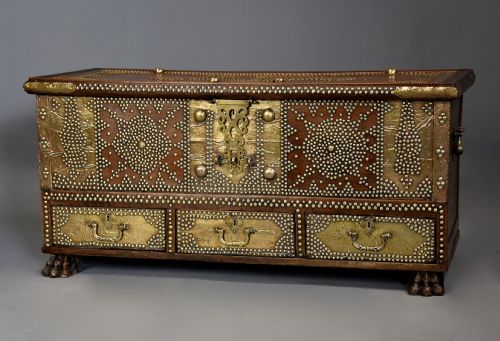
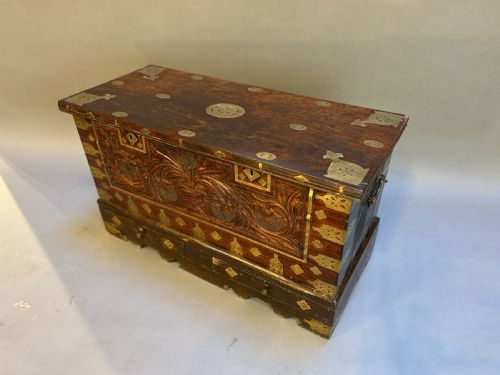
- A heavy hardwood trunk featuring elaborate brass studding, strapwork and specialised hardware. These trading chests reflect Middle Eastern and Indian ocean influences.
- Silver chest
- A reinforced storage box lined for protecting plate and cutlery. They often include fitted trays and internal baize linings.
- Coffer
- A large wooden chest traditionally used for holding valuables, textiles or documents. They sit directly on the floor or upon dedicated stands.
Mahogany Coffer Trunk: Frequently Asked Questions
What is a mule chest?
A mule chest is a form that combines a traditional top-opening blanket box with one or more drawers built into the base. This design allowed users to access smaller items without disturbing the linens piled inside the main compartment.
Cabinet makers produced these pieces extensively through the Georgian and Victorian periods for domestic housekeepers.
How were campaign trunks used?
Campaign trunks served officers and administrators on military campaigns or long sea voyages. They were built in sections with recessed brass handles and protective corner brackets to withstand rough transit.
The modular design allowed military personnel to pack uniforms, maps and instruments securely during relocation.
Where were Zanzibar chests made?
Zanzibar chests were produced along trade routes involving India, the Persian Gulf and the East African coast. Local craftsmen constructed them from dense hardwoods before decorating them with brass studs and intricate metal strapwork.
Merchants and traders utilised these vessels to transport valuable spices, textiles and coins across the Indian Ocean.
How do I care for mahogany?
Mahogany furniture requires stable humidity and protection from direct sunlight to prevent the timber from drying out or fading. Regular dusting with a soft cloth maintains the natural surface lustre without chemical buildup.
A light application of traditional beeswax preserves the grain and develops the patination over decades of use.