
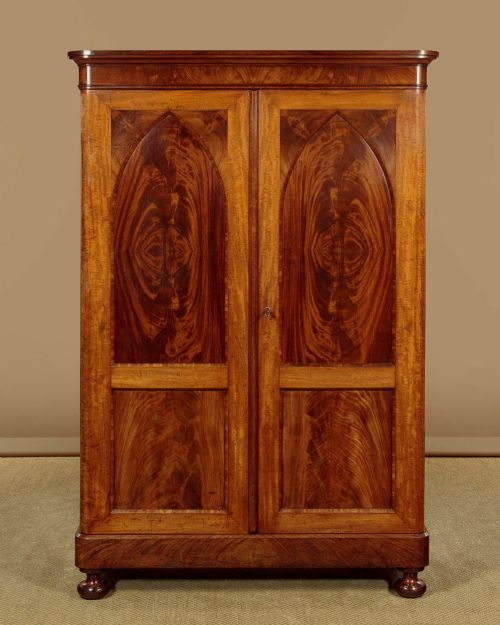
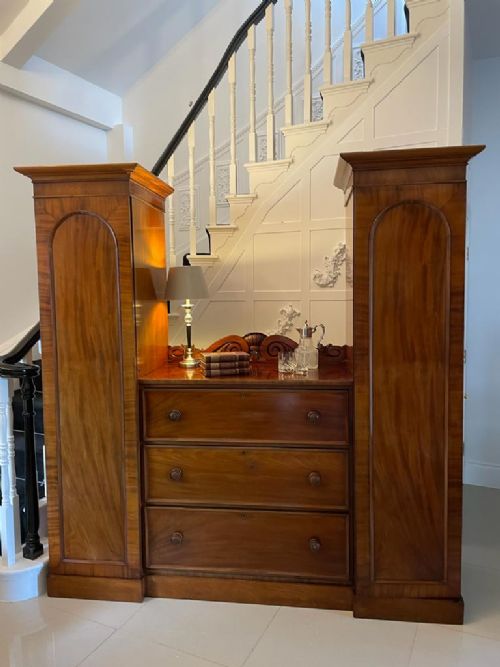
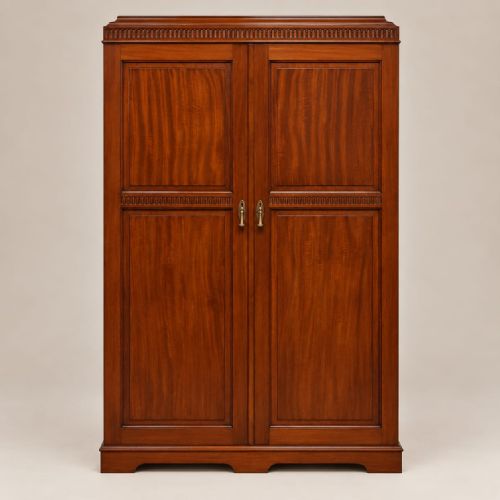
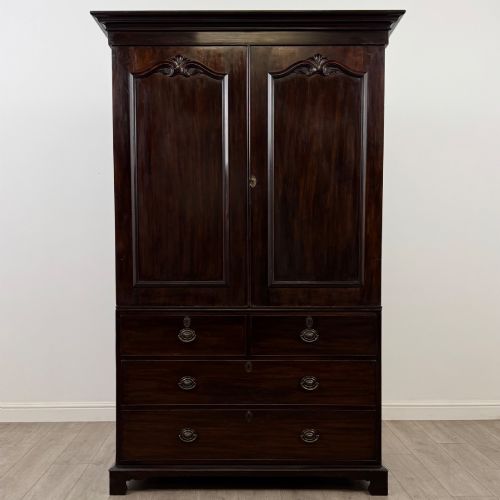
Mahogany Clothes Armoire
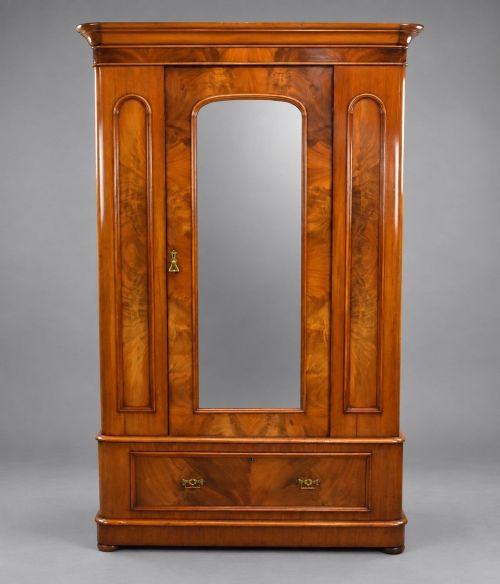
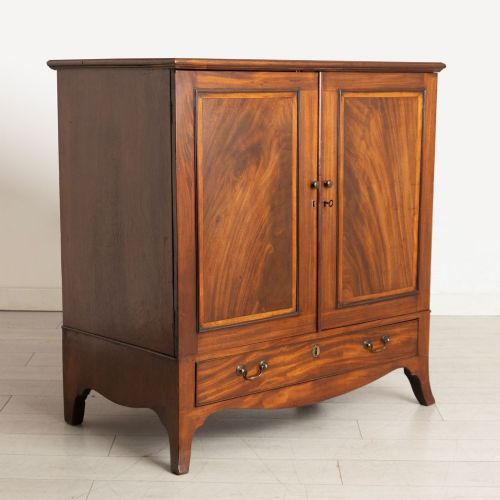
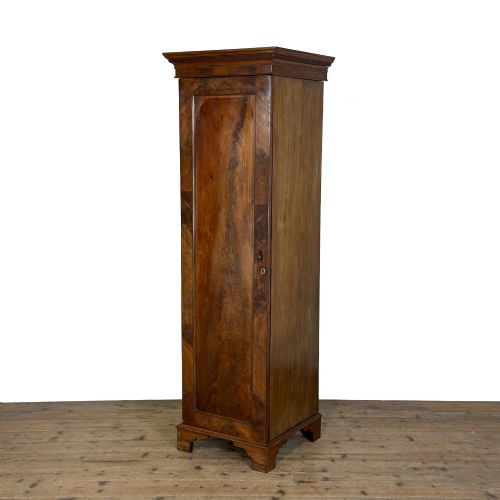
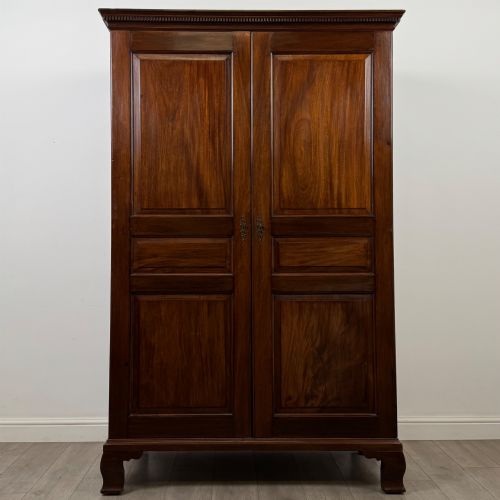
A mahogany clothes armoire brings warmth and presence to a room, offering grand storage built from rich timber.
Mahogany Clothes Armoire
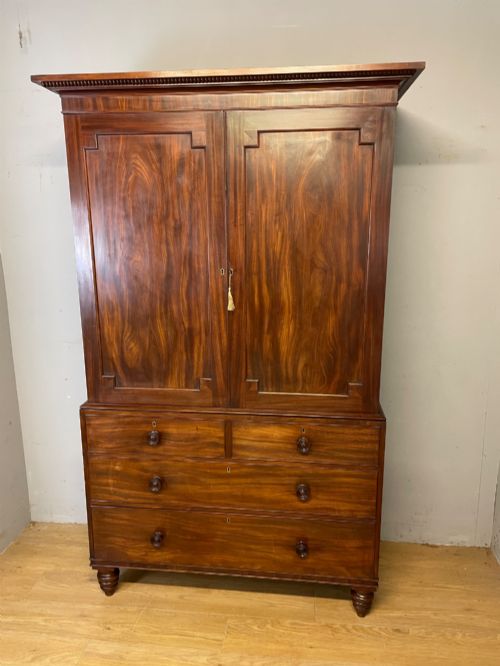
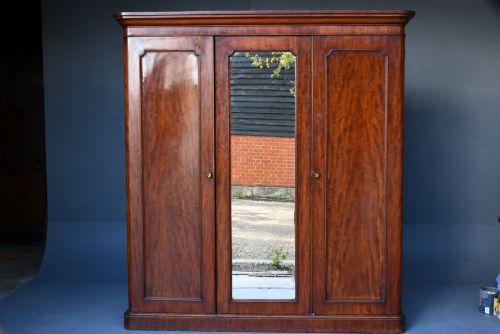
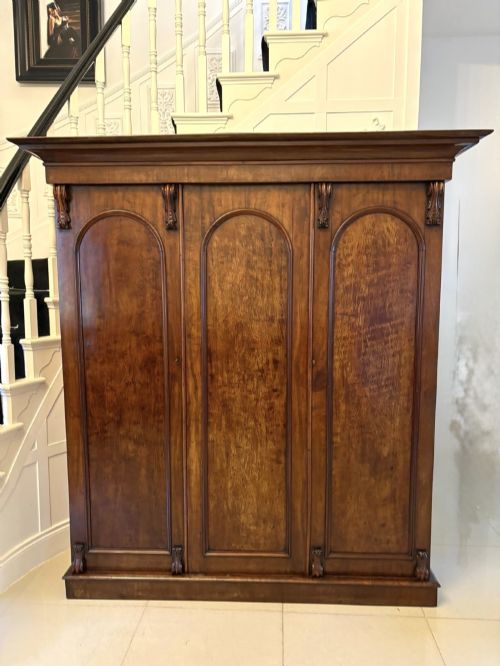
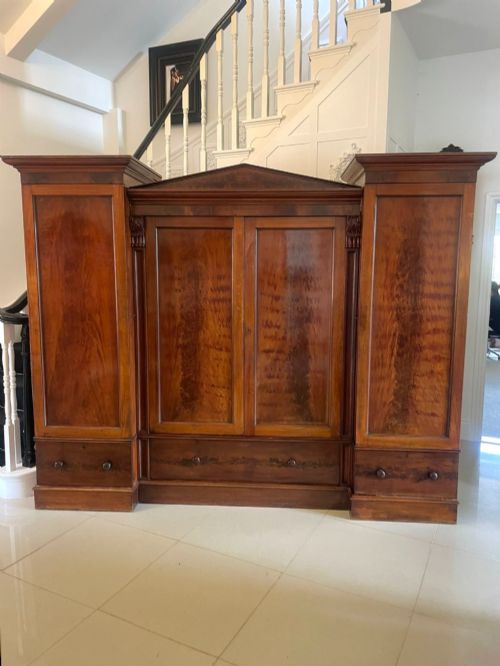
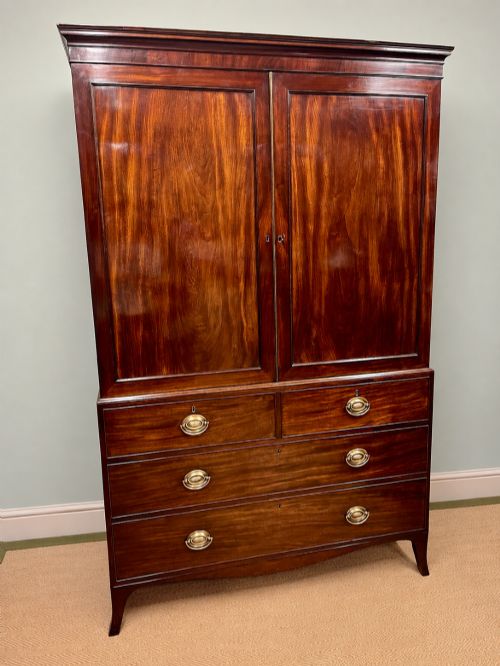
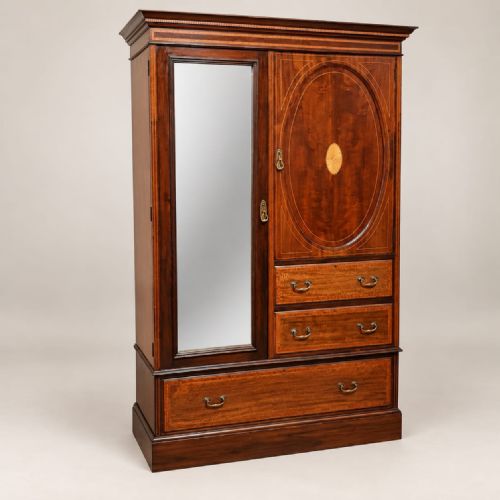
The selection ranges from tall single door cupboards and compact dwarf presses to breakfront combination wardrobes with multiple doors. Many incorporate internal sliding trays or lower drawer banks, reflecting their original purpose as gentleman's wardrobes and housekeepers' cupboards.
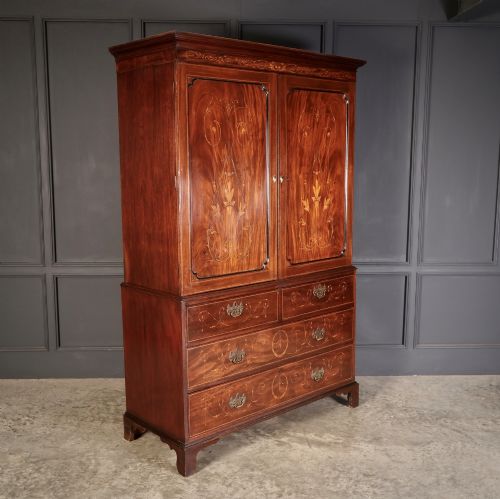
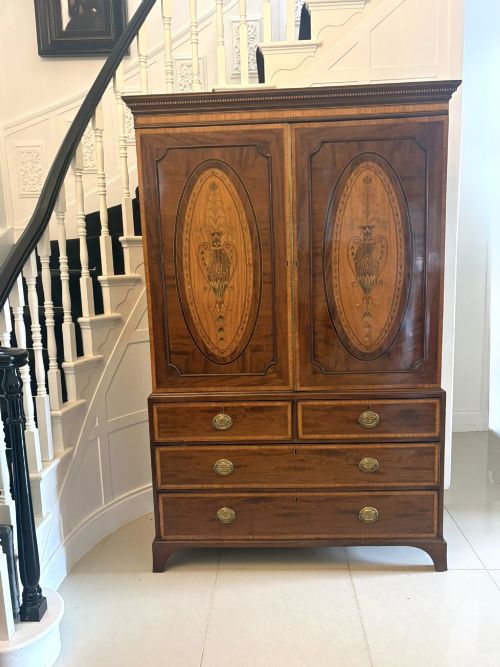
Earlier Georgian and George III iterations often feature dentil cornices and satinwood inlay, while later Victorian and Edwardian versions arrive in double or triple door formats. The material palette frequently incorporates flame mahogany veneer supported by oak carcases and brass hardware.
How they were made
Cabinet makers constructed these large pieces using solid mahogany and dense flame mahogany veneers applied over stable secondary woods like oak. Sections such as cornices and bracket feet required careful joinery to support heavy timber carcases.
Surfaces received hand-polished finishes to highlight the natural grain figures of the wood, sometimes accented with satinwood stringing or brass inlay. Interior components utilised simpler secondary timbers for drawer linings and sliding shelf trays.
Some gentleman's wardrobes hide secret compartments behind dummy drawer fronts designed to keep pocket watches and loose sovereigns safe from prying eyes.
What varies in quality
Quality rests in the choice of timber figure, from plain boards to highly figured flame mahogany veneers that demand expert book-matching across large door panels. Superior examples display restrained, crisp carving on cornices and fine inlay work rather than heavy applied ornamentation.
The construction of internal sliding trays and drawer dovetails separates workshop standards, alongside the original survival of brass locks, handles and mirrored glass. Proportion and symmetry in breakfront or bowfront forms dictate the visual balance of the piece.
Gillows·S and H Jewell
The Mahogany Clothes Armoire Glossary
- Linen Press
- A dual-purpose piece featuring upper sliding shelves for folded textiles above a base chest of drawers. These formed essential storage in Georgian and Victorian homes before hanging wardrobes became universal.
- Flame Mahogany
- A veneer cut from timber where the branch meets the trunk, producing a distinctive flickering flame pattern. Cabinet makers utilised this figure on principal door panels to catch the light.
- Dentil Cornice
- A classical architectural moulding composed of small, evenly spaced rectangular blocks set beneath the top edge. It appears frequently on Georgian and George III case pieces.
- Compactum
- A multi-compartment combination wardrobe designed to hold diverse garments within a single integrated unit. These often incorporate hanging space, drawers and shelving behind multiple doors.
Mahogany Clothes Armoire: Frequently Asked Questions
How do I use an armoire for modern clothes?
Many older pieces feature internal sliding trays which suit folded knitwear and trousers perfectly, while single or double door models often allow modern hanging rails to be fitted inside.
Deep cabinet depths easily accommodate contemporary hangers in larger wardrobes, whereas shallow linen presses function well for linens or folded apparel.
Will a large wardrobe fit in my bedroom?
These pieces were built on a grand scale, particularly breakfront and triple door variants from the Victorian era, requiring careful measurement of ceiling height and floor space.
Many examples dismantle into separate sections including cornices, base drawers and main carcases, which eases transport and installation in rooms with tight access.
What is the difference between a wardrobe and a linen press?
A wardrobe is primarily designed for hanging garments on interior rails, a form that became more common during the Victorian period as fashion changed.
A linen press houses sliding wooden trays behind upper doors for stacking folded textiles, sitting above a chest of drawers in the lower section.
How do I care for mahogany furniture?
Mahogany responds best to stable room temperatures away from direct heat sources and strong sunlight, which can dry out the timber and fade the rich polish.
Regular dusting with a soft, dry cloth maintains the finish, while occasional application of traditional beeswax preserves the depth of the grain.