
Mahogany Chiffonier
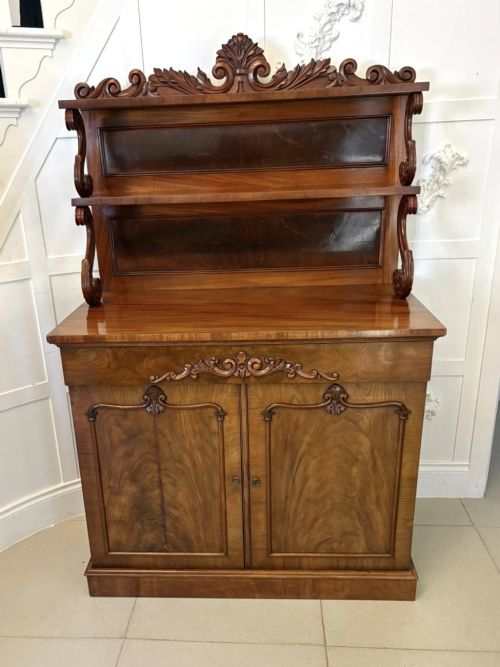
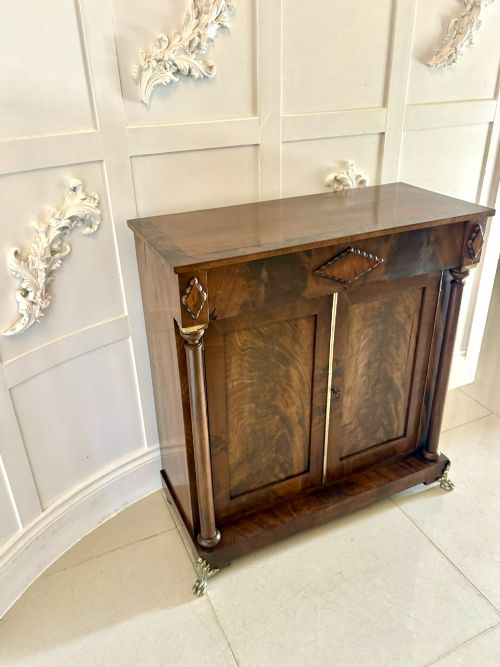
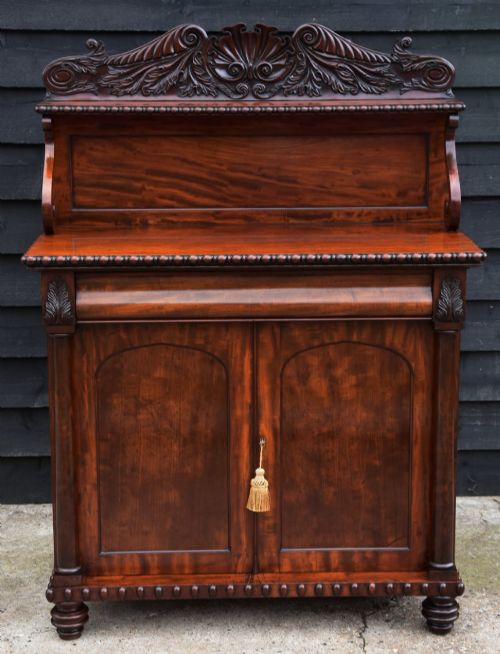
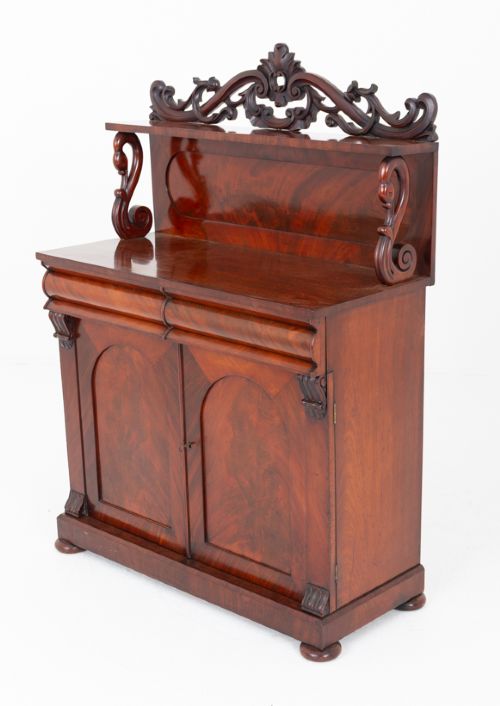
A mahogany chiffonier offers compact cabinet storage and display, prized for rich timber figures and practical proportions.

Mahogany Chiffonier
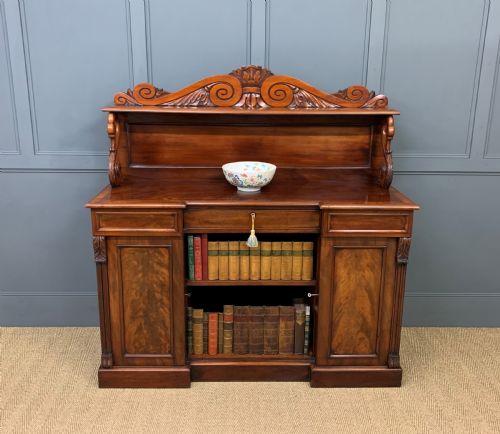
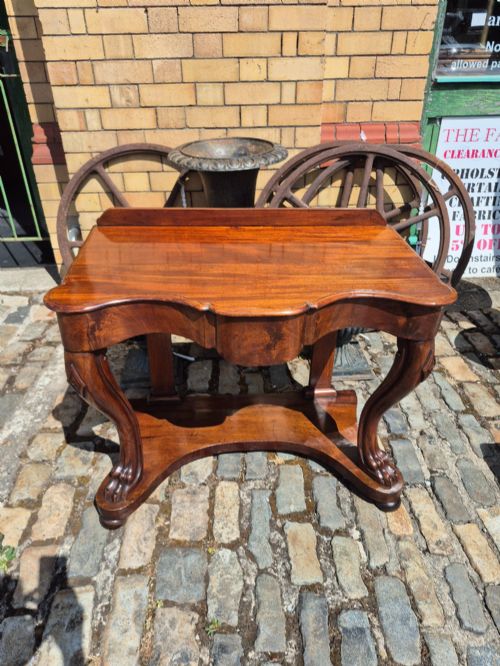
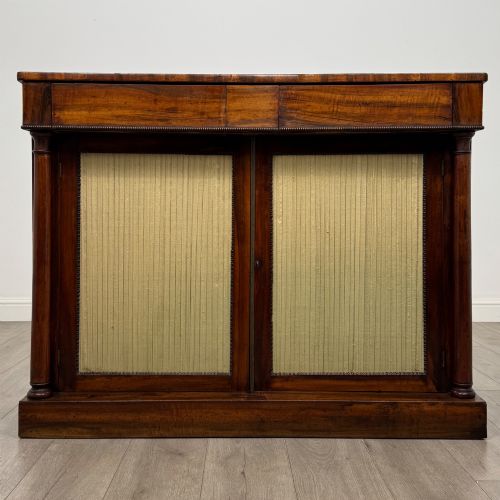
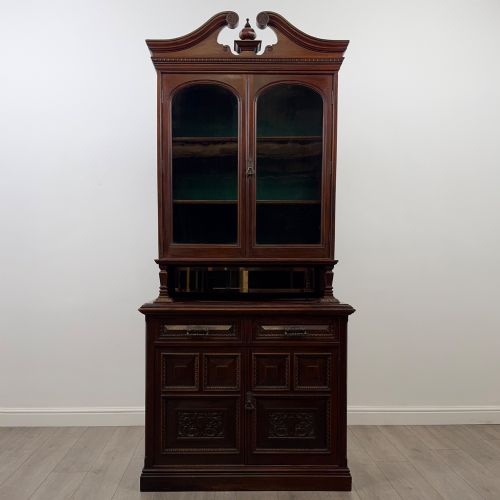
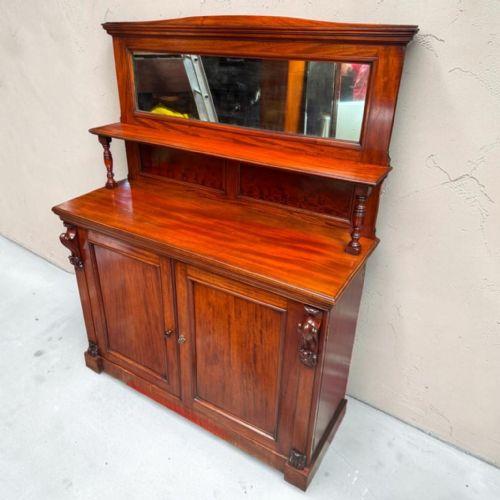
A mahogany chiffonier is a versatile low sideboard or cabinet combining enclosed cupboard space with upper shelving or a flat surface. These pieces range from compact early examples to taller Victorian incarnations designed for the dining room or parlour.
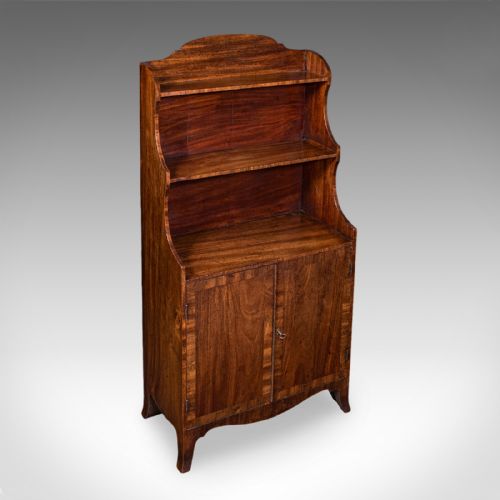
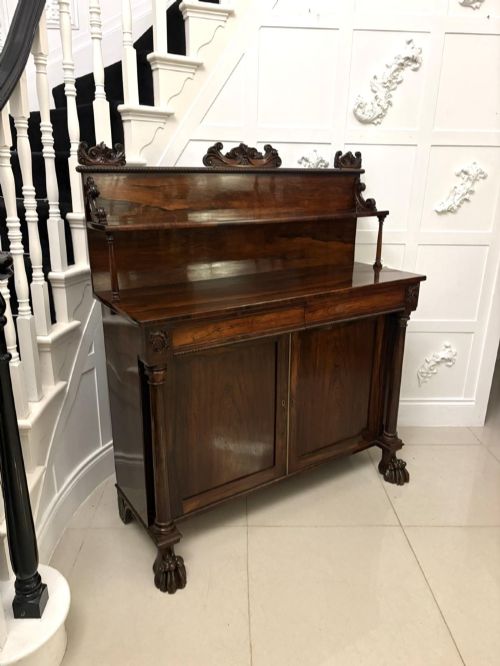
The selections span the Regency, George IV, William IV, and Victorian periods, with pieces appearing from around 1800 through the late nineteenth century. Many feature two-tiered formats, open book shelves, or enclosed cupboards with brass details.
Buyers will find both small scale proportions and larger breakfront configurations, alongside variations with painted elements or inlaid decoration. The primary form functions as a side cabinet, server, or bookcase adaptation.
Materials and construction
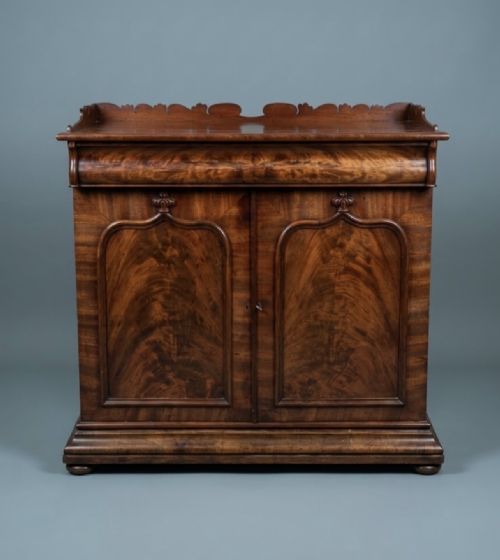
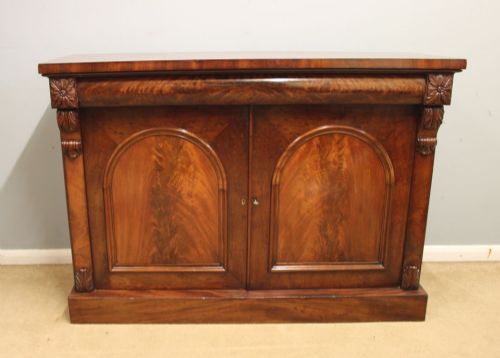
Makers utilised solid mahogany and rich mahogany veneer, sometimes selecting figured or flame timber for visual depth on doors and drawer fronts. Secondary woods support the structural carcase while primary surfaces showcase the polished grain.
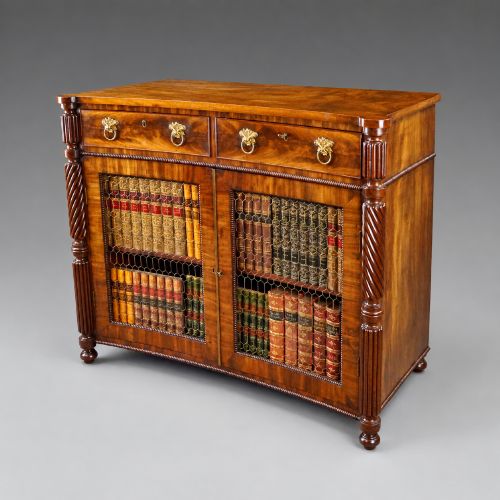
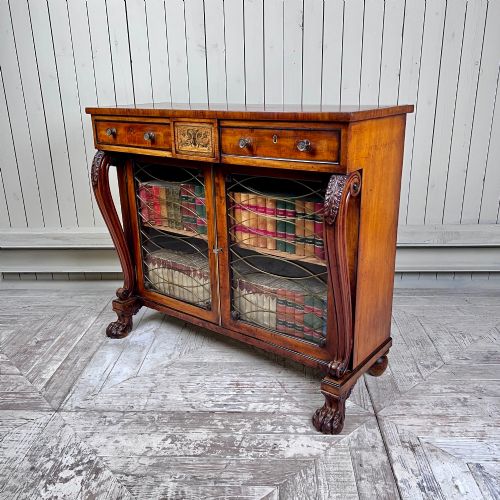
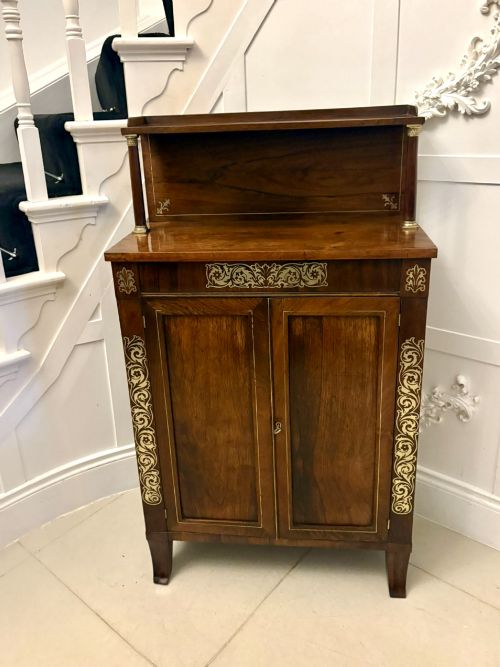
Metalwork appears in the form of brass fittings, hinges, and gallery mounts that accent the timber. Certain variants incorporate paint, hand sign writing, or intricate inlay work to contrast with the dark reddish-brown body of the mahogany.
Retail Price Guide 2026
Typical UK retail prices for mahogany chiffonier, calculated from the Sellingantiques database of over a million retail prices indexed since 2003. This retail price guide relies exclusively on Sellingantiques data; no external sources or auction records are used, so the figures do not describe the wider market.
Standards of execution
Quality rests heavily on the selection of the mahogany veneer, where highly figured or flame patterns distinguish finer cabinets from plain surfaces. The crispness of turning, the weight of the brass hardware, and the integration of upper shelves dictate the tier of the piece.
Proportion and scale also separate standard items from exceptional ones, particularly in unusual small scale designs or sophisticated breakfront forms. Superior cabinet work shows tight joinery, balanced grain matching across doors, and refined detailing throughout.
The Mahogany Chiffonier Glossary
- Chiffonier
- A low sideboard or cabinet featuring a combination of lower cupboards and upper shelves or a flat top. This form evolved from sideboards to provide dedicated storage in domestic interiors.
- Figured Mahogany
- Timber exhibiting highly decorative, rippled, or swirling grain patterns. Cabinet makers prized this wood for principal display surfaces.
- Flame Mahogany
- A veneer pattern resembling leaping flames created by slicing across the branch junctions of the tree. It defines the front panels of superior Regency and William IV pieces.
- Breakfront
- A piece of furniture where the central section projects forward from the flanking sides. This architectural arrangement adds depth and presence to larger sideboards.
- Two-Tiered
- A design incorporating a lower cabinet base beneath an upper shelf structure supported by columns or pilasters. This layout permits both storage and display.
Frequently Asked Questions
What is a chiffonier used for?
A chiffonier serves as a low sideboard or cabinet designed for storage and display in domestic rooms. The enclosed lower cupboards hold dining accessories or books, while upper shelves display decorative objects.
Historically, these pieces occupied dining rooms, libraries, and parlours to provide surface space and organisation without dominating the room's proportions.
How do I date a mahogany chiffonier?
Dating relies on stylistic shifts across periods from the Regency era through the late Victorian period. Earlier pieces from around 1800 or the George IV reign often display cleaner classical lines and fine figured veneers.
Later Victorian examples tend towards heavier proportions, two-tiered shelf superstructures, and occasionally open book shelves or breakfront configurations.
What is the difference between a chiffonier and a sideboard?
A chiffonier is typically smaller and often includes an upper tier of shelves or a gallery back attached to the low cabinet. Traditional sideboards are generally longer serving tables focused solely on flat surface area and base storage.
Both utilise mahogany across the nineteenth-century periods, but the chiffonier specifically integrates display shelving into its compact footprint.
How do I style a chiffonier at home?
Place the piece against a principal wall in a living room, dining area, or hallway where its low profile will not obstruct pathways. Utilise the flat top and any upper shelves to display ceramics, books, or framed art.
The rich tones of the mahogany pair well with both traditional and contemporary interiors, anchoring the room with historical character.