

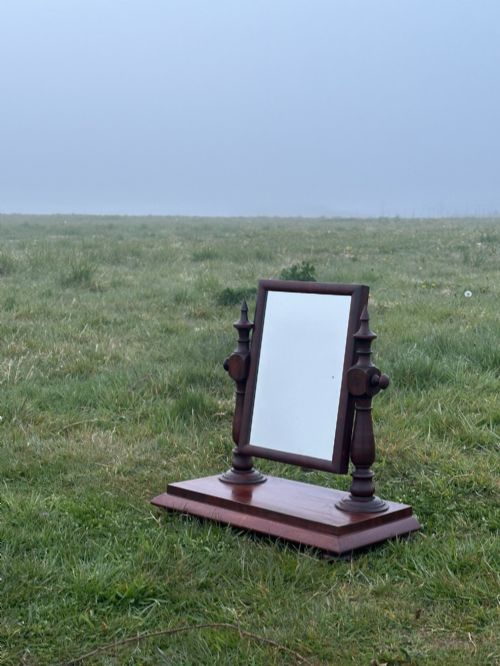


Mahogany Cheval Tabletop Mirror
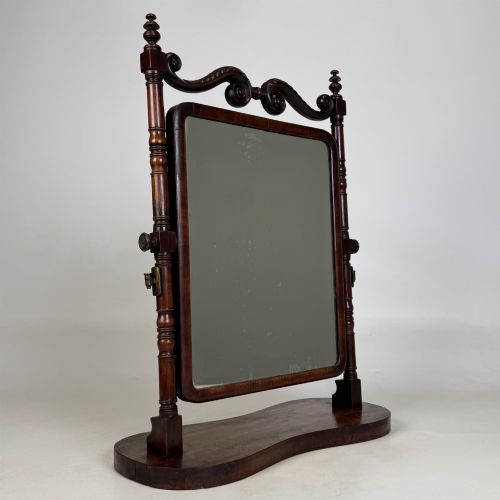
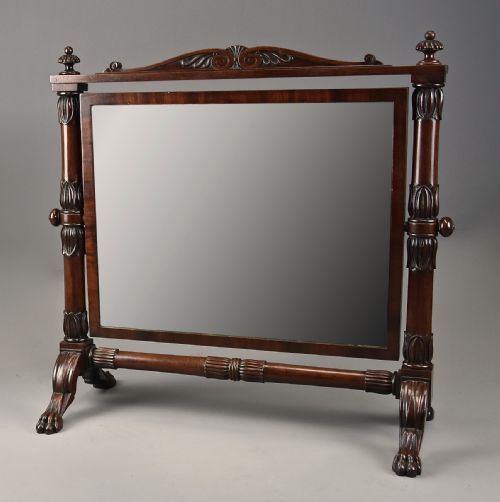
A mahogany cheval tabletop mirror is a pivoted dressing glass designed for the dresser, offering adjustable angles and rich timber grain.
Mahogany Cheval Tabletop Mirror
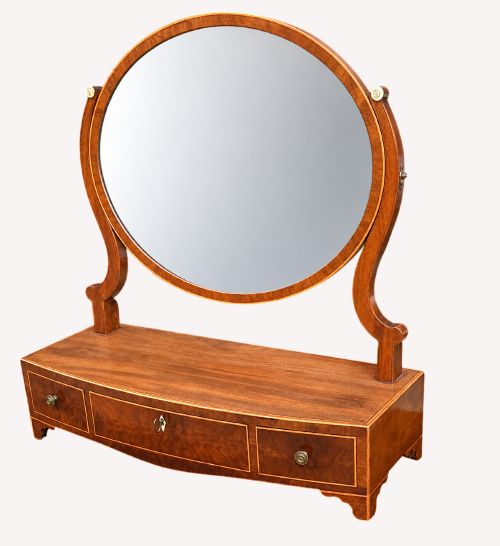
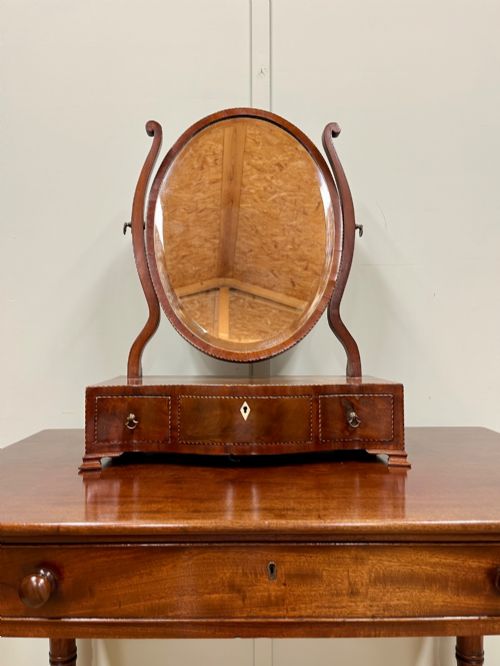
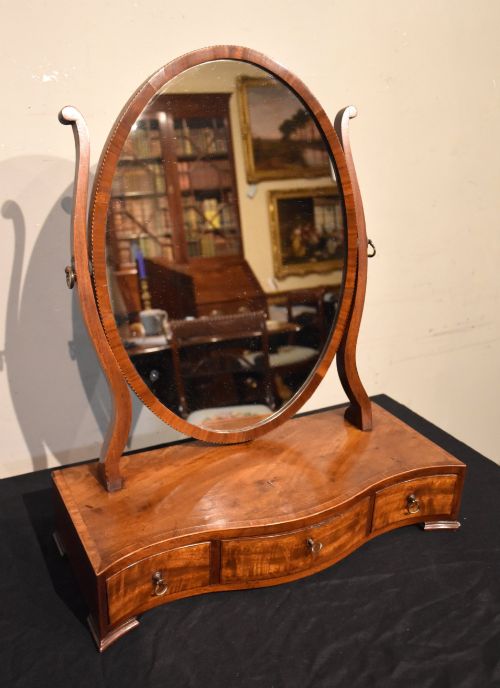
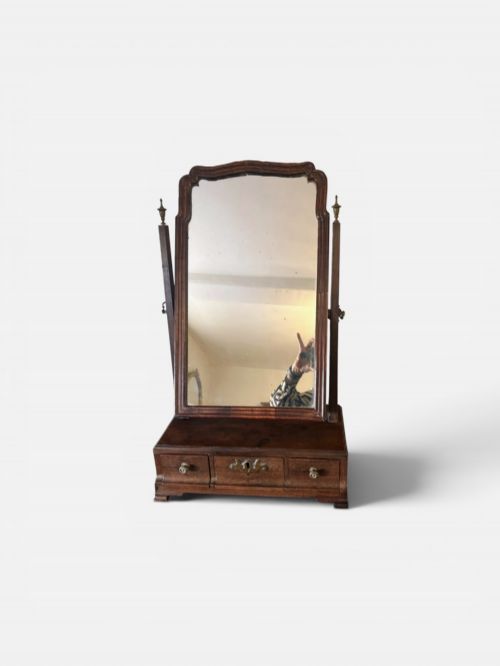
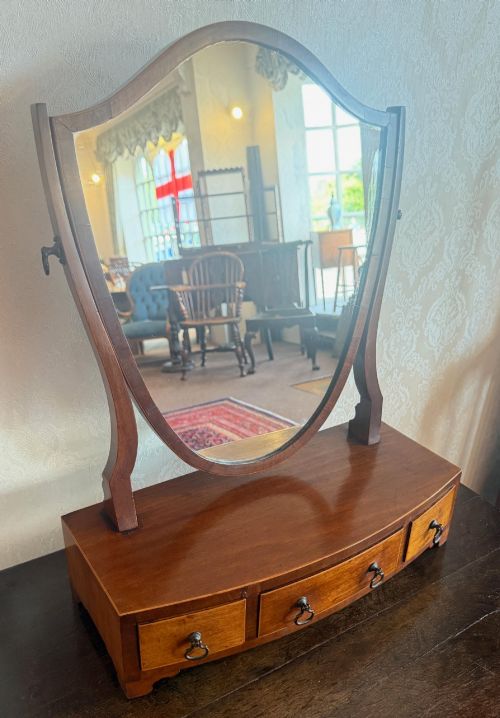
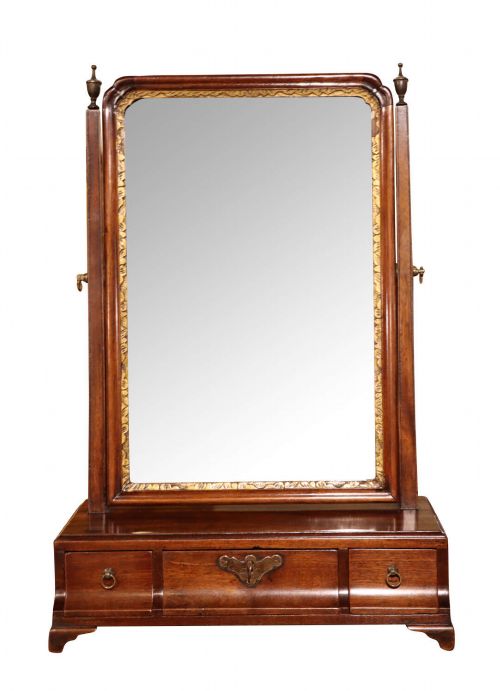
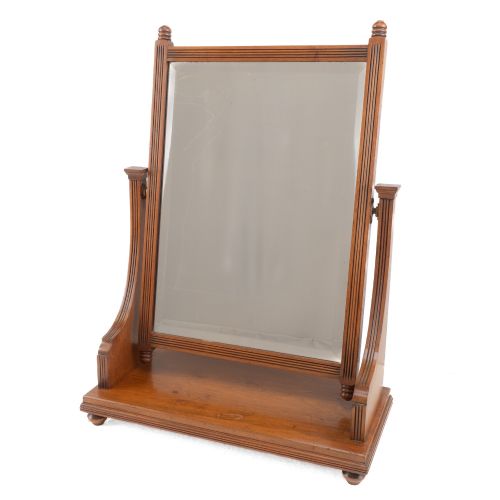
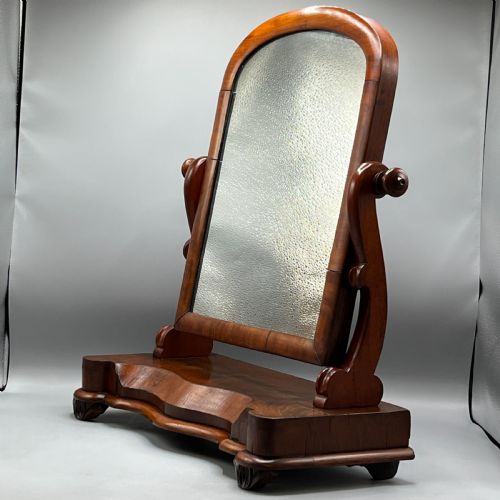
A mahogany cheval tabletop mirror sits upon a base or small drawers, designed to tilt on vertical pivots for personal grooming. These pieces range from compact Georgian toilet mirrors to larger Edwardian examples incorporating jewellery compartments.
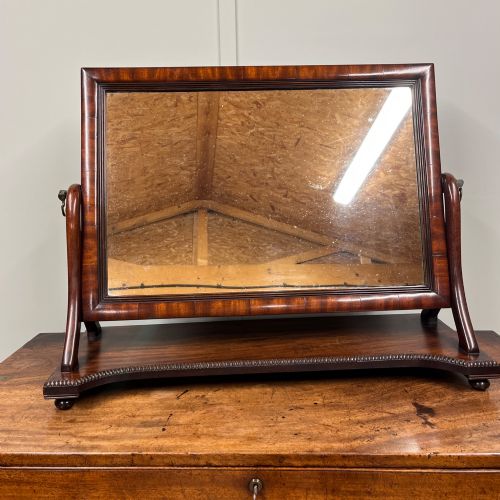
The selections span the eighteenth, nineteenth and early twentieth centuries, encompassing Georgian, Regency, William IV and Victorian periods. You will encounter rectangular and oval swing glasses framed in Cuban mahogany or burr walnut.
Many incorporate serpentine fronts, boxwood inlay, bone details or small drawers beneath the glass. They function as both practical dressing table accessories and decorative table mirrors.
How they were made
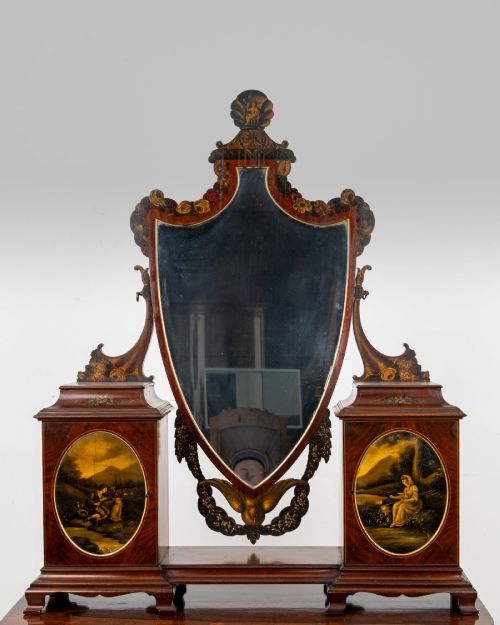
Cabinetmakers constructed the frames and stands primarily from solid mahogany and Cuban mahogany veneers, often embellished with boxwood inlay, wood inlay, or bone stringing. Brass hardware such as pivot screws, knobs and candle sconces provided mechanical articulation and contrast.
The glass itself is held within a swing frame supported by upright pillars and a stable plinth base, frequently fitted with functional drawers for small valuables.
Several mirrors include secret little drawers behind the swing glass for hiding morning letters.
What varies in quality
Quality depends upon the choice of timber figure, such as richly grained Cuban mahogany or burr walnut, alongside the crispness of boxwood inlay and carved details. Finer examples display meticulous joinery in the drawer construction and well-cast brass pivot mechanisms.
Proportion and balance dictate the visual success of the piece, where delicate framing supports the weight of the mirror glass without sagging.
Gillows·P & MA Nicholson
The Mahogany Cheval Tabletop Mirror Glossary
- Cheval mirror
- A freestanding or tabletop mirror mounted on a frame that allows it to swing fully on pivots. This design permits the user to adjust the viewing angle easily.
- Toilet mirror
- A smaller mirror designed to sit on a dressing table, commode or chest. They frequently feature small storage drawers in the base.
- Cuban mahogany
- A dense, dark timber prized by cabinetmakers for its rich grain and deep lustre. It was widely utilised in high-end Regency and Georgian furniture.
- Serpentine front
- A furniture front characterised by a concave centre flanked by convex ends, or vice versa. This undulating shape requires advanced woodworking skill.
- Boxwood inlay
- Contrasting pale wood inserted into recesses within the darker mahogany surface. It creates geometric borders and decorative linear patterns.
Mahogany Cheval Tabletop Mirror: Frequently Asked Questions
What is a mahogany cheval tabletop mirror?
It is a pivoted dressing glass mounted on a miniature frame or table base, designed to tilt for grooming.
These pieces typically sit on chests or dressing tables and date from the eighteenth to the early twentieth century.
How do I date a mahogany table mirror?
Dating relies on stylistic shifts, such as Georgian serpentine fronts, Regency brass mounts, or Edwardian jewellery cabinet combinations.
Secondary woods, construction methods of the small drawers, and framing profiles also help pinpoint the period of manufacture.
Were these mirrors used in bedrooms?
They served as essential dressing accessories in bedrooms and dressing rooms before full-length cheval glasses became common.
Their tabletop design allowed users to adjust the tilt for close-up shaving, hairstyling and applying cosmetics.
How do I care for antique mahogany wood?
Keep the timber away from direct sunlight and steady heat sources to prevent the mahogany veneer from drying out or splitting.
Dust gently with a dry, soft cloth and avoid silicone-based polishes that can damage the historic finish.