
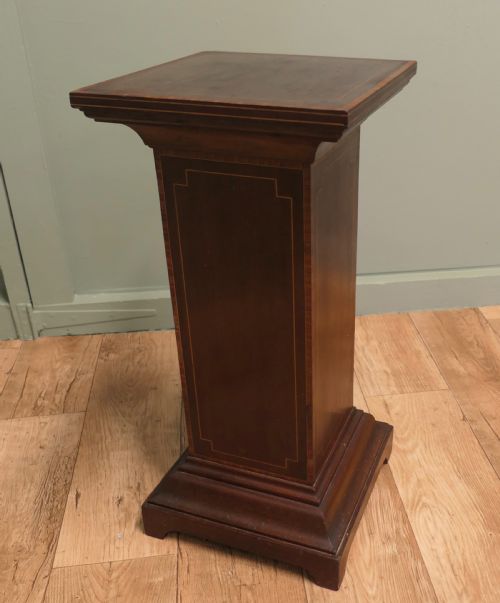


Mahogany Bust Pedestal
These mahogany bust pedestals lift sculpture and plant stands to eye level, bringing architectural presence and rich timber grain into a room.
Mahogany Bust Pedestal
When you search for a mahogany bust pedestal, you are looking at sturdy display columns and stands designed specifically to support heavy marble busts, bronze sculptures, and large decorative plants. These pieces range from simple cylindrical pillars to ornate tripod forms that anchor the corners of a grand hall or drawing room.
How they were made
Makers utilised solid timber and mahogany veneer over a sturdy carcase, often turning the central pillars on large lathes to achieve smooth, tapering columns. Surfaces were frequently polished to a deep lustre that accentuates the natural grain of the wood.
Higher specification examples incorporate contrasting materials, pairing the warm reddish-brown timber with cool carved alabaster tops or detailed ormlou and gilt bronze mounts for added visual weight.
The documented periods stretch from the late Georgian era through the Victorian period up to the nineteen-thirties.
What varies in quality
The distinction between a standard stand and a finer example lies in the ambition of the design and the crispness of the carving. Neoclassical fluting, Adam revival details, and cast ormolu mounts elevate a simple timber pillar into a sophisticated piece of furniture.
Stability and proportion dictate the upper tiers of quality, where heavy tripod bases or robust pillar constructions ensure that top-heavy alabaster tops and large busts remain secure without wobbling.
The Mahogany Bust Pedestal Glossary
- Torchiere
- A tall stand originally intended to carry a torch or candle, later adapted as a tall pedestal for a bust or plant.
- Ormolu
- Gilded bronze mounts applied to furniture and pedestals for decorative accent during the nineteenth century.
- Alabaster
- A fine-grained mineral often used for the contrasting top plates of nineteenth-century plant and bust stands.
- Tripod base
- A three-legged support structure commonly found on nineteenth-century plant and bust stands to ensure stability.
Mahogany Bust Pedestal: Frequently Asked Questions
What is a mahogany bust pedestal?
A mahogany bust pedestal is a tall support column specifically built to display sculptures, busts, or large plants at eye level within a room.
These pieces use solid timber, mahogany veneer, and occasionally alabaster or ormolu to combine structural strength with decorative presence.
How were these pedestals used historically?
Historically, these stands occupied the corners and hallways of grand country houses to showcase classical sculpture, portrait busts, or prized botanical specimens.
They raised decorative objects above floor level to command attention and integrate classical display habits into domestic interiors.
How do I live with a pedestal?
Living with a pedestal involves placing it in a stable corner or hallway where foot traffic will not knock against the displayed sculpture.
Ensure the weight of your bust or plant matches the load-bearing capacity of the top plate, particularly with tripod designs.
How do I date a mahogany pedestal?
Dating involves examining the timber grain, construction joints, and stylistic cues such as Victorian proportions or Adam revival ornamentation.
Nineteenth-century pieces often display hand-turned pillars and specific revival motifs that tie them to the decorative movements of their era.