






Mahogany Bureau Top Glazed
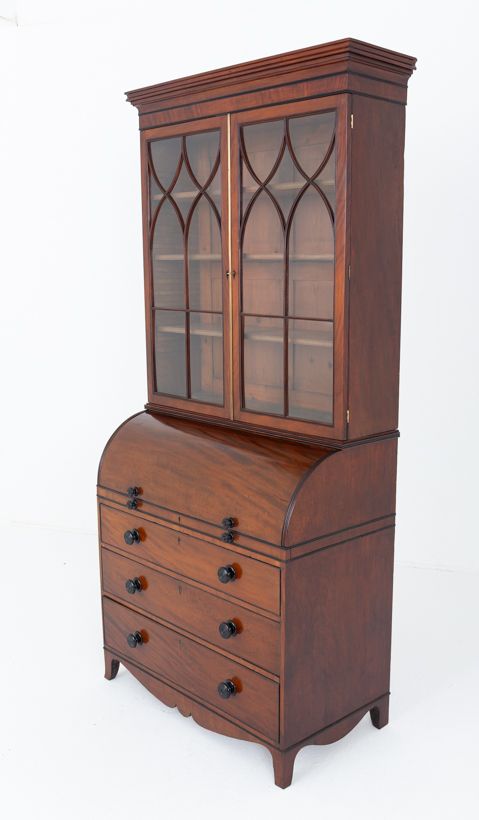
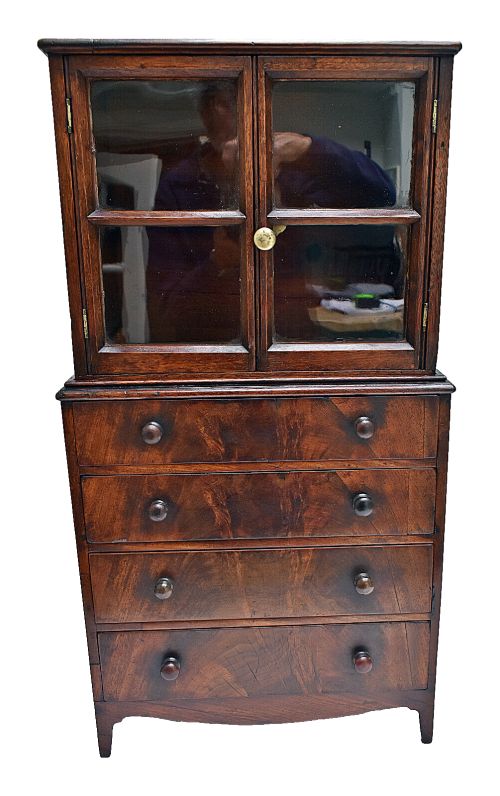
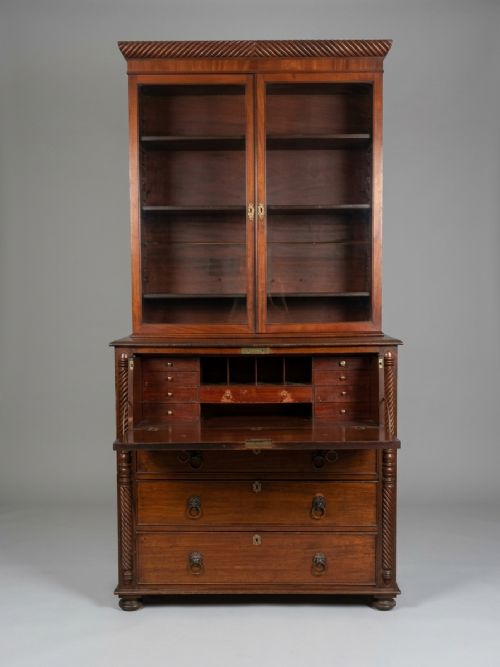
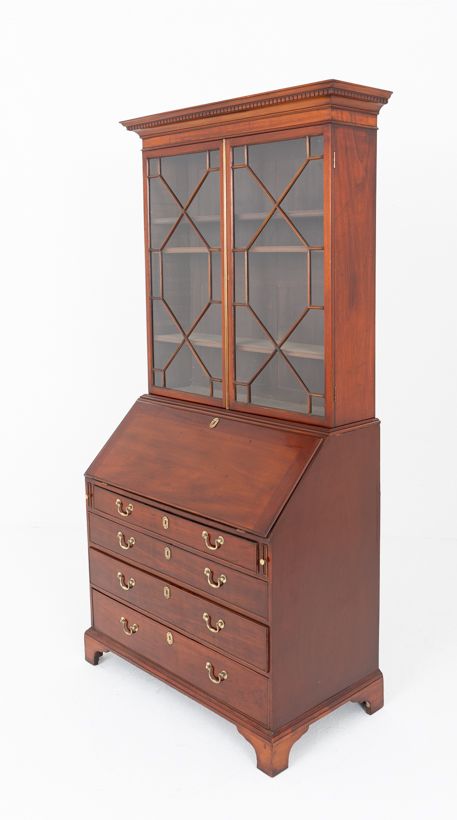
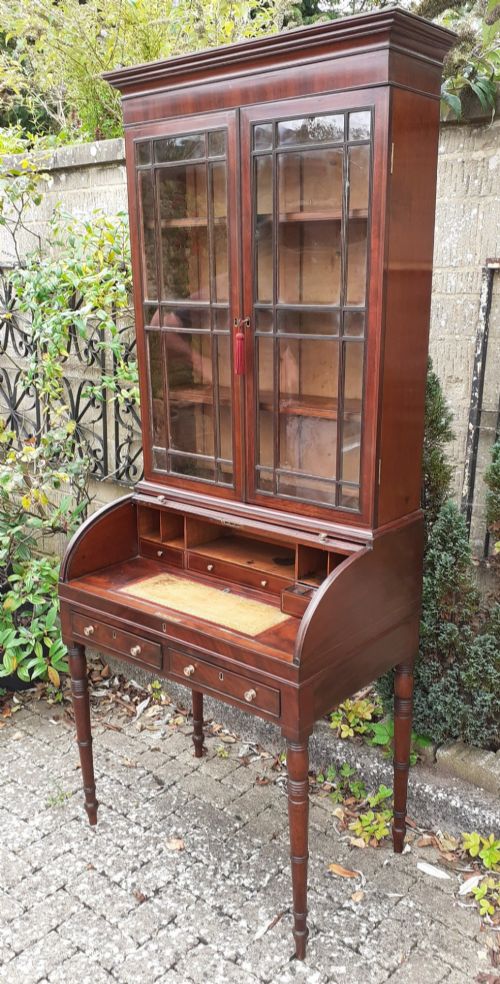
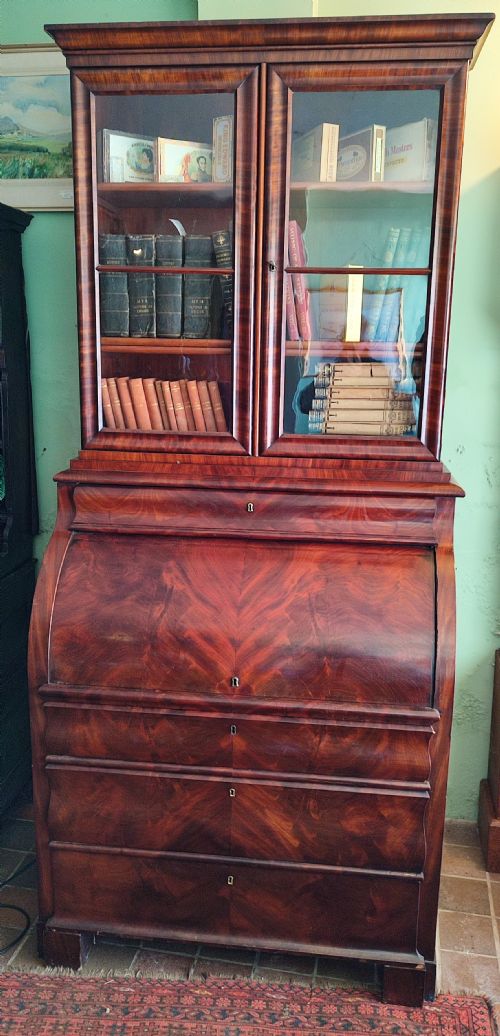
These mahogany bureau top glazed pieces are double-bodied cabinet furniture combining a writing desk with a glazed upper bookcase, offering both workspace and display.

Mahogany Bureau Top Glazed
A mahogany bureau top glazed combines a lower writing compartment, often featuring a fall front or cylinder mechanism, with an upper shelved section enclosed by glass doors. These dual-purpose items served domestic and study needs across multiple eras.
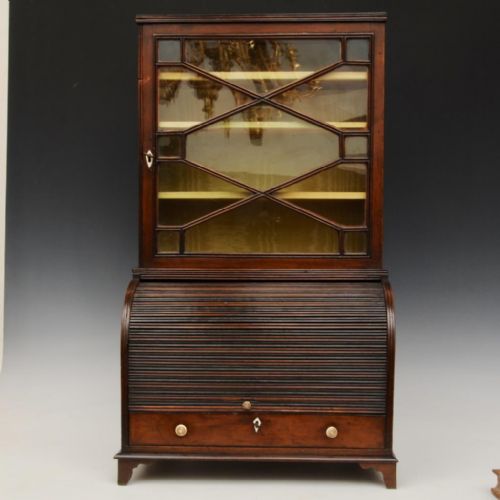
The pieces appearing under mahogany bureau top glazed span several notable periods including Georgian, Regency, Victorian, and Edwardian epochs. Formats range from full-height bookcase cabinets down to miniature furniture and tambour desks.
Makers utilised resilient timbers to construct these dual-purpose items, pairing structural mahogany with glass for the upper display doors and occasional brass hardware for handles and escutcheons.
Materials and construction
Cabinet makers built these pieces using solid mahogany and Cuban mahogany, frequently incorporating secondary timbers such as oak and satinwood for drawer linings and interior cabinetry. Glass panels were glazed into wooden framework doors to protect the library shelves within.
Surface decoration relied upon natural timber grain, occasional bone inlay, and brass fittings rather than heavy applied ornamentation. Cylinder fronts and fall fronts required precise joinery to ensure smooth movement within the desk section.
Mahogany Bureau Top Glazed Retail Price Guide 2026
Typical asking prices for mahogany bureau top glazed among the pieces listed under this phrase on Sellingantiques today, from the lower quarter to the upper quarter. They describe what is for sale here now, not the wider market.
Listings incorporate pieces from the Georgian, Regency, William IV, Victorian, and Edwardian periods, utilising mahogany, Cuban mahogany, glass, brass, satinwood, leather, oak, and bone.
Assessing quality and manufacture
Quality rests upon the selection of timber, particularly the choice of figured mahogany or dense Cuban mahogany for visible exterior surfaces. Finer examples display meticulous matching of wood grain across drawer fronts and cabinet doors.
The internal architecture of the desk section dictates the grade of the piece, where pigeonholes, small drawers, and secret compartments demonstrate the cabinet maker's skill. Superior items maintain original glass panes, brass handles, and functional locking mechanisms.
Tudor and Burrey Shrewsbury
The Mahogany Bureau Top Glazed Glossary
- Bureau bookcase
- A combination furniture form uniting a lower writing desk with an upper shelved cabinet enclosed by glazed doors.
- Cylinder desk
- A writing table featuring a curved quarter-circle wooden shutter that rolls back to reveal the writing surface and interior fittings.
- Secretaire
- A piece of furniture containing a fitted writing drawer or pull-down writing flap.
- Tambour
- A sliding door or shutter constructed from narrow vertical strips of wood glued to a fabric backing.
- Fall front
- A hinged writing flap that drops down to a horizontal position to form a desk surface.
Mahogany Bureau Top Glazed: Frequently Asked Questions
How do I clean the glass?
Use a soft cloth and a mild glass cleaner applied directly to the cloth rather than the wood. This prevents moisture from damaging the surrounding mahogany frame.
Keep polishing agents away from antique glass putty and historical timber surfaces to preserve the finish.
What is a cylinder bureau?
A cylinder bureau employs a rolling quarter-circle wooden shutter instead of a flat hinged flap to conceal the writing desk. Rolling this cylinder upwards retracts it into the body of the cabinet.
This mechanism uncovers interior pigeonholes and small drawers while keeping the workspace accessible.
Are the shelves adjustable?
Most period examples feature fixed wooden shelving supported by fixed wooden glimmers or simple battens. Altering shelf heights is uncommon in older cabinetry.
Books and display items must therefore be selected to fit the predetermined shelf clearances.
How to date these pieces?
Dating relies upon construction methods, timber choice, and stylistic markers associated with Georgian, Regency, Victorian, and Edwardian periods. Cuban mahogany and specific inlay patterns often point to eighteenth or early nineteenth-century origins.
Examine drawer construction, dovetailing techniques, and secondary woods for further clues to age.