


Mahogany Bridge Table
A mahogany bridge table is a folding piece designed for card play, combining solid timber with clever mechanisms that appeal to period collectors.
Mahogany Bridge Table
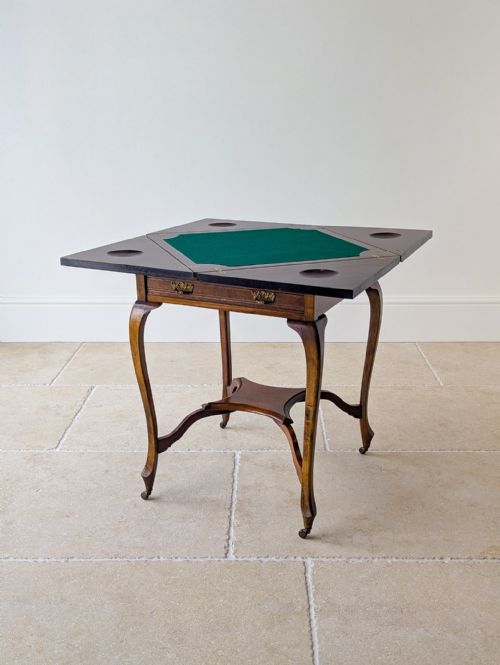
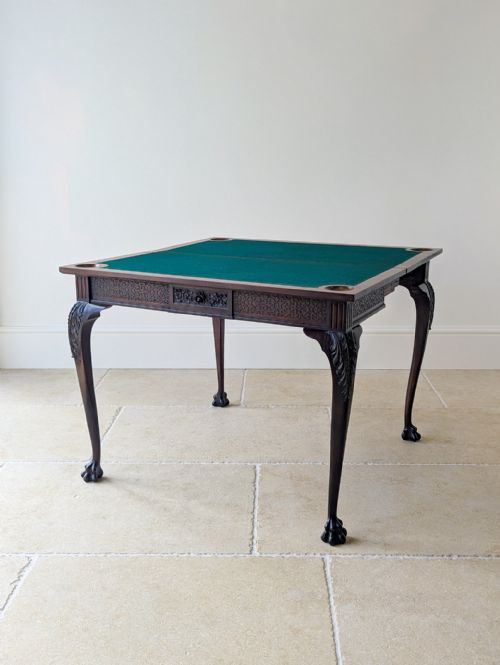
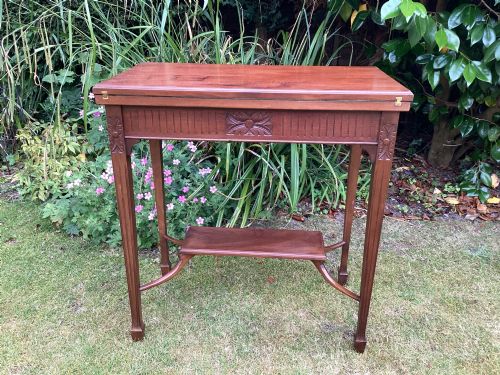
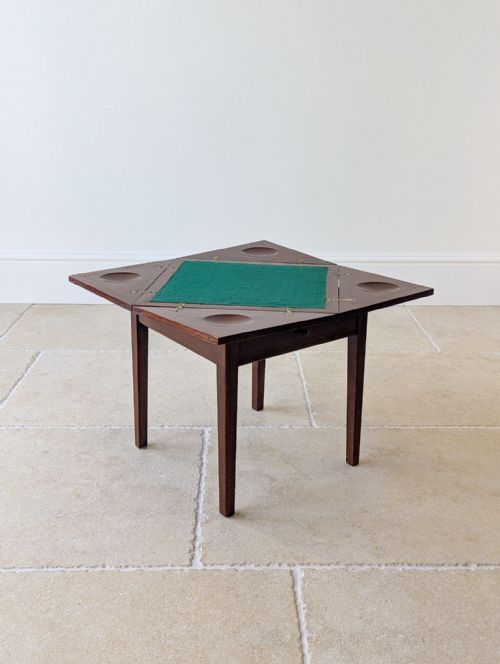
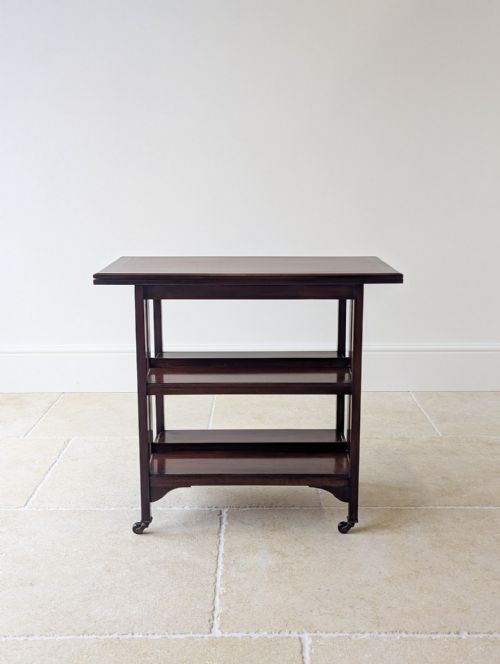
A mahogany bridge table is primarily found in Victorian and Edwardian iterations, spanning the nineteenth and early twentieth centuries. These pieces function as occasional or card tables that transform through folding or rotating actions to reveal baize-lined playing surfaces.
What varies in quality
Quality depends on the precision of the folding mechanism and the stability of the rotating top when extended. Superior examples exhibit smooth, balanced action without looseness in the joints or the clever swivel mechanisms.
The sophistication of the surface decoration marks the distinction between standard and finer pieces. Finely executed satinwood inlay, marquetry, and well-chosen mahogany grain differentiate standard production furniture from master workshop output.
Listings span the Edwardian and Victorian eras, utilising mahogany, satinwood inlay, and wool baize.
James Shoolbred and Co·Edwards and Roberts·Trollope and Colls
The Mahogany Bridge Table Glossary
- Envelope card table
- A table with four triangular flaps that fold inward to resemble an envelope shape when closed. Opening the top rotates the leaves to reveal a baize-lined surface.
- Baize
- A coarse woollen material, often green, used to line the playing surface of card and games tables. It provides a soft, non-slip texture for dealing cards.
- Gaming wells
- Small recessed compartments built into the corners of a card table top to hold counters, chips, or coins during play. They sit beneath the folding leaves when the table is closed.
- Marquetry
- Decorative veneer work formed by fitting together small pieces of different coloured woods to create pictorial or geometric designs. It frequently adorns the top of Edwardian games tables.
- Satinwood inlay
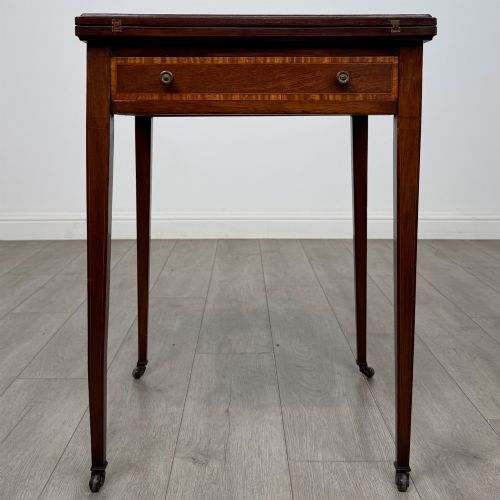
- Contrasting light-coloured wood inserted into recesses within the darker mahogany surface to create decorative borders. This technique highlights the edges of the table top and legs.
Mahogany Bridge Table: Frequently Asked Questions
How do envelope card tables work?
The top consists of four triangular leaves hinged to fold over one another in a specific sequence. Rotating the top section causes the leaves to unfold simultaneously, revealing the interior baize surface.
Underneath the moving leaves, concealed wells appear to hold playing cards and counters during a game. This clever mechanism allows a small occasional table to transform into a full square playing surface.
What is the difference between Victorian and Edwardian tables?
Victorian models tend to be heavier in proportion, often featuring rich mahogany timbers with restrained woodwork or deep polish. They frequently date from the mid to late nineteenth century.
Edwardian versions, produced around the turn of the twentieth century, generally appear lighter and more delicate. They often incorporate satinwood inlay, marquetry, and slender tapering legs.
Can these tables be used daily?
These pieces function well as occasional or lamp tables when folded closed in a room. The sturdy mahogany construction handles everyday placement of decorative items or books.
Opening the folding mechanism for card games requires care to protect the vintage hinges and baize lining. Regular use works best when treating the folding mechanism gently.
How do I care for the baize surface?
Wool baize benefits from gentle brushing to remove dust and maintain the nap of the fabric. Keeping the surface away from direct sunlight prevents the colour from fading over time.
Liquids must remain away from the fabric to avoid staining the wool and warping the wood underneath. Careful cleaning preserves the original playing texture.