

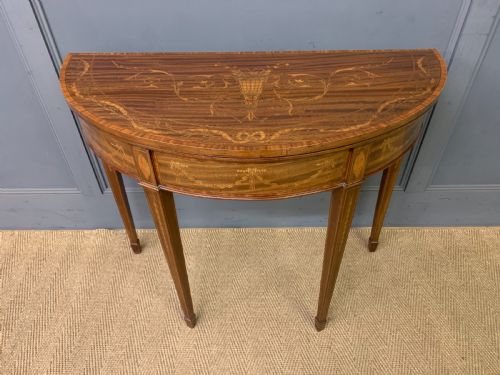


Edwardian Marquetry Games Table
An edwardian marquetry games table brings intricate woodwork and folding surfaces together for domestic play.
Edwardian Marquetry Games Table
When you search for an edwardian marquetry games table, you encounter versatile multi-functional furniture designed for card playing and social gatherings. These pieces often feature folding or swivel tops that conceal baize-lined surfaces or internal storage compartments.
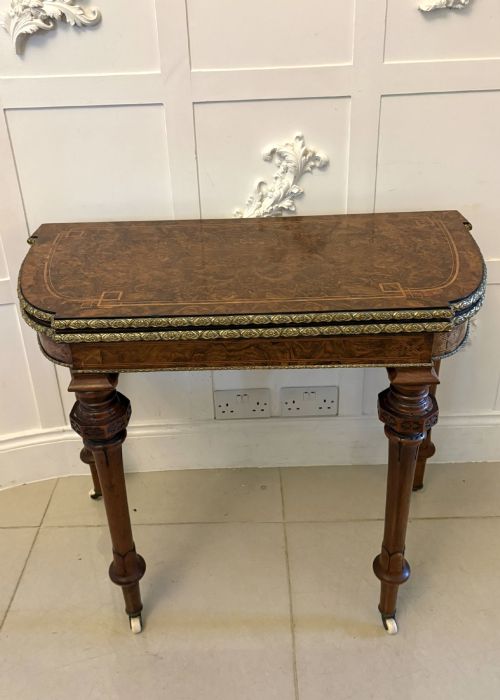
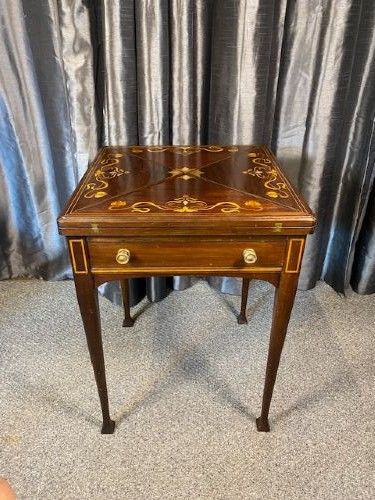
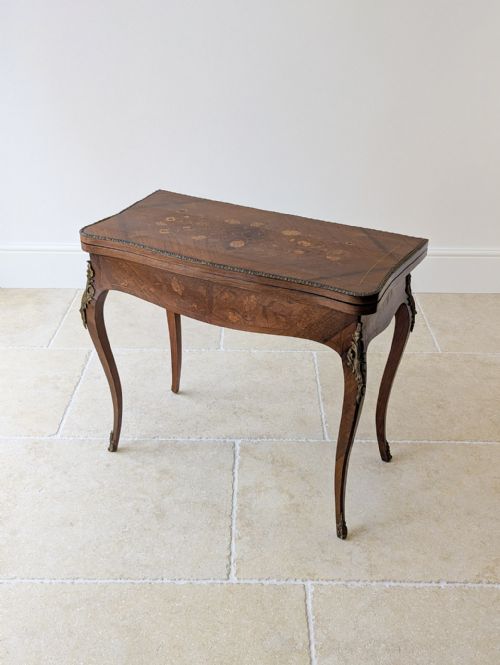
The most common form on this page is the envelope card table, which uses rotating triangular flaps to form a square playing surface. Other variations include demi-lune consoles and occasional tables decorated with elaborate floral or geometric inlays.
The majority of these tables date from the Edwardian period and the late nineteenth century, drawing heavily on earlier Sheraton Revival and Georgian design principles. They combine light timbers with darker contrasting woods to create detailed decorative panels.
How they were made
Cabinet makers built these tables using foundational timbers like mahogany, walnut, and rosewood, applying contrasting veneers such as satinwood and boxwood for the decorative schemes. Marquetry techniques involved cutting thin pieces of varied wood to form intricate pictorial or floral motifs set flush into the surface.
Specialised hinges, swivelling mechanisms, and brass fittings allowed the wooden leaves to fold or rotate smoothly without straining the joints. Inlaid borders often incorporated boxwood and other pale timbers to frame the central marquetry panels.
One exceptional Edwardian table arrived featuring the board for the Royal and Pleasant Game of Goose inlaid right into the wood.
What varies in quality
Quality in these tables depends heavily on the precision of the marquetry cutting and the choice of timber figurations, such as burr walnut or figured mahogany. Superior pieces display crisp, tight joints in the inlay work where different woods meet without visible gaps or excessive filler.
The sophistication of the folding mechanism and the stability of the legs when extended separate standard production from finer cabinet work. Tables retaining original polished surfaces and well-fitted interiors hold greater integrity than those with heavy structural alterations.
Maple & Co.·Howard & Son's
The Edwardian Marquetry Games Table Glossary
- Marquetry
- Decorative woodwork where pieces of veneer are fitted together to form pictorial designs. This technique distinguishes many formal table tops from simpler painted or plain surfaces.
- Envelope table
- A square card table with four triangular flaps that fold inward to cover the centre. Rotating the top reveals a felt-lined playing surface and sometimes small storage wells.
- Demi-lune
- A half-moon shape used for console and card tables designed to sit flush against a wall. These pieces often feature folding tops that open to form a full circle.
- Satinwood
- A durable hardwood with a natural golden sheen utilised extensively for light-coloured veneers and stringing. It provides a bright contrast against darker woods like mahogany and rosewood.
Edwardian Marquetry Games Table: Frequently Asked Questions
What games were played on them?
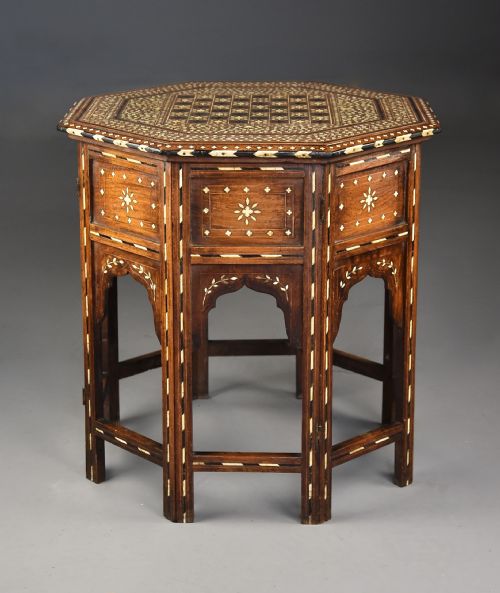
These tables were designed primarily for card games such as whist, bridge, and cribbage, which were popular evening pastimes in middle and upper-class homes. Some specialised surfaces included inlaid chess or checker boards for board games.
The baize or felt lining on the playing surface prevented cards from sliding and muffled the sound of dice during play.
How do you date an inlaid table?
Dating relies on combining the timber choices, stylistic cues, and construction methods visible in the piece. Edwardian and late nineteenth-century versions often show Sheraton Revival influences with light satinwood veneers and delicate floral marquetry.
Earlier eighteenth-century examples feature heavier proportions and different cabinet-making techniques beneath the surface veneers.
Where should you place one?
These freestanding tables suit living rooms, studies, or hallways where their decorated tops remain visible from multiple angles. Demi-lune versions sit neatly against flat walls when closed as console tables.
Keeping them away from direct sunlight and strong heat sources protects the delicate veneer and prevents the wood from warping.