
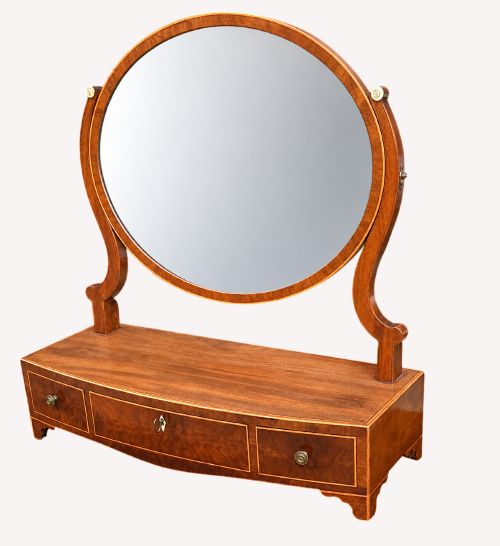
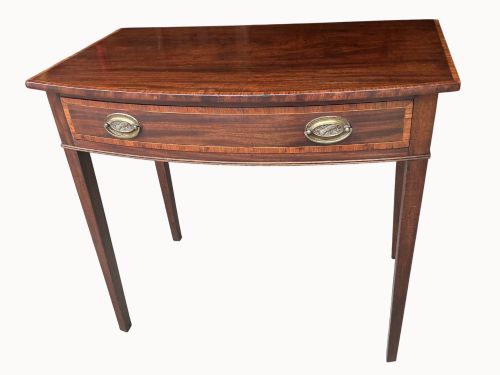
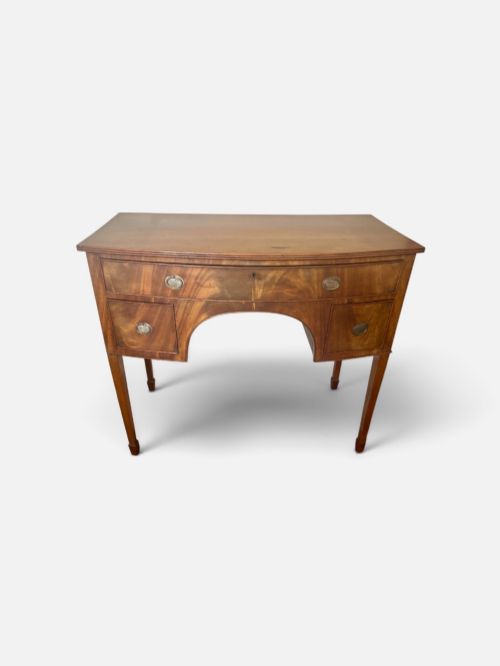
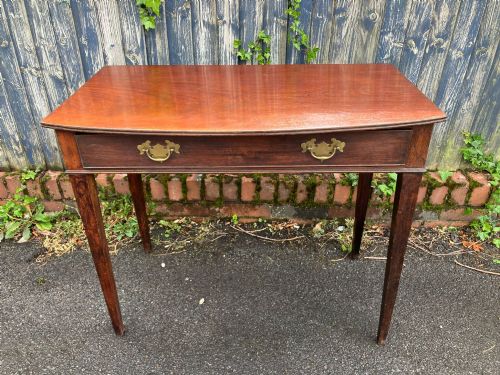

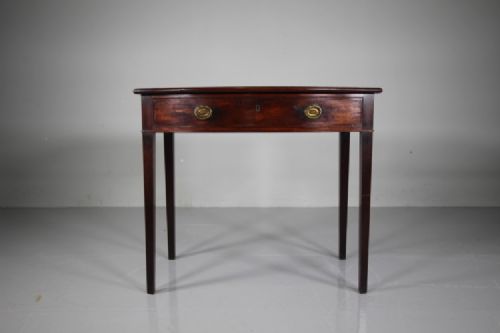


Mahogany Bowfront Dressing Table
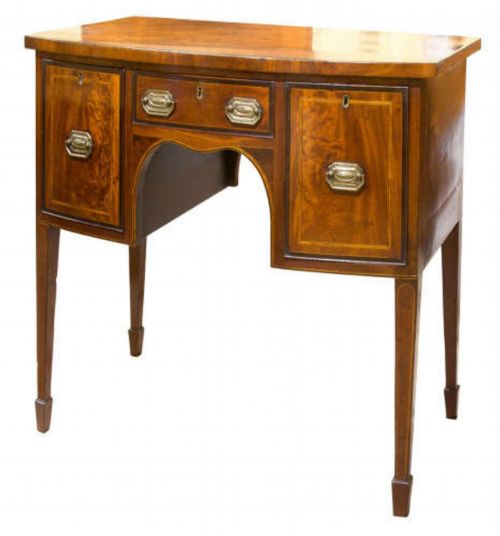
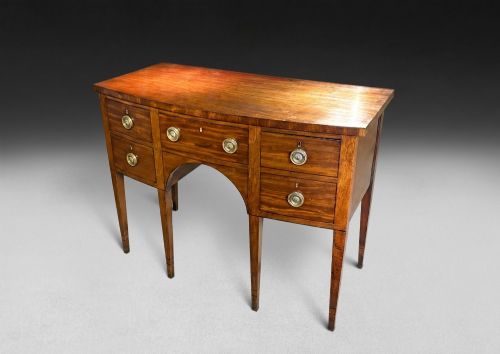
Mahogany bowfront dressing table pieces bring together curved fronts and warm cabinet timbers, offering storage and surface space for a bedroom.
Mahogany Bowfront Dressing Table
A mahogany bowfront dressing table presents a curved frontal outline in rich timber, designed to sit flush against a bedroom wall while providing drawer storage. The pieces encountered here span the Georgian, Regency, and George IV periods, alongside later 19th and early 20th century interpretations.
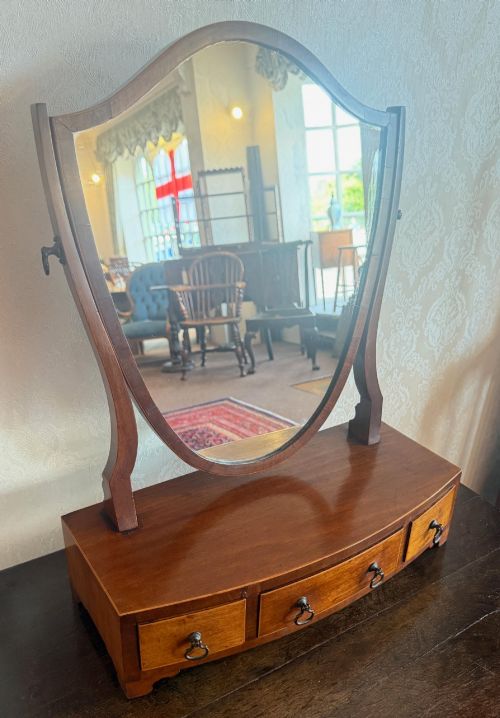
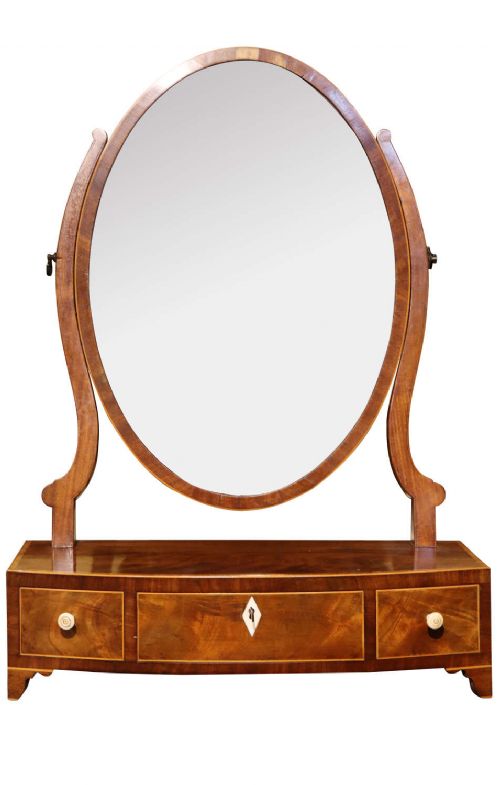
Makers often integrated kneeholes, multiple small drawers, and fitted writing spaces within the bowed carcass. Alongside dedicated dressing tables, the selection includes related side tables and dressing mirrors sharing the characteristic curved mahogany profile.
The form relies on the visual rhythm of the convex sweep, which softens the geometry of a room. Surviving examples demonstrate how cabinetmakers adapted the bowfront to varying room proportions, from compact kneehole formats to wider console and writing surfaces.
Materials and construction methods
Solid mahogany and flame mahogany veneers form the primary visible surfaces, selected for rich grain patterns and deep red-brown tones. Cabinetmakers laid these veneers over secondary softwoods and oak drawer linings, applying boxwood, bone, or ebony inlay to accent the borders.
Constructing a curved bow front required steam-bending timber or carefully shaping solid mahogany blocks and laminated core frames. Dovetail joints secure the drawers, while brass hardware such as ring pulls and drop handles finish the structural assembly.
Listings feature Georgian, Regency, and Victorian periods alongside Edwardian interpretations, constructed primarily from mahogany with brass and bone accents.
Factors influencing quality
The choice of timber grain dictates much of the visual merit, with well-matched flame mahogany veneers and crisp boxwood or ebony stringing marking superior workshops. Finely cut dovetails and original brass hardware contribute to the structural integrity and historical value.
Proportion and restraint in the inlay separate refined pieces from heavier, less harmonious later interpretations. The smoothness of the curved drawer fronts and the integrity of the secondary woods reveal the level of care invested by the original maker.
Maples
The Mahogany Bowfront Dressing Table Glossary
- Bowfront
- A convex curved front profile that projects outward in the centre. This shape softens the lines of case furniture and requires skilled carpentry to construct.
- Crossbanding
- A border of veneer laid perpendicular to the grain of the main surface. It frames the top or drawer fronts of a piece to create a decorative edge.
- Stringing
- Thin inlaid lines of contrasting timber or bone used to outline panels and drawers. It adds delicate linear detail to mahogany surfaces.
- Flame mahogany
- A highly figured wood veneer displaying characteristic flickering grain patterns resembling flames. Cabinetmakers reserved this timber for principal drawer fronts and tops.
Mahogany Bowfront Dressing Table: Frequently Asked Questions
What is a mahogany bowfront dressing table?
A mahogany bowfront dressing table is a freestanding bedroom furnishing featuring a convex curved front and timber drawer storage.
These pieces combine display surfaces with practical compartments for personal items.
How do I date a mahogany bowfront dressing table?
Dating relies on construction methods, timber selection, and stylistic details such as inlay patterns and leg shapes.
Georgian and Regency examples show hand-cut dovetails and native secondary woods, whereas later 19th-century pieces introduce machine-sawn elements.
Were these tables used only for dressing?
Many examples served multiple functions as writing desks, sideboards, or console surfaces alongside morning grooming.
Kneehole configurations and fitted top drawers accommodated paperwork as well as cosmetics.
How do I care for mahogany furniture?
Mahogany benefits from stable indoor humidity and protection from direct sunlight to preserve the rich timber colour.
Regular dusting with a dry cloth and occasional application of appropriate wax maintain the finish.