



19th Century Marble Washstand
A 19th century marble washstand brings solid stone tops and practical timber frames together for daily bedroom use.
19th Century Marble Washstand
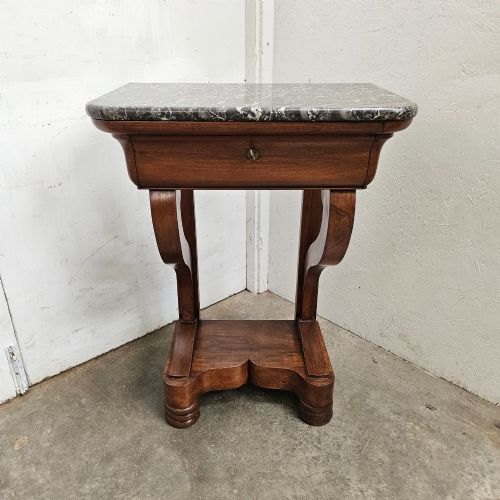
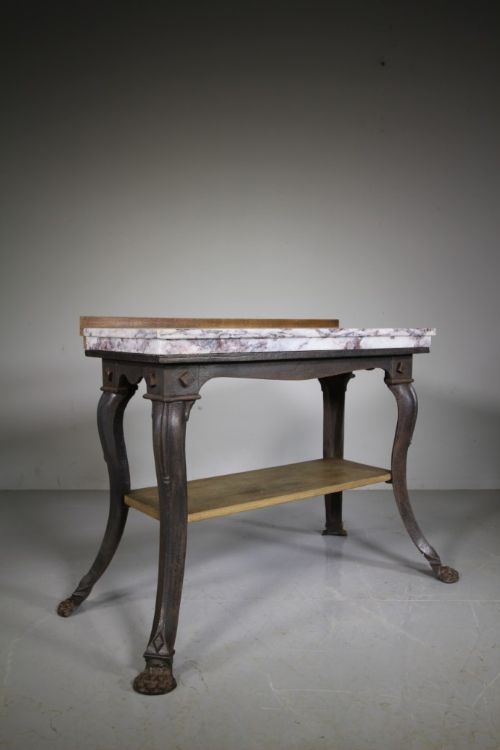
Buyers searching for a 19th century marble washstand encounter substantial bedroom furniture designed for personal hygiene before plumbed bathrooms became standard. These pieces combine a heavy stone slab surface with timber cabinetry, commodes, or side tables.
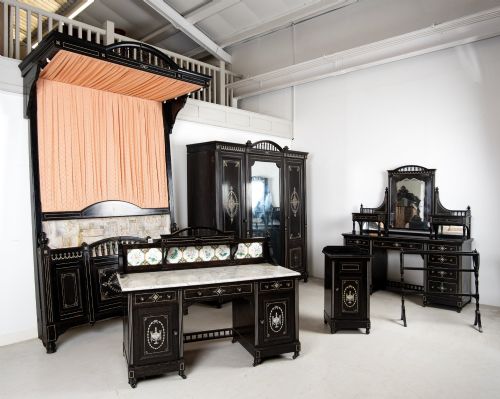
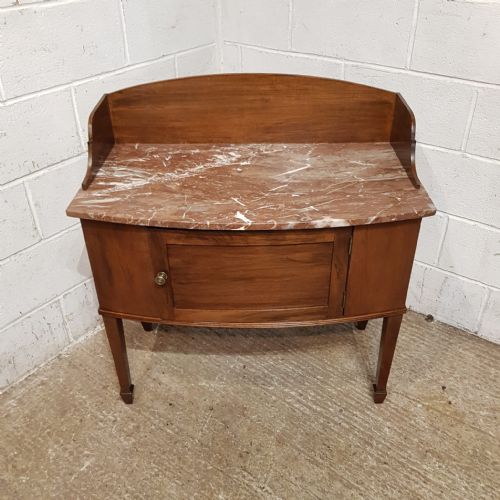
The version most commonly met on this page is the Victorian or late 19th century continental washstand, often rendered in mahogany, walnut, or ash. Many examples feature bow fronts, tiled or mirrored splashbacks, and fitted cupboards below the marble top.
Materials and construction
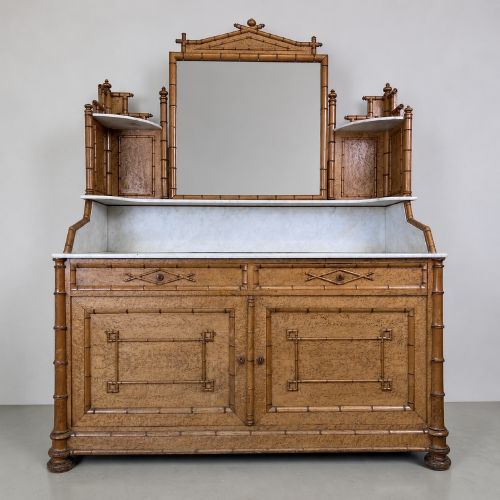
Cabinetmakers built these frames using dense hardwoods like mahogany, walnut, rosewood, and satinwood, alongside structural pine and ash. Ebonised finishes, faux bamboo turnings, and brass mounts frequently appear across English and continental workshops.
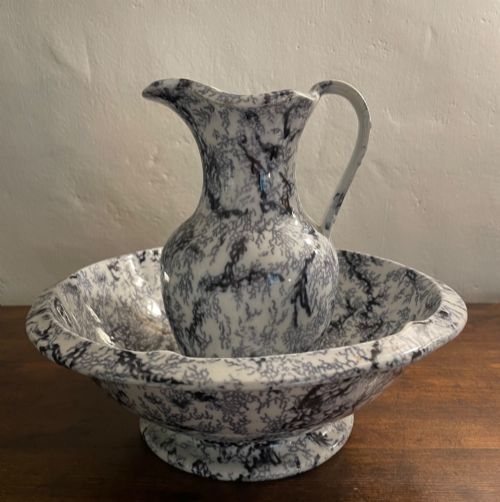
The defining element is the heavy marble top, cut to fit the contour of the wooden base, whether straight, bow fronted, or serpentine. This stone provided a waterproof, easily cleaned surface to hold pitchers, basins, and toilet services.
Some washstands disguise themselves as faux bamboo bird's-eye maple dressing cabinets, bringing an unexpected touch of the jungle to the Victorian bedroom.
Judging quality in these pieces
Quality rests primarily in the selection of the timber and the grade of the marble slab. Finely figured mahogany, burr walnut, or bird's-eye maple paired with thick, well-veined marble elevates a piece above standard utility furniture.
Joinery detail and internal secondary woods also separate workshops. Dovetailed drawers, robust framing, and intact original brass hardware or ceramic fittings indicate superior construction from the period.
Maples
The 19th Century Marble Washstand Glossary
- Washstand
- A piece of bedroom furniture designed to hold a basin and pitcher for washing. These utilitarian items evolved into decorative marble-topped cabinets by the Victorian era.
- Marble top
- A thick slab of polished stone fitted to the upper surface of a table or cabinet. It offered a cool, water-resistant counter for washing utensils.
- Bow front
- A convex, curved front section on a chest, cabinet, or table. This shape softens the corners of heavy bedroom furniture.
- Faux bamboo
- Wood turned and carved to imitate the segmented stalks of bamboo. This decorative technique gained popularity in nineteenth-century European furniture.
- Commode
- A low cabinet or chest of drawers, often adapted in the nineteenth century to house washing equipment or chamber pots behind closed doors.
19th Century Marble Washstand: Frequently Asked Questions
What is a 19th century marble washstand?
It is a piece of antique bedroom furniture featuring a solid stone top designed to hold washing equipment.
These items combine timber frames, such as mahogany or walnut, with functional waterproof surfaces used before modern plumbing.
How were these washstands used originally?
They served as the central washing station in nineteenth-century bedrooms before plumbed bathrooms existed.
Users placed ceramic basins and pitchers on the marble top for morning ablutions, storing linens and jugs in the cabinets below.
How do I live with one today?
These pieces adapt easily as hallway consoles, bathroom vanity bases, or side tables in living spaces.
The stone top handles moisture well, making it practical for modern utility while retaining period character.
How do I tell English and continental pieces apart?
English examples often favour dense mahogany or walnut with straightforward structural lines and bow fronts.
Continental pieces frequently display lighter woods like bird's-eye maple, faux bamboo details, or walnut framing associated with French workshops.