

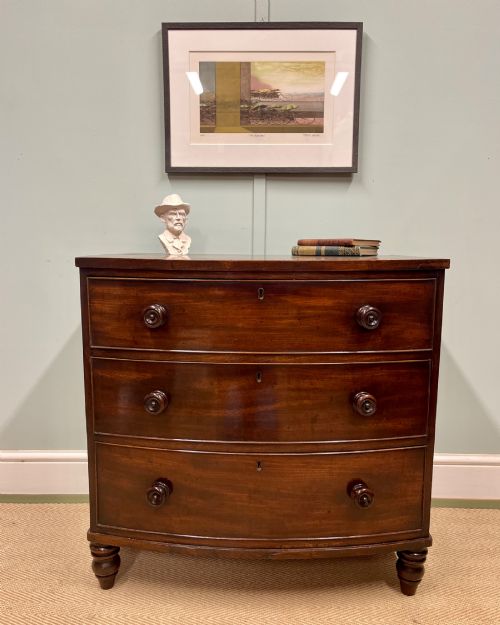
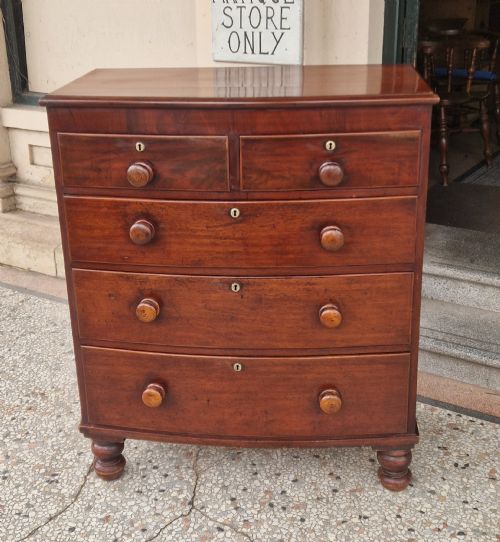
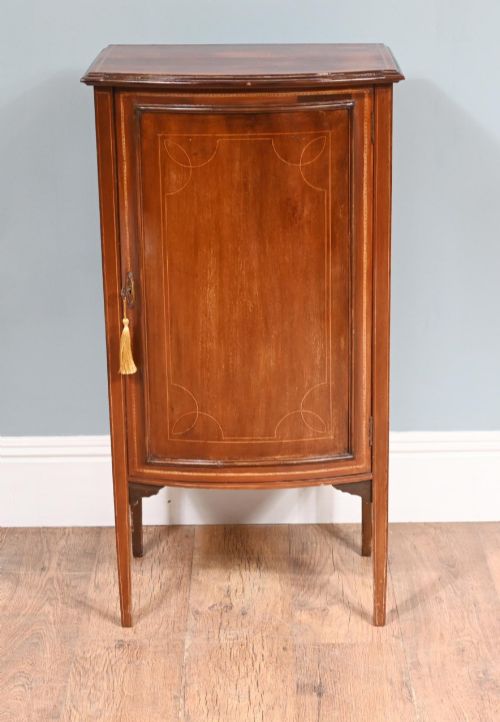
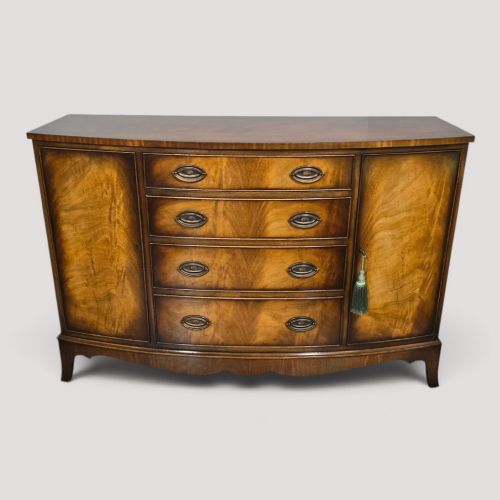
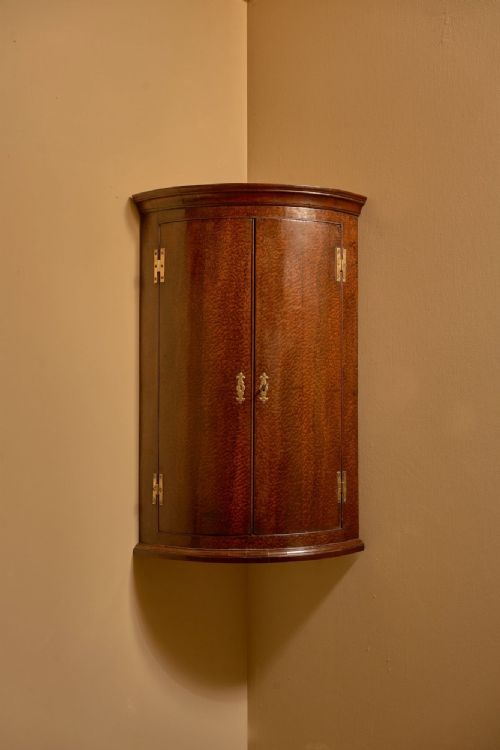
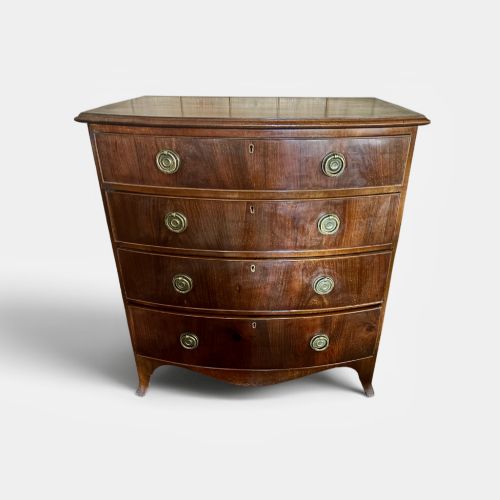
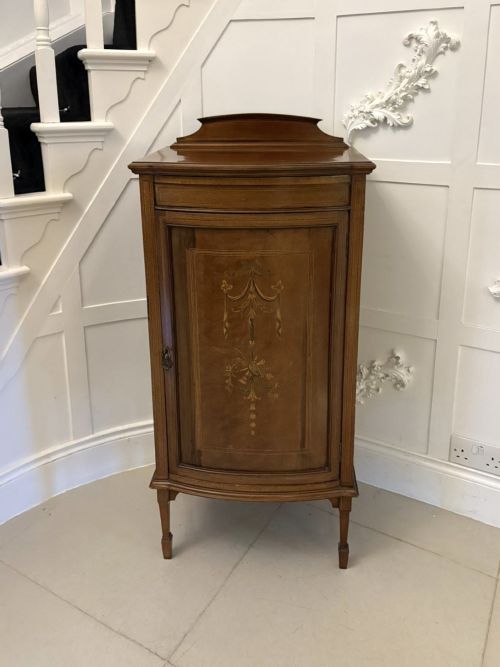
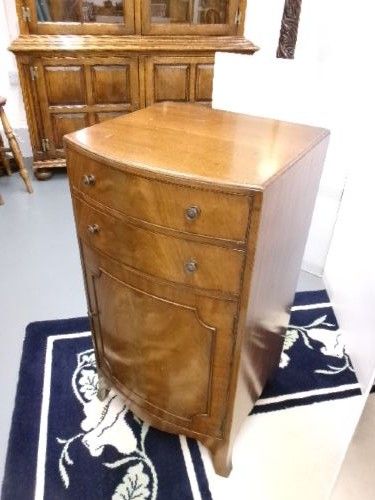
Mahogany Bow Front Cabinet
A mahogany bow front cabinet brings a rounded elegance to a room, offering practical storage disguised by a curved profile.
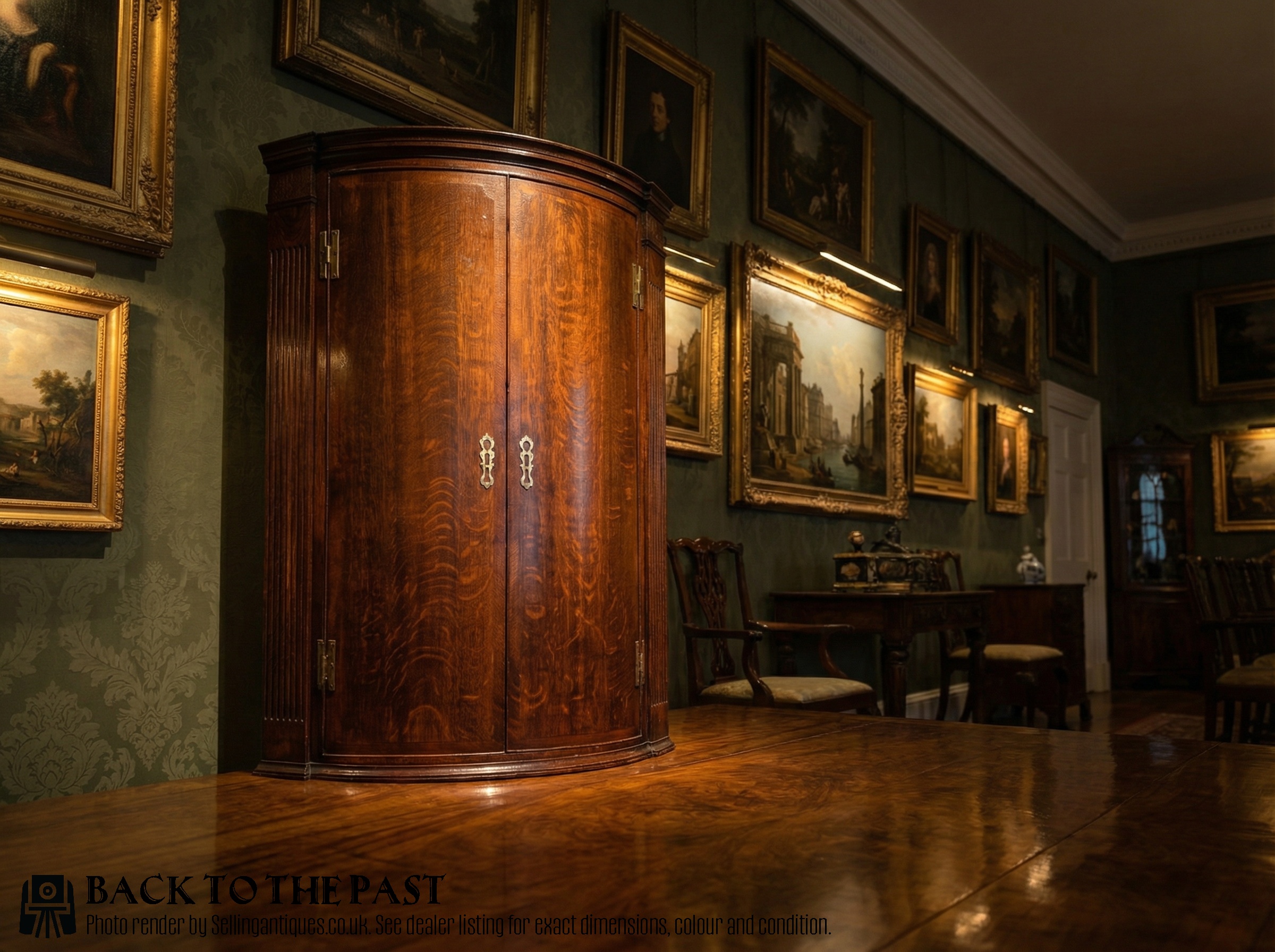
Mahogany Bow Front Cabinet
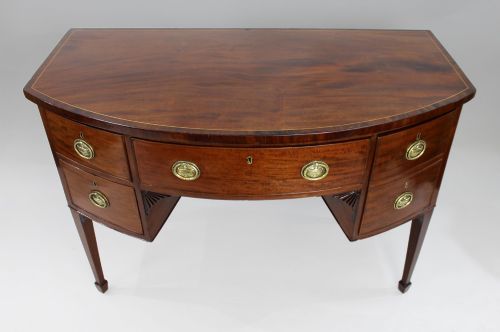
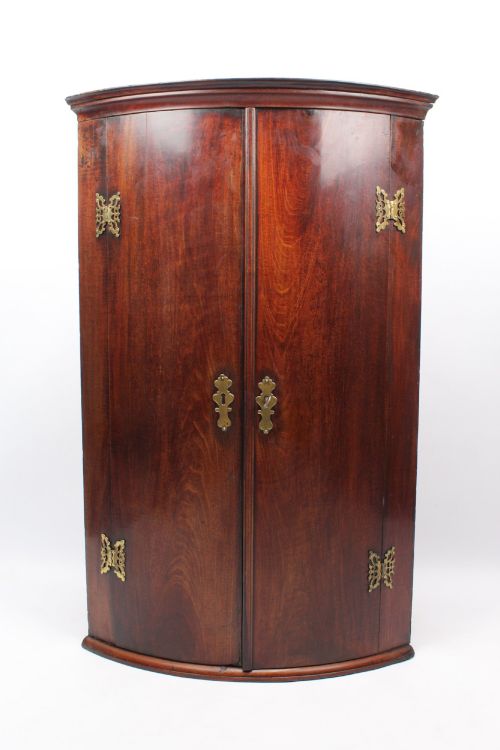
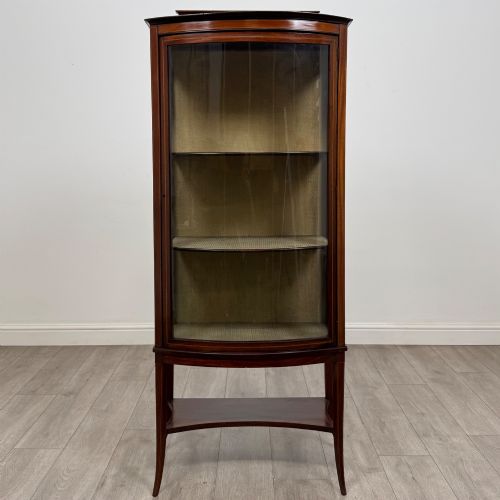
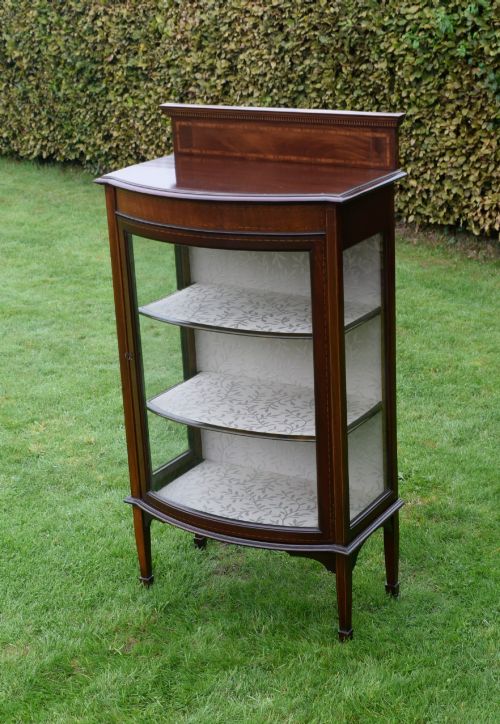
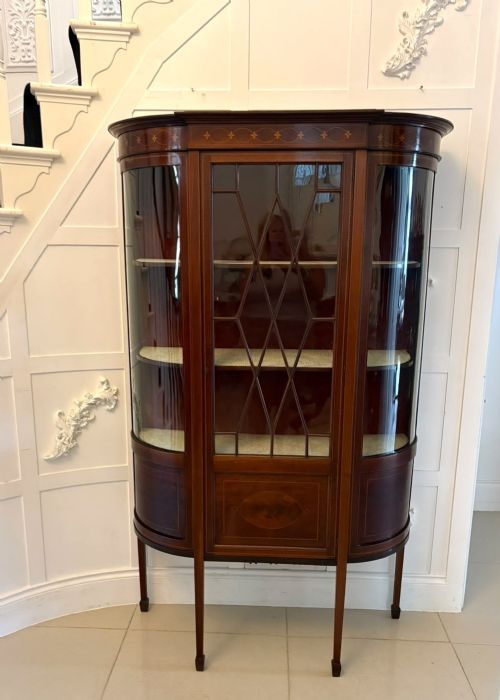
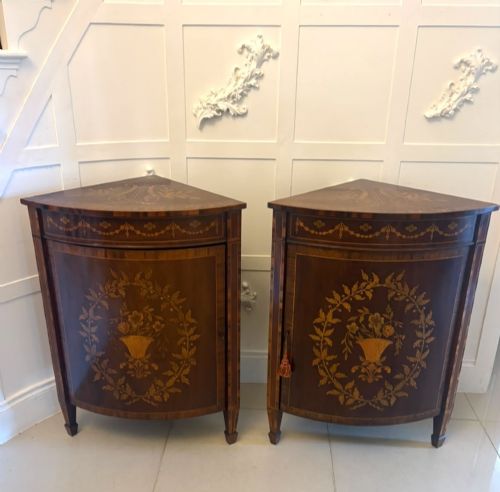
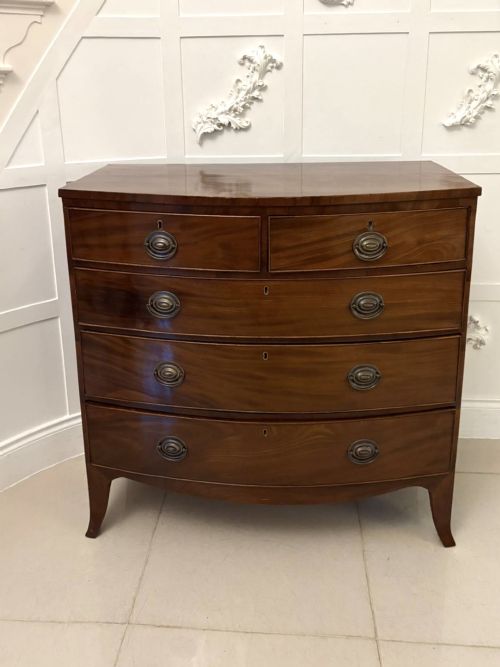
A mahogany bow front cabinet encompasses a range of rounded case furniture designed for storage and display across multiple eras. The pieces on this page span Georgian, Regency, Victorian, and Edwardian periods, appearing as sideboards, corner cupboards, chests of drawers, and display cabinets.
Sideboards and chests of drawers dominate the larger forms, while corner cupboards and bedside cabinets provide solutions for compact spaces. Edwardian and Victorian versions frequently feature delicate stringing, display glazing, or fitted interiors.
Georgian and George III examples emphasise clean architectural proportions in solid timber, while later revival styles lean towards decorative marquetry. Buyers encounter both wall-hanging corner units and substantial floor-standing pieces.
How they were made
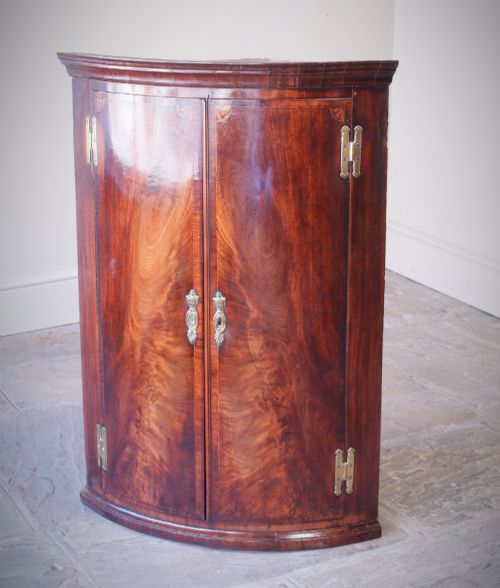
Cabinet makers constructed the curved fronts using solid mahogany or applied wood veneers, often selecting flame mahogany or plum pudding timber for figured grain patterns. These panels were curved over constructed internal frames to maintain the distinct bow shape.
Surface decoration frequently incorporated contrasting timbers such as satinwood, boxwood, and fruitwood for inlay and stringing. Brass hardware, glass panels for display doors, and occasional hand-painted panels completed the construction.
Mahogany Bow Front Cabinet Retail Price Guide 2026
Typical asking prices for mahogany bow front cabinet among the pieces listed under this phrase on Sellingantiques today, from the lower quarter to the upper quarter. They describe what is for sale here now, not the wider market.
Listings feature mahogany, satinwood, oak, and glass combined with brass hardware across pieces dated from the eighteenth century to the twentieth.
What varies in quality
Quality rests in the selection of the timber veneer and the precision of the curved joinery. Superior examples display symmetrical flame mahogany figuring across the entire bow front without interruption.
The refinement of the secondary detailing separates standard production from finer work. Hand-cut inlay, delicate stringing, and well-chosen brass fittings elevate the presence of the piece.
The Mahogany Bow Front Cabinet Glossary
- Bow front
- A convex curved cabinet front that projects outward in an arc. This shape softens the corners of a room and creates deeper internal storage capacity.
- Flame mahogany
- A veneer cut from the fork of the mahogany tree where the branch meets the trunk. It produces a distinctive flame-like pattern prized for decorative cabinet doors.
- Stringing
- Thin lines of contrasting timber inlaid into the surface of the wood. It outlines drawers, doors, and borders in Edwardian and Sheraton revival pieces.
- Marquetry
- Elaborate decorative patterns formed from fitted pieces of coloured veneers. It often appears on cabinet doors and tabletops.
- Astragal
- The wooden moulding strips that divide panes of glass in a display cabinet door. Georgian and Regency pieces frequently use intersecting astragal patterns.
Mahogany Bow Front Cabinet: Frequently Asked Questions
Where should I put a corner cabinet?
Corner cabinets suit empty room junctions where standard rectangular furniture wastes space. Hanging versions work well above tables or desks, while floor-standing cupboards anchor awkward corners in dining rooms or hallways.
Ensure the wall angles match the cabinet back before hanging or placing the unit. Wall-mounted Georgian examples require secure fixing to support the weight of solid timber.
How do I care for mahogany?
Protect mahogany surfaces from direct sunlight to prevent the rich reddish-brown colour from fading unevenly. Dust regularly with a soft, dry cloth and avoid silicone-based polishes.
Feed the timber occasionally with a traditional wax to maintain the lustre of the grain. Keep pieces away from direct heat sources to stop the wood veneer from drying and lifting.
How can I tell Georgian from Edwardian?
Georgian pieces rely on architectural proportions, solid timber construction, and minimal external ornamentation. They often feature cockbeaded drawer edges and heavy brass drop handles.
Edwardian furniture frequently incorporates lighter satinwood stringing, marquetry inlay, and glazed display doors. The wood is often used as a veneer over a stable secondary timber base.
Are bedside cabinets matching pairs?
Bedside cabinets appear both as single items and as matched or near pairs. Single pieces function independently as small storage units or lamp tables.
Pairs often originate from bedroom suites of the Victorian and Edwardian periods. Check the dimensions and timber grain to confirm if unlinked pieces form a balanced pair.