
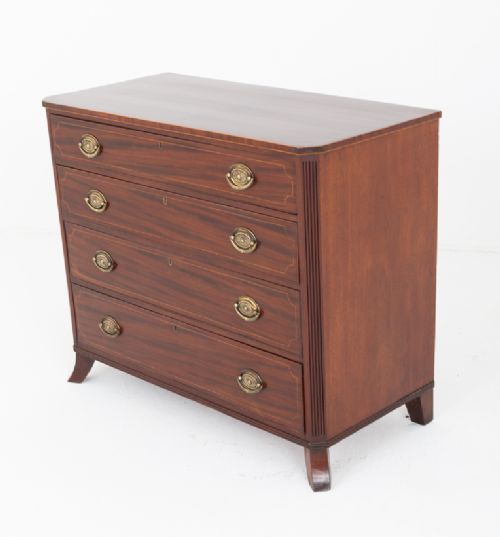
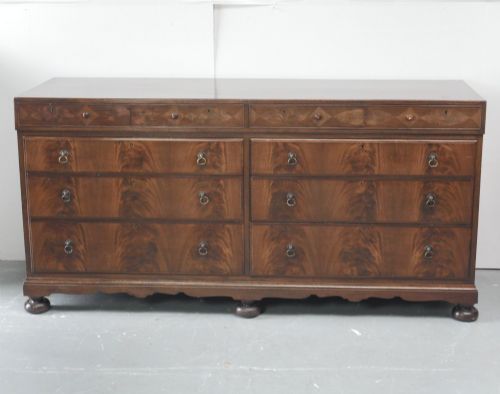
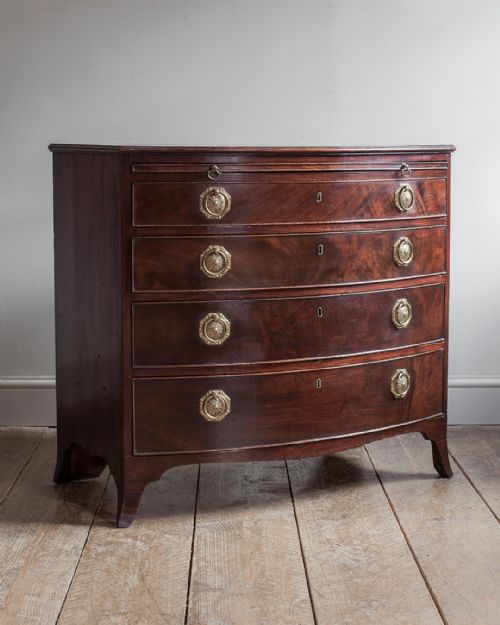
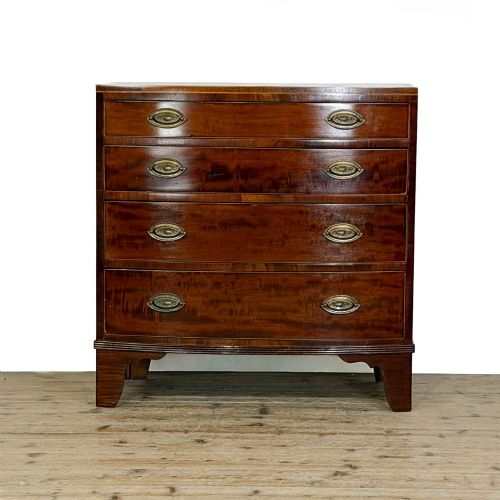



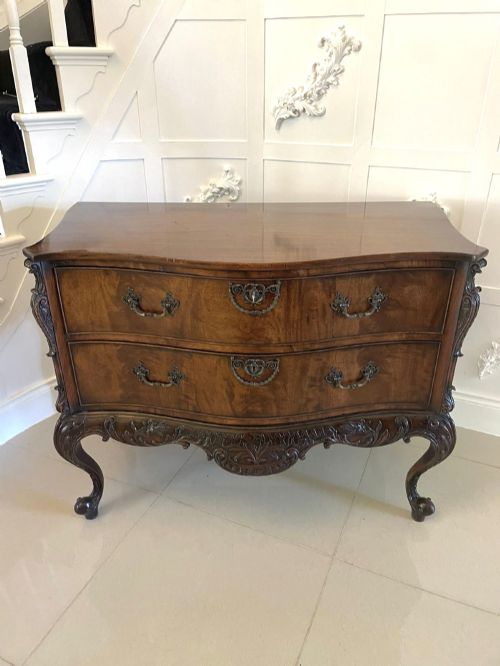
Mahogany Bedroom Commode
A mahogany bedroom commode provides enclosed storage for a chamber pot or personal items, uniting practical utility with refined cabinet work.
Mahogany Bedroom Commode
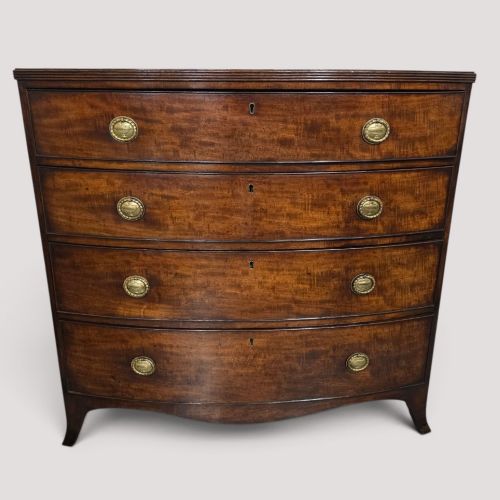
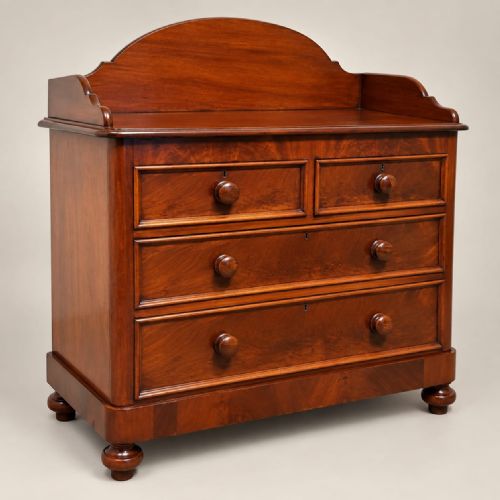
A mahogany bedroom commode is typically encountered as a compact cabinet or toilet commode dating from the Victorian period, designed to house porcelain vessels discretely within a bedroom. These pieces range from simple square cupboards to fitted boxes with hinged tops intended to match the wider suite of chamber furniture.
The material record for these utilitarian items spans the nineteenth century, drawing upon the robust timbers and polished surfaces common to domestic dressing spaces of the era. Makers utilised solid mahogany and applied veneers to construct functional enclosures that sat quietly beside washstands and beds.
Buyers seeking a mahogany bedroom commode encounter utilitarian forms that reflect nineteenth-century domestic habits, where sanitation and refined timber work met in daily use. The survival of these pieces demonstrates the enduring quality of their timber construction.
Judging Quality
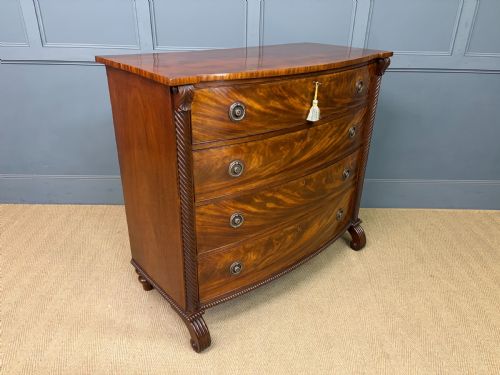
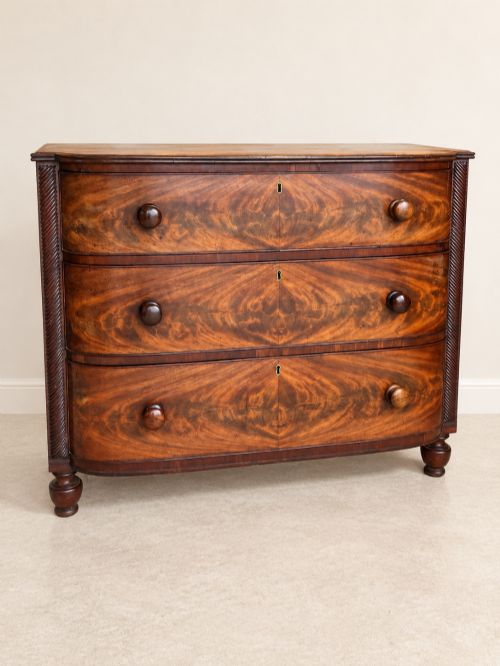
Quality in these cabinets rests upon the selection of timber figures, the precision of the veneer work, and the original integrity of the internal fittings. Superior examples display carefully matched flame or figured mahogany across the primary surfaces rather than plain stock.
The degree of refinement in the cabinet maker's joinery, from the tightness of the dovetails to the smooth operation of fitted lids and doors, separates standard utility items from finer chamber furniture. Original brass hardware and well-preserved internal liners further elevate the standing of a piece.
Mahogany Bedroom Commode Retail Price Guide 2026
Typical asking prices for mahogany bedroom commode among the pieces listed under this phrase on Sellingantiques today, from the lower quarter to the upper quarter. They describe what is for sale here now, not the wider market.
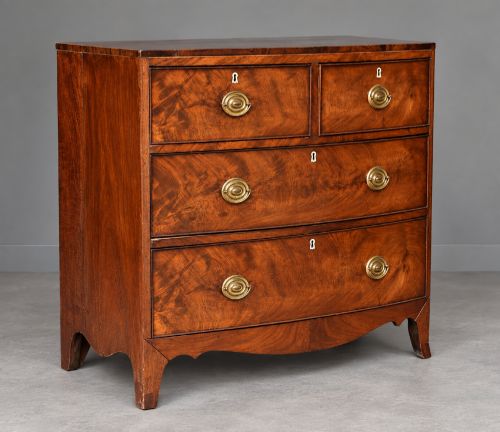
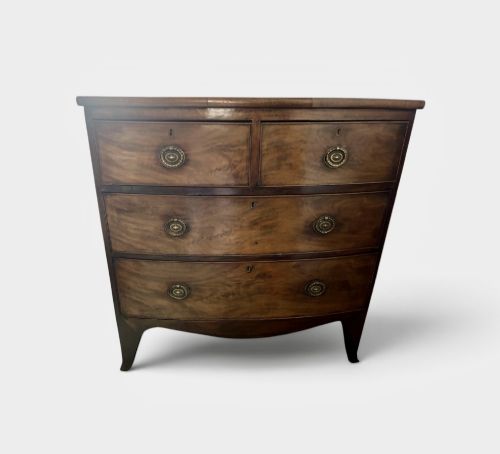
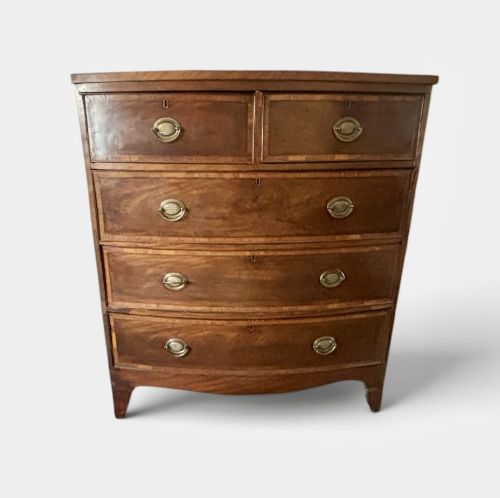
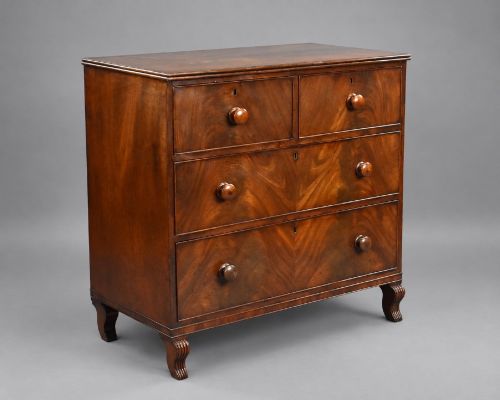
The listings show nineteenth-century examples incorporating solid mahogany, flame mahogany veneer, and brass fittings within compact bedside cabinet forms.
Whytock & Reid
The Mahogany Bedroom Commode Glossary
- Commode
- A low cabinet or piece of furniture containing drawers or a cupboard, historically designed to house a chamber pot. These items formed an essential part of nineteenth-century bedroom suites.
- Flame Mahogany
- A veneer cut from the fork of the mahogany tree where the branch joins the trunk, producing a distinctive flickering flame pattern. Cabinet makers used this decorative grain on prominent exterior surfaces.
- Dovetail
- A joint formed by interlocking wedge-shaped fingers, used extensively in drawer construction for maximum tensile strength. This method keeps drawer corners secure over centuries of pulling and pushing.
- Crossbanding
- A strip of veneer applied to the border of a furniture top or drawer front with the grain running perpendicular to the central panel. This technique provides a neat visual frame to the timber.
Mahogany Bedroom Commode: Frequently Asked Questions
How were these commodes used?
In nineteenth-century homes, these cabinets sat beside the bed or washstand to provide discrete night-time sanitation before indoor plumbing became universal. Users opened the hinged top or cabinet door to access the internal ceramic vessel.
After use, the enclosed space kept odours contained until the chamber pot could be emptied by household staff. They combined furniture craftsmanship with necessary domestic utility.
How do I date a mahogany commode?
Dating relies upon examining the construction methods, handle styles, and timber types visible across the piece. Nineteenth-century examples often feature hand-cut dovetails and specific turning styles that evolved from the Georgian era through the Victorian period.
Secondary timbers like oak inside the carcass and the specific thickness of mahogany veneers also help narrow down the decade of manufacture. Comparing the hardware fixing methods provides further chronological clues.
How do I clean and care for mahogany?
Maintain the polished timber surface by dusting regularly with a soft, dry cloth and avoiding synthetic silicone sprays. Natural beeswax applied sparingly helps nourish old mahogany and preserves the depth of the grain.
Keep these cabinets away from direct heat sources and strong sunlight to prevent the timber from drying out or the veneer from lifting. Consistent indoor humidity protects the structural integrity of the joints.