




Mahogany Barometer Case
A mahogany barometer case houses scientific instruments that measure atmospheric pressure in handsome timber housings.
Mahogany Barometer Case
When you search for a mahogany barometer case, you are looking at timber enclosures built to protect delicate weather-measuring instruments. These pieces range from simple domestic wheel barometers to complex barographs with chart drawers and stick barometers.
The versions you are most likely to meet on this page date from the Victorian and Edwardian eras through to the interwar period, reflecting a time when domestic weather recording combined utility with fine cabinetry.
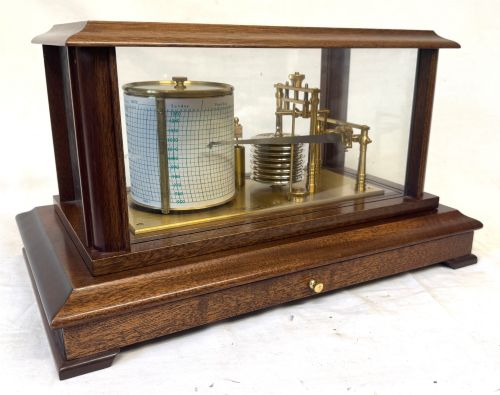
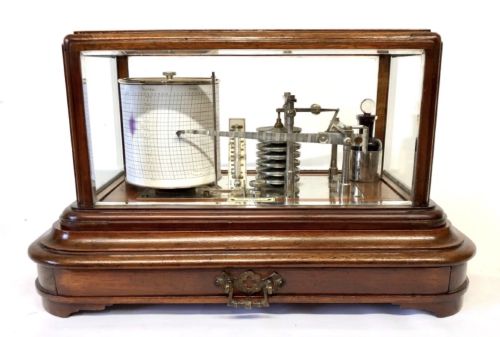
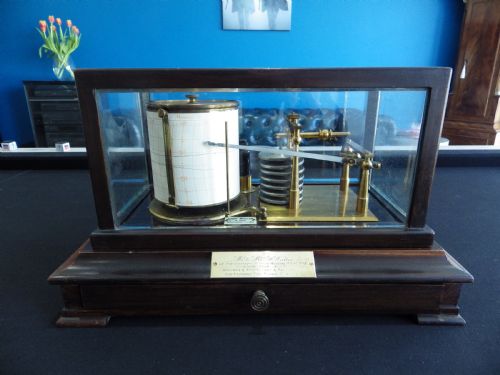
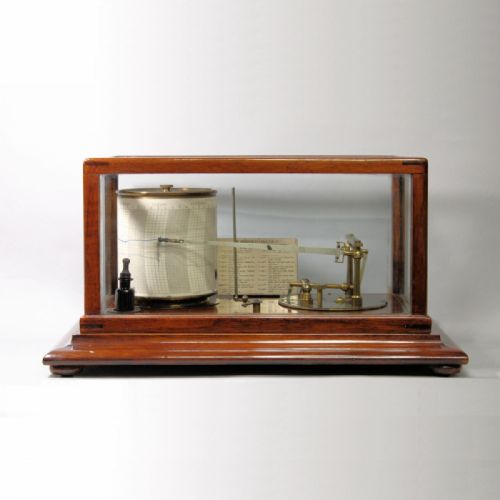
The forms span upright stick barometers, wheel barometers with onion tops, and five-glass table barographs that display the recording drum and needle mechanism.
How they were made
Cabinet makers utilised solid and veneered mahogany for the timber housings, often incorporating brass fittings, hinged glass doors, and small drawers to store replacement paper charts.
Internal components combined brass movements, steel linkages, silvered metal dials, and occasionally bone or paper scales to record barometric pressure variations.
Listings feature mahogany, brass, glass, steel, paper, silvered metal, and bone across Victorian, Edwardian, and interwar periods.
What varies in quality
The distinction between standard items and superior examples rests on the crispness of the cabinet work, the integration of makers' signatures on dials or movements, and the survival of original components such as glass panels and chart drawers.
Cases featuring refined turnings, marquetry inlay, or retail provenance from prominent establishments demonstrate a higher degree of initial craftsmanship and better preservation over time.
Russell Norwich·Gaupp And Co·Alexander Wright·Negretti And Zambra·Short And Mason·Casella London·R Fuess·Harrods Of London·Robson Of Newcastle·WE Pain·Richard Freres
The Mahogany Barometer Case Glossary
- Barograph
- A self-recording aneroid barometer that plots atmospheric pressure onto a rotating paper chart over the course of a week. This mechanical instrument uses a stack of vacuum chambers linked to an inked nib.
- Stick Barometer
- A tall, vertical barometer containing a column of mercury balanced against atmospheric pressure. These upright instruments provide precise readings and often feature exposed scale plates.
- Wheel Barometer
- A domestic barometer design where pressure changes move a float in a U-shaped mercury tube, turning a cotton thread and pulley to rotate a dial hand. They frequently include ancillary instruments like thermometers.
- Aneroid Barometer
- A barometer that measures pressure without liquid, using a flexible metal box that expands or contracts as pressure shifts. This design allowed barometers to become more compact and portable.
Mahogany Barometer Case: Frequently Asked Questions
How do I read a barograph chart?
The rotating drum holds a paper chart marked with days of the week and millibars of pressure. The inked arm traces a continuous line showing whether pressure rises or falls.
Charts are typically replaced weekly to maintain an accurate meteorological record of local weather patterns.
Where should I place a barometer case?
Mount or place your barometer away from direct sunlight, central heating vents, and exterior draughts. Stable indoor temperatures prevent artificial expansion of the internal mechanism.
Most wall-hung stick and wheel barometers require a secure fixing to an interior wall to maintain plumb alignment.
How do I date an antique barometer?
Examine the timber species, dial typography, fastening methods, and any maker signatures engraved on the metal plates or paper scales. Victorian and Edwardian examples often display distinct casing styles and retailer labels.
Patination on the brass components and the construction of the mahogany case provide additional clues to the period of manufacture.
What is an Admiral Fitzroy barometer?
Developed in the nineteenth century following storm-reporting initiatives, this barometer type includes detailed weather interpretation text on the register plates alongside the main dial. They often incorporate a thermometer and a curved storm glass.
These instruments were designed to help mariners and farmers anticipate local gales by observing pressure tendencies.