




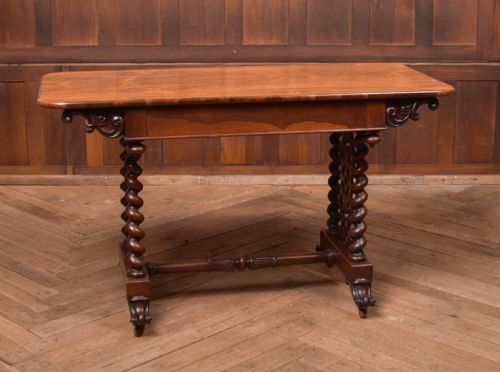

Mahogany Barley Twist Table
A mahogany barley twist table brings tactile warmth and upright turnings to a room, offering sturdy support through centuries of dining, writing, and display.
Mahogany Barley Twist Table
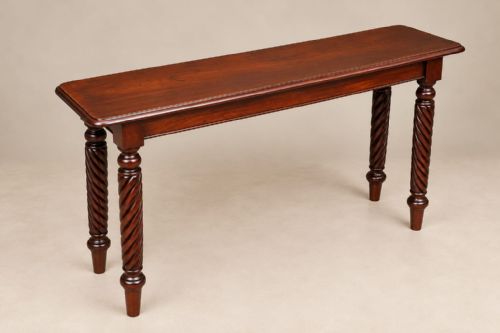
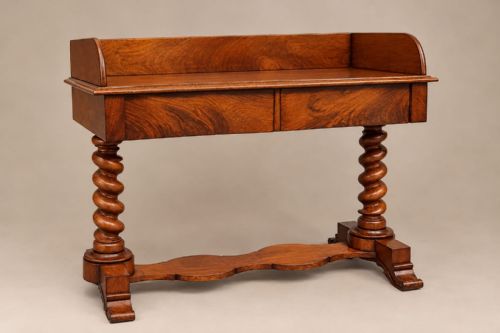
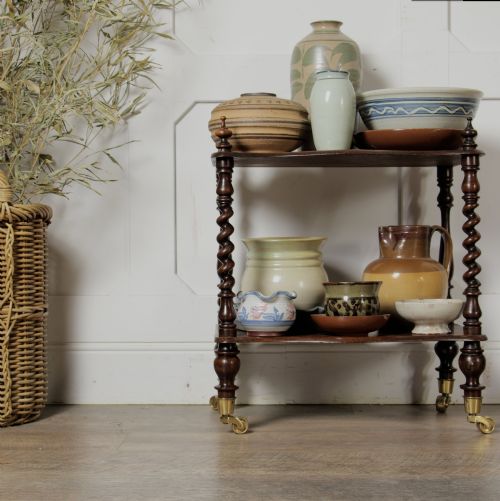
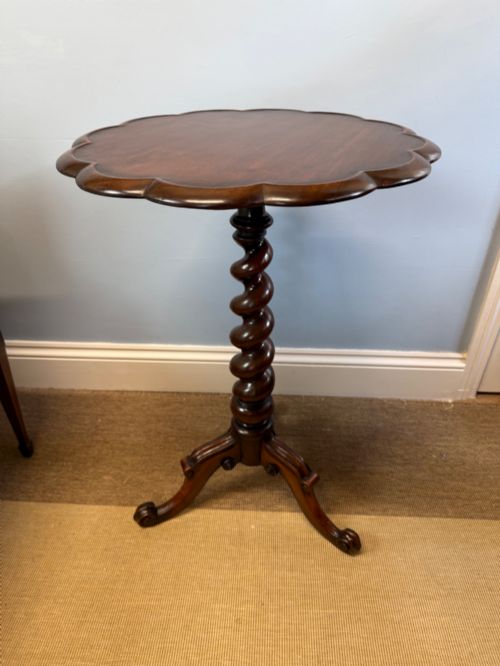
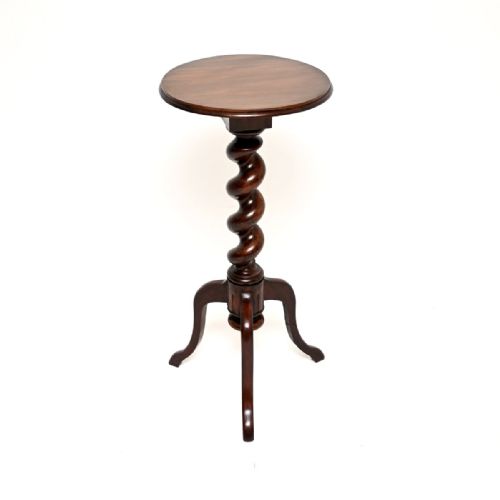
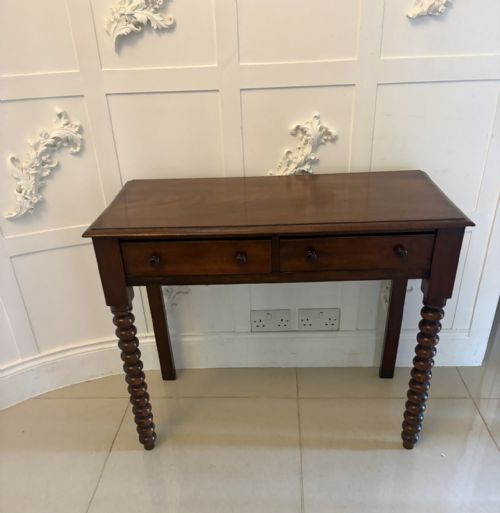
When you hunt for a mahogany barley twist table, you are looking at items shaped by helical turned supports that spiral upwards like a column of rope. These pieces span casual tripod wine tables and writing desks to larger centre and side formats.
The version you are most likely to meet on this page is the Victorian tripod side table or occasional stand, often bearing a circular top supported by a turned column above three shaped legs. Georgian and William IV examples also appear, showing how makers adapted the twist to pedestal bases and drop leaf designs.
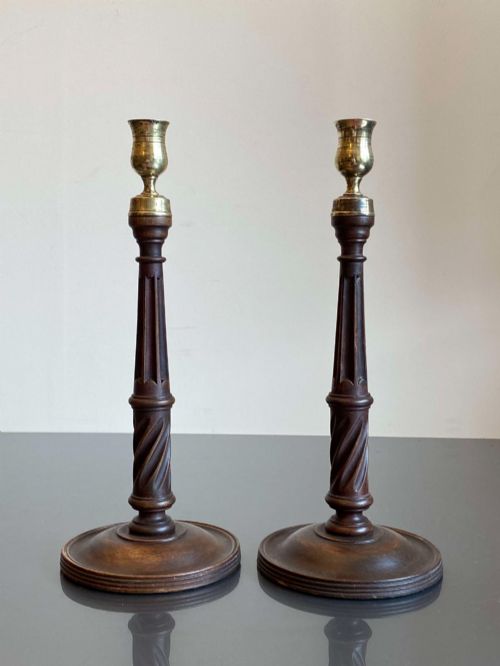
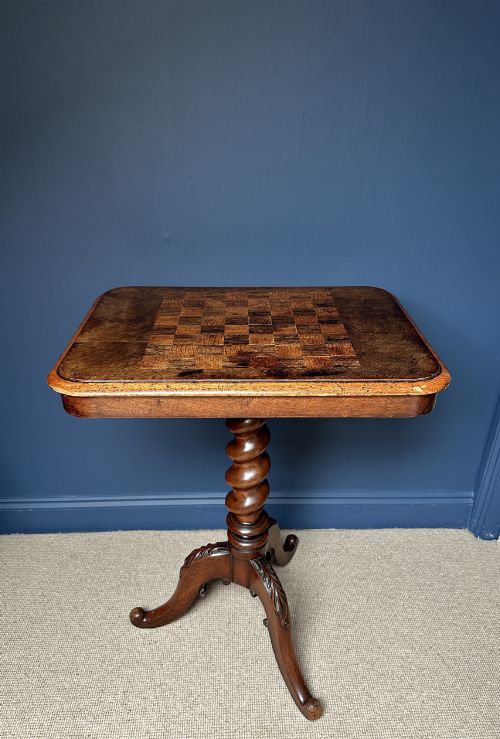
Beyond the standard occasional tables, the evidence includes games boards, writing surfaces, and dressing mirrors that incorporate the characteristic spiral turning into their frames or legs. These items served practical domestic roles in nineteenth century parlours and studies before finding a place in modern interiors.
How they were made
Carpenters shaped the helical turnings using hand chisels and lathes, cutting away wood to form the continuous spiral contour. This technique required steady precision so the angle of the twist remained uniform along the length of the leg or column.
Solid timber such as mahogany provided the dense foundation needed to hold these sharp profiles without chipping during turning. Workshops also paired the rich reddish brown wood with brass fittings, marble inserts, or glass elements where the design called for contrasting textures.
Mahogany Barley Twist Table Retail Price Guide 2026
Typical asking prices for mahogany barley twist table among the pieces listed under this phrase on Sellingantiques today, from the lower quarter to the upper quarter. They describe what is for sale here now, not the wider market.
Several miniature stands were originally built just high enough to hold a single glass of port.
What varies in quality
The distinction between ordinary and superior pieces lies in the rhythm of the turning and the choice of stock timber. A crisp, evenly pitched spiral reveals the hand of a confident maker, whereas a sluggish or uneven twist lacks visual energy.
Grain selection also separates standard furniture from the finest examples, particularly where figured mahogany or flame veneers catch the light on table tops. Structural integrity in the joints and tripod bases ensures the piece remains balanced over time.
The Mahogany Barley Twist Table Glossary
- Barley twist
- A decorative turning shaped like a spiral or helix, resembling a twisted rope. This profile gained popularity during the seventeenth century and saw a major revival during the Victorian era.
- Tripod table
- A small freestanding table supported by three legs radiating from a central pillar. These formats allowed the top to tilt or remain stationary for serving wine and holding lamps.
- Flame grain
- A distinctive ripple pattern in timber veneer resembling flickering flames. It occurs where branches join the main trunk of the mahogany tree.
- Occasional table
- A light, movable small table designed for specific, intermittent tasks in a reception room. They include lamp stands, wine tables, and small tea formats.
Mahogany Barley Twist Table: Frequently Asked Questions
Where did people place these tables?
Victorian households positioned these stands beside armchairs, near windows for natural light, or in the centre of rooms to hold lamps and decorative objects.
Smaller tripod and wine versions moved easily from room to room depending on the daily needs of the family.
How do I care for mahogany surfaces?
Keep wooden furniture away from direct sunlight and sudden temperature shifts to protect the polish and prevent the timber from drying out.
Dust regularly with a dry cloth and occasionally apply a traditional wax to maintain the soft sheen of the grain.
Are tilt top tables stable?
A well adjusted catch beneath the surface holds the top firmly in place when horizontal, allowing normal use without wobbling.
The mechanism was originally designed to save space when the furniture stood against a wall between uses.
How do I date a twist turning?
Earlier seventeenth century twists tend to be chunkier and hand carved from oak or walnut, while nineteenth century mahogany versions display finer, more uniform lathe work.
Examining the secondary woods, fixings, and overall wear helps confirm whether a piece belongs to the Georgian revival or earlier periods.