



Small Round Plant Table
A small round plant table offers a compact surface for foliage or lamps, bringing period timber and proportion into everyday spaces.
Small Round Plant Table
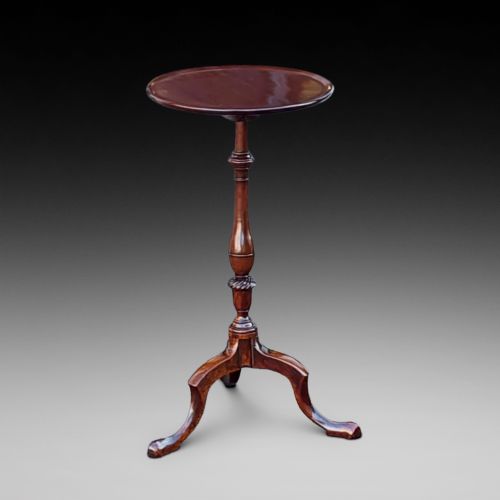
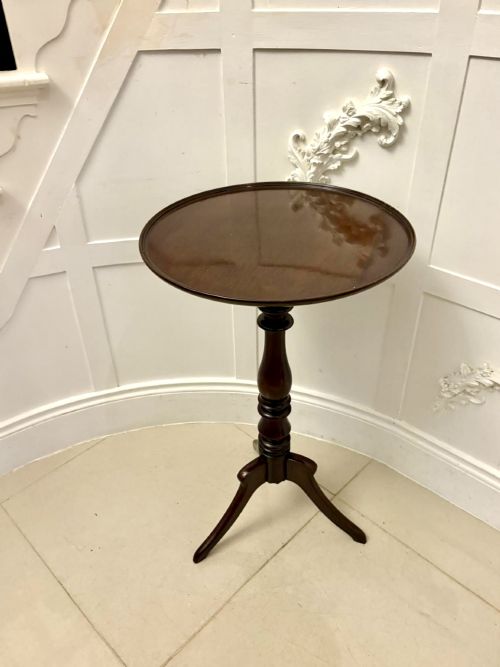
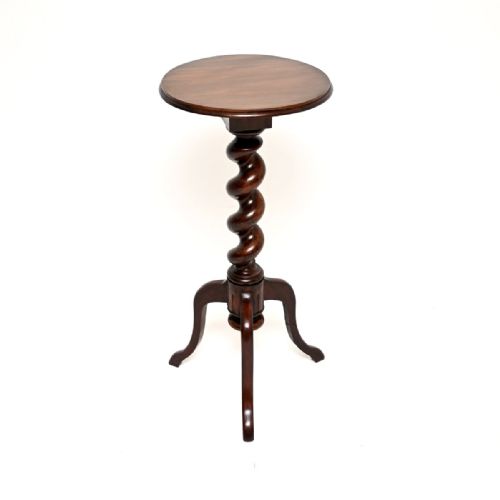
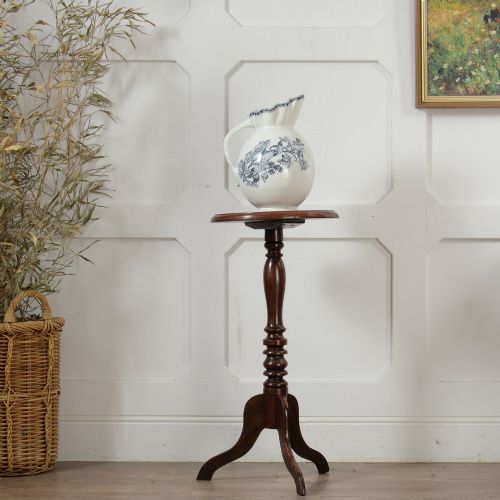
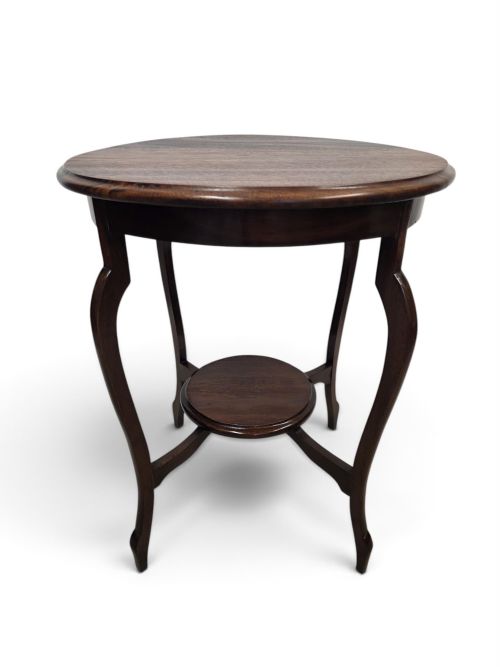
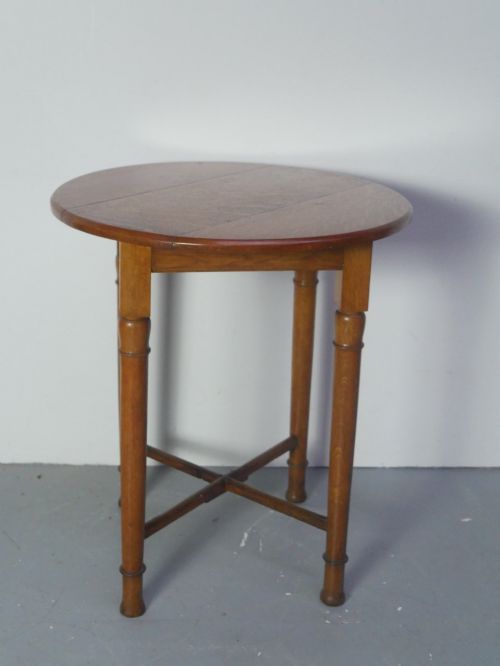
A small round plant table appears across Victorian, Edwardian, and early twentieth-century periods as an occasional table, side table, or wine table. These pieces serve primarily to hold plants, lamps, or decorative items within compact interior footprints.
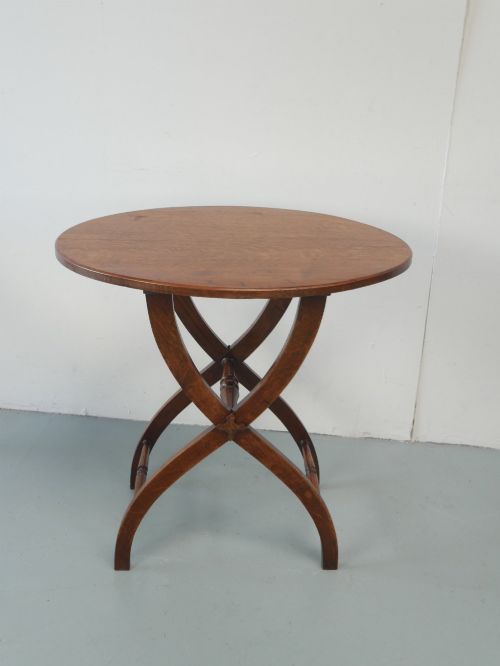
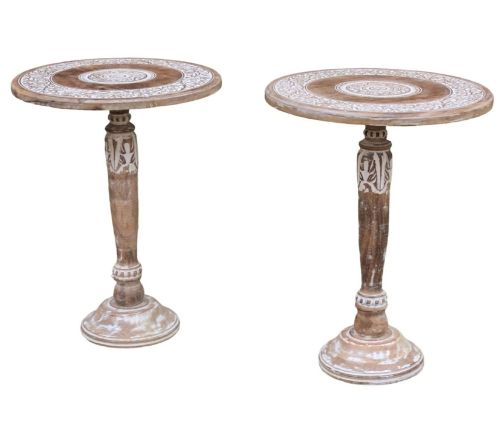
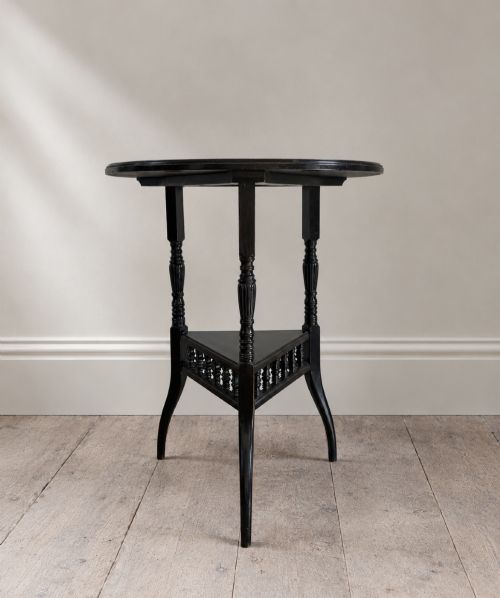
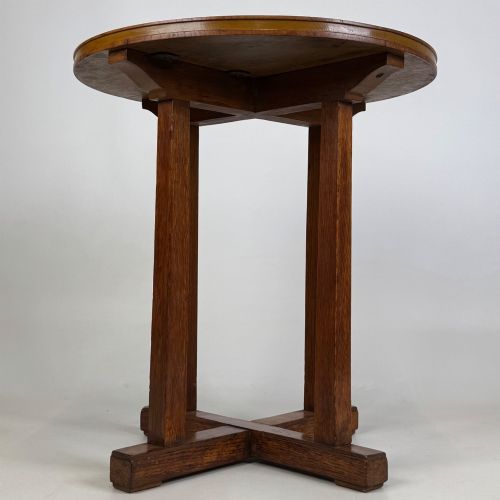
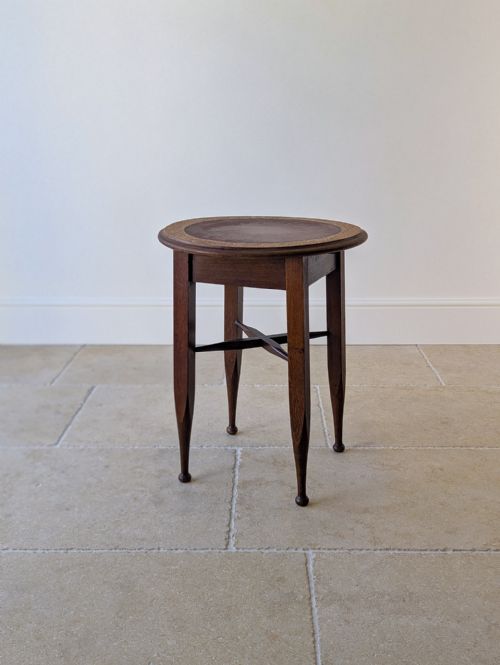
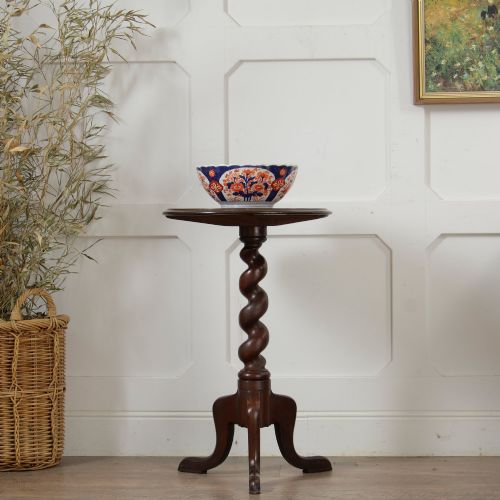
The selections on this page span styles from Arts and Crafts and Jacobean Revival to Sheraton Revival and French designs. Common formats include tripod bases, pedestal columns, and carved tripod cricket tables originating from the nineteenth and early twentieth centuries.
Materials and construction methods
The pieces rely heavily on hardwoods such as mahogany, oak, walnut, and teak, alongside ebonised hardwood and satinwood. Wood inlay, painted finishes, and dark stained timber also appear frequently across the various periods.
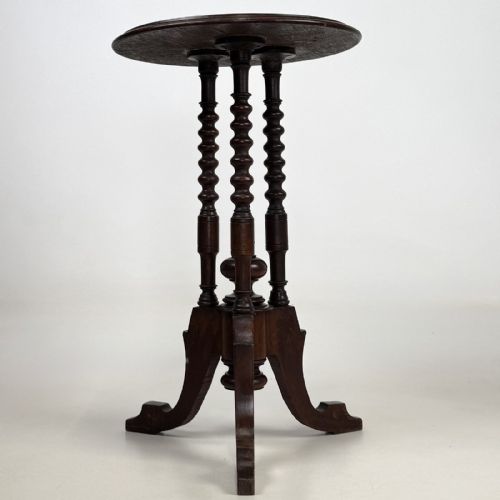
Joinery techniques focus on sturdy three-legged tripod configurations, pedestal supports with barley twist columns, and carved detailing on tops and legs. These construction choices ensure stability for holding weights like pots and lamps.
Small Round Plant Table Retail Price Guide 2026
Typical asking prices for small round plant table among the pieces listed under this phrase on Sellingantiques today, from the lower quarter to the upper quarter. They describe what is for sale here now, not the wider market.
Several tables retain traces of historic plant rings, whispering tales of long-departed ferns and forgotten watering routines.
Judging quality and character
Quality rests in the crispness of the timber carving, the precision of the wood inlay, and the stability of the pedestal or tripod base. Finer examples show careful selection of grain in mahogany, oak, or walnut.
Proportion and the integrity of the original joints separate simpler utilitarian pieces from refined decorative examples. The presence of distinct period stylistic elements, such as barley twist turnings or Sheraton Revival details, elevates the character of the table.
The Small Round Plant Table Glossary
- Tripod table
- A small table supported by three legs radiating from a central pillar. This design provides natural stability on uneven floors.
- Wine table
- A small occasional table traditionally used for holding drinks. They share the compact circular top characteristic of plant tables.
- Occasional table
- A general term for a small table intended to be moved about a room as needed. They form a large portion of the available round plant table designs.
- Barley twist
- A type of woodturning resembling a spiralling rope. It appears frequently on Victorian pedestals and legs.
- Inlay
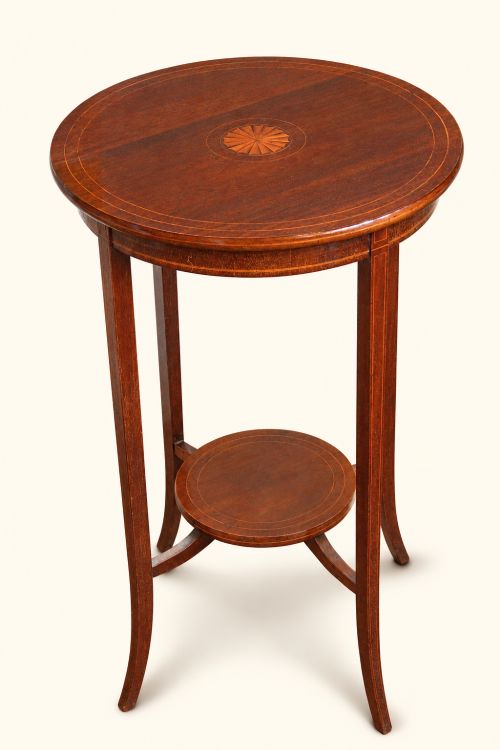
- A technique where pieces of contrasting timber, such as satinwood, are inserted into the primary wood surface to form patterns.
Small Round Plant Table: Frequently Asked Questions
Where should I put a small round plant table?
These compact pieces fit easily beside seating, in hallways, or on landings where floor space is limited. They provide a stable surface for holding potted greenery, reading lamps, or small decorative objects.
Because of their modest footprint, they work well in corners or empty gaps between larger items of furniture. Their varied periods and wood tones allow them to blend into both traditional and contemporary interiors.
How do I care for antique wood tables?
Keep wooden surfaces away from direct heat sources and strong sunlight to prevent the timber from drying out or fading. Regular dusting with a soft, dry cloth preserves the finish without building up residue.
Use protective pads beneath plant pots or wet items to prevent water rings and moisture damage to the polish or grain. Occasional waxing helps maintain the lustre of mahogany, oak, and walnut.
What is the difference between a side table and a wine table?
Side tables generally feature slightly larger tops and sometimes lower shelves or heavier frames suited to general living room use. Wine tables traditionally have smaller, dished or plain circular tops supported by a slender central pillar and tripod base.
Both forms overlap significantly in everyday usage and function well as plant stands. The distinction usually lies in the historical scale and intended portability of the piece rather than its modern application.
How can I tell the period of these tables?
Dating relies on observing the combination of timber, hardware, construction methods, and stylistic revival movements. Victorian examples often feature dark mahogany, walnut, or heavy turned columns like barley twists.
Edwardian and early twentieth-century pieces frequently display lighter oak construction, Arts and Crafts simplicity, or Sheraton Revival mahogany inlay. Comparing the turning style and joinery helps narrow down the decade of manufacture.