




Barley Twist Tripod Stand
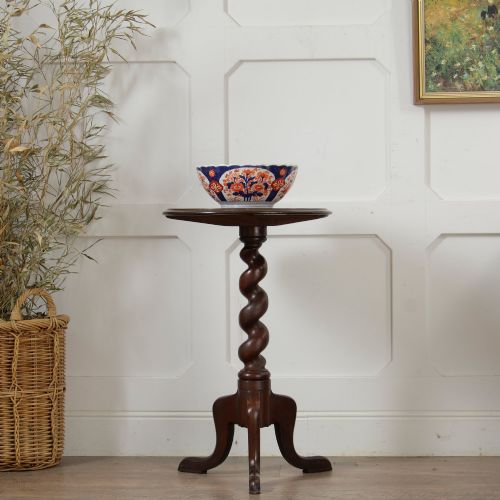
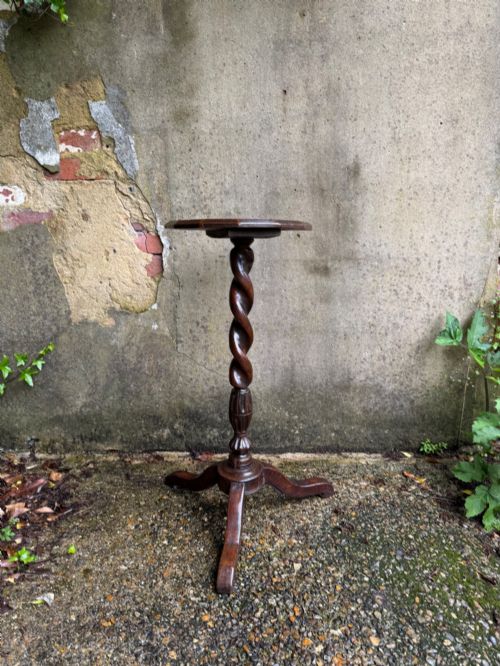
A barley twist tripod stand is a slender, elevated support for plants, lamps, or small objects, prized for its spiralling turned column and three-legged stability.
Barley Twist Tripod Stand
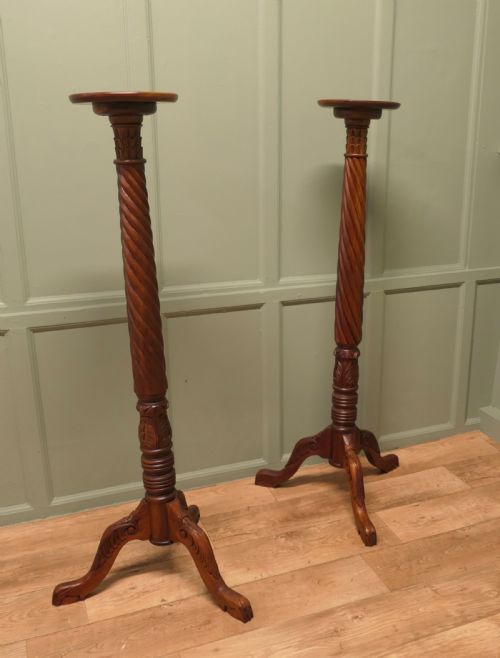
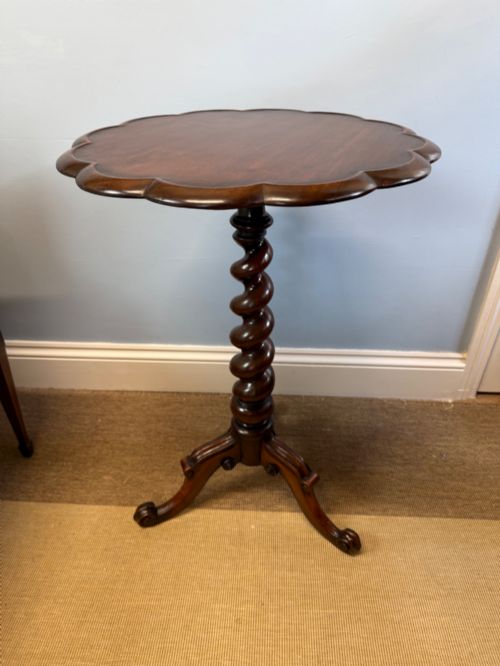
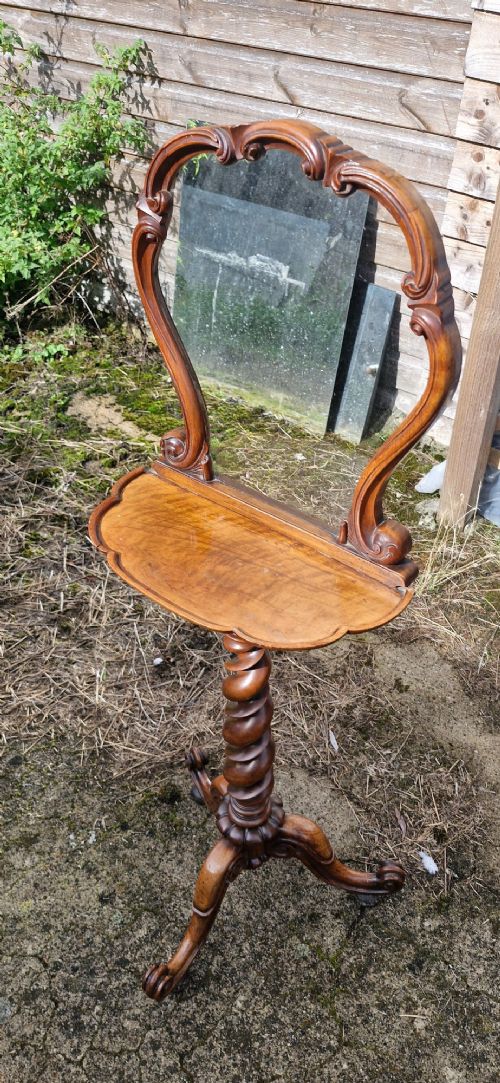
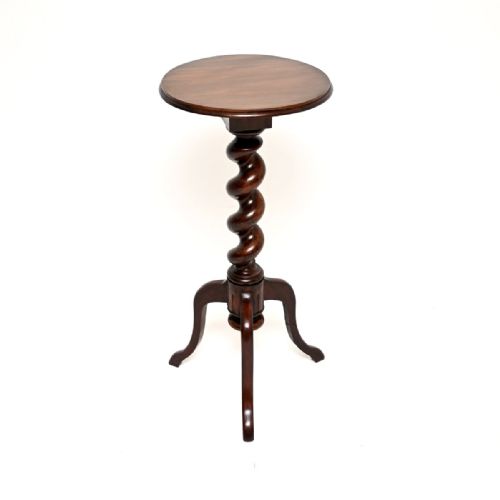
A barley twist tripod stand is a compact occasional table or pedestal designed to elevate lamps, plants, and decorative vessels on a three-legged base. When you search for a barley twist tripod stand, you encounter a variety of forms including torcheres, candle stands, wine tables, and small side tables.
The pieces on this page span the 17th century through to the Edwardian period, with Victorian examples appearing most frequently. Woods such as mahogany and walnut dominate the selection, often accompanied by occasional variations in oak, rosewood, and burr elm.
Makers utilised these stands as both functional furniture and decorative accents in domestic interiors. The combination of a slender upright column and a stable tripod foot defines the category across different revivals, from Jacobean to Georgian styles.
How they were made
Makers turned timber on a lathe to create the distinctive helical spiral of the barley twist column. This demanding technique required precise hand-chiselling and smoothing to achieve an even rhythm down the length of the shaft.
The central shaft was then joined to a tripod base, often featuring cabriole or plain legs secured with hidden tenons or brackets. Selected surfaces received wood inlay, marquetry, or brass fittings to enhance the visual weight of the timber.
Barley Twist Tripod Stand Retail Price Guide 2026
Typical asking prices for barley twist tripod stand among the pieces listed under this phrase on Sellingantiques today, from the lower quarter to the upper quarter. They describe what is for sale here now, not the wider market.
Listings feature pieces spanning from the 17th century to the 1920s, constructed predominantly in mahogany, walnut, and oak.
What varies in quality
The crispness of the hand-turned spiral separates finer examples from heavier, mass-produced alternatives. A well-executed twist maintains exact proportions and smooth transitions along the column without flat spots or wobble.
Choice of timber and grain alignment dictate the distinction at the upper end of the range. Solid walnut or figured mahogany with rich natural patination outlasts softer woods or poorly fitted joints on the tripod base.
Holland & Son
The Barley Twist Tripod Stand Glossary
- Barley twist
- A type of turning shaped like a helix, resembling a twisted rope or a stalk of barley. This decorative column design gained popularity during the 17th century and saw widespread revival in Victorian furniture.
- Tripod base
- A furniture support comprising three legs radiating from a central point. This arrangement ensures stability on uneven floors.
- Torchere
- A tall, slender stand designed specifically to hold a lamp or candle. These pieces often feature elevated platforms to project light across a room.
- Teapoy
- A small table or caddy used originally for holding tea canisters. Some examples incorporate pedestal or tripod supports.
- Marquetry
- The art of applying decorative pieces of veneer to a structure to form intricate patterns. This technique appears on tabletop surfaces using contrasting woods.
Barley Twist Tripod Stand: Frequently Asked Questions
What is a barley twist tripod stand used for?
These versatile stands serve as elevated platforms for holding lamps, small decorative objects, or house plants in corners and beside seating.
Historically, specific variations functioned as wine tables, candle stands, or torchere pedestals to illuminate dark spaces.
How do I identify a Victorian stand?
Victorian examples often feature dark dense timbers such as walnut and mahogany, combined with heavy carving and spiral turning.
They frequently date from the mid to late 19th century, reflecting revivals of earlier Jacobean and Georgian aesthetics.
Are these stands stable on carpets?
The three-legged tripod design naturally self-adjusts on uneven surfaces better than a four-legged table.
However, very tall torchere stands benefit from placement away from heavy footfall to prevent tipping.
What woods were used for these pieces?
Cabinet makers utilised dense hardwoods including mahogany, walnut, oak, and rosewood to withstand the strain of slender turned columns.
Some examples incorporate decorative elements like burr elm, brass mounts, and wood inlay.