
Mahogany Balloon Chairs
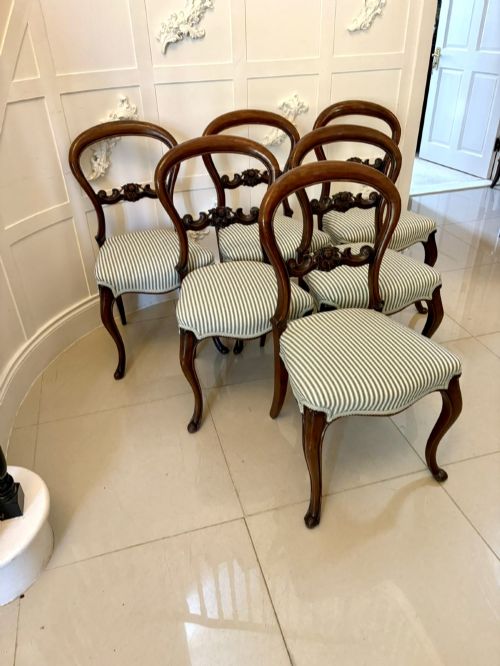
Mahogany balloon chairs bring the curved, sculptural timber backs of the nineteenth century into modern dining rooms.
Mahogany Balloon Chairs
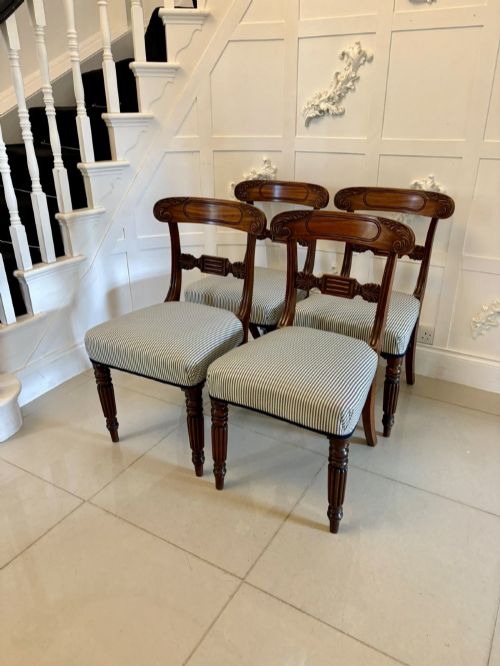
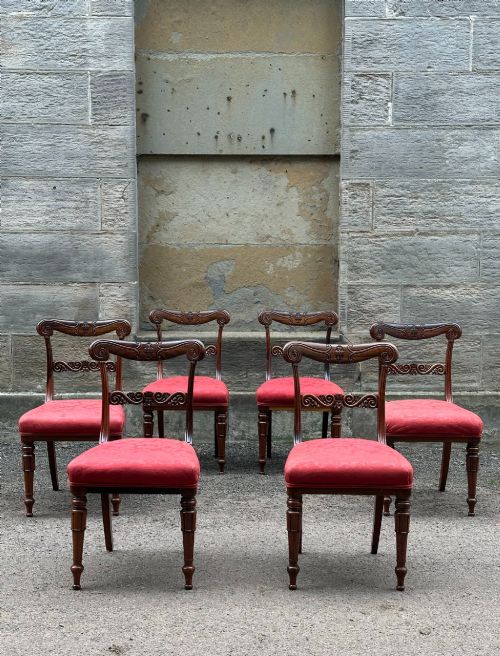
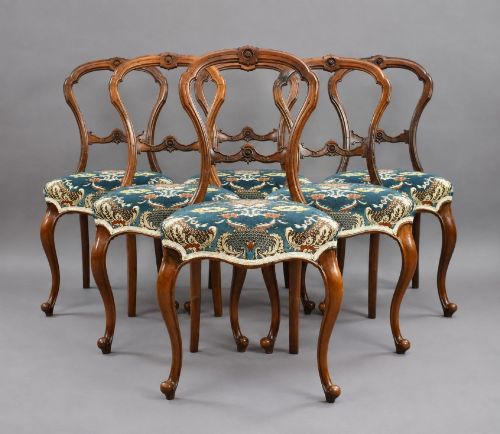
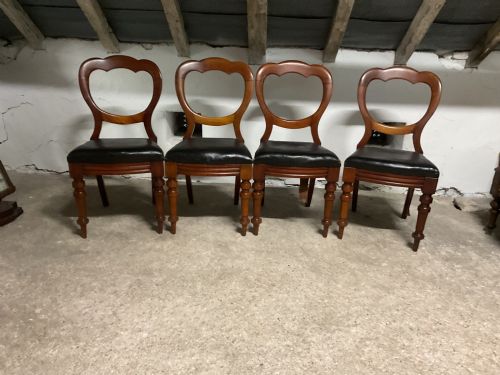
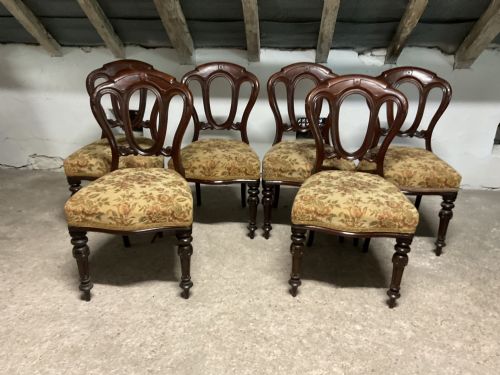
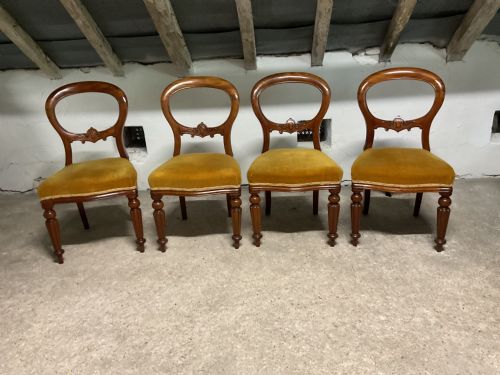
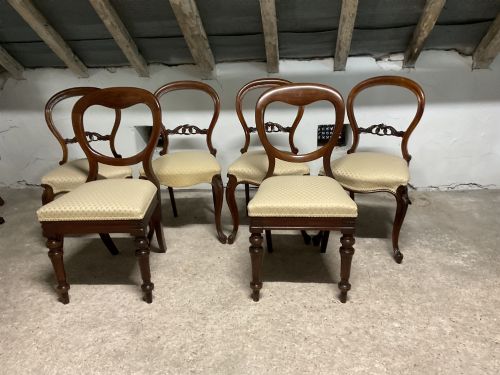
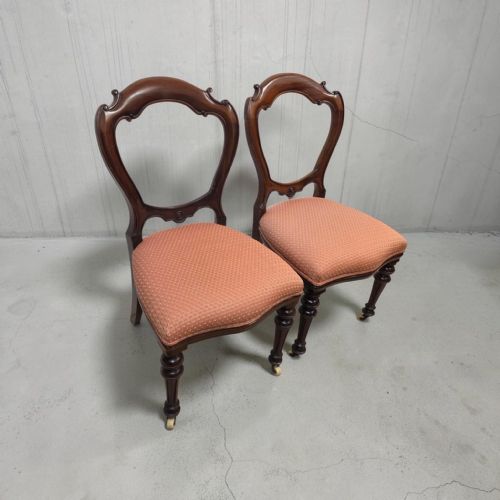
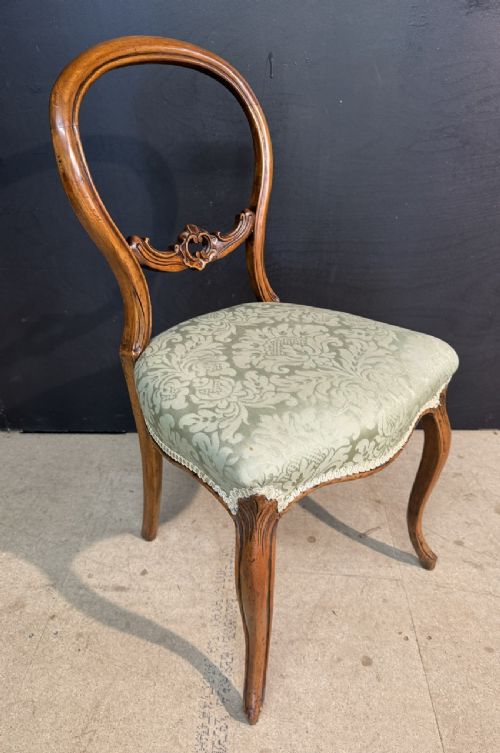
When you search for mahogany balloon chairs, you encounter seating built primarily during the Victorian era, alongside pieces originating in the Regency and William IV periods. The form is defined by an oval or rounded backrest that curves outward like a balloon, supported by turned or cabriole legs.
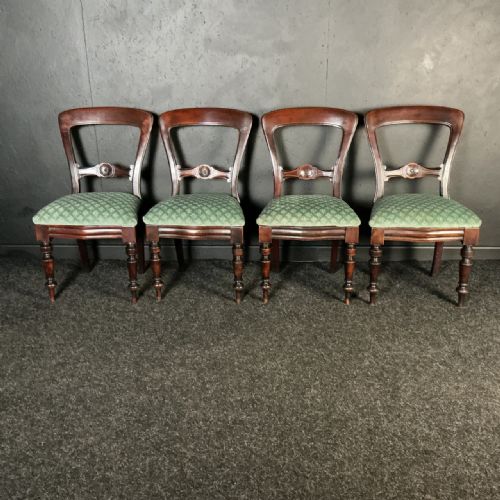
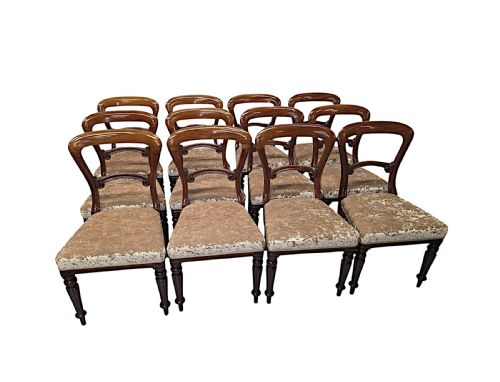
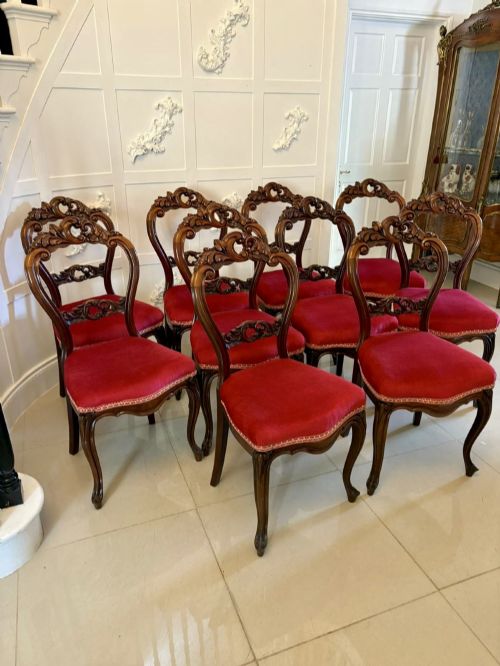
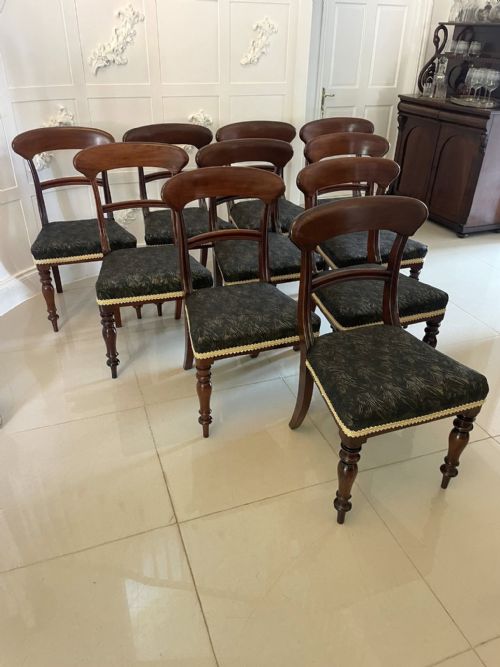
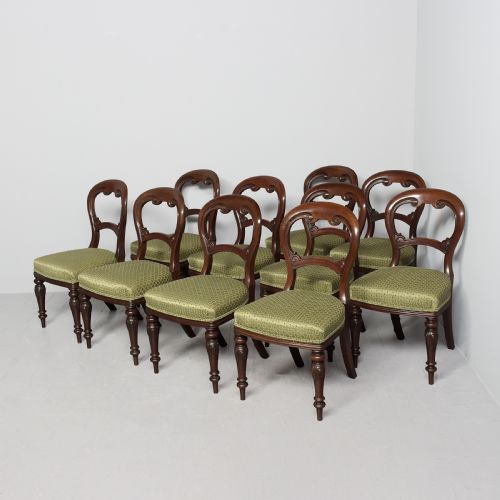
The version you are most likely to meet on this page is the dining chair, often found in sets of four, six, eight, or ten. These range from plain frames to deeply carved examples with scroll details or pierced splats.
How they were made
Cabinet makers utilised dense timbers, predominantly mahogany, alongside occasional rosewood and walnut, shaping the curved backrails through steam bending or careful lamination. Solid timber construction provided the structural strength required to support the open loop of the balloon back without splitting under pressure.
Upholstery techniques varied from drop-in pad seats to fully sprung bases covered in fabrics such as velvet, brocade, or contemporary textiles. Brass fixings and internal webbing secured the padding, while hand carving defined the surface decoration on the top rails and front legs.
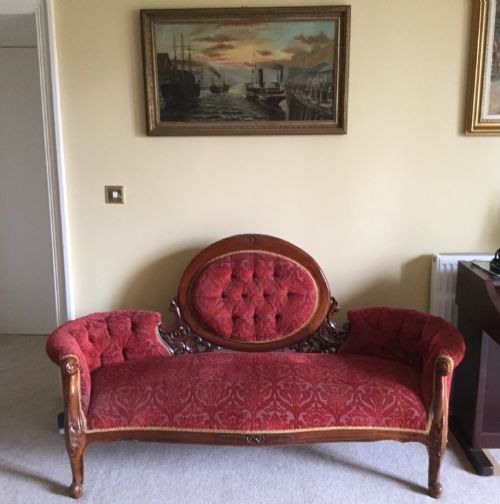
Listings feature dining chairs, armchairs, and sofas spanning the Victorian, Regency, and William IV periods in solid mahogany, rosewood, and walnut.
What varies in quality
The distinction between standard seating and top-tier pieces rests on timber selection, the crispness of the hand carving, and the integrity of the frame construction. Superior examples exhibit tightly grained mahogany with rich natural colour, alongside deeply defined floral or scroll motifs carved directly into the solid wood rather than applied as separate ornaments.
Rigidity in the joints and the weight of the timber separate finer sets from lesser alternatives. Chairs that retain their original proportions and sturdy leg joinery without excessive past repairs command greater appreciation among collectors.
Gillows
The Mahogany Balloon Chairs Glossary
- Balloon back
- A chair back shaped in a continuous oval curve resembling the outline of a balloon. This silhouette dominated mid-nineteenth-century seating design.
- Splat
- The vertical central strip of wood connecting the seat to the top rail of a chair back. In these pieces, it often forms the lower curve of the balloon frame.
- Cabriole leg
- A furniture leg that curves outward at the knee and tapers inward toward the foot, echoing animal limbs. It appears frequently on mid-nineteenth-century decorative seating.
- Drop-in seat
- A removable upholstered frame that fits into a rebated opening in the chair seat rails. This design allowed for easier re-covering over generations of domestic use.
Mahogany Balloon Chairs: Frequently Asked Questions
How do I date a balloon back chair?
Dating relies on observing timber density, leg shape, and structural joinery relative to documented nineteenth-century stylistic shifts. Regency and William IV precursors display heavier frames and simpler lines, while Victorian examples introduce more exaggerated curves and intricate carved details.
Examining the underside reveals construction methods, screw types, and tool marks that help distinguish mid-nineteenth-century production from later revivals.
Were these chairs originally sold in large sets?
Dining chairs of this period were frequently produced in matched sets of six, eight, ten, or twelve to accommodate large nineteenth-century dining rooms. Surviving large sets remain intact because they stayed within the same households for generations.
Smaller groups of two or four typically served as occasional chairs, bedroom seating, or parlor furniture rather than formal dining sets.
How should I care for mahogany dining chairs?
Maintenance involves keeping the timber away from direct heat sources and sudden humidity changes that cause wood to dry and split. Regular dusting with a dry cloth preserves the polished surface without the need for heavy silicones.
Checking the leg joints periodically ensures that loose glue blocks or dry dowels are addressed before structural strain damages the frame.
Can I mix these chairs with a modern table?
The warm reddish-brown tones of nineteenth-century timber pair effectively with contemporary glass, metal, or plain oak dining tables. The sculptural silhouette of the curved back provides a visual contrast against straight-lined modern architecture.
Mixing chair sets with a large centre table creates a layered interior that highlights the individual grain and carving of each piece.