


Mahogany Afternoon Tea Stand
These mahogany afternoon tea stand examples offer tiered display for gatherings, bringing period timber and folding utility to domestic spaces.
Mahogany Afternoon Tea Stand
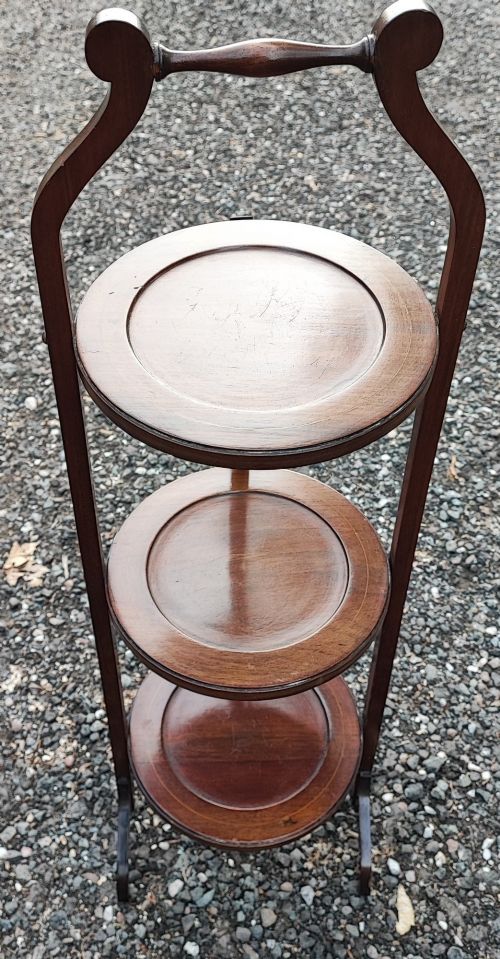
When you search for a mahogany afternoon tea stand, you encounter tiered items designed for serving or display, spanning the Georgian, Victorian, and Edwardian eras. The most common format met here is the multi-tiered folding cake stand, typically featuring three tiers connected by upright supports.
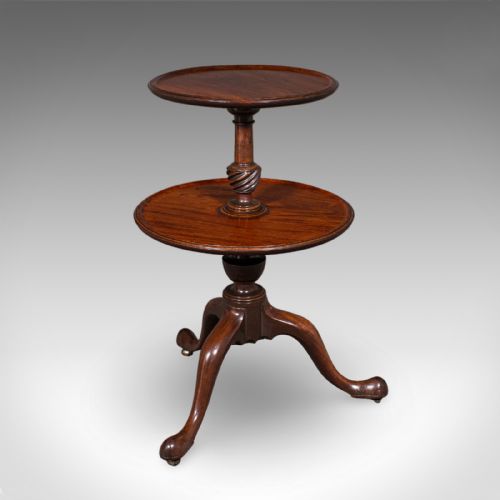
Beyond the standard folding cake stand, the evidence includes occasional tables, side tables, low lamp tables, and dumb waiters functioning as serving stands. These pieces cross over between formal tea service and versatile room furniture, appearing in configurations from two tiers up to four tiers.
Origins stretch from the early nineteenth century through to the nineteen twenties, capturing Regency elegance and Sheraton Revival aesthetics. Buyers find both static serving tiers and clever folding mechanisms suited to smaller spaces.
How they were made
Makers built these pieces primarily using solid mahogany and mahogany veneers, often enhanced with contrasting boxwood and satinwood inlay. Brass fixtures frequently appear on folding mechanisms and structural joints, adding both durability and visual contrast.
Some examples incorporate felt surfaces or delicate string inlay to define the tier edges. Construction methods balanced the need for lightweight portability in folding variants with the sturdy weight required for tiered serving tables.
Listings feature periods spanning from Georgian and Regency up to the nineteen-twenties, with Edwardian examples predominating.
What varies in quality
The distinction between standard production and superior examples lies in the crispness of the timber grain, the precision of the boxwood inlay, and the integration of brass hardware. Finer pieces display careful attention to the turning of upright supports and the smooth operation of folding joints.
Proportion and stability dictate overall merit, particularly in taller four-tier or three-tier folding formats. Superior craftsmanship ensures the tiers remain level and secure when extended, without looseness in the hinges or joints.
The Mahogany Afternoon Tea Stand Glossary
- Dumb waiter
- A multi-tiered piece of furniture used for serving food and beverages without the need for attendants. These items feature stacked circular or shaped tiers supported by a central column or tripod base.
- Sheraton Revival
- A late nineteenth and early twentieth century design movement inspired by the furniture of Thomas Sheraton. Pieces in this style utilise delicate mahogany framing, symmetrical proportions, and refined inlay.
- Boxwood inlay
- A decorative technique where contrasting pale boxwood is inserted into recesses cut into the darker mahogany surface. This method creates fine geometric lines and floral motifs along tier edges.
- Monoplane folding cake stand
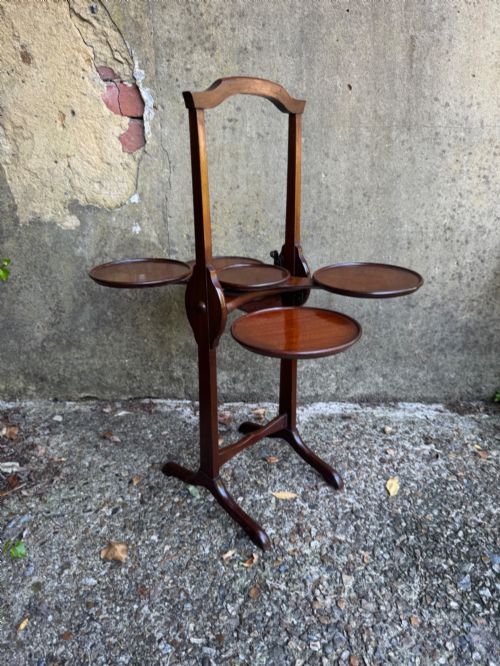
- A specific mechanical designation found among Edwardian examples where the tiers collapse or fold flat into a single plane. This design prioritises space-saving storage when the stand is not in use.
- Tiered stand
- Any piece of furniture constructed with multiple horizontal surfaces placed one above another. In this category, the form serves afternoon tea, cakes, or decorative plants.
Mahogany Afternoon Tea Stand: Frequently Asked Questions
What is a mahogany afternoon tea stand?
A mahogany afternoon tea stand is a tiered piece of furniture created to hold cakes, pastries, or tea accessories during afternoon gatherings. These items range from simple folding cake stands to formal dumb waiters and side tables.
Most examples seen here date from the Edwardian period and the early twentieth century, though earlier Georgian and Regency variants also appear. They combine functional surface area with decorative period woodwork.
How were these stands used originally?
These stands served domestic hospitality, holding small plates and teaware during afternoon tea in drawing rooms. Their tiered construction allowed hosts to present multiple items within a compact floor footprint.
Many versions featured folding frames so servants could pack them away easily when tea service concluded. Others remained stationary as permanent side tables or lamp stands.
How do I tell an Edwardian stand from a Georgian one?
Edwardian stands frequently utilise folding frames, satinwood and boxwood inlay, and Sheraton Revival design motifs typical of nineteen-hundred production. They often take the specific form of three-tier cake stands.
Georgian and Regency pieces tend to be heavier dumb waiters or two-tier serving tables constructed without folding mechanisms. Their timber finish and structural joinery reflect earlier cabinet-making traditions.
How do I live with a folding cake stand?
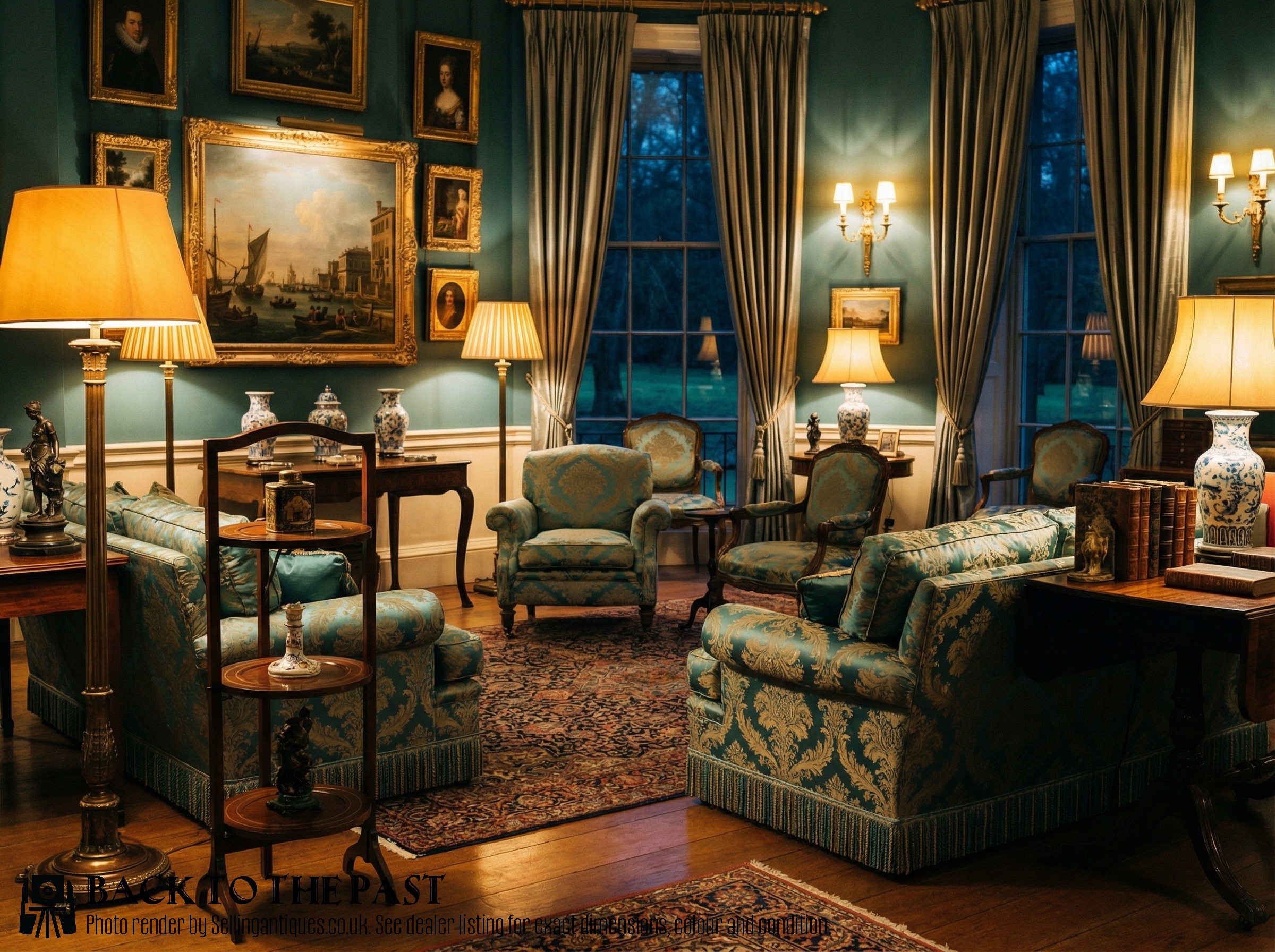
Living with a folding cake stand involves utilising its mobility to display small decorative objects, plants, or books in living spaces. The folding mechanism allows the stand to be stored flat against a wall when floor space is needed.
Regular care involves dusting the mahogany surfaces and treating the timber gently to preserve the polish and any delicate boxwood inlay. Placed beside a chair or in an alcove, the vertical tiers add height and structure to a room.