
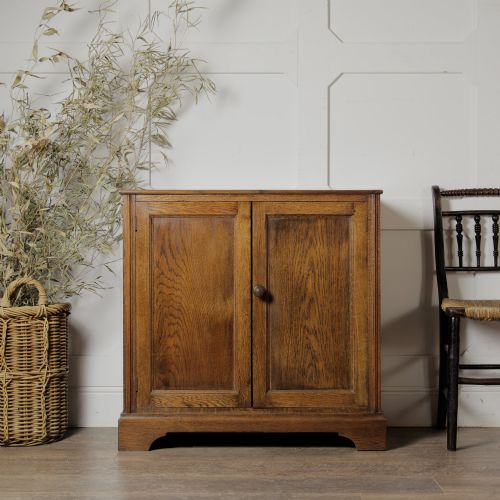
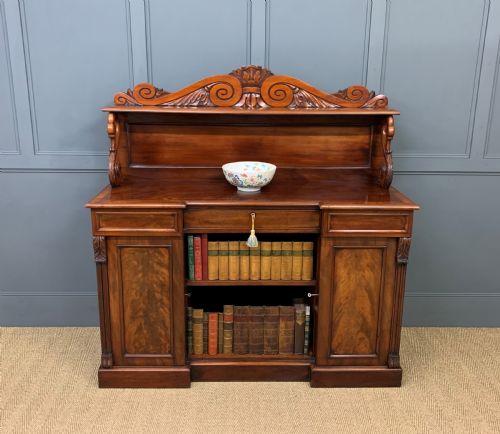
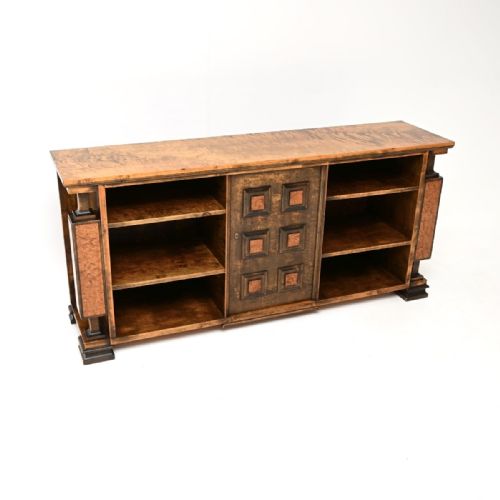
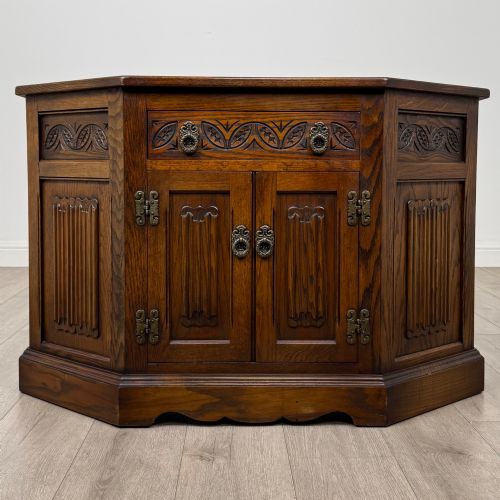
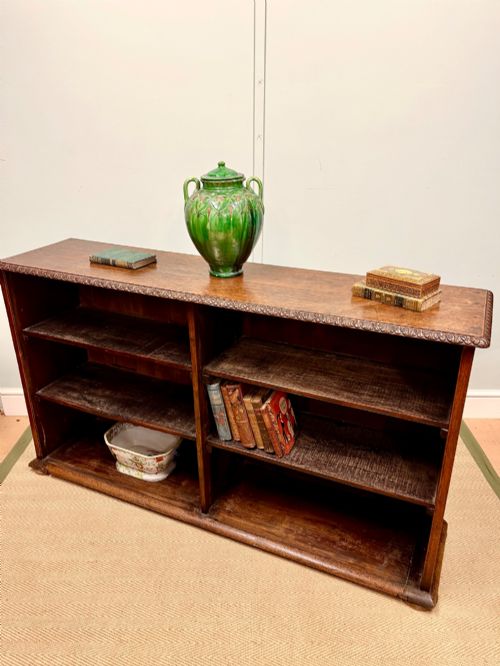
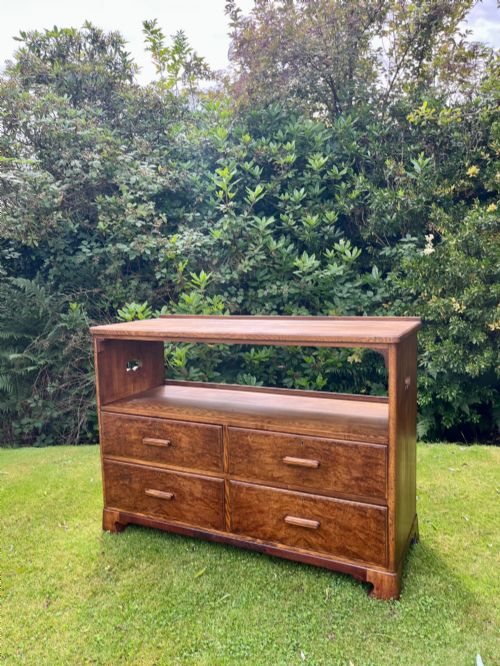
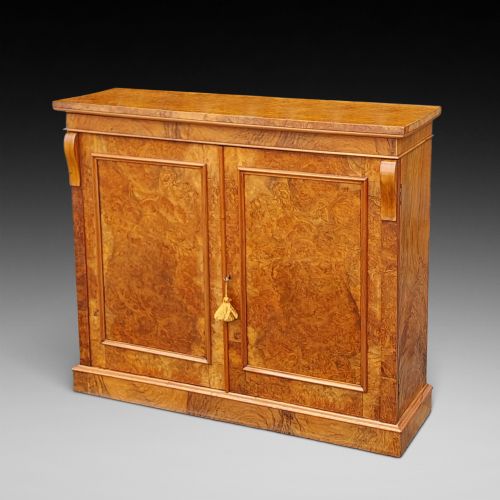
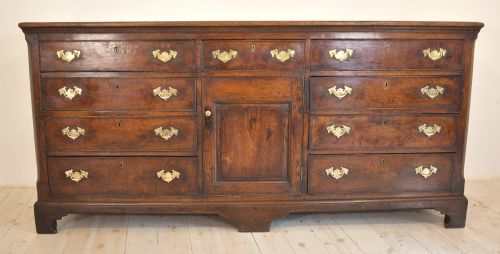
Low Wooden Credenza
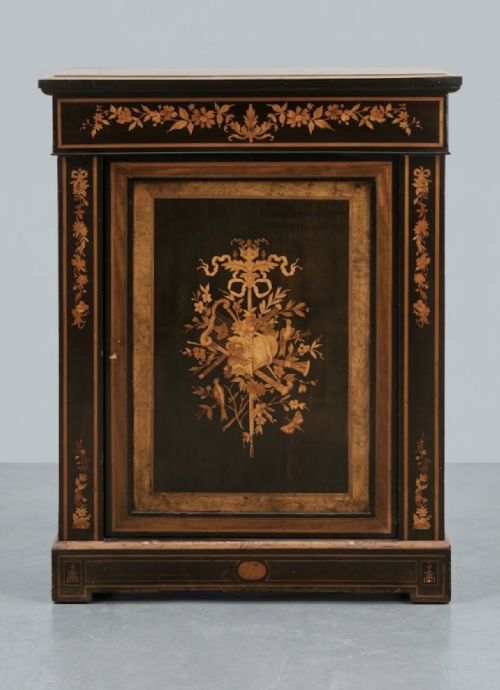
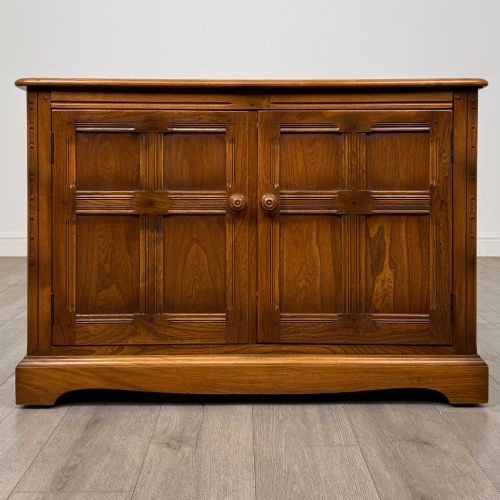
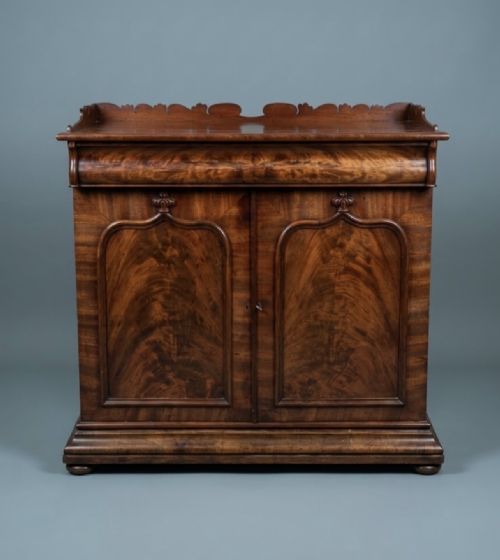
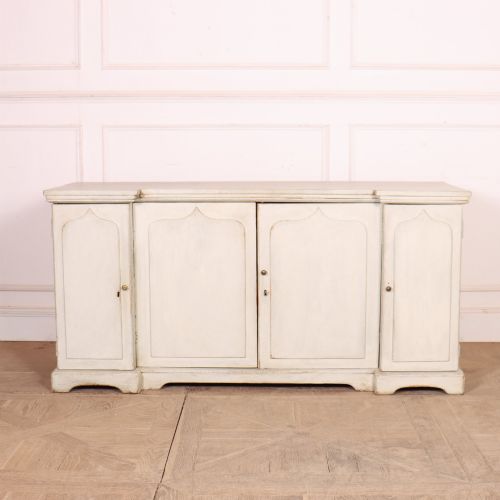
A low wooden credenza offers substantial storage with a low profile, bringing period character and practical surface space to a room.
Low Wooden Credenza
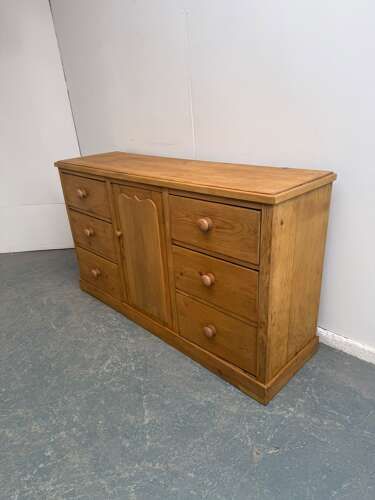
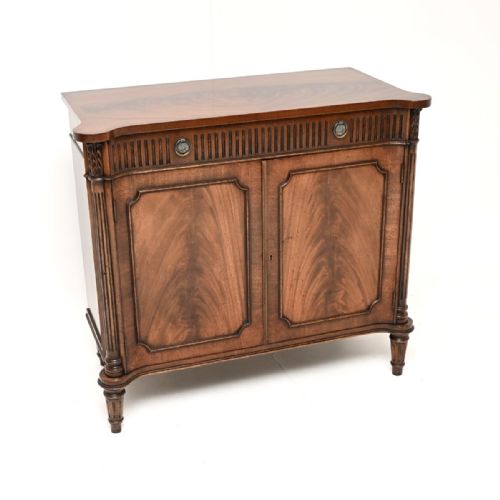
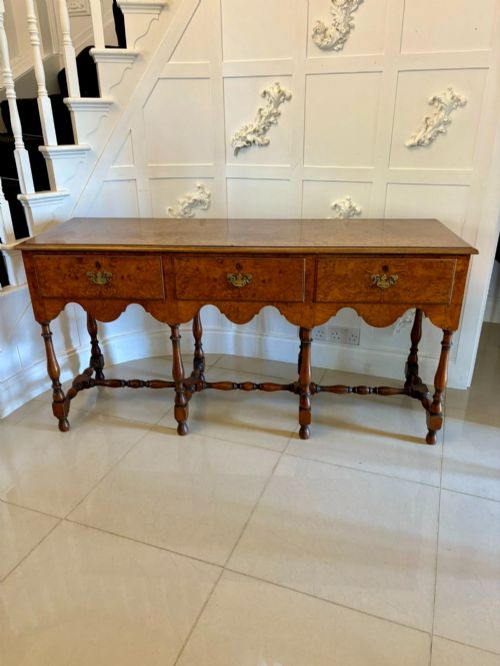
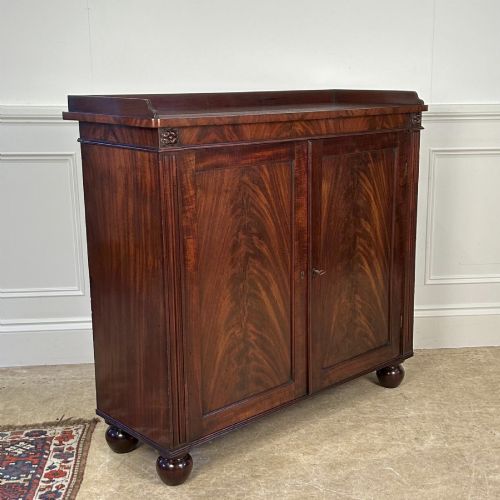
A low wooden credenza spans various historical periods, incorporating low cupboards, dresser bases, and side cabinets designed for domestic storage and display.
The pieces grouped under low wooden credenza appear in forms such as Georgian potboard bases, Regency side cabinets, and Edwardian golden oak cupboards.
Makers utilised timber such as oak, mahogany, walnut, and pine, often finished with polished surfaces or original paint.
How they were made
Carpenters constructed these items using solid timbers like oak and mahogany, frequently applying decorative veneers such as flame mahogany, burr walnut, and satin birch over secondary woods.
Details include brass hardware, carved elements, linenfold panelling, and painted surfaces that reflect the stylistic preferences of periods from the eighteenth century into the twentieth century.
Some provincial kitchen pieces still wear their original layers of paint, bearing the quiet marks of centuries of domestic life.
What varies in quality
The standard of a low wooden credenza depends on the selection of timber figures, such as matched flame mahogany or burr walnut veneers, and the precision of the joinery.
Superior examples exhibit thoughtful proportions, original hardware, and refined carving or inlay work executed by skilled cabinet makers.
Gillows·Whytock and Reid
The Low Wooden Credenza Glossary
- Dresser base
- A low-standing kitchen or dining cabinet featuring drawers or cupboards beneath a wide surface. This form provided essential storage in traditional domestic interiors.
- Breakfront
- A cabinet design where the central section projects forward from the flanking outer sections. This architectural arrangement creates depth and visual interest.
- Potboard
- An open lower shelf incorporated into dresser bases, historically utilised for storing pots and heavy kitchenware. It forms a stable base beneath the main body of the furniture.
- Gonçalo Alves
- A dense exotic hardwood with striking figuring, often utilised in Regency and Victorian cabinet making for decorative impact. It provides rich dark brown and golden tones.
- Linenfold
- A style of carved wooden panelling resembling folded vertical linen fabric. This technique appeared frequently on Tudor revival and Edwardian oak cupboards.
Low Wooden Credenza: Frequently Asked Questions
Where should I place a low wooden credenza?
These cabinets suit dining rooms, hallways, and living spaces where low furniture preserves sightlines while offering concealed storage.
Their substantial top surfaces also accommodate lamps, books, and decorative objects without crowding a wall.
How do I identify the period of a low wooden credenza?
Examine the timber species, construction methods, and hardware style to determine the era of manufacture.
Georgian and Regency pieces often feature mahogany or oak with subtle inlay, whereas Edwardian items frequently utilise golden oak or light finishes.
What is the difference between a dresser base and a side cabinet?
A dresser base typically originates from kitchen or dining contexts, featuring rows of drawers and lower shelving or cupboards.
Side cabinets generally offer enclosed storage with doors and tend to have more formal decorative veneers suited to reception rooms.
Can I use a low wooden credenza for media storage?
The low profile and internal cabinet space make many of these historical pieces practical for modern electronics.
Cupboards with panelled or wooden doors conceal equipment while keeping items easily accessible.