

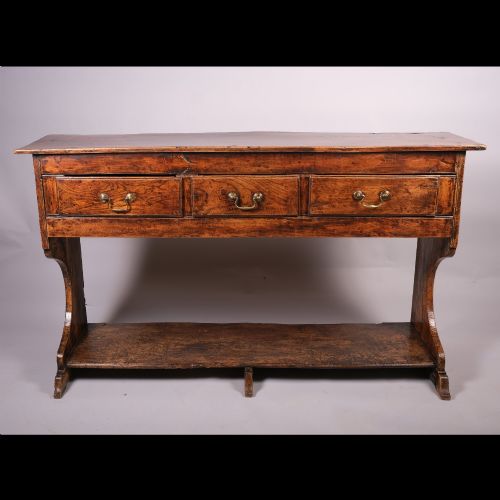
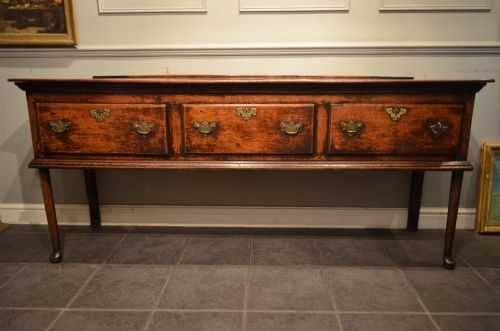
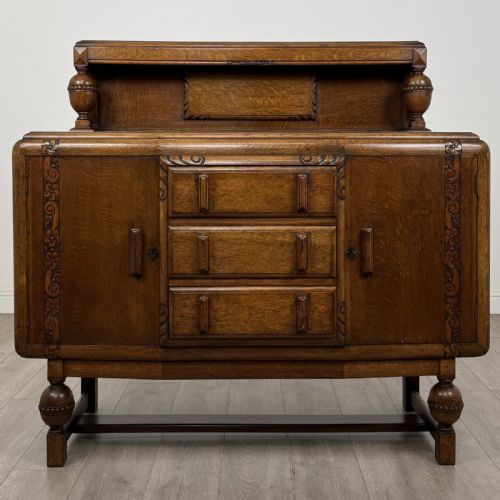

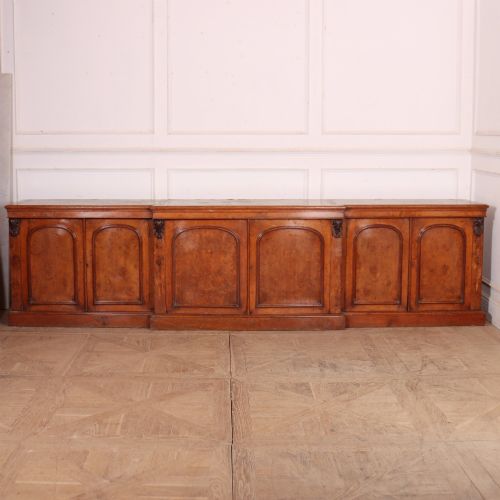
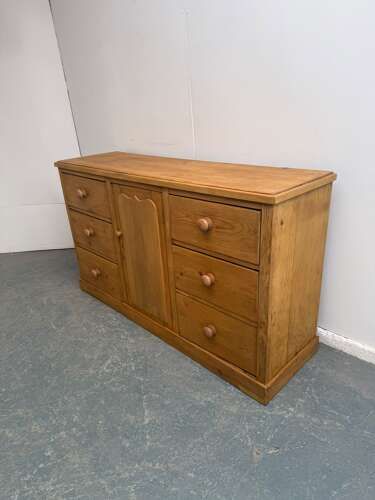
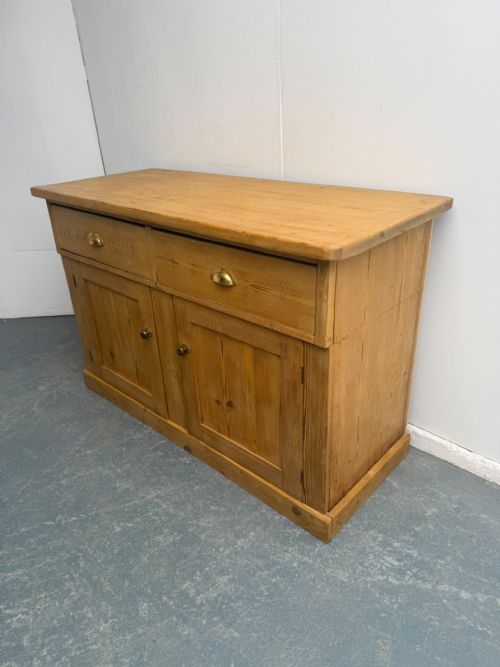


Traditional English Credenza Base
A traditional english credenza base is a sturdy storage piece built for domestic service, most often seen here in oak, pine, or burr walnut from the eighteenth and nineteenth centuries.
Traditional English Credenza Base
A traditional english credenza base brings functional kitchen and dining room storage from past centuries into modern interiors. These heavy storage items, often categorized alongside dresser bases and sideboards, offer deep drawers and enclosed cupboards beneath a wide timber surface.
The pieces on this page span the eighteenth and nineteenth centuries, taking shape through Georgian, Victorian, and Edwardian eras. Buyers encounter items ranging from formal golden oak constructions to rustic painted housekeepers cupboards and country house potboard bases.
Regional English cabinetmaking heavily influences these forms, particularly through the use of native timbers like elm and pine alongside traditional oak. Many examples reflect domestic utility in country houses, designed to hold linen, tableware, and provisions.
Materials and Construction
Makers built these pieces using solid native timbers, predominantly oak and pine, frequently paired with secondary woods like elm for structural elements and drawer linings. Surface finishes range from waxed pine and golden oak to original paint and figured burr walnut veneers.
Hardware consists primarily of brass fittings, drop handles, and iron hinges that secure heavy doors and drawers. Joinery relies on traditional pegged frames and solid board construction designed to endure heavy daily domestic use over generations.
Traditional English Credenza Base Retail Price Guide 2026
Typical asking prices for traditional english credenza base among the pieces listed under this phrase on Sellingantiques today, from the lower quarter to the upper quarter. They describe what is for sale here now, not the wider market.
Judging Quality and Character
Quality rests in the choice of timber and the integrity of the original construction rather than decorative excess. Fine examples feature well-figured burr walnut or richly grained eighteenth century oak with patination accumulated through long use.
Proportion and proportioned storage distinguish finer country house pieces from simpler utility items. The survival of original brass hardware, unaltered timber patination, and sound structural joinery elevate certain examples above standard workshop output.
The Traditional English Credenza Base Glossary
- Potboard
- An open lower shelf beneath a dresser base designed to hold pewter plates and heavy pots. This storage shelf sits close to the floor between the supporting legs.
- Burr Walnut
- A highly figured timber harvested from walnut tree growths, prized for intricate grain patterns. Cabinetmakers utilised this veneer on formal nineteenth century furniture.
- Housekeepers Cupboard
- A tall storage unit designed for linen and provisions in large country houses. These cupboards often feature deep lower drawers and panelled upper doors.
- Dresser Base
- The lower section of a kitchen or dining room storage unit featuring drawers and cupboards. This form serves as a standalone sideboard or serving surface.
Traditional English Credenza Base: Frequently Asked Questions
What is a traditional english credenza base used for?
These pieces provide substantial storage with surface space, drawers, and cupboards suited for living rooms, hallways, and dining spaces.
Historically utilised for storing tableware, linen, and household provisions, they now function as sideboards or media credenzas in modern homes.
How do I date an antique credenza base?
Dating relies on timber selection, construction methods, and hardware styles seen across Georgian, Victorian, and Edwardian periods.
Eighteenth century pieces typically feature hand-cut joints and dense oak, while nineteenth century examples often incorporate pine, elm, or burr walnut veneers.
Are these pieces made of solid wood?
The listings on this page consist of solid timbers like oak, pine, elm, and iron fittings, alongside decorative burr walnut veneers.
Traditional cabinetmakers built structural frames from sturdy native hardwoods to withstand heavy domestic demands.
What is the difference between a dresser base and a sideboard?
While both terms describe low storage furniture with drawers and cupboards, dresser bases often originate from kitchen and country house environments.
Sideboard forms can sometimes reflect more formal dining room designs from the Georgian and Victorian eras.