




Elm Side Cabinet
An elm side cabinet brings figured grain and honest storage to a room, offering everything from Chinese provincial red lacquer to French burr wood.
Elm Side Cabinet
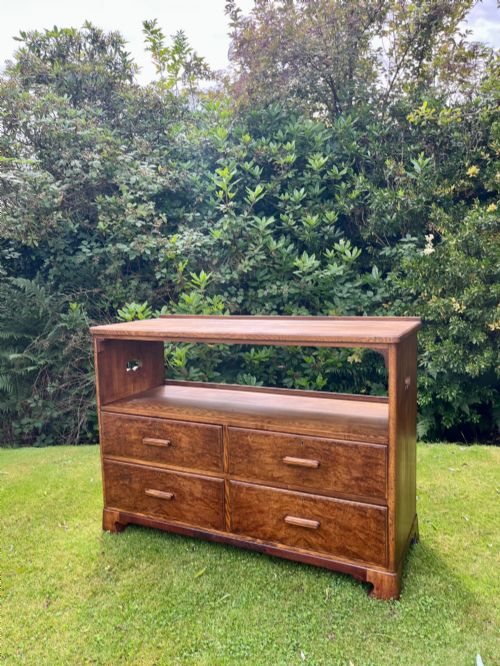
An elm side cabinet is a storage piece defined by its timber, appearing across periods from the 18th century through to Art Deco designs of 1930. Buyers seeking an elm side cabinet will encounter diverse forms, including bedside cupboards, commodes, dressers, and low Chinese storage pieces.
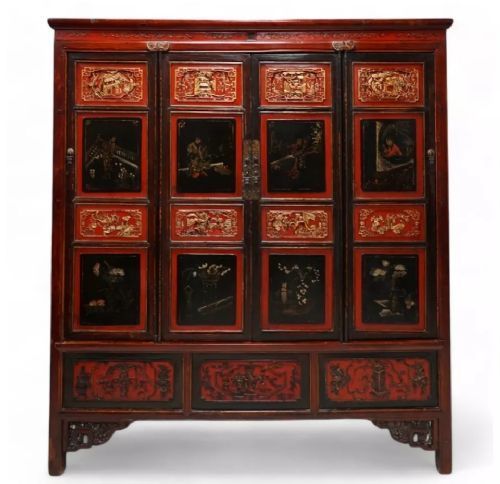
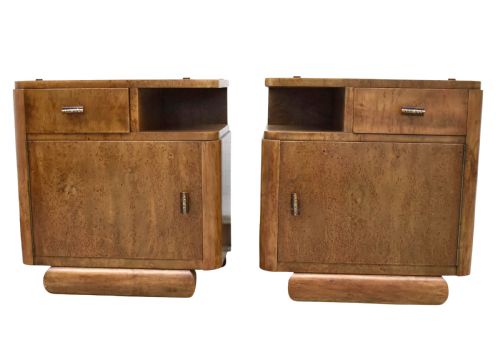
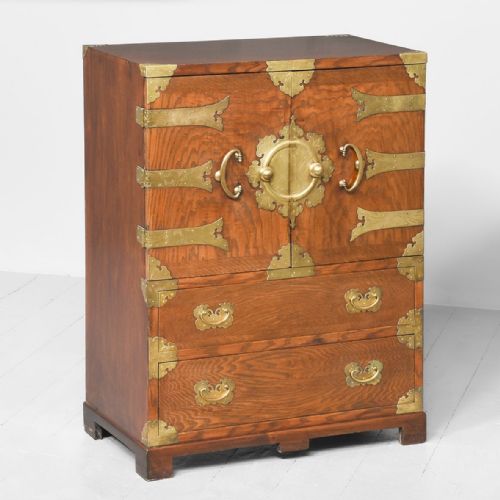
The selections span distinct geographical origins and styles, ranging from George III neoclassical commodes and Scottish William IV bedside units to Chinese provincial and Korean cabinets. French provincial examples and Art Deco burr elm pairs also feature regularly among the available inventory.
How they were made
Makers utilised solid elm, burr elm, and pippy elm for cabinet construction, often selecting wood with intense figuring for visible surfaces. Wood inlay added linear contrast on continental and British pieces, while other examples integrated brass hardware for functional mounts and hinges.
Surface treatments varied widely by region and date, encompassing polished timber finishes alongside red lacquer applications on Chinese pieces. Marble tops were occasionally fitted to European commodes and bedside cabinets, pairing heavy stone with timber carcases.
Marriage cabinets carried bright red lacquer into homes to bring fortune and longevity to newlyweds.
What varies in quality
Quality rests principally in the selection and bookmatching of the timber veneer or the character of the solid wood grain. Pieces displaying dense burr figures or well-figured elm command attention through their visual depth.
Construction methods and regional craftsmanship also separate standard examples from exceptional ones. Refined joinery, original brass mounts, and intact historical surfaces elevate the standing of a cabinet.
Whytock and Reid
The Elm Side Cabinet Glossary
- Burr Elm
- A distortion in the growth of an elm tree that produces knotty, highly figured wood grain prized for decorative veneer. It creates swirling patterns across the front of commodes and cabinets.
- Commode
- A low standing cabinet or chest of drawers, often with a finished top surface such as marble or wood inlay. These pieces originated in France before appearing in British and continental workshops.
- Pippy Elm
- Timber scattered with small knots or 'pips' that interrupt the grain with circular markings. This natural variation adds distinct texture to country furniture.
- Marriage Cabinet
- A traditional Chinese storage piece constructed with two doors and internal shelving, historically associated with domestic unions. They often feature bright red lacquer finishes and brass hardware.
Elm Side Cabinet: Frequently Asked Questions
What is an elm side cabinet used for?
These cabinets serve as practical storage furniture in living rooms, hallways, and bedrooms. They hold tableware, linens, or bedside items depending on their scale.
Smaller versions function effectively as bedside tables or lamp stands, while larger sideboards and commodes anchor dining spaces or reception rooms.
How do I date an elm cabinet?
Dating relies on observing construction techniques, hardware styles, and timber preparation methods specific to each period. Eighteenth-century pieces often display hand-cut dovetails and vernacular joinery.
Nineteenth-century and Art Deco examples from 1930 reveal shifts toward symmetrical veneers, machine assistance, and specific regional aesthetic movements.
Are Chinese elm cabinets antique?
Many Chinese elm cabinets date from the 19th century and earlier periods, reflecting traditional provincial woodworking traditions. They often feature distinct frame-and-panel construction without metal nails.
Later pieces from the early 20th century maintain these regional forms while adapting to changing household needs.
How do I care for burr elm?
Burr elm benefits from stable indoor humidity and protection from direct sunlight to prevent timber movement and fading. Regular dusting with a soft, dry cloth preserves the polished surface.
Occasional application of appropriate wax feeding maintains the lustre of the figured wood without building up heavy residues.