
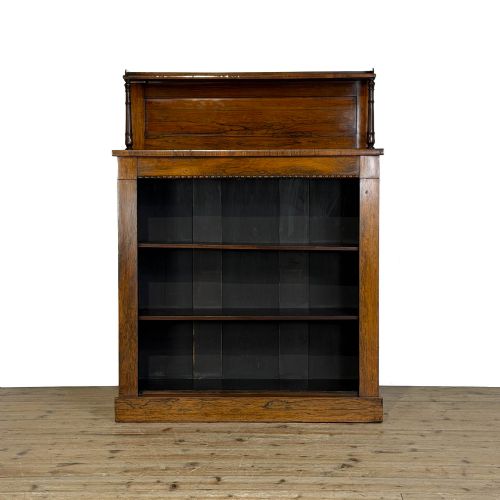
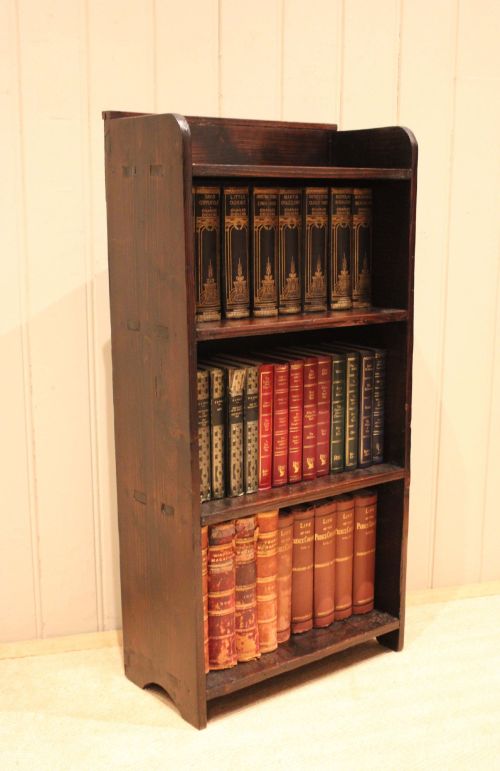
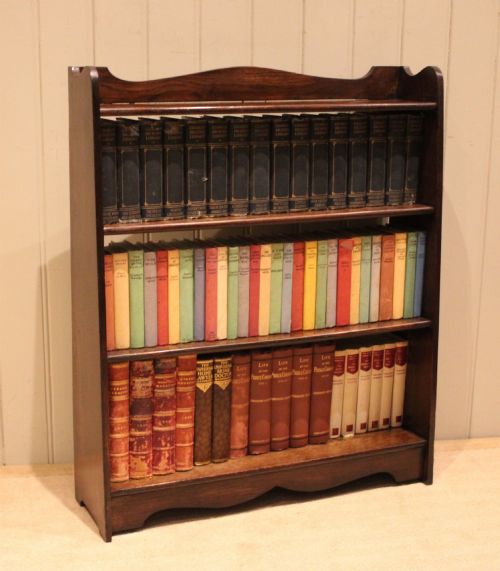
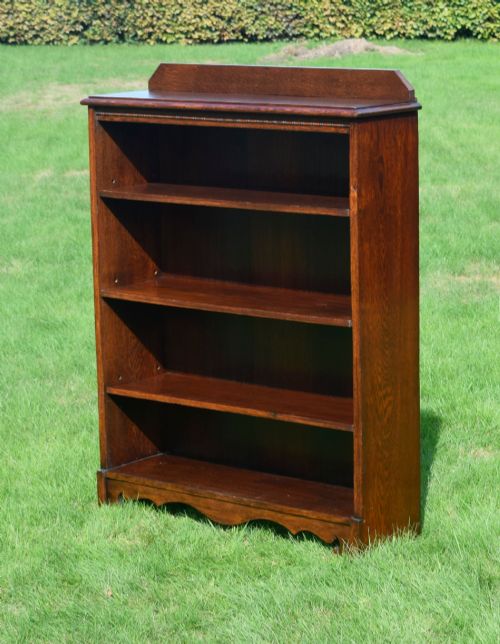
Low Standing Bookcase
A low standing bookcase holds a collection at hand height while keeping the room feeling open above.
Low Standing Bookcase
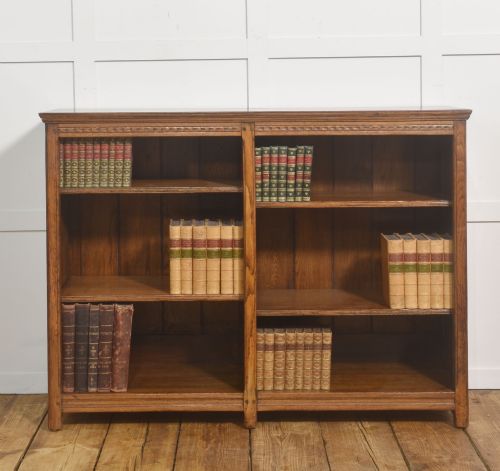
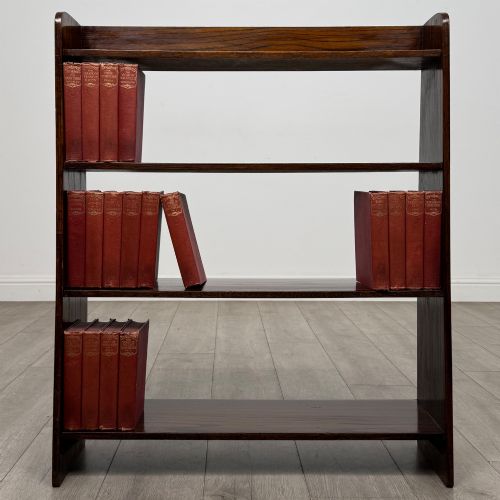
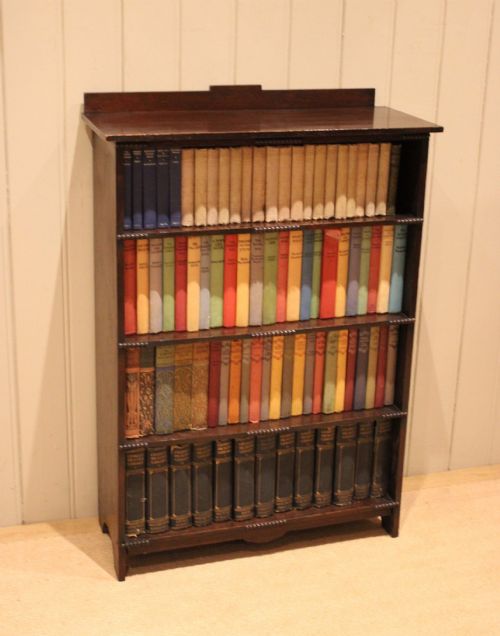
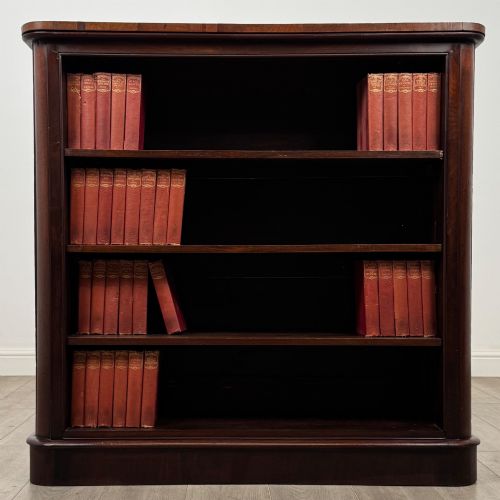
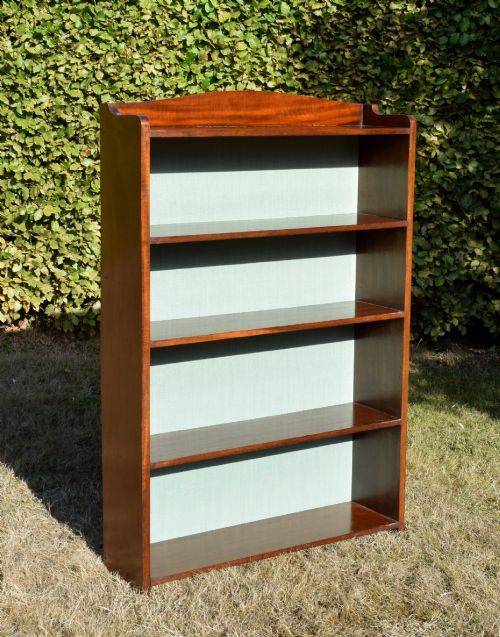
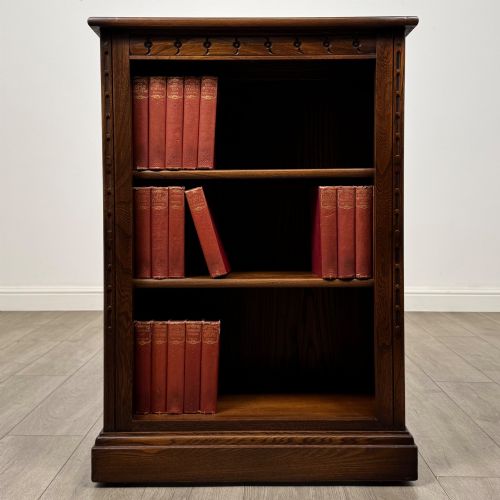
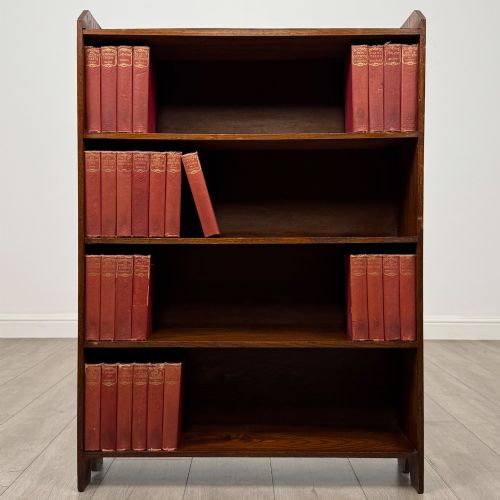
A low standing bookcase provides accessible open shelving at a height that allows the top surface to hold objects or function as a counter. When you search for a low standing bookcase, you encounter pieces designed for domestic libraries, studies and living spaces from the nineteenth and twentieth centuries.
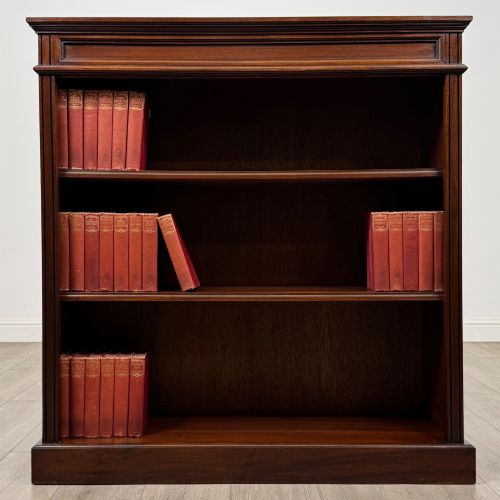
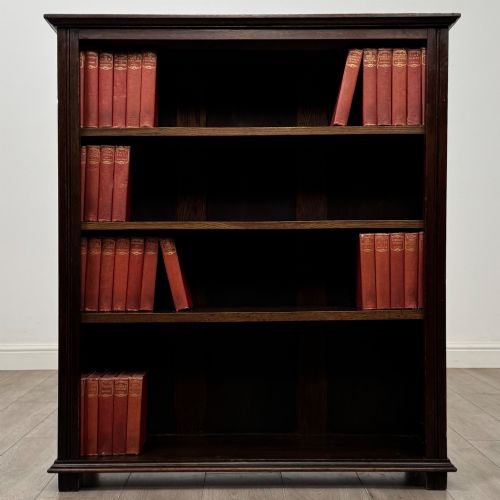
The most common form on this page is the open bookcase, often rendered in oak or mahogany. These pieces span periods from the Regency era through the Victorian period and into the Edwardian years and the 1930s, reflecting changing domestic interiors.
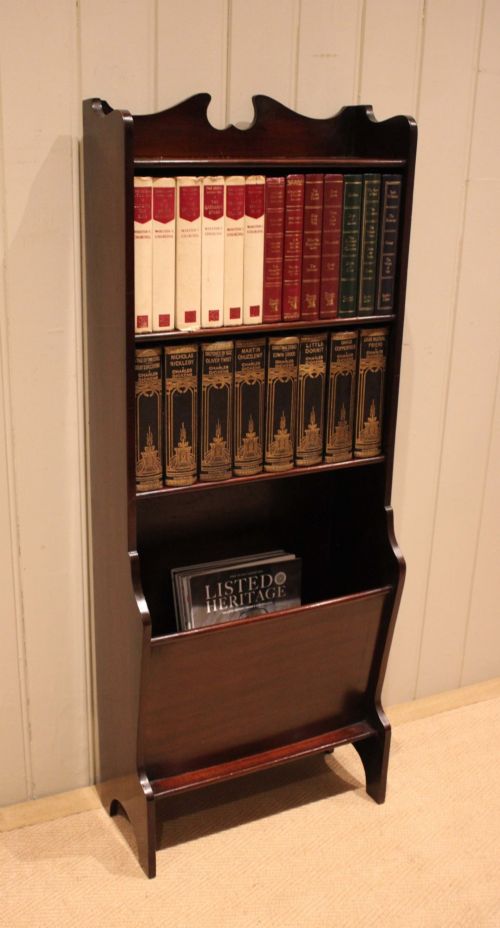
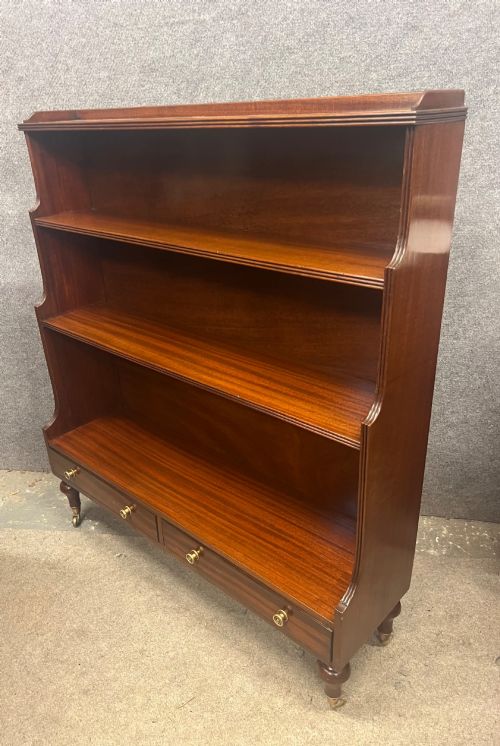
Many examples incorporate adjustable shelves, glazed doors, or small cabinets below. Variations include waterfall designs, revolving mechanisms, and specialised configurations like magazine racks or leather-topped surfaces.
What varies in quality
The distinction between standard commercial pieces and finer work lies in timber selection and secondary wood usage. Superior bookcases employ dense, well-figured mahogany or quarter-sawn oak throughout, with meticulous attention to internal framing and shelf adjustment mechanisms.
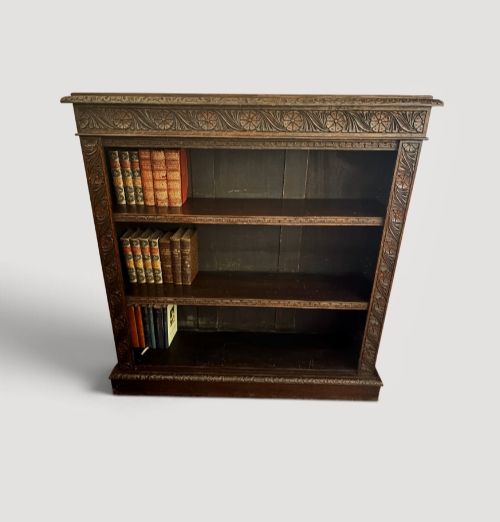
Subtleties of proportion and decorative restraint separate better examples from utilitarian workshop output. Details like inlaid stringing, carved mouldings, and solid brass castors indicate a higher grade of design and execution.
One unexpected variant includes a built-in magazine rack for the daily broadsheet.
Heals·Betty Joel·Gillows
The Low Standing Bookcase Glossary
- Dwarf bookcase
- A low freestanding bookcase designed to sit below window height so as not to block natural light. These pieces typically feature a single tier of open shelves.
- Waterfall bookcase
- A set of open shelves stepped back progressively from bottom to top, creating a profile resembling descending water. This style gained popularity during the Regency and Edwardian periods.
- Revolving bookcase
- A compact bookcase mounted on a hidden turntable base allowing books to be accessed from any angle. They are frequently built in square or octagonal forms.
- Breakfront
- A cabinet or bookcase whose central section projects forward from the flanking wings. This architectural arrangement creates depth and shadow across the facade.
- Adjustable shelves
- Shelving supported by movable pins, ratchets, or metal tracks that permit height reconfiguration. This feature appears on library bookcases designed for varied volumes.
Low Standing Bookcase: Frequently Asked Questions
Where should I place a low bookcase?
A low bookcase functions well beneath windows or against partition walls where tall furniture would overwhelm the floor plan. Its top surface offers a convenient place for lamps, ceramics, or small collections.
Because the height remains modest, these bookcases keep sightlines clear across a room while keeping frequently read volumes within arm's reach.
How do I adjust the shelves?
Many period bookcases use wooden ratchets, brass studs, or shelf slips that slot into vertical grooves inside the cabinet carcase. You lift each shelf slightly to disengage it from its supports.
Take care when repositioning older shelves not to force the timber, as aged pins or fixed tracks can stick within dry wood.
Can these hold heavy books?
Solid oak and mahogany shelves generally support substantial weight without sagging, provided the spans are reasonably short. Adjustable shelving in older pieces depends on the strength of the original support pins.
For heavy folios or large art volumes, check the thickness of the timber and the condition of the shelf supports before loading the lower tiers.
How do I tell an Edwardian bookcase from a Victorian one?
Victorian bookcases often feature darker finishes, heavier carved mouldings, and denser mahogany or walnut timbers. Edwardian examples tend to show lighter golden oaks, simpler satinwood inlays, and brighter polished surfaces.
Construction methods also shift over time, with Edwardian pieces occasionally showing machine-sawn backing boards alongside traditional hand dovetails.