
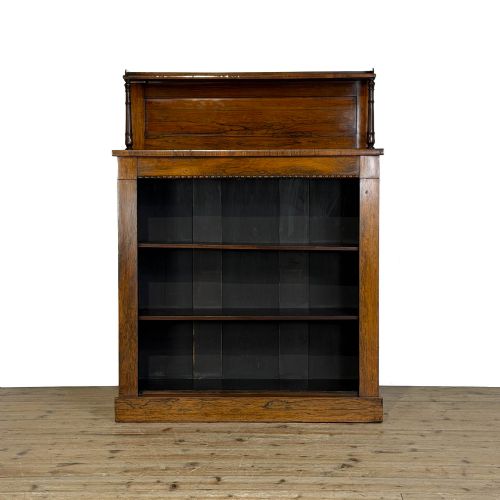
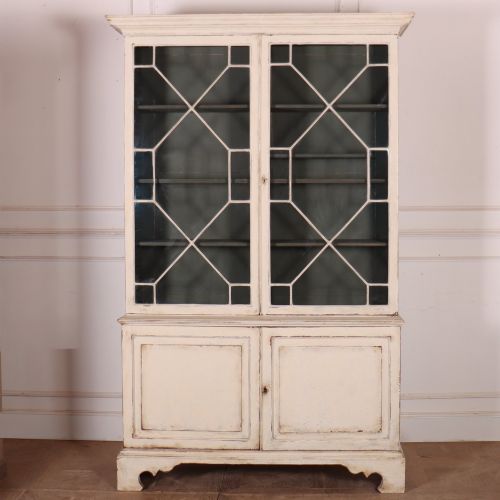
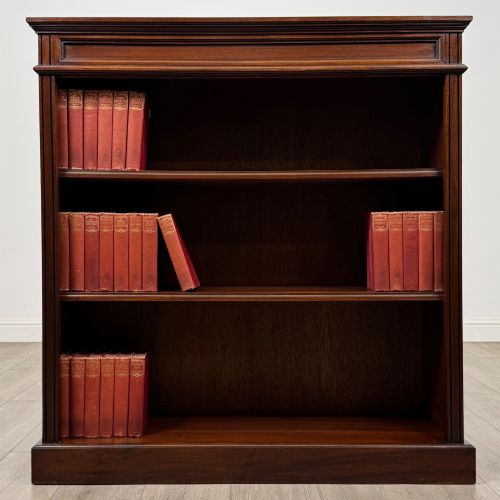
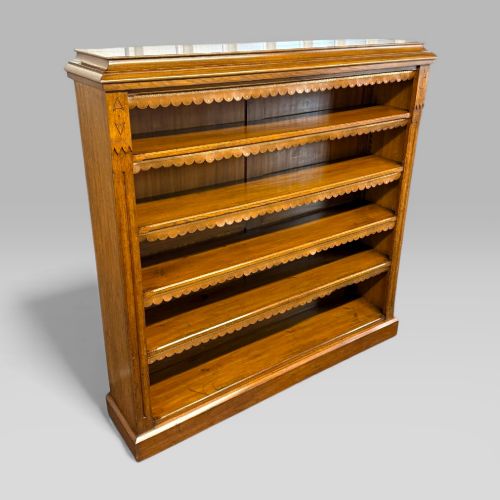

Antique Timber Bookcase
An antique timber bookcase brings warmth and character to a room while keeping a serious collection of volumes neatly housed.
Antique Timber Bookcase
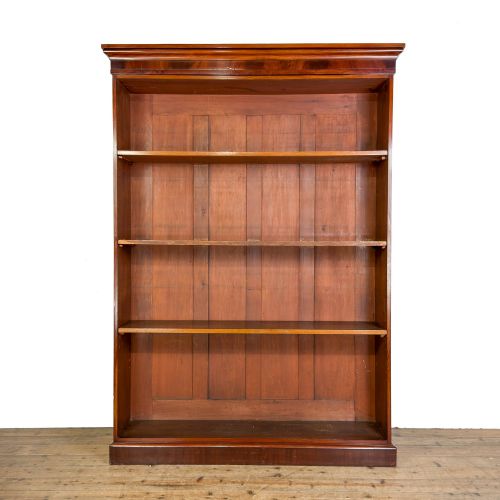
When you search for an antique timber bookcase, you encounter a practical storage piece designed to hold libraries large and small. These items range from simple open shelving units and wall shelves to elaborate glazed display cabinets and breakfront furniture.
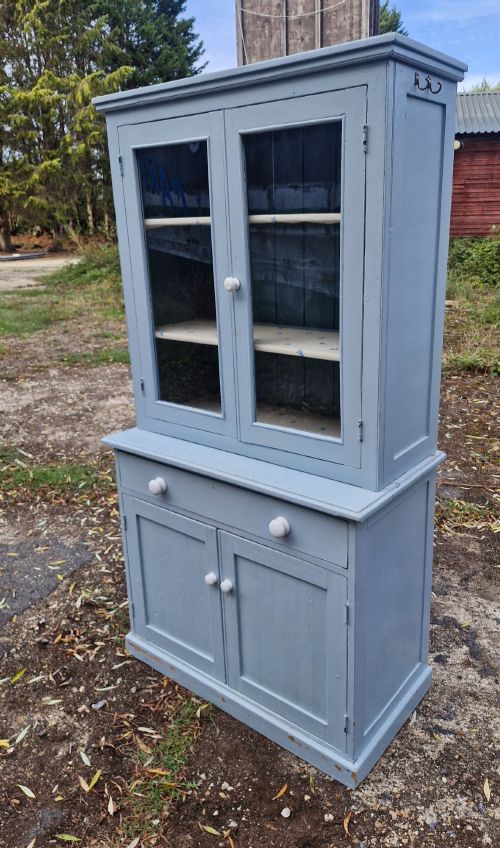
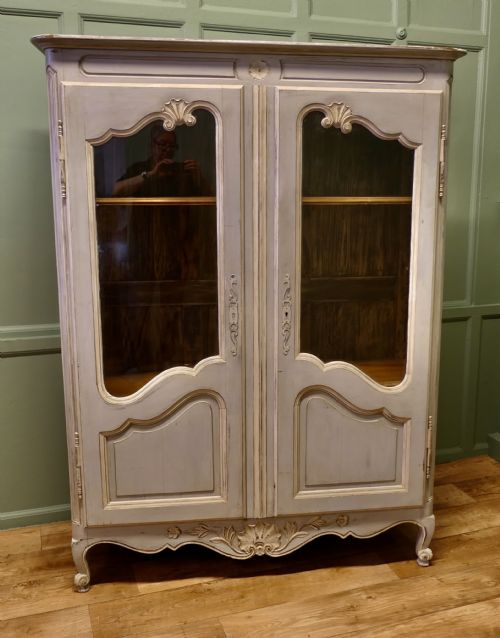
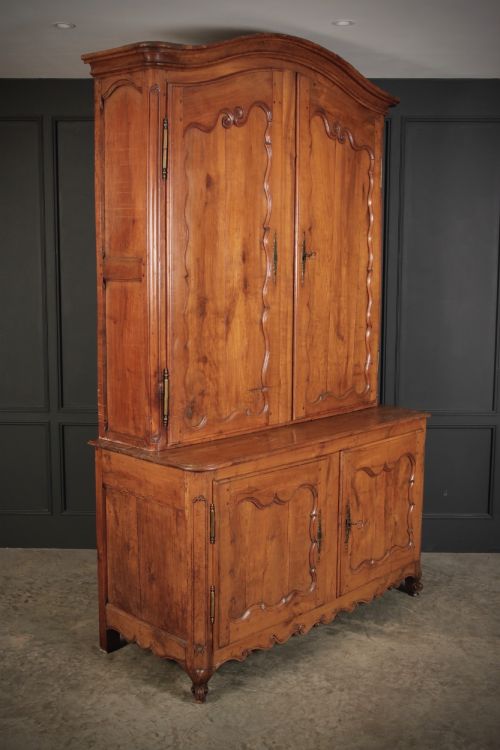
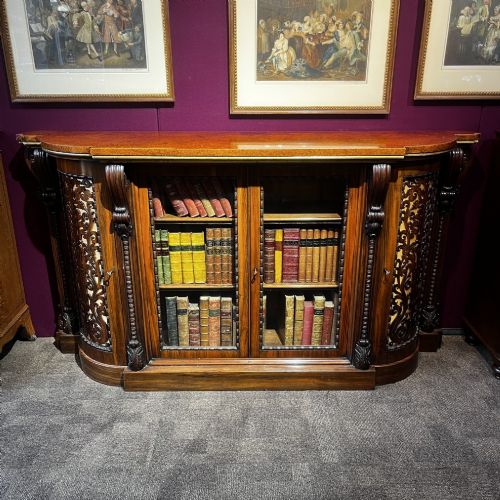
The pieces appearing on this page span several centuries and styles, originating predominantly from the 18th century, the Victorian era, and the Edwardian period. Mahogany, oak, and walnut form the backbone of the selection, accompanied by rosewood, pine, and painted finishes.
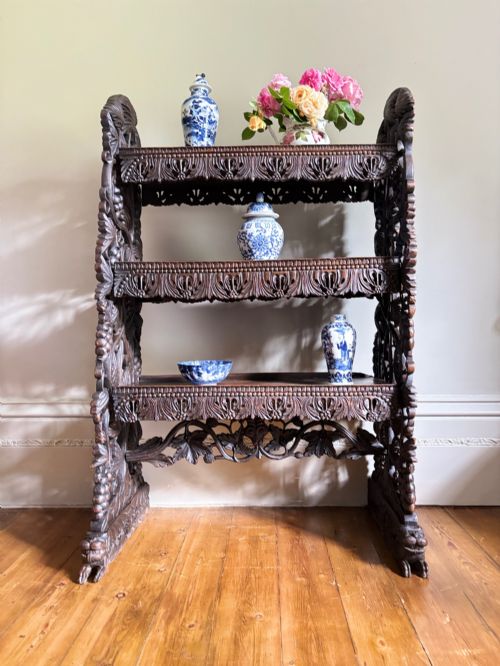
Forms vary from compact waterfall bookcases and barrister stacking units to grand multi-section library bookcases. Buyers select them for domestic studies, living rooms, and hallways where books and display objects require sturdy housing.
How they were made
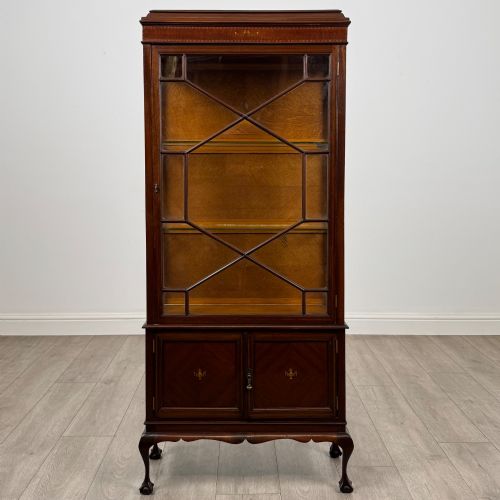
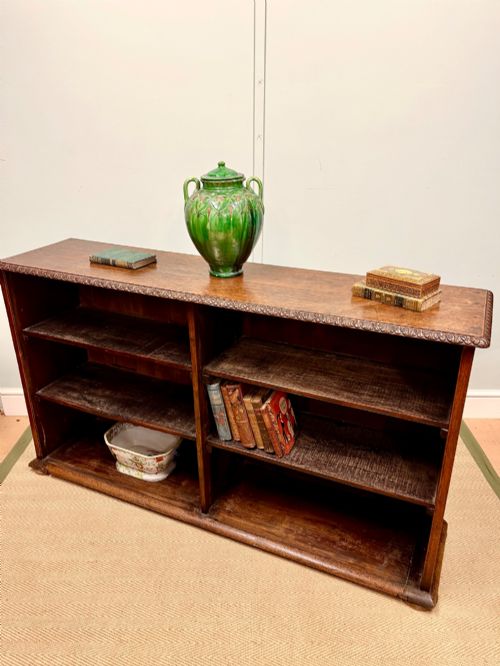
Cabinetmakers constructed these pieces using solid hardwoods such as mahogany, oak, walnut, and rosewood, frequently employing fine veneers like burr walnut or amboyna over secondary timbers. Surfaces often feature carved details, boxwood or ebony stringing, and painted decoration.
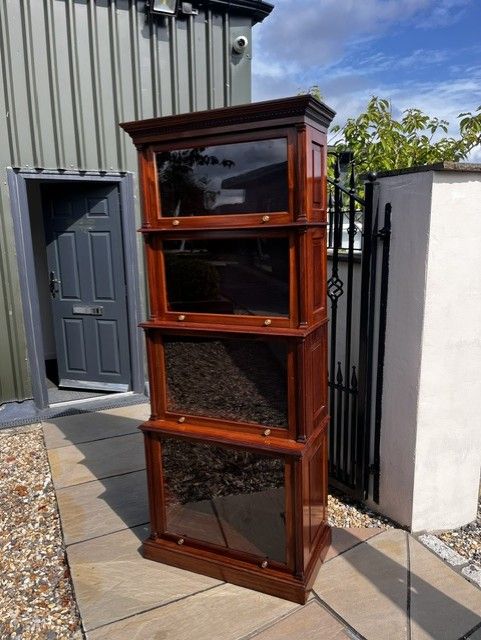
Glazed doors utilise timber framing fitted with individual glass panes, whilst barrister models incorporate mechanical lifting glass fronts. Brass hinges, handles, and locks secure doors and drawers across Victorian and Edwardian examples.
A barrister bookcase lets you slam shut all the glass tiers at once with a satisfying mechanical clatter.
What varies in quality
The distinction between ordinary and superior pieces rests upon timber selection and cabinetmaking execution. Dense, finely figured grain patterns in walnut or mahogany indicate high-grade material selection by the maker.
Joinery methods reveal the underlying standard of construction, where tight dovetails, smooth drawer runners, and well-fitted adjustable shelving separate workshop standard work from mass production. Original glass, hardware, and surface finishes elevate the standing of a piece.
Waring and Gillows·Gillows
The Antique Timber Bookcase Glossary
- Breakfront
- A cabinet design where the central section projects forward from the flanking wings. This architectural arrangement creates depth and visual interest in large library pieces.
- Barrister bookcase
- A modular shelving unit featuring glass-fronted tiers that lift and slide inside the case. This specific design allows individual sections to stack upon one another.
- Vitrine
- A glass-fronted cabinet or display case intended for showing porcelain, books, or objects of curiosity. These pieces often feature glazed sides as well as doors.
- Waterfall bookcase
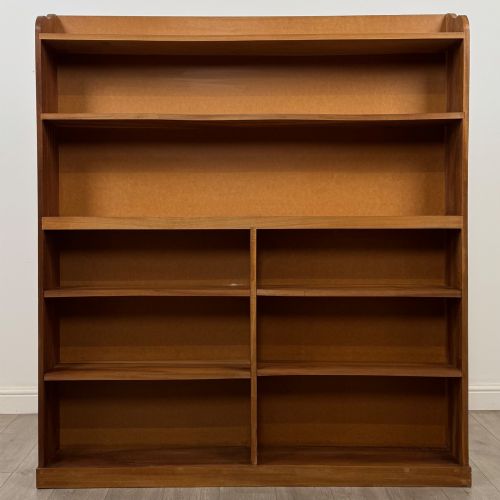
- A set of open shelves that steps back progressively from bottom to top, creating a profile resembling descending water. They frequently appear in smaller domestic rooms.
- Book trough
- A compact open receptacle designed to hold a small selection of books on a table or desk. These portable items often feature inlaid timber decoration.
Antique Timber Bookcase: Frequently Asked Questions
How do I clean timber shelves?
Dust surfaces regularly with a soft, dry cloth to prevent dirt accumulation on the polished wood. Avoid silicone-based polishes, opting instead for traditional beeswax applied sparingly.
Keep bookcases away from direct sunlight and strong heat sources to prevent the timber from drying out and splitting over time.
Can I adjust the shelf heights?
Many period bookcases feature adjustable shelving supported by wooden ratchets, brass studs, or metal track systems. This allows you to fit volumes of varying heights inside the cabinet.
Older fixed-shelf units require you to arrange books according to the set compartment dimensions.
How do I date an oak bookcase?
Examine the timber grain, construction joints, and backboards to determine the period. Hand-cut dovetails and pegged joints usually point to earlier 18th-century work, whilst machine-sawn elements suggest later manufacturing dates.
Stylistic markers such as Victorian carved decoration or Edwardian inlaid stringing also help narrow down the decade of production.