


Edwardian Waterfall Shelves
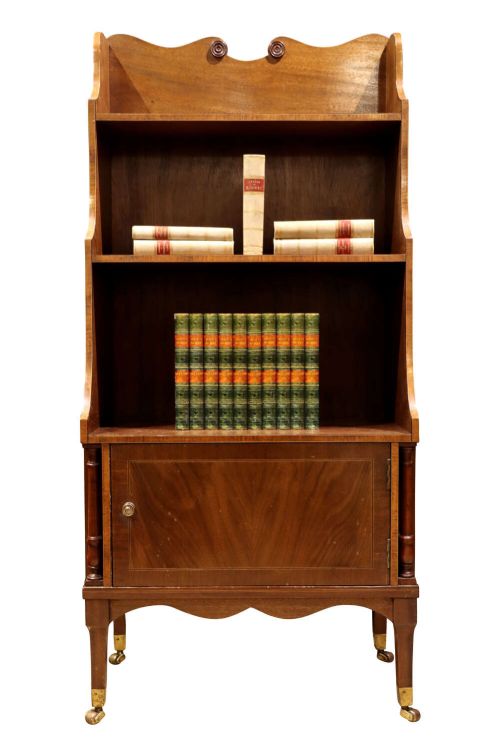
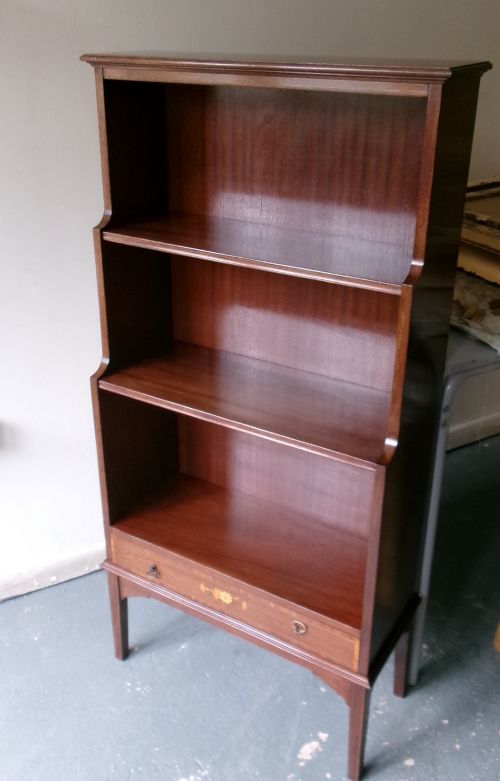
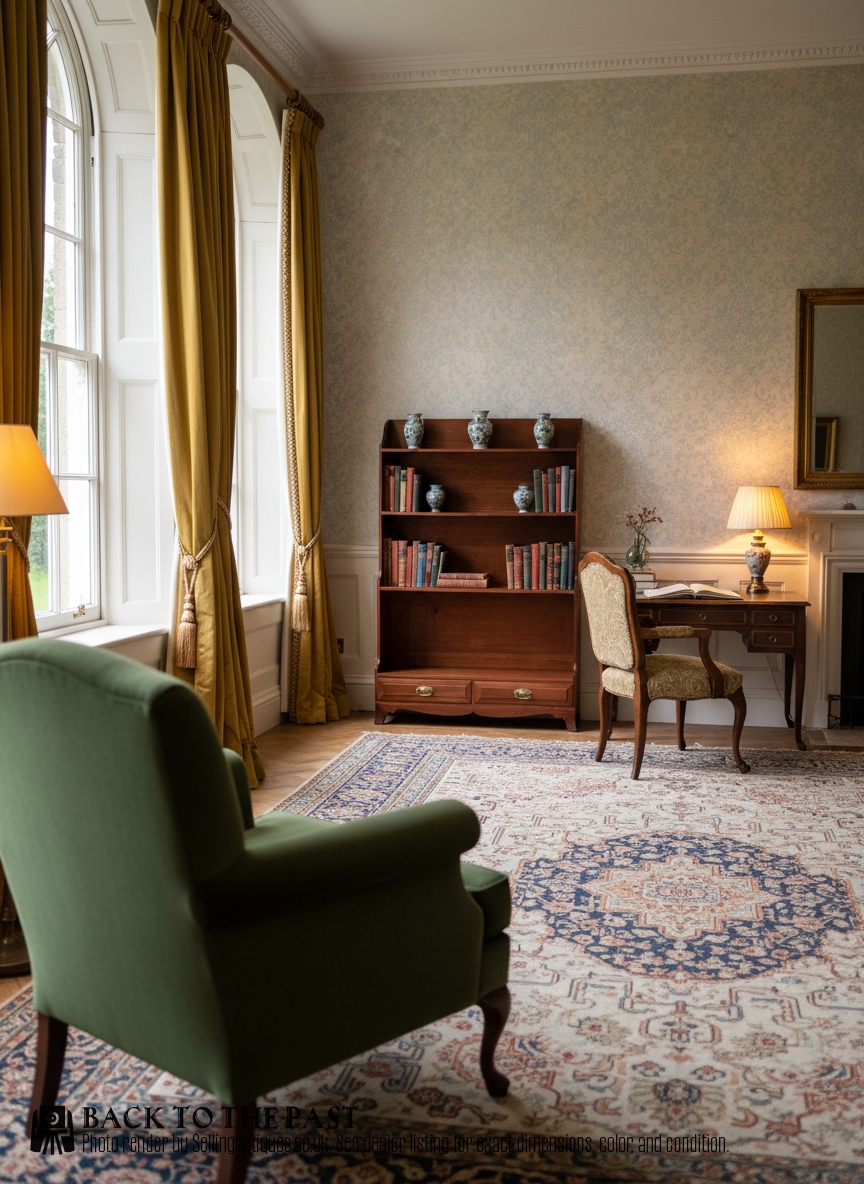
Edwardian waterfall shelves are stepped tier bookcases designed to hold books and display ornaments.
Edwardian Waterfall Shelves
Edwardian waterfall shelves are tiered shelving units that step back progressively from the bottom to the top, creating a silhouette that resembles a cascading waterfall. When exploring edwardian waterfall shelves, a buyer encounters pieces originating primarily from the Edwardian period alongside examples from the Victorian, Regency, and 18th century periods.
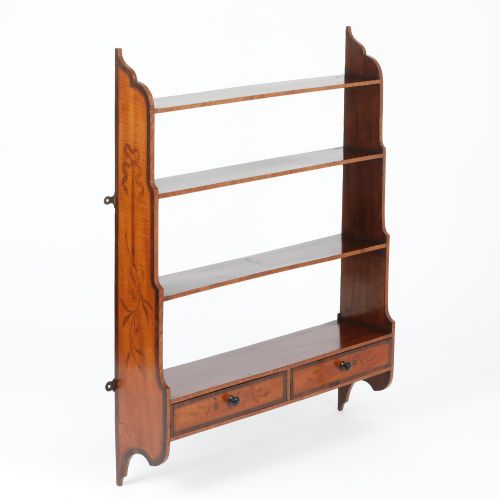
The evidence shows these objects manifest in various forms, including wall shelves, hanging bookshelves, open bookcases, and cabinet variants featuring drawers or cupboards. Mahogany and oak dominate the selection, accompanied by rosewood, satinwood, yew wood, and flame mahogany veneer.
Makers and designers drew on stylistic influences ranging from Sheraton and Georgian style to Arts and Crafts and Edwardian revival. Most examples on offer combine functional shelving with decorative cabinet work suited to period interiors.
How they were made
Cabinet makers constructed edwardian waterfall shelves using solid hardwoods such as mahogany and oak, often applying finely figured veneers including flame mahogany and satinwood to prominent surfaces. Timber selection governed the visual weight of the stepped tiers, providing structural stability for stacked books and display items.
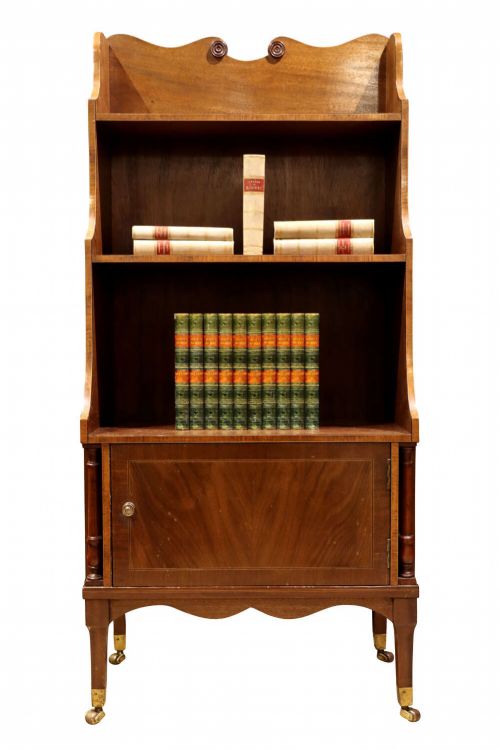
Craftsmen enriched these pieces through decorative techniques such as intricate wood inlay, fret-cut detailing, and brass fittings including castors on larger cabinet formats. Joinery techniques ensured that each receding shelf level remained secure and level under daily use.
The listings demonstrate a strong presence of mahogany and oak, supplemented by rosewood, satinwood, and yew wood.
What varies in quality
The distinction between standard and superior pieces rests on the choice of timber and the precision of decorative enrichment. Finely figured veneers and delicate inlay work indicate a higher grade of workshop production compared to plain utilitarian constructions.
Structural harmony also dictates quality, particularly in how gracefully the graduated shelves step upward and how securely the supporting sides integrate with cupboards or drawers where fitted.
Shapland & Petter
The Edwardian Waterfall Shelves Glossary
- Waterfall bookcase
- A set of open shelves stepped back progressively from bottom to top so that each tier is shallower than the one below. This stepped arrangement allows books of varying heights to be stored logically while displaying their spines.
- Inlay
- A decorative technique where contrasting pieces of wood or other materials are inserted into recessed portions of a base timber. It creates ornamental patterns and borders across cabinet doors and shelf friezes.
- Brass castors
- Small swivelling wheels made of brass attached to the base legs of heavy cabinet furniture. They allowed large bookcases to be moved across floors without damaging floorboards.
- Fret-cut
- Woodwork pierced or perforated with a fretsaw to create openwork patterns and decorative silhouettes. It appears on brackets and side panels of select shelving units.
Edwardian Waterfall Shelves: Frequently Asked Questions
What are waterfall shelves used for?
These stepped tier units were designed to hold collections of books while simultaneously displaying decorative ornaments and small collectibles on their progressively shallower upper ledges.
Their open format allowed easy access to frequently read volumes in studies, libraries, and drawing rooms.
How do I date an Edwardian piece?
Dating relies on examining the timber species, construction methods, and prevailing design styles recorded during the early twentieth century.
Comparing the specific brass hardware, inlay patterns, and secondary woods against documented pieces from the same era helps confirm the period of manufacture.
Are these shelves sturdy enough for heavy books?
The structural stability depends on the solid hardwood framing and the depth of the lower tiers, which naturally support greater weight than the narrower upper shelves.
Most period examples are built from dense timbers like mahogany or oak, providing robust support for standard library collections.
How do I fit these into a modern room?
Their compact vertical footprint and stepped profile allow them to fit into alcoves or against narrow wall spaces without dominating a modern interior.
They blend effectively with traditional and contemporary furnishings by providing functional display space with minimal floor usage.