
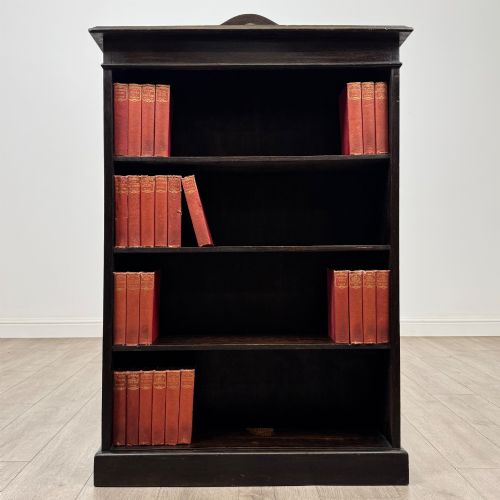
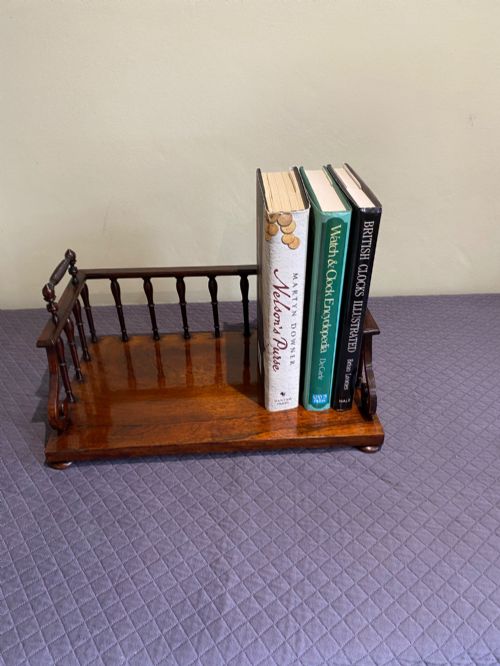
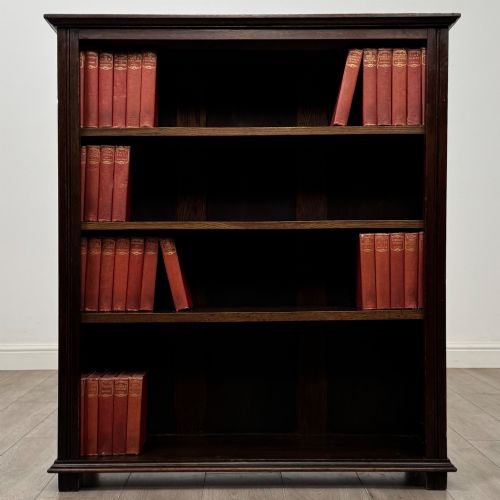
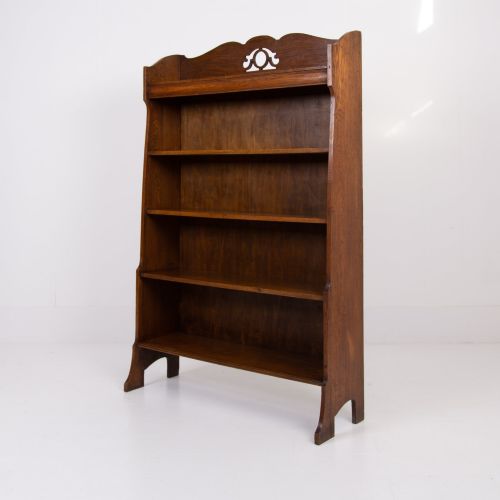
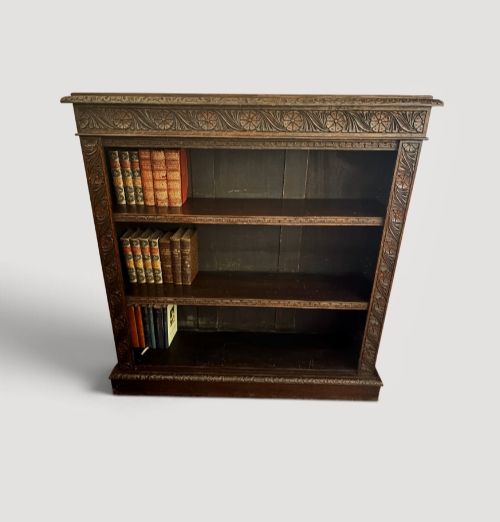
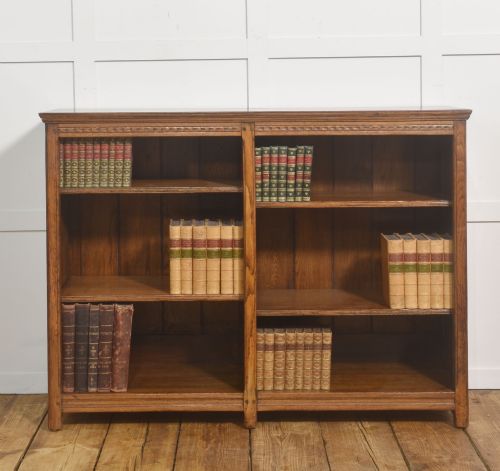
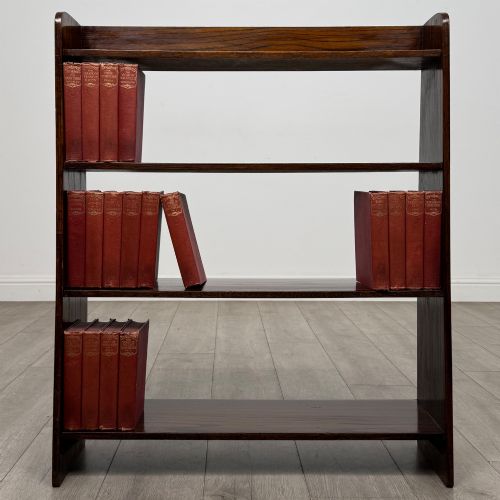
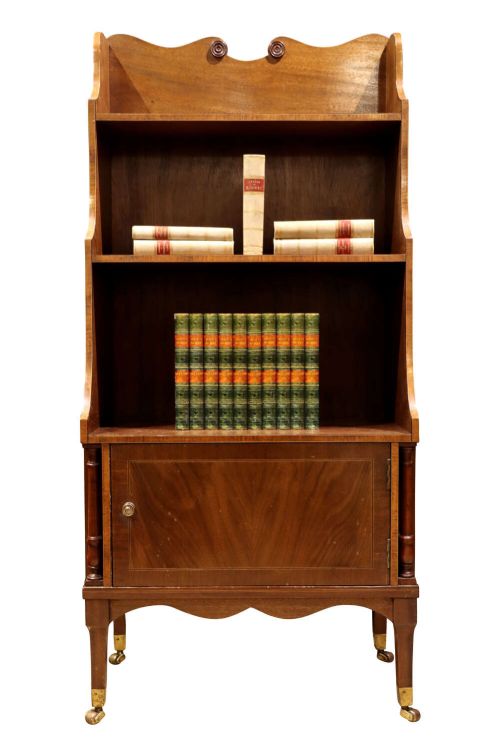
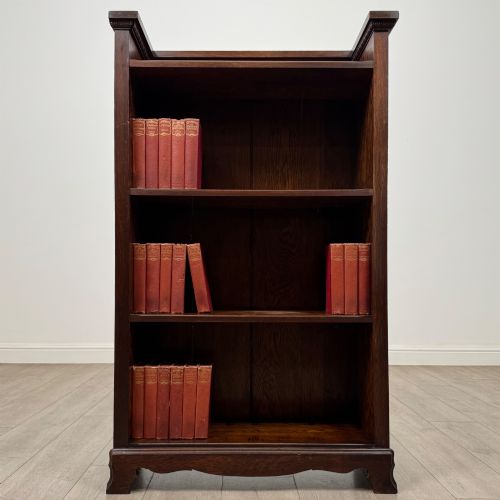
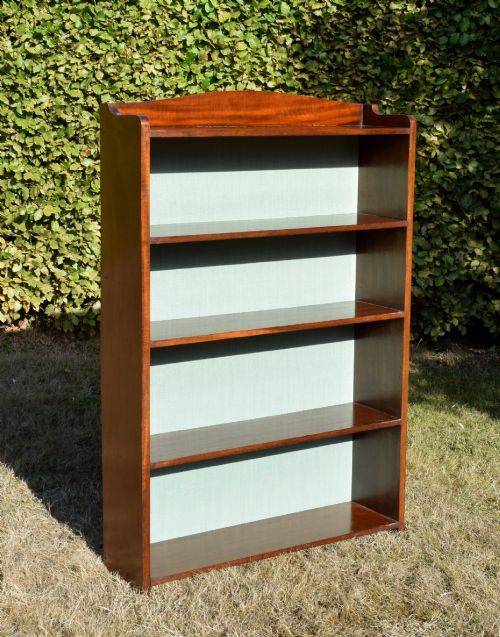
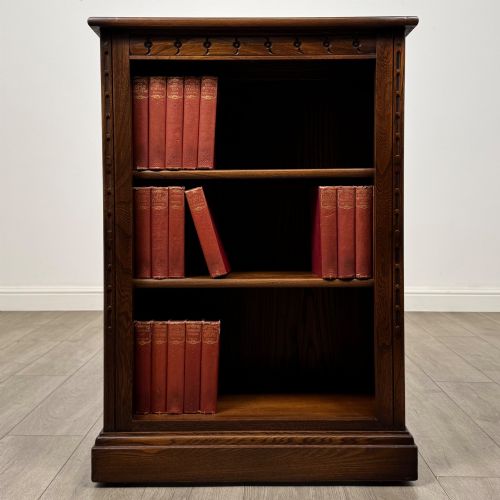
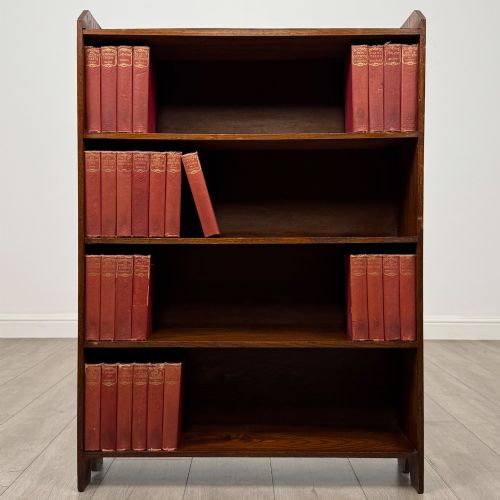
Standing Wooden Bookshelf
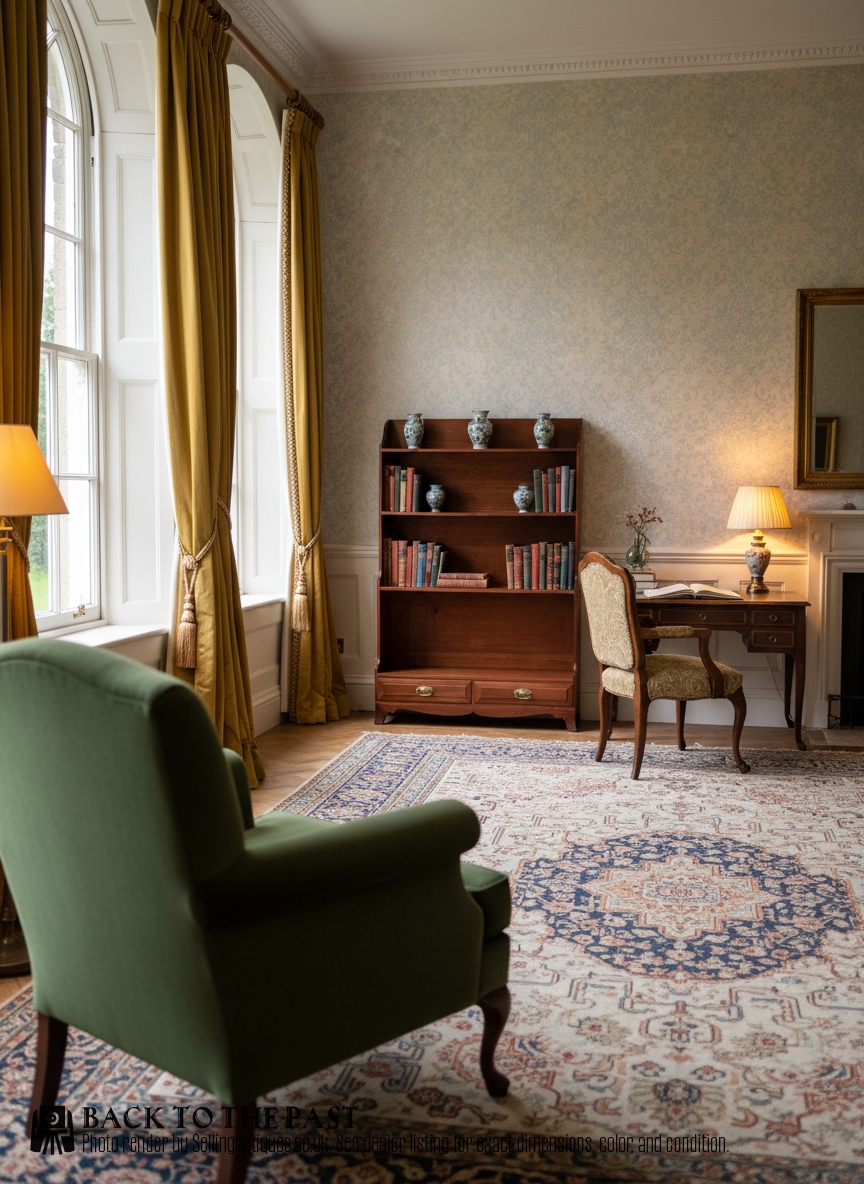
A standing wooden bookshelf organises domestic libraries with accessible open tiers.
Standing Wooden Bookshelf
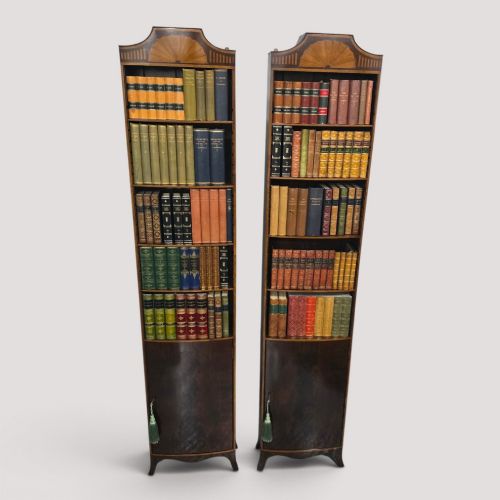
A standing wooden bookshelf offers accessible open tiers for domestic libraries. These pieces take the form of open bookcases, revolving designs, and waterfall shelving units.
The selections span the Regency era through the Edwardian period and the early twentieth century. Oak and mahogany dominate the offerings, frequently accompanied by adjustable shelving.
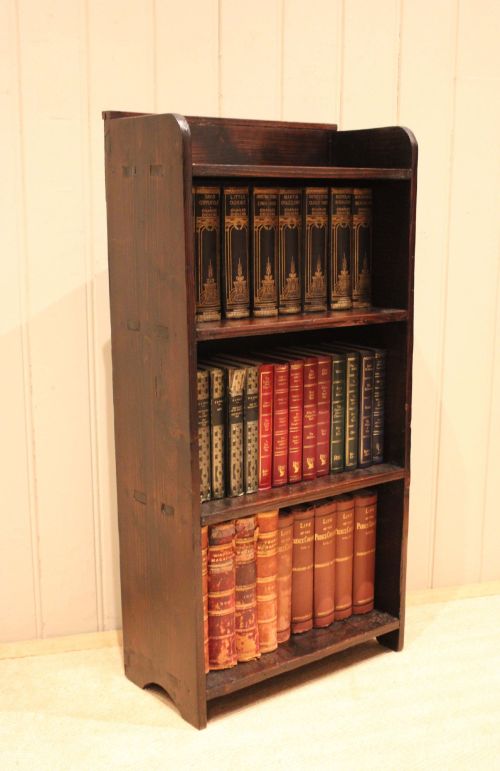
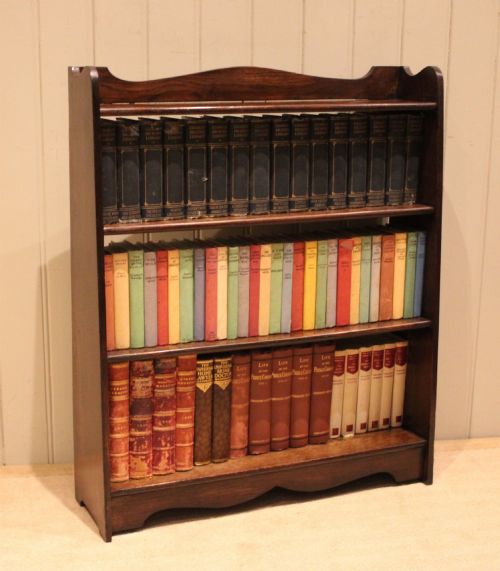
Buyers encounter compact small oak bookcases alongside larger Victorian and Edwardian library editions. Rustic country examples and Arts and Crafts designs provide alternative aesthetic choices.
Craftsmanship and Proportion
Quality rests upon the selection of timber and the precision of the joinery. Fine examples display carefully matched grains, subtle inlay, and functional adjustable shelving mechanisms.
Proportion and stability separate standard utility pieces from refined library furniture. Superior items incorporate durable brass hardware and balanced framing that supports heavy volumes securely.
Listings feature oak, mahogany, rosewood, and walnut across Victorian, Edwardian, and Regency periods.
The Standing Wooden Bookshelf Glossary
- Waterfall bookcase
- A tiered shelving unit where each successive shelf steps back from the one below. This stepped arrangement creates a cascading profile popular in the nineteenth century.
- Revolving bookcase
- A compact shelving unit mounted on a rotating pivot base. This design allows users to access volumes from all sides within a confined footprint.
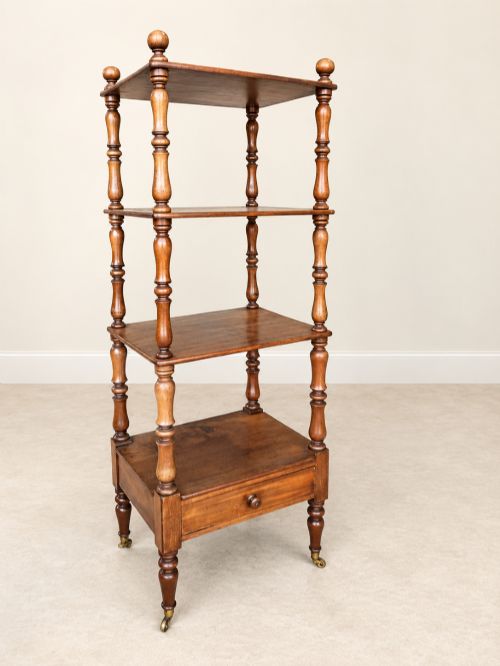
- Whatnot
- A piece of freestanding furniture featuring multiple open shelves for displaying or storing books and objects. These versatile units appeared frequently during the Victorian and Edwardian eras.
- Adjustable shelves
- Shelving supported by movable pegs or ratchets rather than fixed framing. This adaptability accommodates books of varying heights within a single cabinet.
Standing Wooden Bookshelf: Frequently Asked Questions
How do I style a standing wooden bookshelf?
Arrange books both vertically and horizontally to create visual rhythm across the open shelves. Integrate small decorative objects or book stands between groups of volumes to break up solid rows.
Keep heavier encyclopaedias and larger folios on the lower tiers for structural balance. Lighter novels and display items sit comfortably on upper shelves within easy reach.
Where should I place an open bookshelf?
Position the piece against a sturdy interior wall away from direct sunlight and heat sources. Stable placement protects timber finishes and prevents warping in older woods like oak and mahogany.
Allow adequate clearance around revolving designs so the mechanism turns freely without hitting surrounding furniture. Rooms with consistent humidity levels help preserve the integrity of antique joints.
Can these bookshelves hold heavy books?
Solid timber construction in oak and mahogany provides natural strength for supporting substantial libraries. Units featuring adjustable shelves allow you to configure tier heights for oversized volumes.
Distribute heavy reference books evenly across the lower shelves to maintain overall stability. Avoid overloading single boards beyond their natural span limits.
What is the difference between a bookcase and a whatnot?
A bookcase focuses primarily on housing reading material within enclosed or open shelf tiers. These pieces prioritize sturdy load-bearing construction for heavy paper collections.
A whatnot serves as a multi-tiered display piece designed for lighter books and decorative objects. These slender units often feature turned supports and delicate framing suited to drawing rooms.