
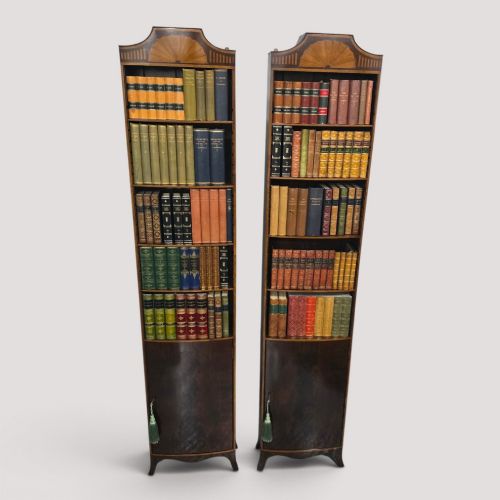
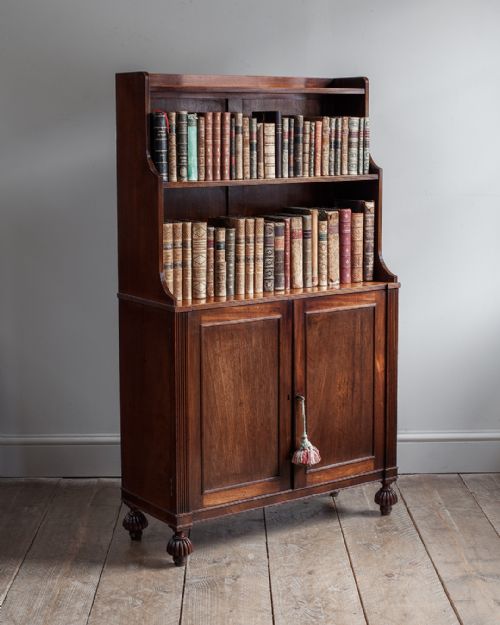
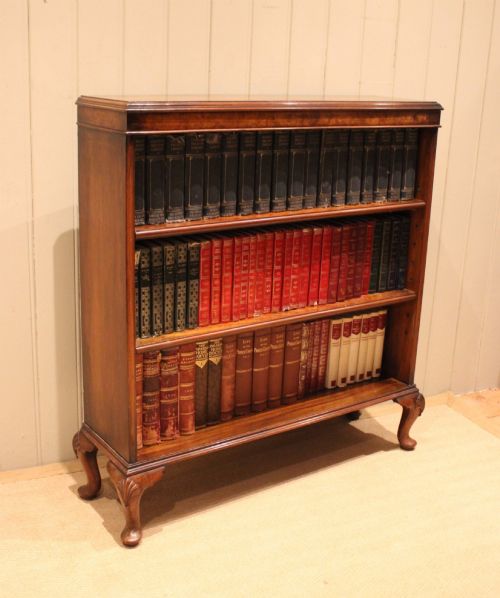
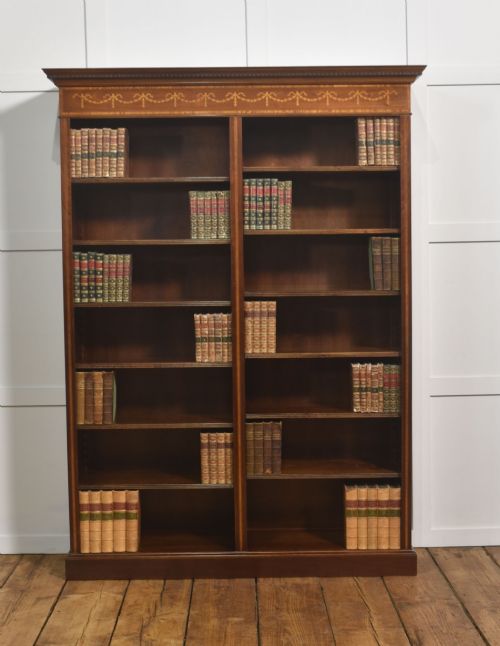
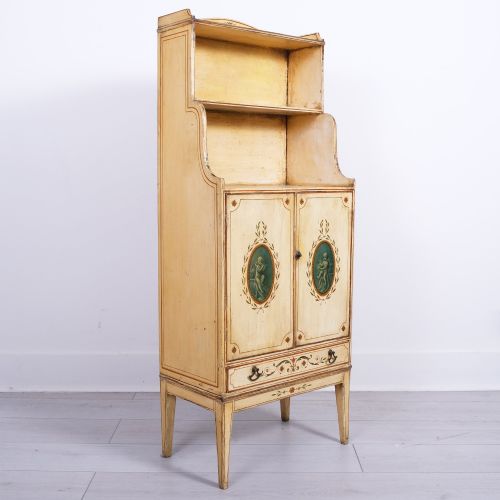
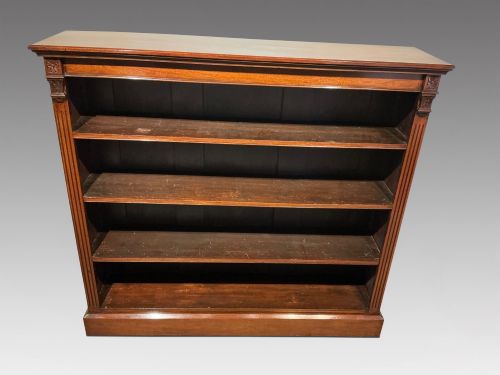
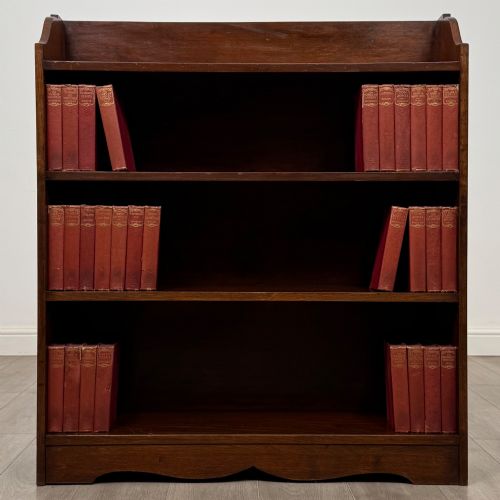
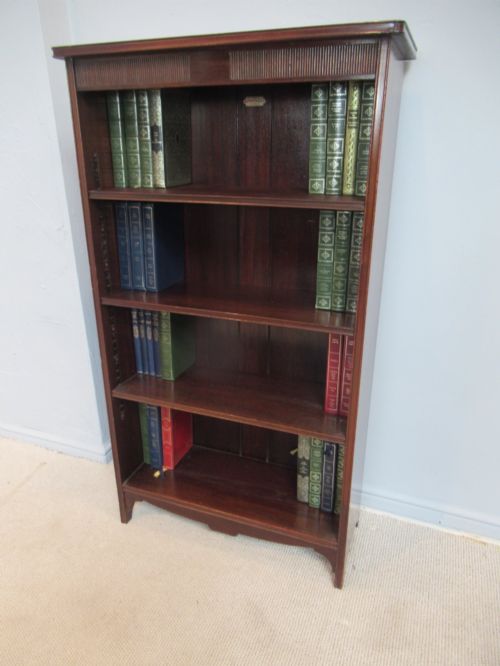
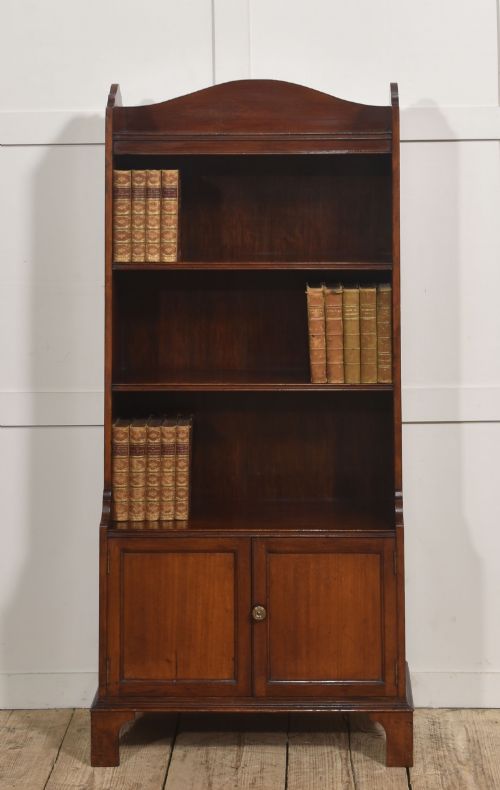
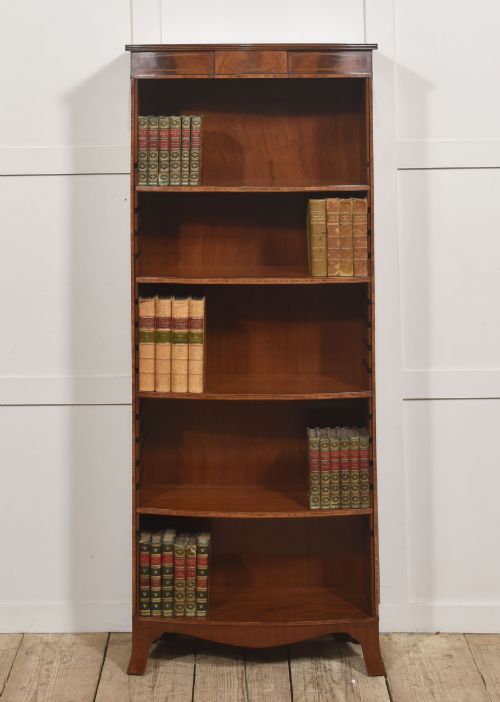
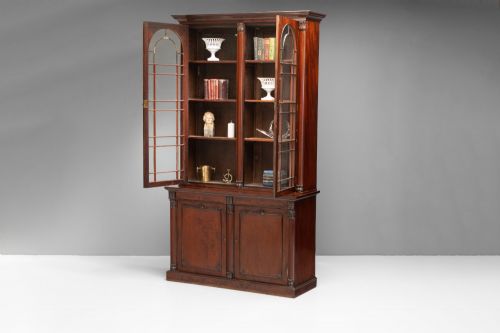
Georgian Style Shelving Unit
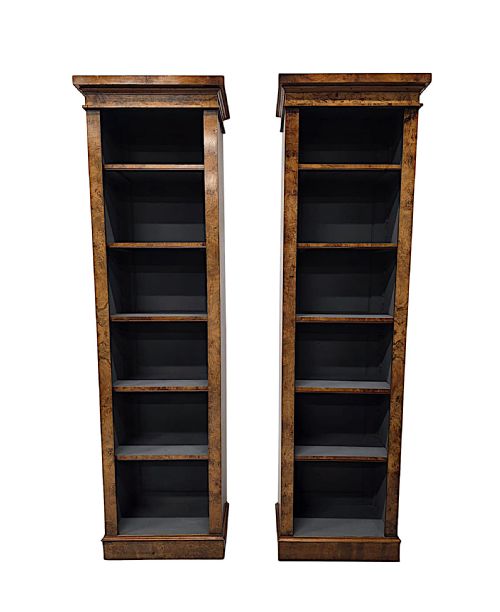
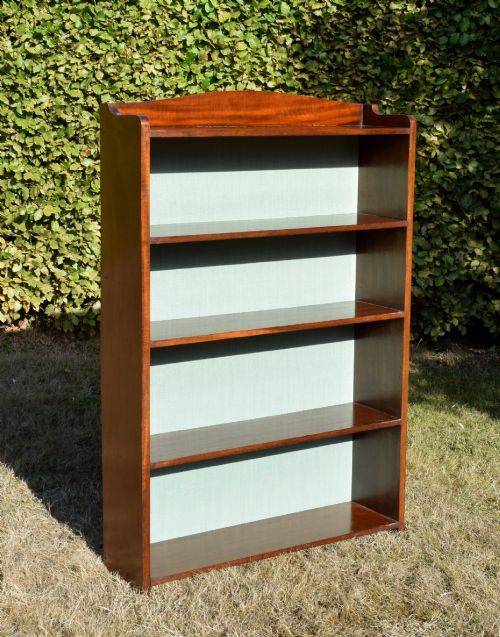
A georgian style shelving unit brings traditional display to a room through open tiers and mahogany or walnut timber.
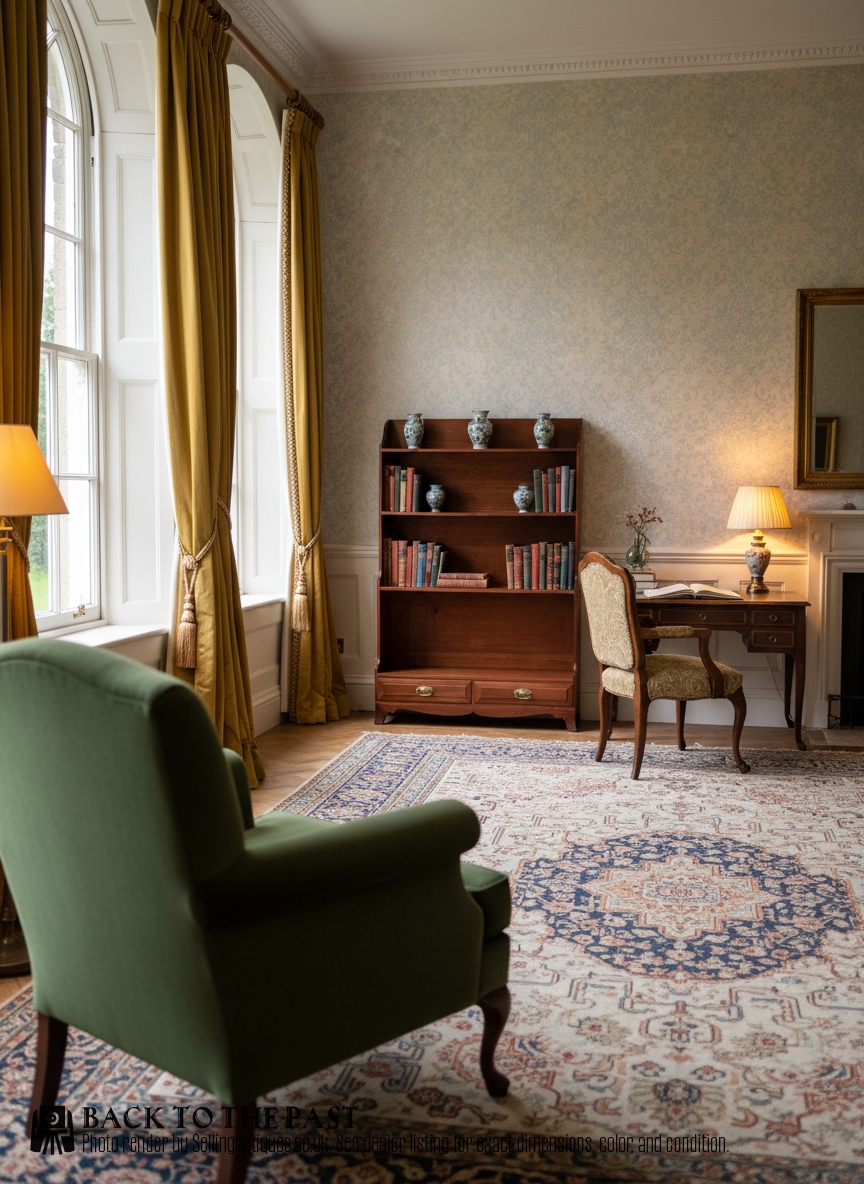
Georgian Style Shelving Unit
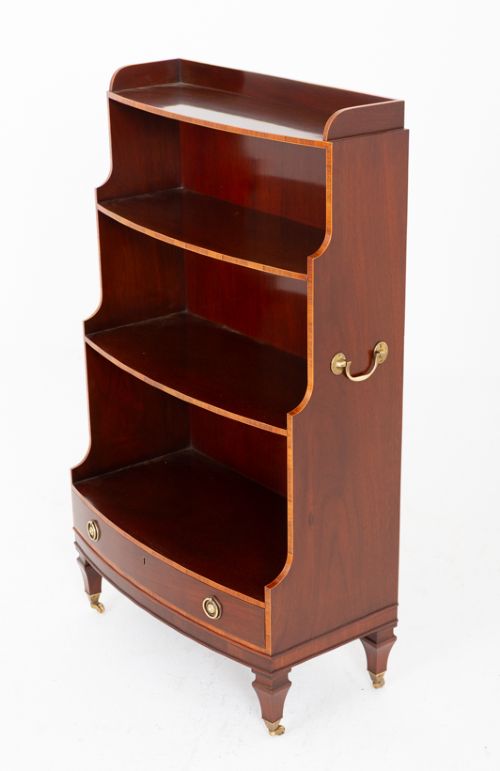
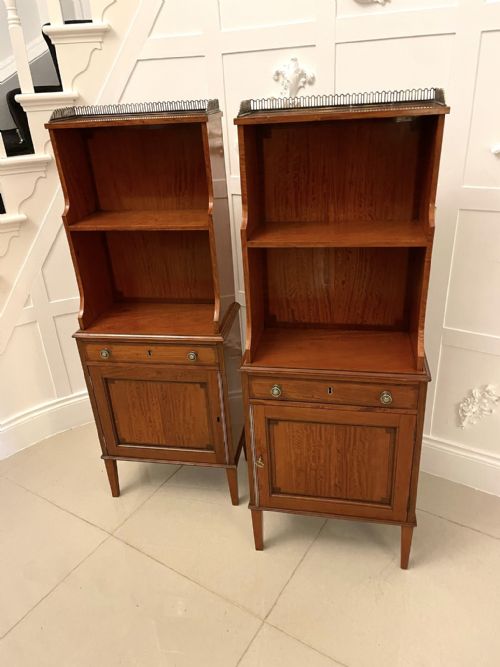
A georgian style shelving unit encompasses open bookcases, waterfall tiers, corner cabinets and hanging wall shelves designed with classical proportions. The examples available here span revival periods from the early twentieth century alongside genuine nineteenth-century pieces, reflecting enduring demand for formal storage.
Most items meeting the search for a georgian style shelving unit take the form of open bookcases or cascading waterfall tiers rather than enclosed cupboards. These variations suit smaller domestic spaces while maintaining the architectural cornices and bracket feet associated with earlier centuries.
How they were made
Cabinet makers utilised solid and veneered timbers, predominantly mahogany, walnut and satinwood, often enhanced with contrasting stringing and brass mounts. Grain selection played a central role, particularly in burr walnut and figured mahogany surfaces designed to catch the light.
Construction methods combined pegged mortise and tenon joints for structural uprights with finely dovetailed drawer boxes where side tables or cabinets formed part of the design. Painted wood and simulated paint finishes also appear alongside polished natural timbers to replicate formal aesthetics.
Mahogany and walnut remain the predominant materials recorded across these shelving units and open bookcases.
What varies in quality
Quality rests in the crispness of inlaid borders, the depth of figuring in the timber veneers, and the structural integrity of adjustable shelving systems. Finer pieces demonstrate careful book-matching across wider surfaces and proportioned gallery tiers rather than purely utilitarian assembly.
The sophistication of decorative details such as satinwood crossbanding, brass gallery rails, and painted classical motifs separates standard workshop production from finer cabinet work. Proportion and timber selection dictate the visual weight of each piece within a room.
Gillows·Waring and Gillows
The Georgian Style Shelving Unit Glossary
- Waterfall bookcase
- A tiered shelving unit where each successive shelf steps back from the one below, creating a cascading silhouette. These pieces gained popularity during the nineteenth and early twentieth centuries for displaying small volumes.
- Stringing
- Thin lines of contrasting timber inlaid into the surface of furniture to frame panels and drawers. This technique defined much of the Sheraton revival aesthetic.
- Étagère
- A set of open shelves designed for displaying ornaments, supported by slender uprights or columns. They originated in France and appear in nineteenth-century British interiors.
- Breakfront
- A large cabinet or bookcase whose central section projects forward from the flanking wings. This architectural arrangement creates depth and shadow.
Georgian Style Shelving Unit: Frequently Asked Questions
How do I style open shelves?
Open shelving suits living rooms and studies for displaying collections of books and ceramics.
Balance heavier volumes on lower tiers while placing smaller objects and hanging items toward the top.
Are these shelves adjustable?
Many examples include adjustable shelves supported by traditional wooden or metal ratchets.
This flexibility accommodates volumes of varying heights within the same bookcase.
What woods were used?
Makers relied heavily on mahogany, walnut, and satinwood for both solid construction and decorative veneers.
Inlay work often incorporated darker timbers to create contrasting geometric borders.