


Tiered Open Bookshelf Unit
A tiered open bookshelf unit offers stepped display space that suits books and decorative objects in equal measure.
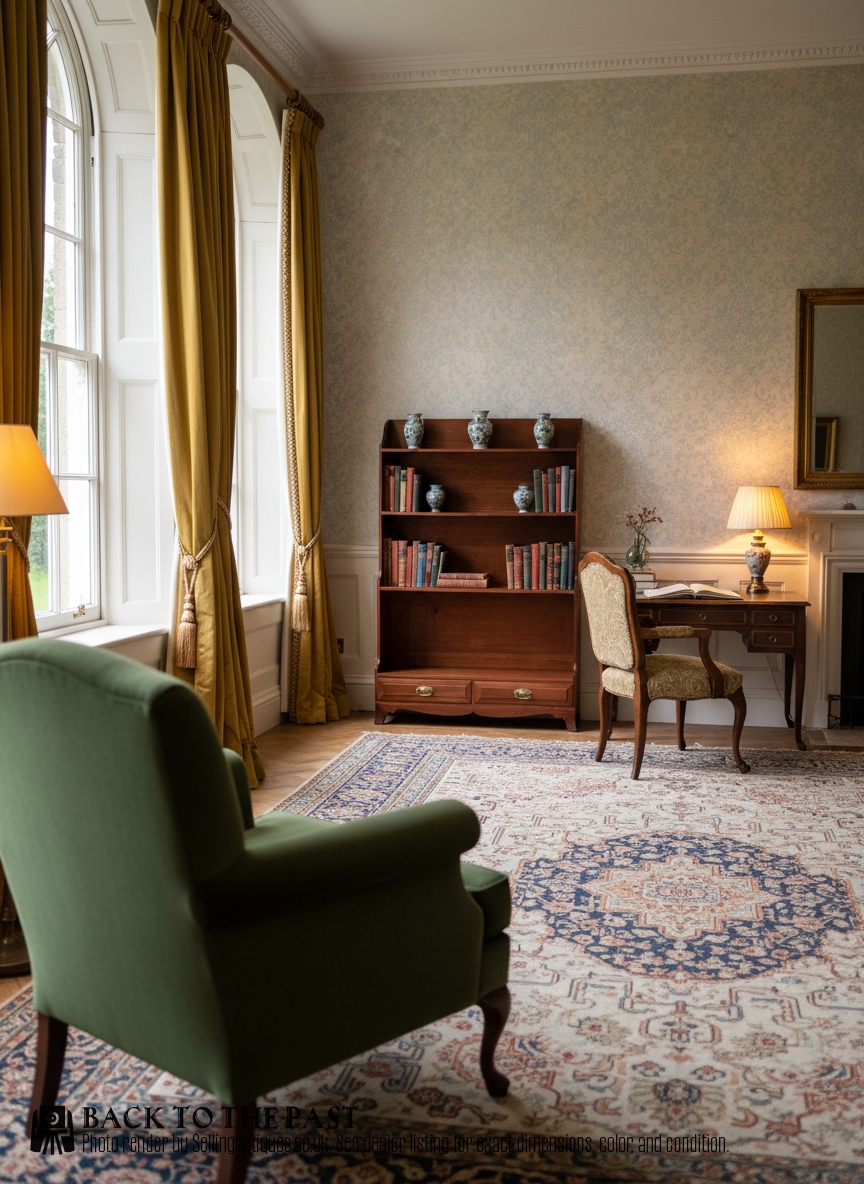
Tiered Open Bookshelf Unit
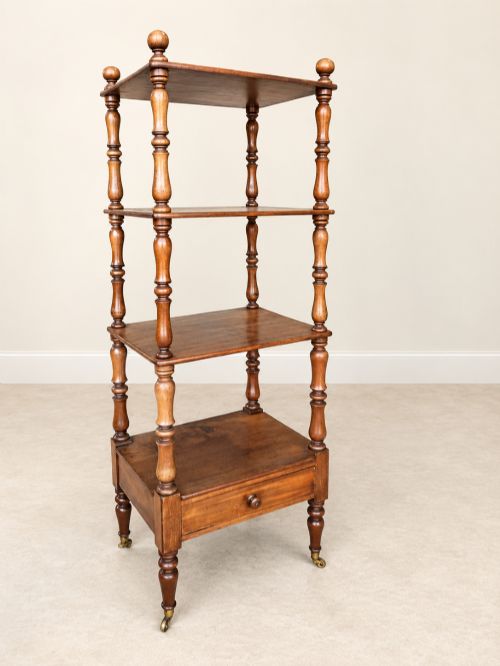
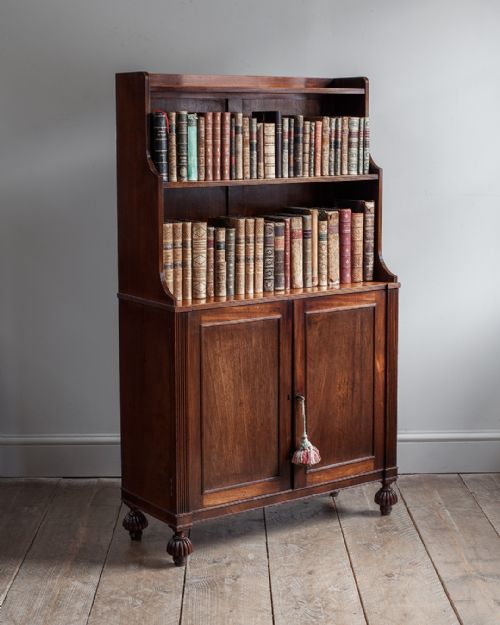
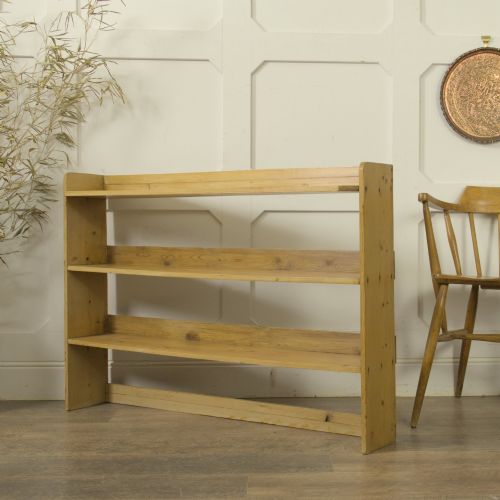
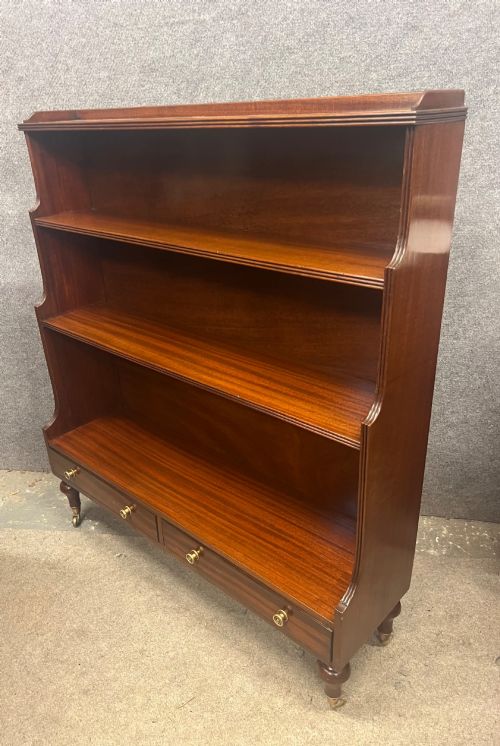
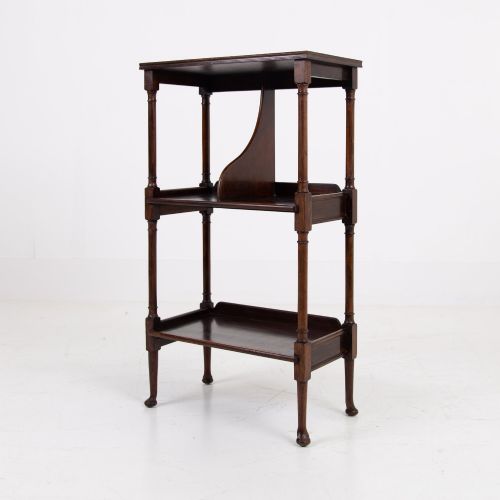
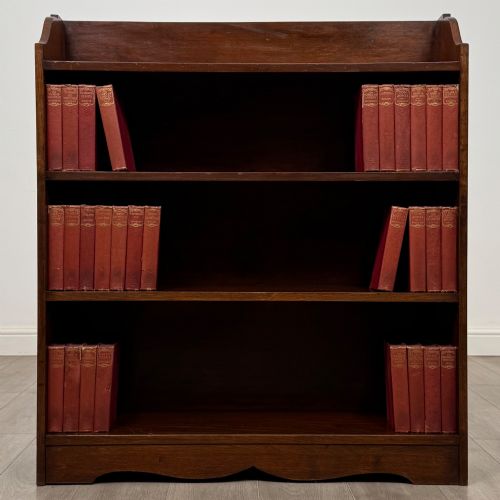
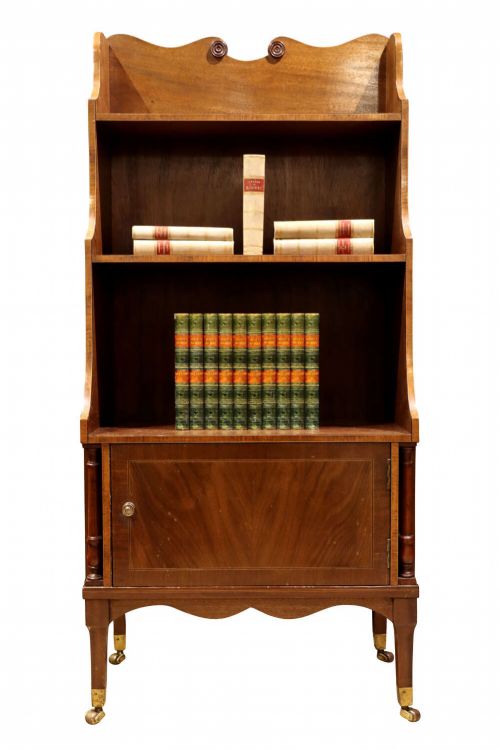
A tiered open bookshelf unit provides graduated shelving in forms such as the waterfall bookcase, whatnot, and etagere, designed for both books and display. These pieces appear across periods from the Regency era through the Victorian period, Edwardian years, and early twentieth century.
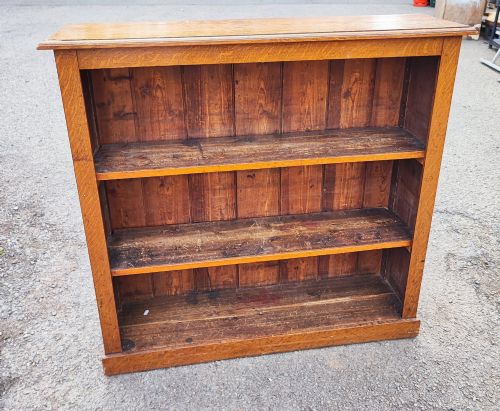
Mahogany, oak, and rosewood form the majority of the structural timber seen in these multi-tiered units, complemented by examples in walnut, pine, teak, satin birch, and yew wood.
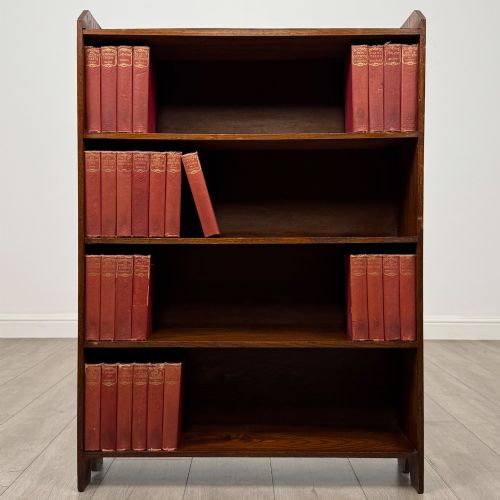
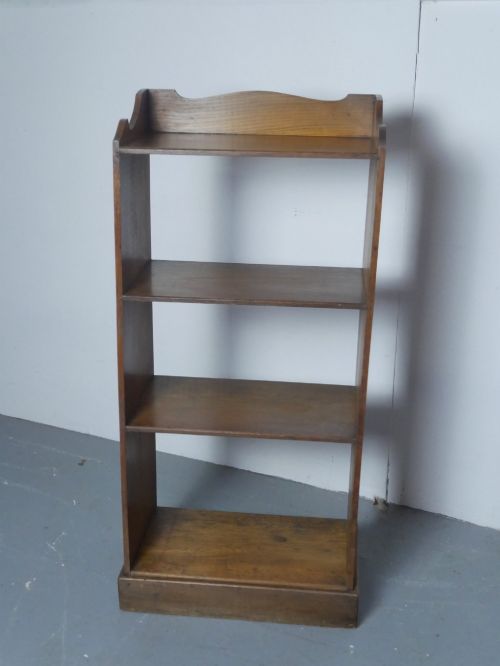
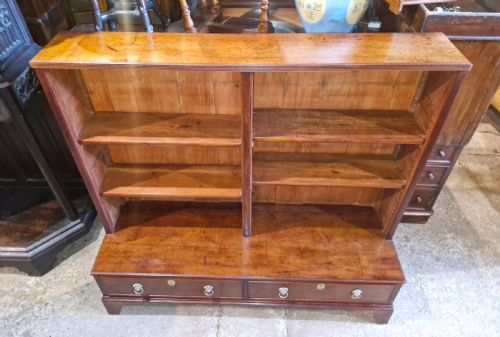
The layout ranges from compact three-tier items to tall six-tier open gallery shelves, occasionally incorporating cupboards, drawers, mirrors, or brass castors.
Materials and construction
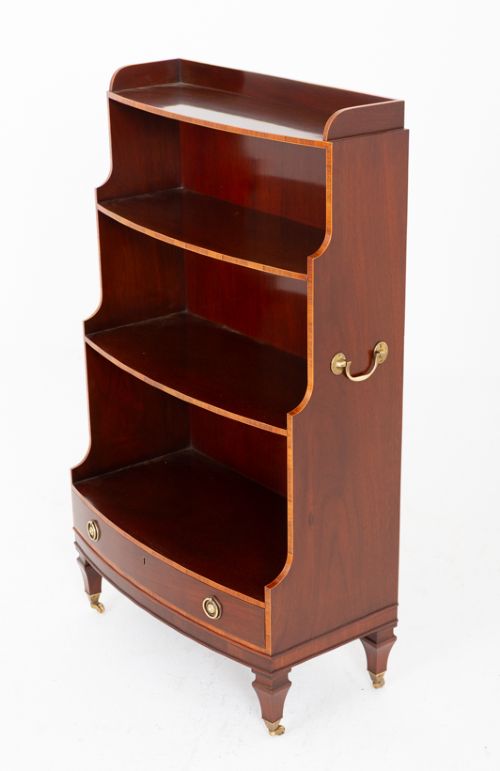
Cabinetmakers utilised dense hardwoods like mahogany, rosewood, and walnut for strength and fine grain appearance, alongside structural oak, pine, and teak. Selected pieces employ cross banding, boxwood stringing, or fret-cut timber to articulate the stepped tiers.
Metal components such as brass castors and inlay provide mobility and contrast against the dark timber surfaces. Painted finishes and simulated rosewood also appear among the construction methods.
The listings here span the 19th Century, Regency, Victorian, Edwardian, and early 20th Century periods.
Judging quality in tiered shelving
The refinement of the timber selection and decorative details dictates the tier of quality, distinguishing standard utility shelving from exhibition pieces with intricate fret-cutting, contrasting cross banding, and inlaid brass stringing.
Proportion and stability across multiple stepped levels govern the construction standard, where heavier woods require precise joinery to support the graduating shelf loads securely without sagging.
Heals
The Tiered Open Bookshelf Unit Glossary
- Waterfall bookcase
- A tiered shelving unit where each successive shelf steps back from the one below, resembling the cascade of a waterfall. This form gained popularity during the Regency and Victorian periods.
- Whatnot
- A piece of furniture consisting of a set of open shelves for displaying small objects or books. They typically feature three or more tiers supported by slender uprights.
- Etagere
- A piece of furniture with a series of open shelves for displaying ornaments. The term is often used interchangeably with whatnot in nineteenth-century contexts.
- Cross banding
- A strip of veneer applied to the edge of a shelf or top where the grain runs at right angles to the facing surface. This technique adds a decorative border to mahogany and rosewood pieces.
- Boxwood stringing
- A narrow inlaid line of pale boxwood set into a darker timber ground such as mahogany. It highlights the structural outlines of the tiers.
Tiered Open Bookshelf Unit: Frequently Asked Questions
What is a tiered open bookshelf unit?
A tiered open bookshelf unit is a piece of furniture featuring multiple graduating shelves designed to hold books and display objects. These pieces include waterfall bookcases, whatnots, and etageres.
They provide accessible open storage across several levels, making them versatile for living spaces or studies.
How were tiered bookshelves used historically?
These units served primarily for the storage of portable libraries, display items, and household ornaments in drawing rooms or studies. The stepped tiers allowed owners to view and reach items easily.
Taller multi-tier versions often functioned as standalone display furniture for ceramics and decorative objects alongside books.
How do I identify a Regency period piece?
Regency tiered units frequently employ solid mahogany, rosewood, or contrast cross banding with boxwood stringing. The proportions tend to be clean and classical.
Brass inlay and dwarf shelving formats also point toward this early nineteenth-century aesthetic.
Can I place these bookshelves in modern rooms?
These wooden units integrate easily into contemporary interiors by providing vertical storage without heavy doors or enclosed bulk. Their open structure keeps rooms feeling light.
Placing them against walls or using freestanding versions as room dividers allows their varied tier heights to function practically.