

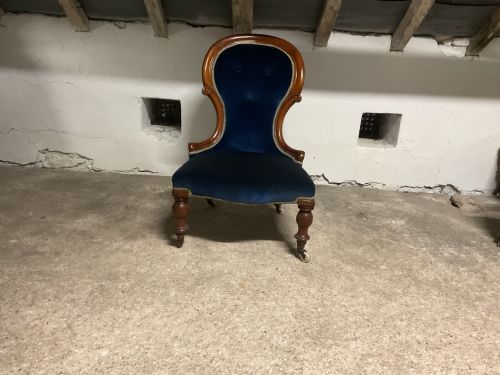
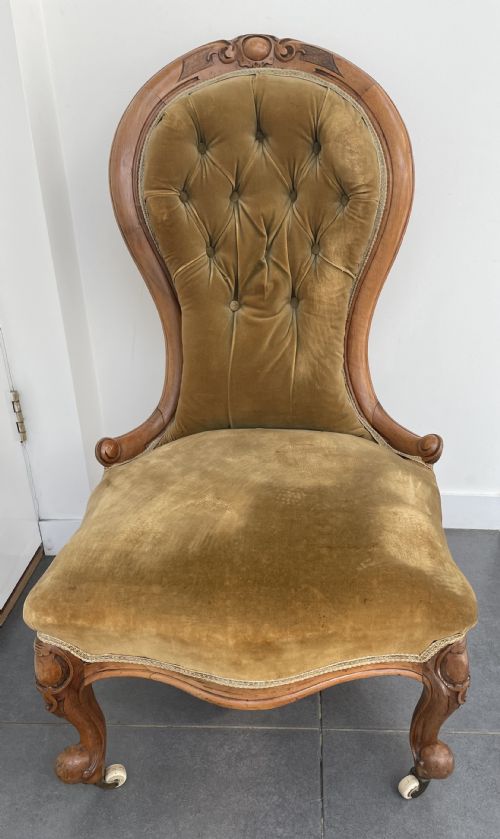
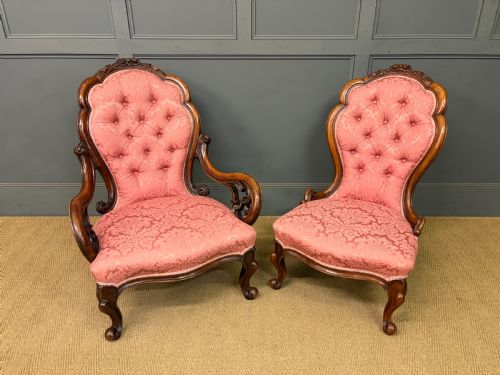


Low Seated Occasional Chair
These low seated occasional chair pieces offer compact, comfortable seating designed across the Victorian and Edwardian periods.
Low Seated Occasional Chair
A low seated occasional chair brings compact, accessible seating into bedrooms, salons and sitting rooms across the Victorian and Edwardian periods. These forms include nursing chairs, slipper chairs, salon chairs and gossip chairs designed for comfort close to the ground.
Most examples found here span the nineteenth century into the early twentieth century, taking the form of mahogany, walnut, oak or ebonised frames. Buyers frequently encounter low upholstered armchairs, button back designs and inlaid occasional seating.
Origins stretch from standard English vernacular pieces to Scottish vernacular examples and Anglo-Indian production. The low profile serves specific domestic functions, from fireside sitting to bedroom dressing.
Materials and construction
Frames rely on solid timbers such as mahogany, walnut, oak and ebonised hardwoods, shaped with carved details or delicate inlay. Brass elements and ceramic fittings appear alongside exposed timber structures.
Upholstery forms an integral part of the construction, utilising traditional textiles like velvet, floral tapestry and modern or original fabric over buttoned padding. Frames often support low, curvaceous lines tailored for domestic ease.
Low Seated Occasional Chair Retail Price Guide 2026
Typical asking prices for low seated occasional chair among the pieces listed under this phrase on Sellingantiques today, from the lower quarter to the upper quarter. They describe what is for sale here now, not the wider market.
Periods represented span from mid-nineteenth century Victorian designs through to Edwardian inlaid occasional furniture.
Assessing quality
Quality rests in the integrity of the timber frame, the crispness of any carving or inlay, and the retention of original upholstery elements. Finer pieces demonstrate robust joinery beneath the textile cover alongside balanced proportions.
The sophistication of the timber choice, from figured walnut to dense mahogany and ebonised finishes, elevates an example above simpler vernacular builds. Retained period textiles and intact buttoning further distinguish superior survivals.
Wheeler Of Arncroach
The Low Seated Occasional Chair Glossary
- Nursing chair
- A low seated chair traditionally designed to allow a person to sit comfortably while tending to children or dressing. These seats feature low frames and padded upholstery.
- Slipper chair
- An upholstered chair with short legs designed for bedrooms, historically used while putting on shoes. The low seat sits close to the floor.
- Gossip chair
- An occasional chair built with a low, conversational design often associated with Scottish vernacular makers. It provides compact, informal seating.
- Button back
- An upholstery technique where depressions are created in the padding by stitching through to the frame, securing buttons at regular intervals. This adds both structure and decoration.
- Ebonised
- Timber treated with a finish to imitate ebony wood, producing a deep black surface often seen on Victorian frames. This finish provides a stark contrast against bright upholstery.
Low Seated Occasional Chair: Frequently Asked Questions
What is a low seated occasional chair used for?
These pieces serve as secondary seating in bedrooms, dressing rooms, and salons where a compact footprint is required. Their low profile makes them suitable for firesides or dressing areas.
Historically, specific variants accommodated tasks like nursing infants or changing footwear. Today, they function well as accent pieces in living spaces.
How do I date a Victorian nursing chair?
Dating relies on examining the timber frame, upholstery style, and construction methods. Mid nineteenth century examples often feature solid walnut or mahogany with hand-carved details.
Later Victorian and Edwardian pieces incorporate inlaid woodwork, ebonisation, or lighter oak frames. Button-backed upholstery appears frequently across both periods.
Can I use original velvet upholstery daily?
Original fabric and vintage velvet require careful assessment depending on their structural integrity and wear. Fragile textiles may need protective handling or professional conservation.
Many pieces are suitable for recovering if the underlying springs and frame remain sound. Buyers frequently choose to re-cover chairs to match modern interiors.
What is the difference between a slipper chair and a nursing chair?
Slipper chairs traditionally sit very low to the ground and were built for bedrooms to aid in dressing. They often feature minimal arms or a backless appearance in some historical contexts.
Nursing chairs share the low seat height but typically include supportive backs and sometimes arms for prolonged sitting. Both types emerged strongly during the Victorian era.