

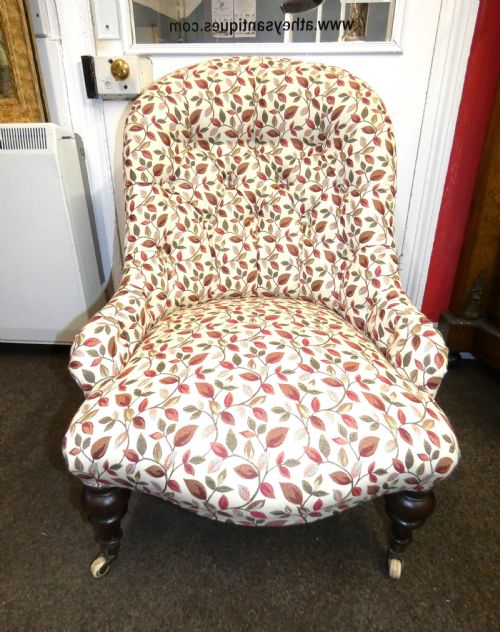
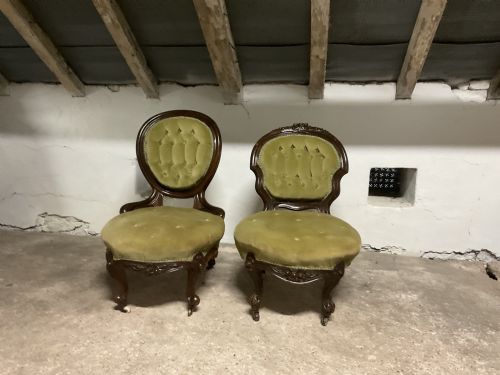
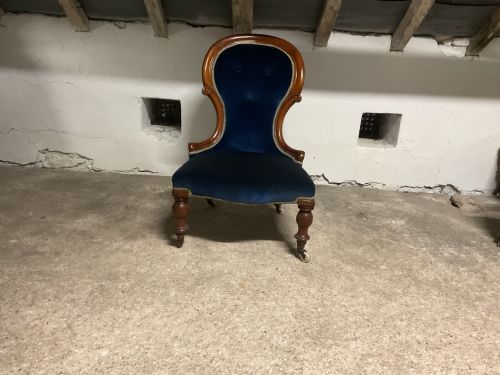
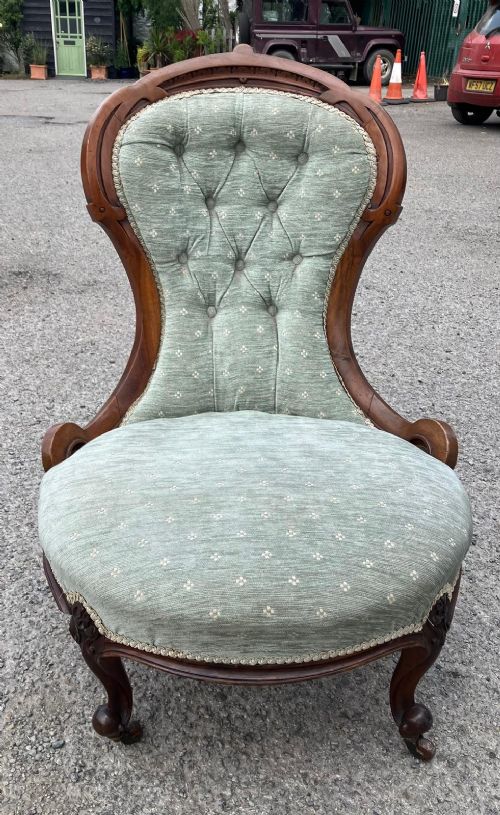

Buttoned Back Slipper Chair
A buttoned back slipper chair brings low, upholstered comfort to a bedroom or parlour, offering deep seats and distinctive tufted padding.
Buttoned Back Slipper Chair
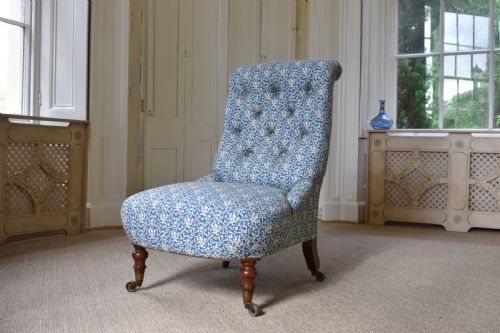
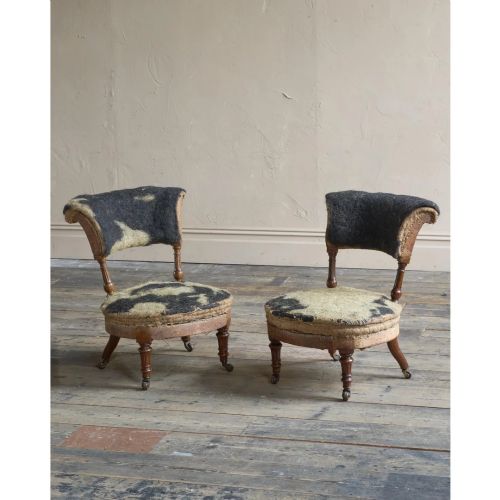
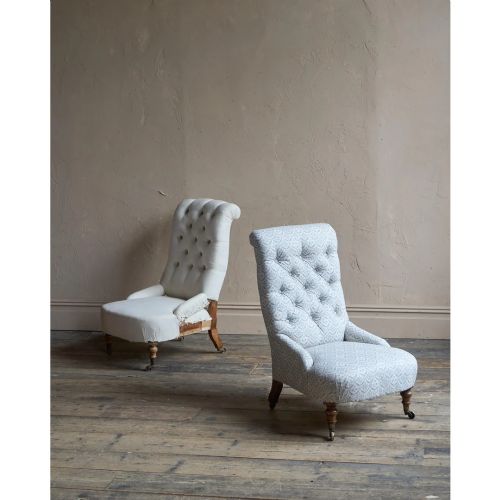
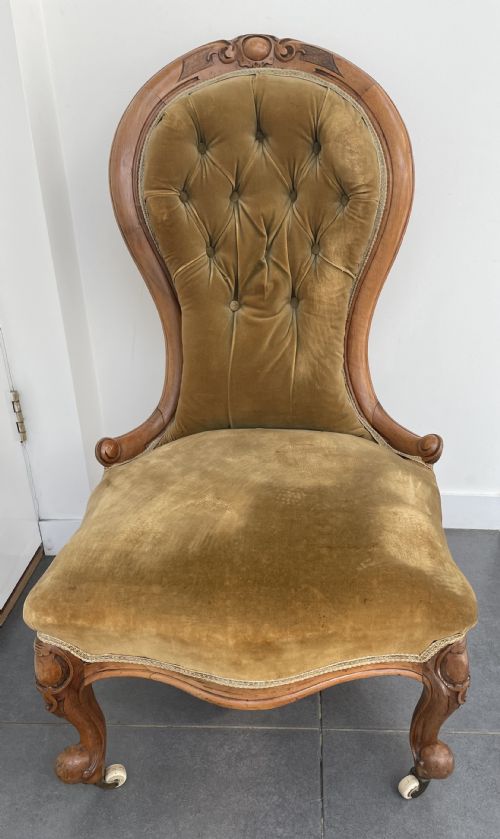
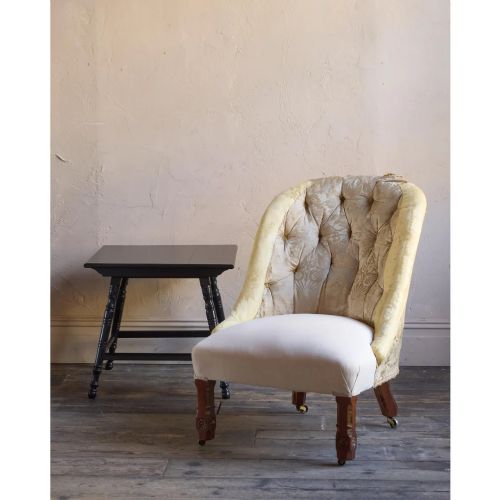
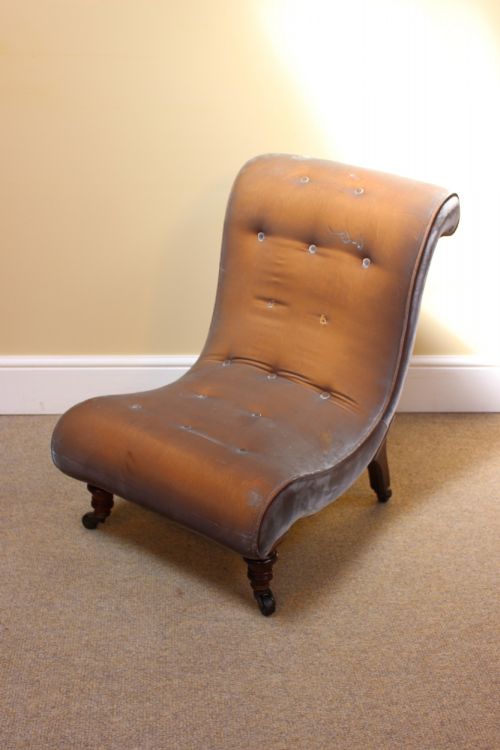
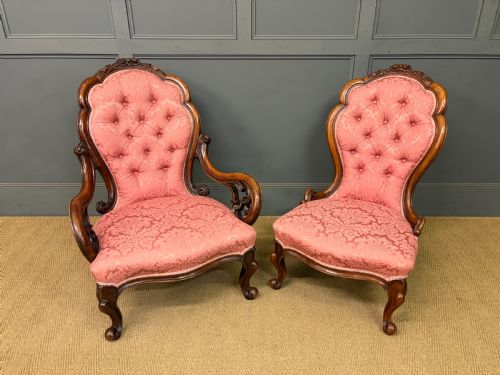
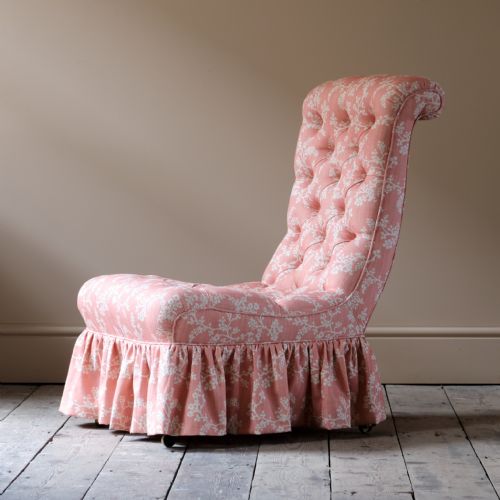
When you search for a buttoned back slipper chair, you encounter low-slung seating designed originally for bedrooms and dressing rooms. These pieces appear frequently across the Victorian and Edwardian periods, constructed in forms such as nursing chairs, occasional chairs, and salon chairs. They sit close to the floor to allow ease of dressing, often featuring low backs and generous seats.
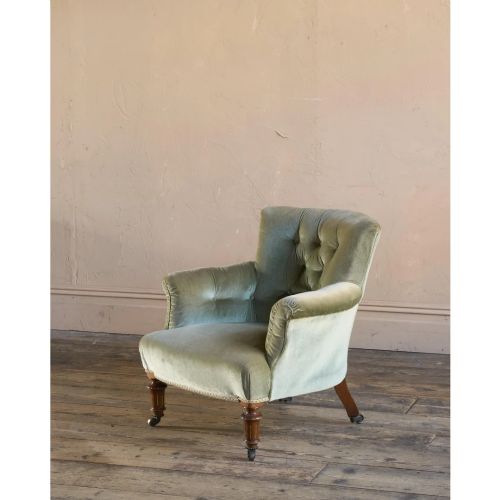
The versions met most often on this page date from the nineteenth century, including walnut and mahogany frames. Makers built these low chairs with sprung seats and deep tufting to provide support while maintaining a compact footprint suitable for smaller chambers. Armless varieties dominate, alongside low armchair formats that suit intimate seating arrangements.
How they were made
Cabinet makers utilised dense timbers such as walnut, mahogany, and occasional exotic woods for the exposed frames and legs. These frames conceal robust internal webbing and metal springs beneath layers of horsehair and stuffing. Turnings, brass castors, and gilt details frequently finish the wooden supports.
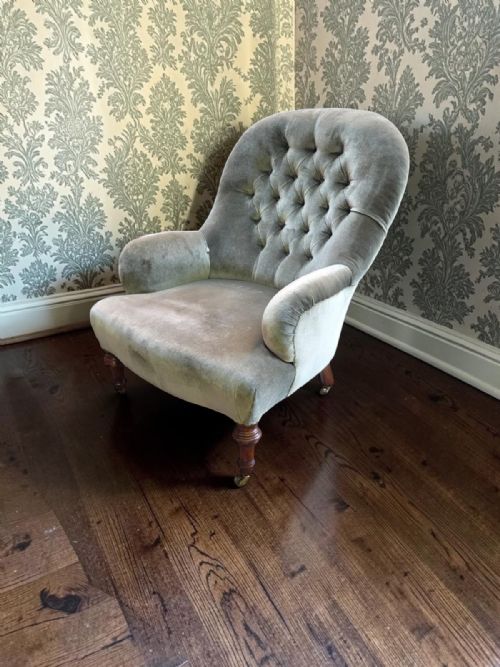
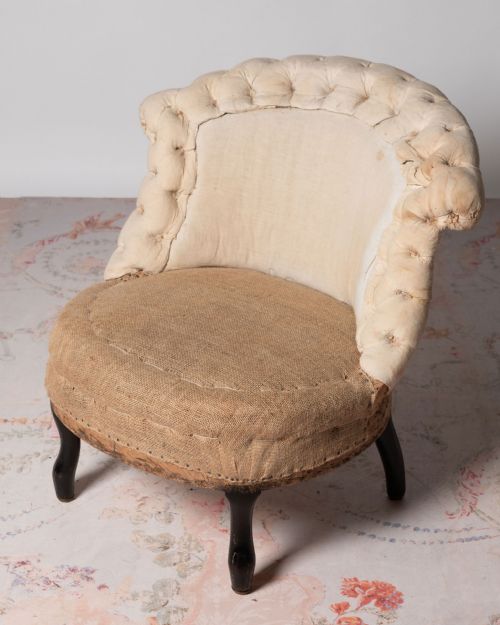
Upholsterers secured the fabric using deep buttoning techniques, drawing the material tight with tufts to create distinct diamond patterns across the backrest. Velvet, printed cotton, and damask fabrics cover these padded surfaces, often trimmed with fringe or braid along the base.
Buttoned Back Slipper Chair Retail Price Guide 2026
Typical asking prices for buttoned back slipper chair among the pieces listed under this phrase on Sellingantiques today, from the lower quarter to the upper quarter. They describe what is for sale here now, not the wider market.
Listings for buttoned back slipper chairs feature timber frames primarily in walnut and mahogany, accompanied by occasional ebonised or gilt wood.
What varies in quality
The distinction between ordinary and exceptional examples rests in the crispness of the timber frame carving and the integrity of the underlying joinery. Superior pieces possess robust frame construction that prevents wobble, alongside balanced proportions in the low back and seat curve. Maker attribution to workshops such as Gillows or Howard and Sons elevates the standing of a piece.
Upholstery execution dictates the visual impact of the chair, distinguishing tight, symmetrical buttoning from loose, uneven padding. The choice of original or high-grade replacement fabric, down to the selection of Robert Kime textiles or antique velvets, contributes to the overall character and finish.
Gillows·Howard and Sons·Holland and Sons·Robert Kime
The Buttoned Back Slipper Chair Glossary
- Button back
- A method of upholstery where deep buttons are pulled through the padding at regular intervals to form a tufted diamond pattern. This technique secures the internal stuffing while providing firm support to the sitter.
- Spoon back
- An upholstered chair back shaped in a concave oval resembling the bowl of a spoon. This design cradles the spine and appears frequently on Victorian nursing and salon chairs.
- Nursing chair
- A low-seated chair designed without arms to accommodate the wide skirts of nineteenth-century women while nursing children. These pieces share close affinities with standard slipper chairs.
- Ebonised
- Wood stained or painted black to imitate expensive ebony. Makers utilised this finish on nineteenth-century beech and fruitwood frames to create stark contrasts against bright upholstery.
- Castor
- A small wheel attached to the base of furniture legs to aid movement across carpets and floorboards. Brass fittings frequently appear on nineteenth-century chair legs.
Buttoned Back Slipper Chair: Frequently Asked Questions
What is a buttoned back slipper chair?
A buttoned back slipper chair is a low-seated, upholstered chair designed without arms, or with very low arms, intended for bedrooms and dressing rooms. The low profile made it easier for people to dress in the nineteenth century.
These chairs feature deep button tufting across the backrest and rest on short wooden legs, often fitted with castors. They appear in Victorian and Edwardian forms across walnut and mahogany frames.
How do I date a Victorian slipper chair?
Dating relies on examining the timber, frame shape, and upholstery style. Mid-nineteenth-century examples often feature walnut or mahogany frames with spoon backs and ceramic or brass castors.
Later Victorian and Edwardian pieces show stylistic shifts towards ebonised finishes, distinct carved walnut details, or specific workshop stamps on the wood or webbing.
Were these chairs used only in bedrooms?
While originally designed as bedroom, nursing, or dressing room seats, these chairs also served in drawing rooms and intimate parlours. Their compact size allowed them to fit easily into smaller spaces.
They functioned as occasional seating where guests could sit comfortably without obstructing views or taking up the floor space of large armchairs.
What fabric should I use for recovering?
Restoration often involves traditional textiles that match the historic character of the frame, such as rich velvets, patterned cottons, or branded decorator fabrics. Velvet enhances the depth of buttoned upholstery.
Choosing heavyweight woven fabrics ensures the material withstands the tension of deep buttoning and regular daily use without tearing.