
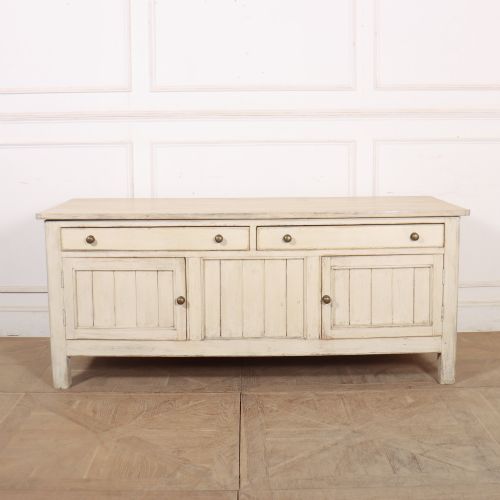


Low Pine Cupboard
A low pine cupboard offers practical utility and honest character, making it a versatile choice for modern rooms.
Low Pine Cupboard
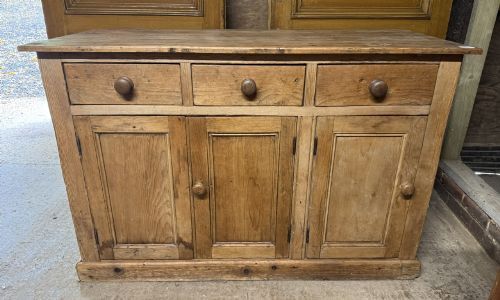
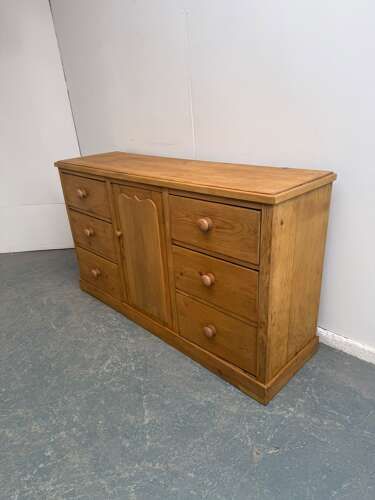
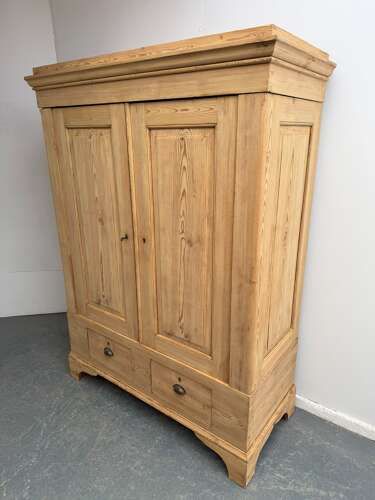
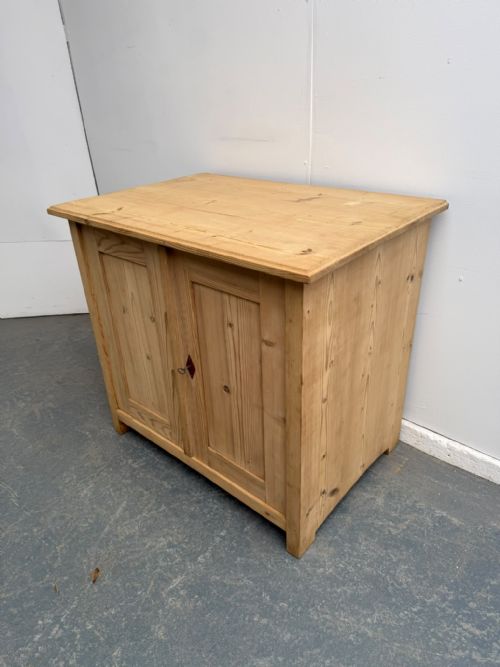
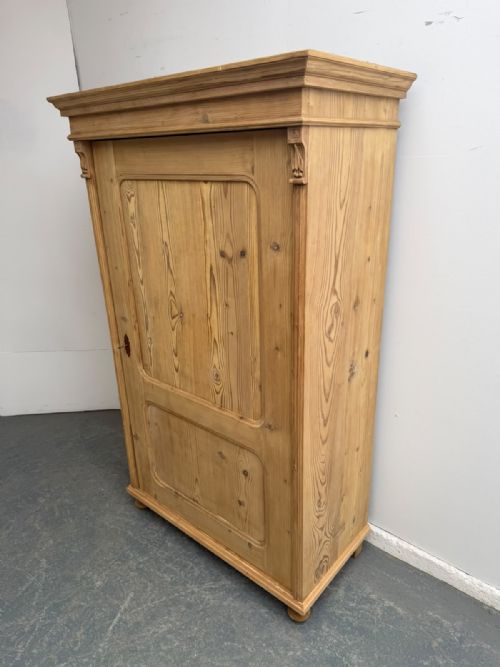
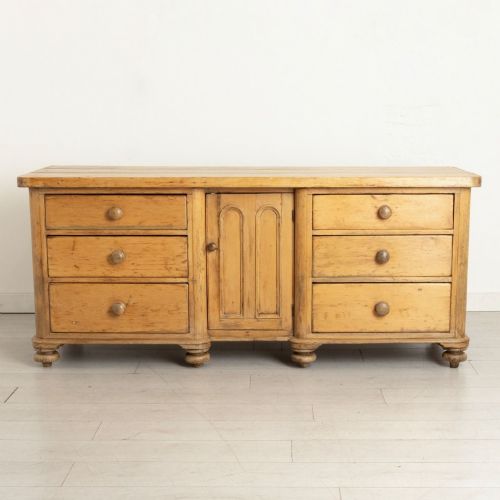
A low pine cupboard is a utilitarian storage piece typically found in domestic and country settings across the eighteenth, nineteenth, and early twentieth centuries. These items serve multiple functions, appearing as dresser bases, chiffoniers, kitchen cabinets, and wide storage units.
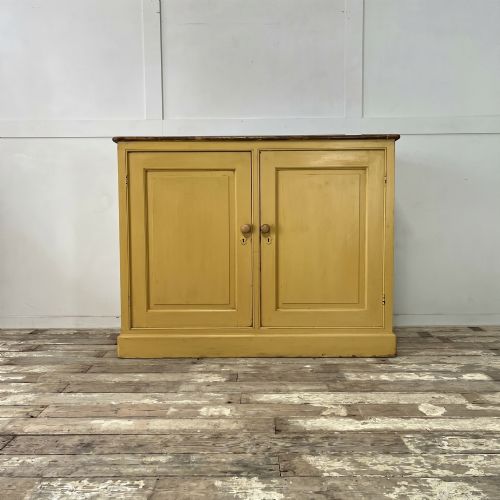
The pieces on this page span several eras including the Georgian, Victorian, and Edwardian periods. Buyers meeting these items will encounter everything from simple waxed timber to painted country finishes.
Regional variations also emerge, including English and Scottish country workshops alongside Swedish examples. Common formats include wide storage cupboards, shallow hall cupboards, and small bedside versions.
How they were made
Makers constructed these cupboards primarily from solid pine and pitch pine, utilising durable timber suited to daily domestic service. Iron and brass hardware, such as hinges and drawer pulls, provide functional support and fastening across the doors and drawers.
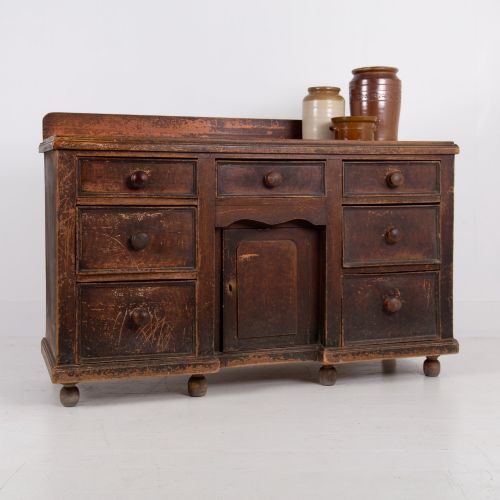
Surfaces received different treatments according to regional taste and period custom, ranging from clear wax finishes that highlight the natural grain to original paintwork and painted timber. Many items were constructed to dismantle, utilising knockdown joints for transport in domestic spaces.
Periods represented span from the 18th century through the Victorian era to Edwardian and early 20th century pieces.
What varies in quality
The distinction between standard utility items and finer examples rests in the joinery, timber selection, and proportion. Heavier construction using solid pine timbers and well-fitted doors indicates careful workshop production.
Survival of original paint finishes or untouched waxed surfaces adds considerable character compared to later stripped or altered examples. The integrity of the original hardware and the balance of the proportions define the overall merit of the piece.
The Low Pine Cupboard Glossary
- Dresser base
- The lower section of a kitchen dresser, usually comprising cupboards and drawers beneath a flat top surface.
- Chiffonier
- A low cabinet or sideboard, often fitted with drawers and doors, popular during the Victorian and Edwardian periods.
- Pitch pine
- A durable resinous pine timber utilised for heavy-duty furniture and large cupboards.
- Knockdown
- Furniture constructed to be easily disassembled and reassembled for movement between rooms or properties.
- Waxed
- A surface finish applied to timber to nourish the wood and provide a soft sheen.
Low Pine Cupboard: Frequently Asked Questions
What rooms suit a low pine cupboard?
These cupboards adapt easily to kitchens, hallways, and living spaces where surface area and low height are advantageous.
Their restrained proportions allow them to sit beneath windows or along passage walls without dominating the room.
How do I care for waxed pine?
Waxed pine benefits from occasional applications of natural beeswax to maintain the moisture and lustre of the timber.
Avoiding direct heat and moisture prevents the wood from drying out or staining over time.
Are these cupboards original?
The listings comprise antique pieces originating from the eighteenth century through to the early twentieth century.
Each item retains the construction methods and materials appropriate to its specific period of manufacture.
What is the difference between painted and waxed finishes?
Waxed finishes expose the natural grain and knots of the pine timber under a protective layer.
Original paint finishes preserve the historic decorative choices of past owners and workshops.