
Low Padded Stool
A low padded stool anchors a fireside or dressing table, offering compact comfort through centuries of traditional English and continental forms.
Low Padded Stool
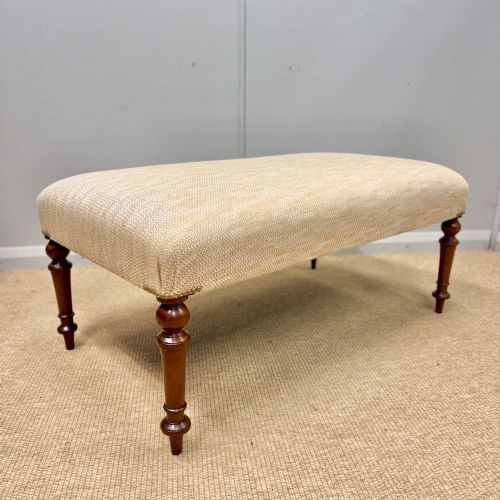
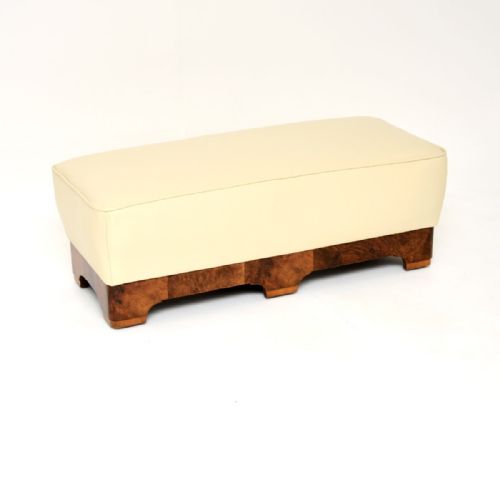
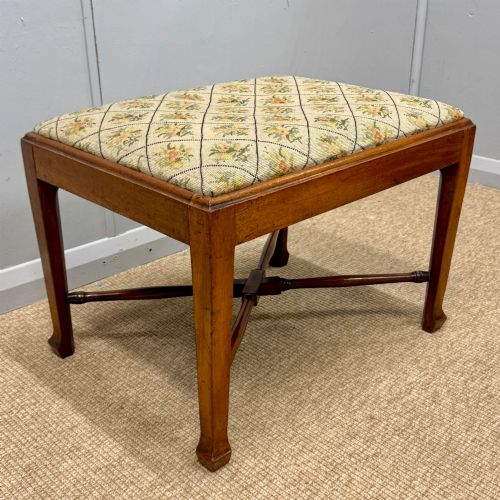
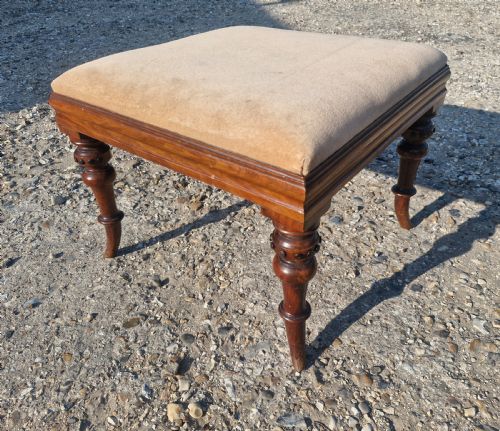
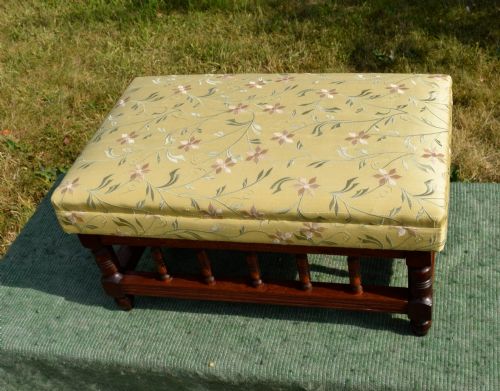
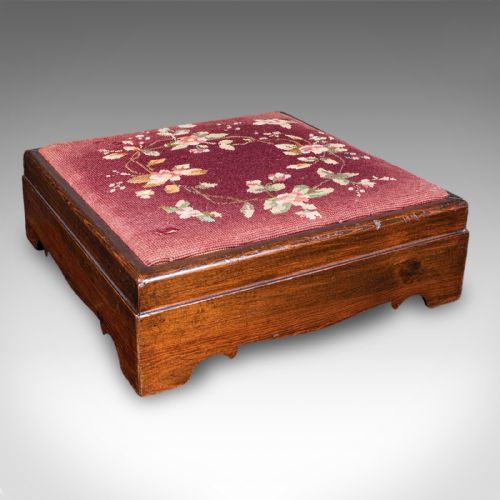
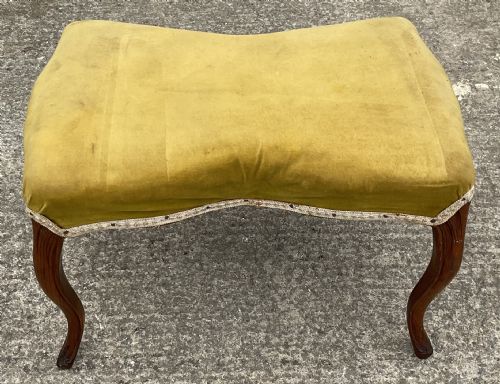
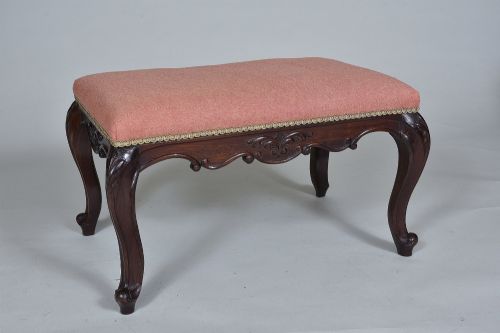
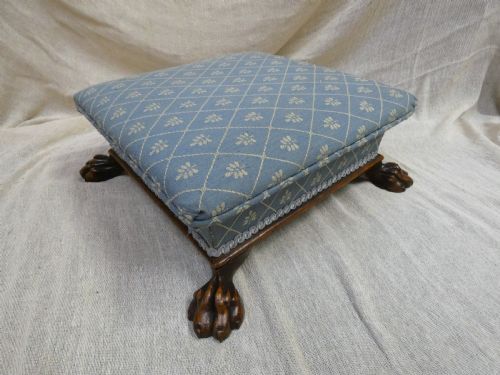
A low padded stool appears across multiple periods, most commonly taking the form of a Victorian or Edwardian footstool, fireside seat, or dressing table stool. These pieces serve practical functions in domestic spaces, functioning as footstools, ottomans, or occasional seating.
The selection ranges from simple mahogany and walnut frames to elaborate French giltwood and Anglo-Indian rosewood designs. Buyers frequently encounter nineteenth-century and early twentieth-century examples alongside revival styles spanning Queen Anne to Chippendale.
Materials and construction
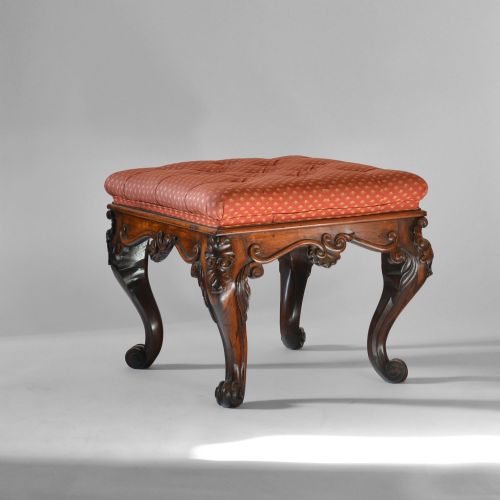
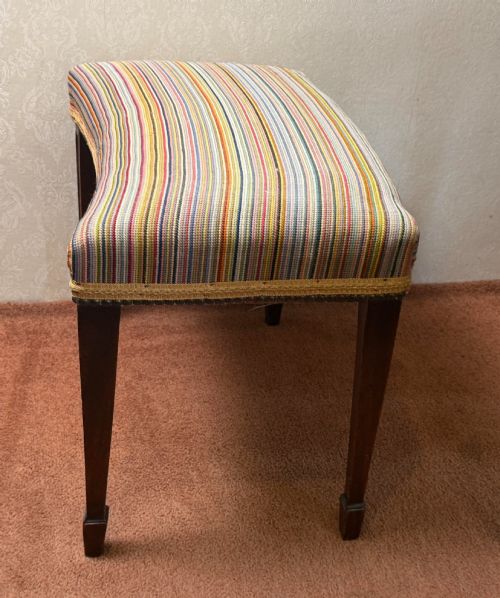
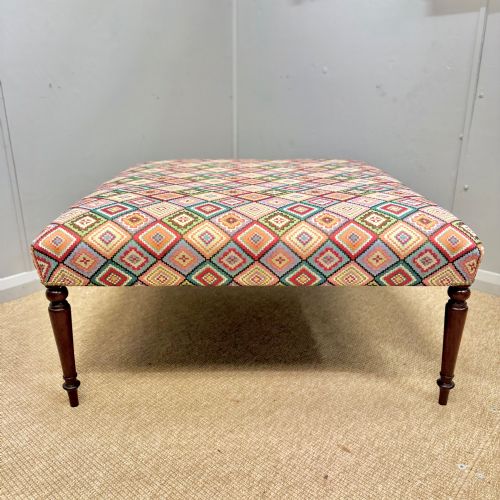
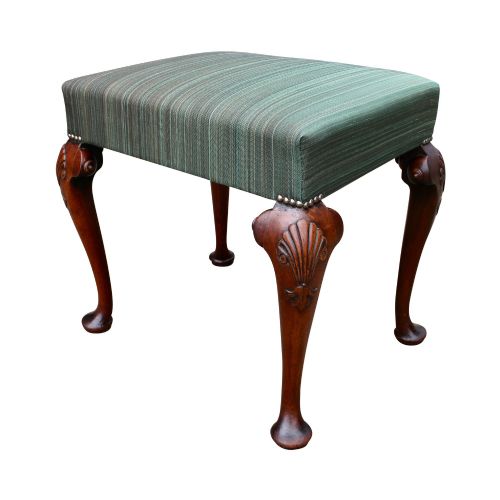
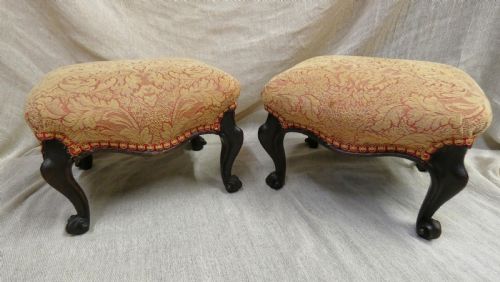
Frames rely on hardwoods such as mahogany, walnut, pitch pine, and rosewood, sometimes finished with ebonising, parcel gilt, or lacquer. Joinery techniques support sturdy legs, which appear as square tapering, turned, cabriole, or barley-sugar supports, occasionally fitted with brass castors.
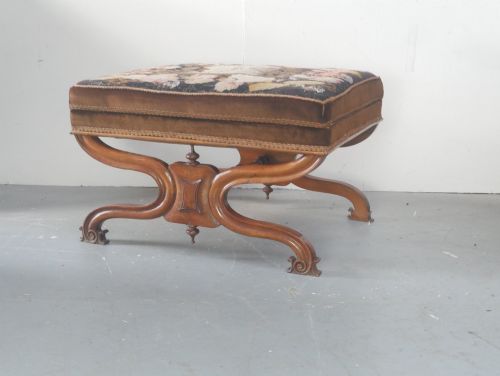
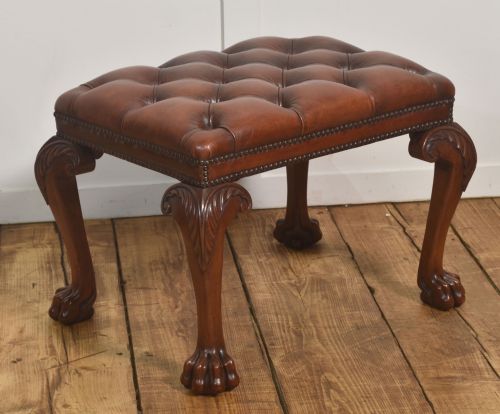
Seats combine wooden bases with padding upholstered in varied textiles, including leather, velvet, tapestry, needlepoint, fabric, and woven rattan. Many pieces retain period upholstery or feature newly applied fabrics matching historical patterns.
Several stools double as secret nap stations for tired Victorian house cats.
Judging quality in stools
Quality rests in the timber selection and the precision of the carving on frames, distinguishing standard utilitarian seating from pieces executed in the French carved giltwood or Scottish Baronial manner. Substantial scale and sculptural elements, such as scroll tops or cross stretchers, elevate certain forms above simpler domestic stools.
The integrity of the frame construction and the fidelity of revival styles, whether George III or Louis XIV, separate competent cabinetmaking from ordinary production. Original details like brass castors and surviving early textiles contribute to historical interest.
Mathew Gregson·Loidrault Freres Paris
The Low Padded Stool Glossary
- Cabriole leg
- An S-shaped furniture leg that curves outward at the knee and inward at the ankle, commonly ending in a pad or scroll foot. This form derives from ancient furniture traditions and gained prominence during the eighteenth century and subsequent revival periods.
- Stretcher
- A horizontal wooden brace connecting the legs of a stool to provide structural rigidity. Stretchers can be plain, turned, or ornamented with veneers such as oyster-cut patterns.
- Parcel gilt
- A decorative technique where specific carved details or mouldings on a wooden frame receive a thin application of gold leaf while the remaining surface shows polished wood or paint. This finish highlights particular elements of the maker's design.
- Needlepoint
- A form of counted-thread embroidery stitched on canvas to create durable and decorative seat coverings. It frequently appears on nineteenth-century dressing table stools.
- Castor
- A small wheel mounted in a swivel fixture beneath a furniture leg to facilitate movement. Brass versions are typical on nineteenth-century footstools.
Low Padded Stool: Frequently Asked Questions
How were low padded stools used?
These pieces functioned primarily as footrests by firesides or as low seats before dressing tables. Their compact dimensions allowed them to move easily around nineteenth-century reception rooms.
Larger versions also served as centre stools or ottomans in domestic interiors, accommodating various textiles to match existing room decor.
How do I identify a Victorian stool?
Victorian examples frequently employ walnut or mahogany timbers, often featuring turned or cabriole legs. Many incorporate upholstered tops in leather, velvet, or needlepoint.
Construction methods and timber ageing help distinguish these pieces from later twentieth-century revivals.
Are these stools suitable for daily use?
Solid hardwood frames and sturdy joinery make these stools robust enough for contemporary seating. Many pieces benefit from updated upholstery that supports everyday utility.
Care should be taken with antique textiles and delicate giltwood finishes to preserve their condition over time.
What is a dressing table stool?
A dressing table stool is a low seat designed specifically for use in bedrooms alongside vanity tables. They typically feature upholstered tops and accessible heights for personal grooming.
Styles range from plain mahogany frames to decorative ebonised or inlaid pieces from the Edwardian period.