

Low Ottoman Bench
A low ottoman bench brings versatile seating and resting surfaces into a room, spanning nineteenth-century rosewood forms and walnut revival styles.
Low Ottoman Bench
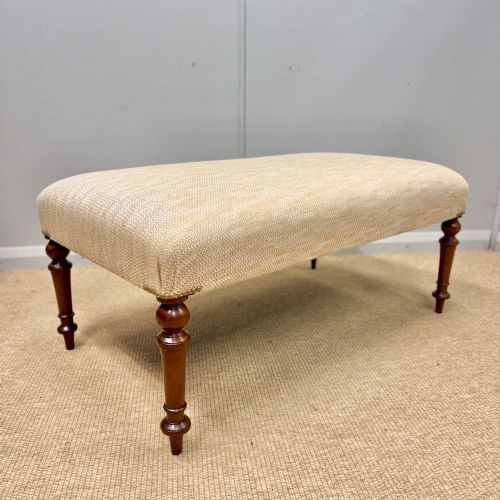
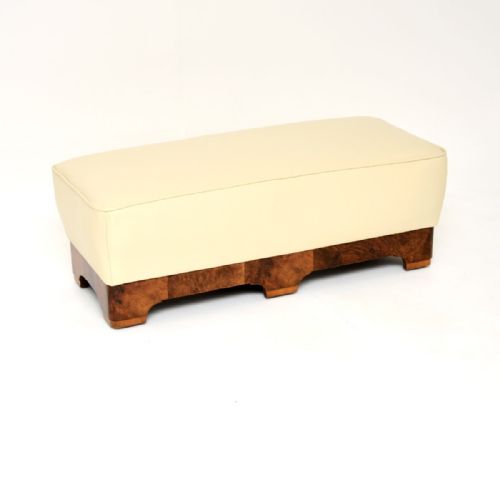
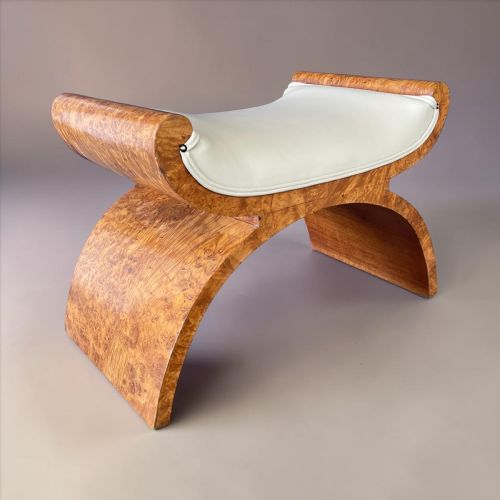
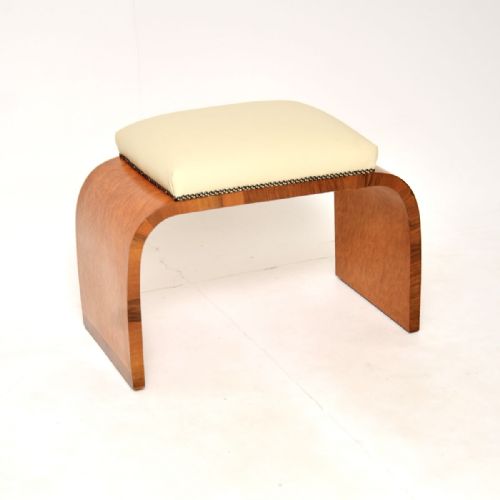
A low ottoman bench serves multiple purposes as a footstool, dressing table seat, or low coffee table within traditional and twentieth-century interiors. Buyers searching for a low ottoman bench frequently encounter nineteenth-century mahogany, walnut, and rosewood forms alongside Art Deco burr walnut versions.
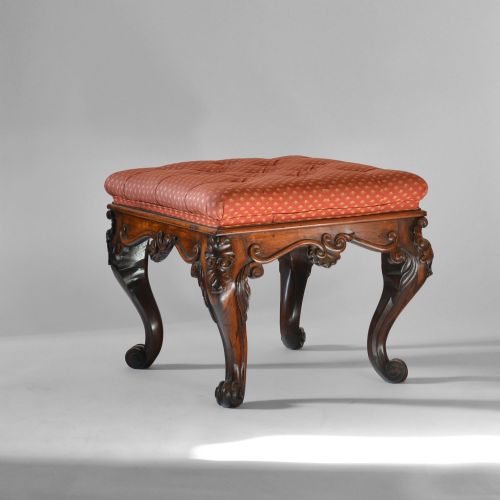
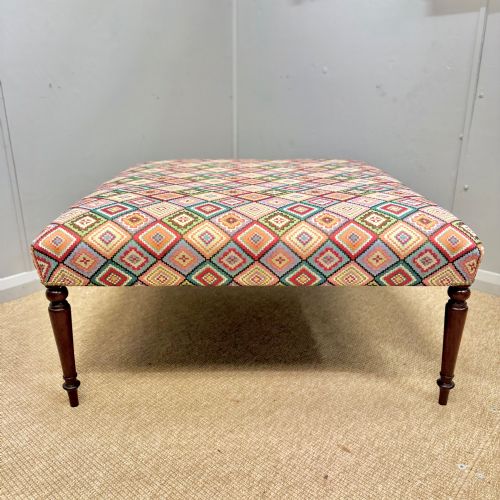
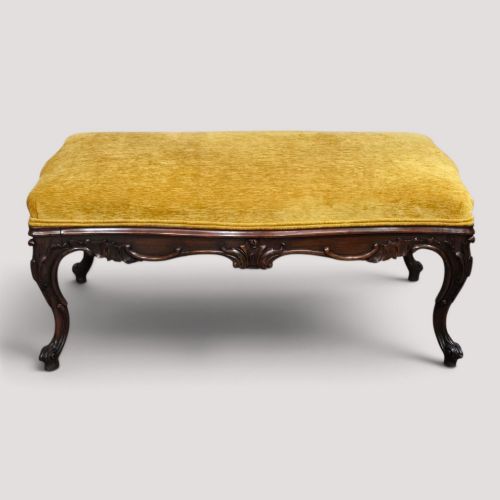
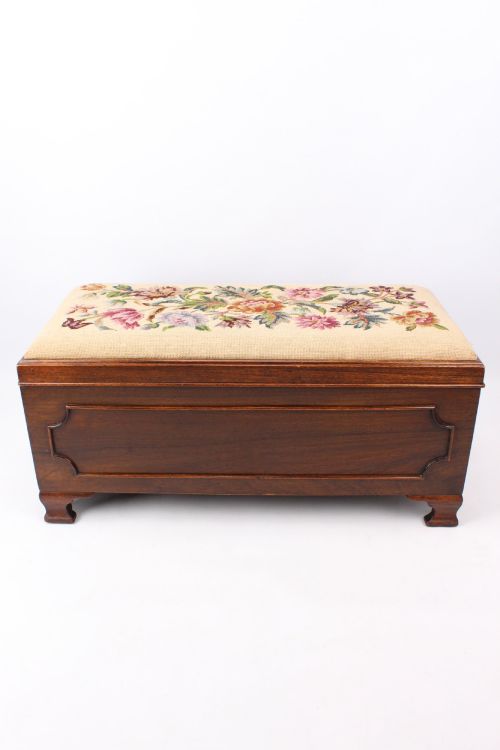
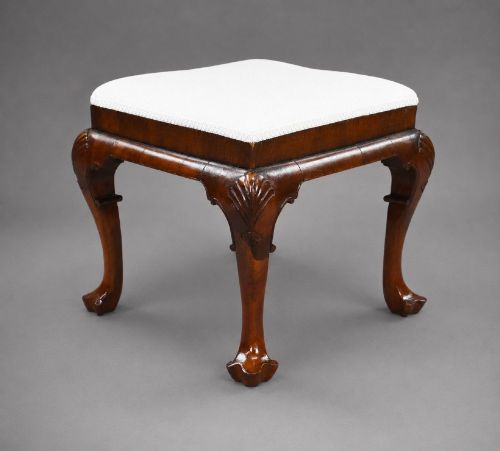
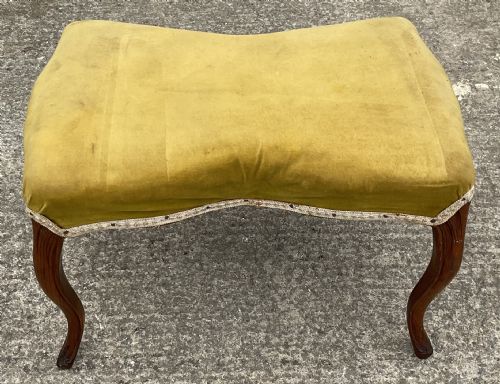
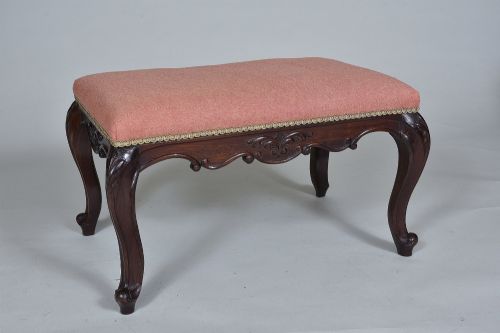
The selection ranges from compact Victorian footstools with cabriole legs to large Anglo-Indian rosewood and teak pieces. Upholstered tops featuring needlework, leather, fabric, and textile predominate across the selection.
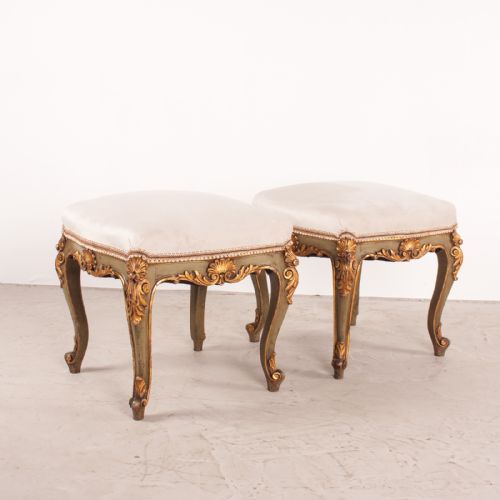
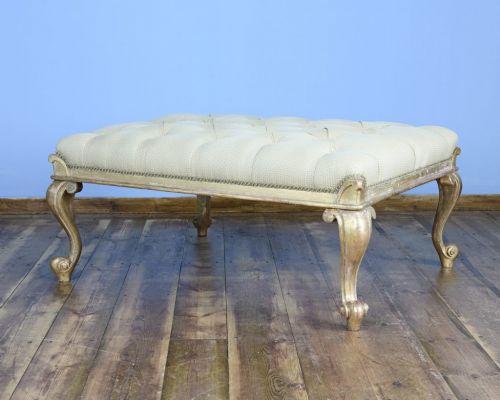
Revival pieces following Queen Anne, Georgian, and Louis XIV styles appear alongside plain timber frames with caned or woven rattan tops. These low seats adapt easily to drawing rooms, dressing rooms, and foot-of-the-bed placements.
Materials and construction
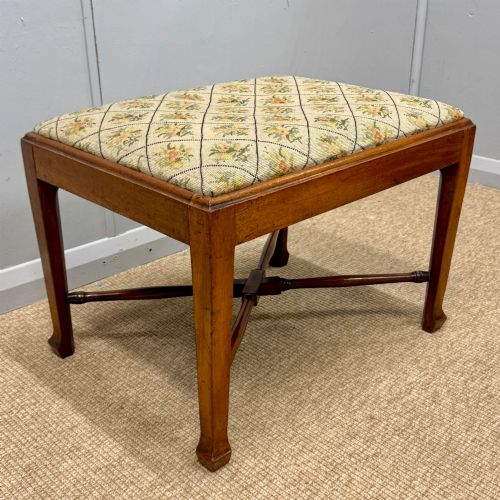
Timbers such as mahogany, walnut, rosewood, oak, and teak form the rigid structural frames, shaped with carved details or parcel gilding. Joinery techniques combine traditional cabinetmaking with supportive cross stretchers to handle daily sitting and resting.
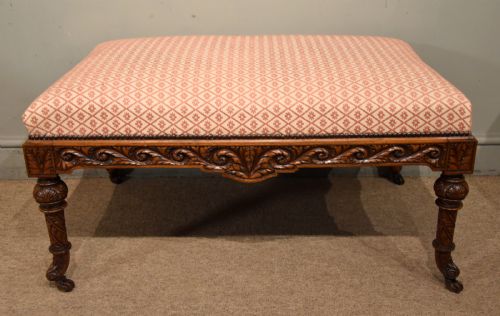
Upholstery materials include leather, wool, textile, and needlework, secured over padded interiors. Brass castors frequently finish the feet of larger nineteenth-century examples to allow smooth movement across carpets and floors.
Some nineteenth-century footstools roll into position on tiny brass castors, ready to rescue weary feet.
Quality variations
The refinement of the timber carving and the choice of facing woods dictate the visual distinction of each piece. Figured veneers like burr walnut and birds eye maple elevate twentieth-century examples above plain utility frames.
Structural integrity rests on the tightness of the joinery in the frame and the quality of the upholstery materials chosen. Original details such as period fabric and intact brass castors add historical weight to nineteenth-century specimens.
Harry and Lou Epstein
The Low Ottoman Bench Glossary
- Cabriole leg
- An S-shaped furniture leg curving outward at the knee and tapering inward to the foot. This form appears frequently on walnut and mahogany Victorian frames.
- Cross stretcher
- An intersecting timber brace connecting the legs beneath a stool for added rigidity. These are common on dressing table and salon variants.
- Needlework
- Hand-stitched textile used for seat covers and upholstery panels. It introduces colour and texture to nineteenth-century footstools.
- Caned top
- A seat surface woven from peeled rattan or cane strips. This technique provides a light, flexible platform on oak and mahogany frames.
- Parcel gilt
- A surface treatment where specific carved details receive a thin layer of gold leaf while the underlying wood remains visible.
Low Ottoman Bench: Frequently Asked Questions
What is a low ottoman bench used for?
These low seats function primarily as footstools, dressing table chairs, or occasional resting tables in living spaces. Their compact height makes them suitable for placement at the foot of a bed or beside a fireside.
Larger variations accommodate trays to serve as coffee tables while retaining their upholstered or caned seating surfaces.
How do I identify nineteenth-century frames?
Nineteenth-century pieces typically display solid mahogany, walnut, or rosewood construction with hand-carved details. Common indicators include traditional joinery methods and the presence of brass castors on larger formats.
Stylistic cues draw heavily on Victorian proportions and revival movements like the Louis XIV and Jacobean tastes.
Are Art Deco stools different from Victorian ones?
Art Deco pieces from the 1930s favour streamlined geometries and exotic veneers like burr walnut and birds eye maple. They often pair these woods with smooth leather upholstery.
Victorian equivalents lean toward darker timbers, heavily carved rosewood, cabriole legs, and textured textile or needlework seats.
Can I use these benches as coffee tables?
Sturdy rectangular frames and large ottoman formats adapt well to holding trays and books. Flat-topped timber and leather examples handle surface items securely.
Softer upholstered or needlework tops require a firm tray placed on top to prevent spills and protect the textile.