
Low Open Shelving Unit
A low open shelving unit brings books and objects into daily reach, combining practical storage with clean lines across Victorian and later periods.
Low Open Shelving Unit
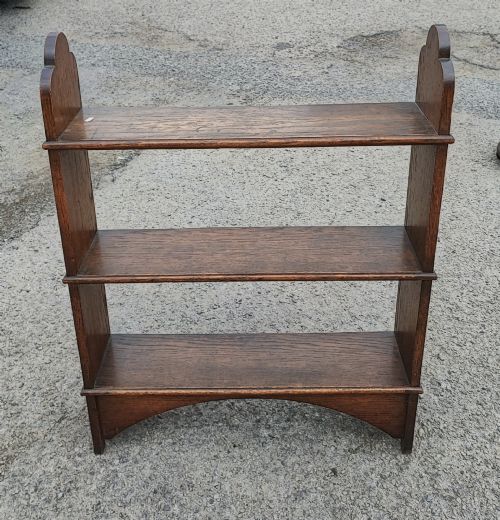
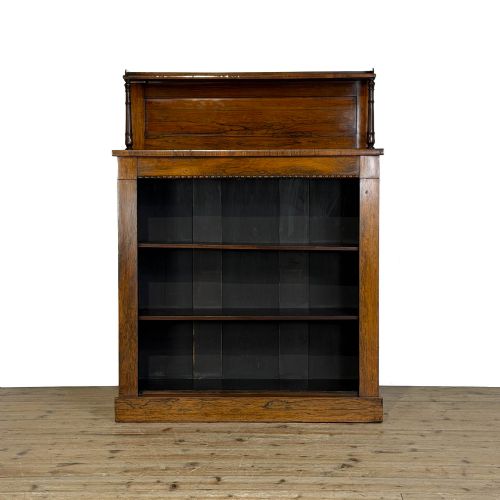
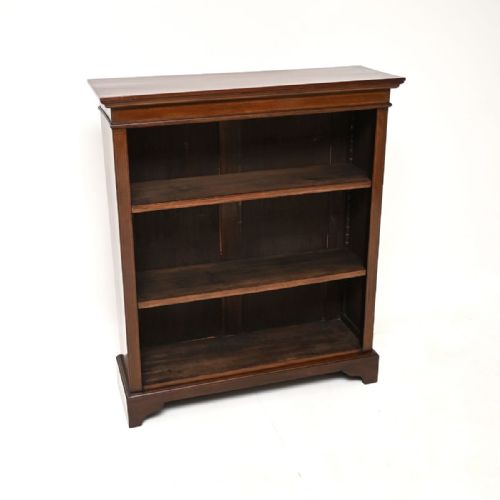
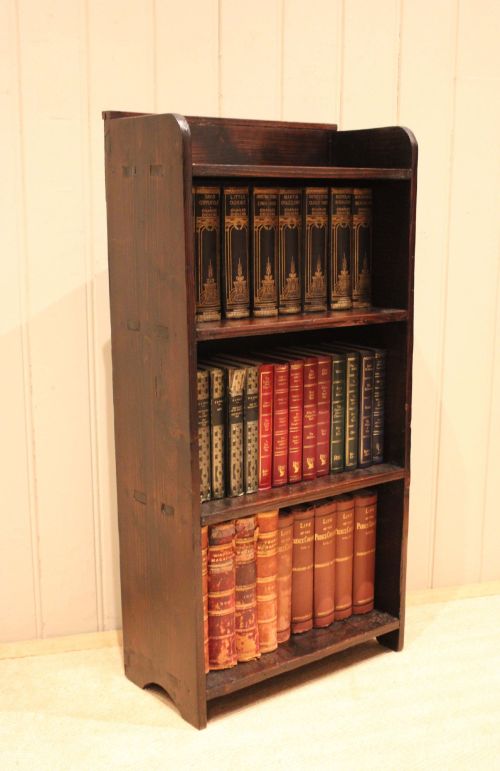
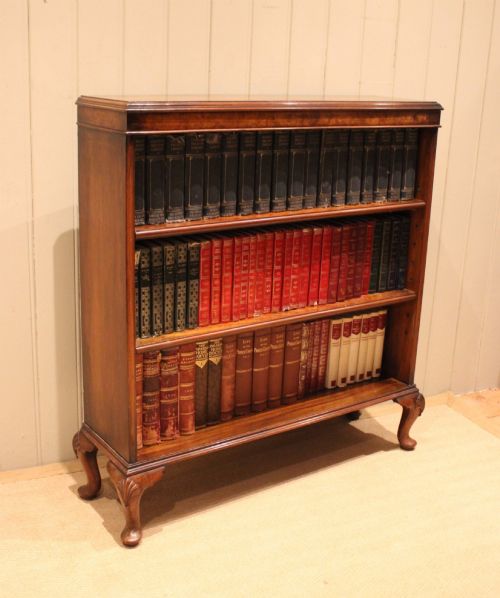
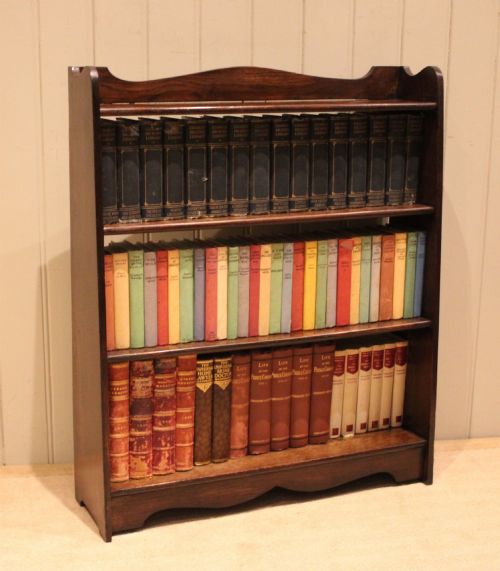
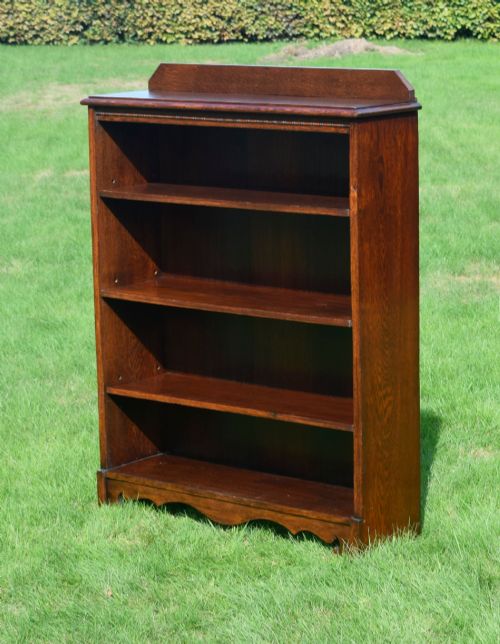
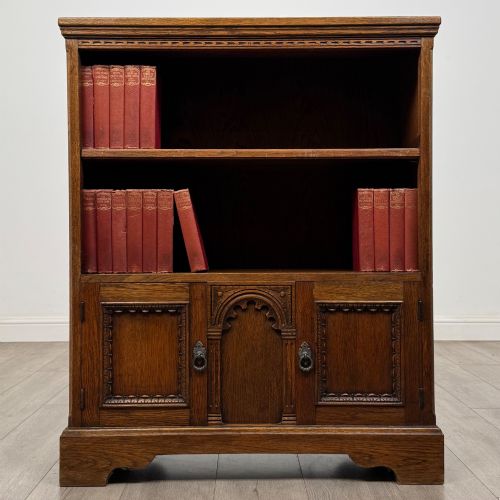
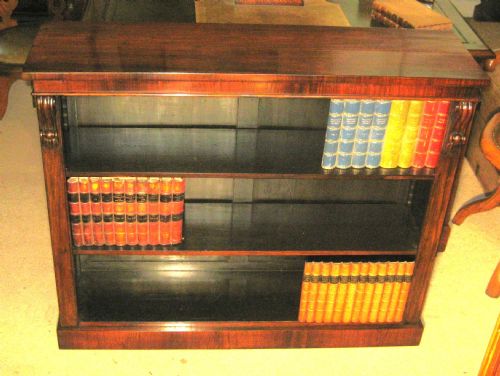
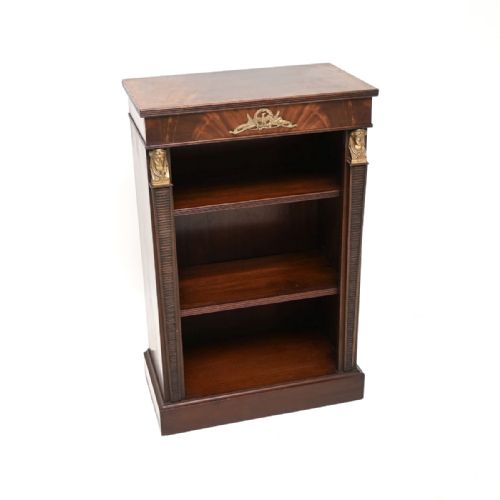
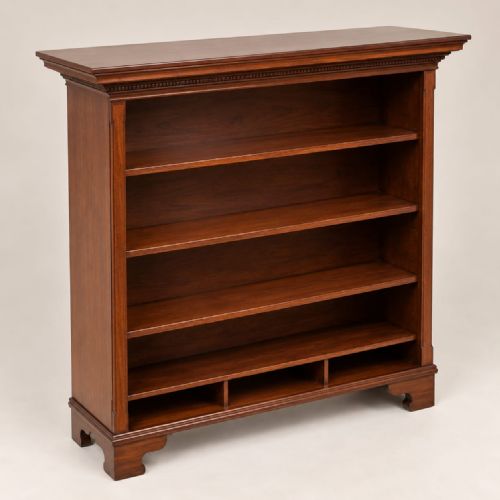
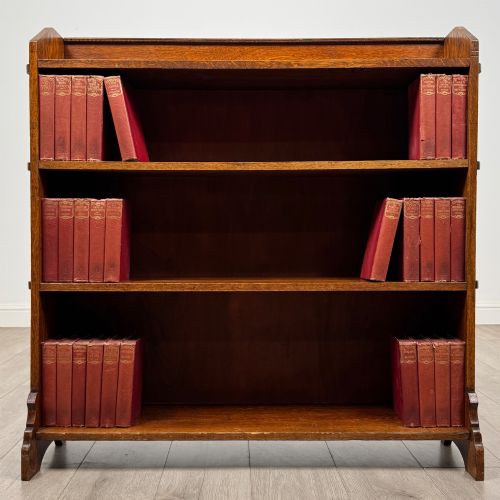
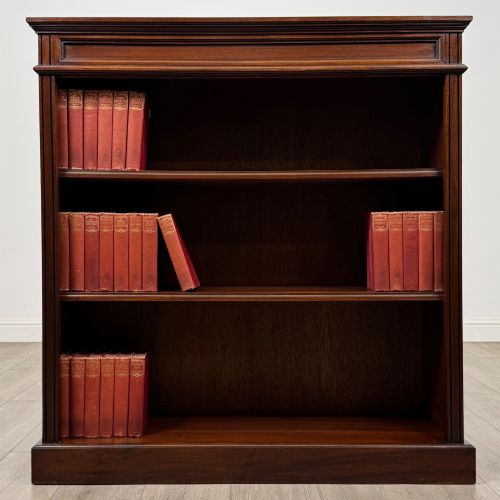
A low open shelving unit functions as a versatile bookcase or low library piece, appearing primarily in oak, mahogany, rosewood, walnut, and pine. These pieces emerge across Victorian, Edwardian, and twentieth-century periods, including specific examples from the 1900s, 1910s, 1920s, and 1930s.
Buyers most frequently encounter oak and mahogany variants from the Victorian and Edwardian eras, often featuring adjustable shelves, carved details, or inlaid decoration. Styles span from Arts and Crafts and Art Deco to Jacobean Revival and rustic country forms.
How they were made
Cabinet makers utilised solid timbers such as oak, mahogany, walnut, rosewood, and pine to construct the main framework and shelves. Selected pieces incorporate brass hardware, ormolu accents, and decorative carving or inlaid veneers.
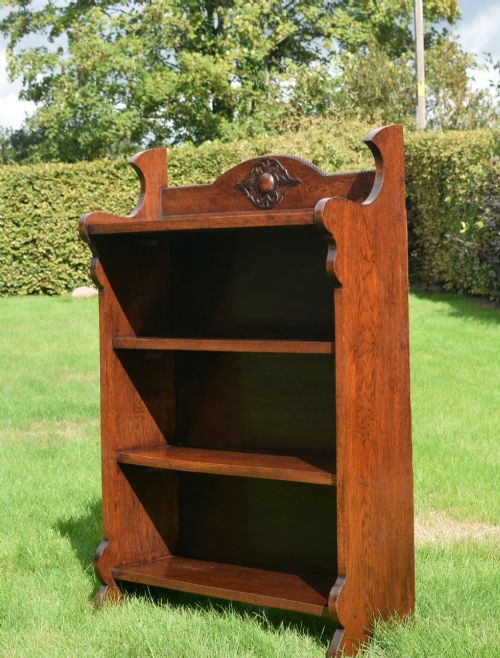
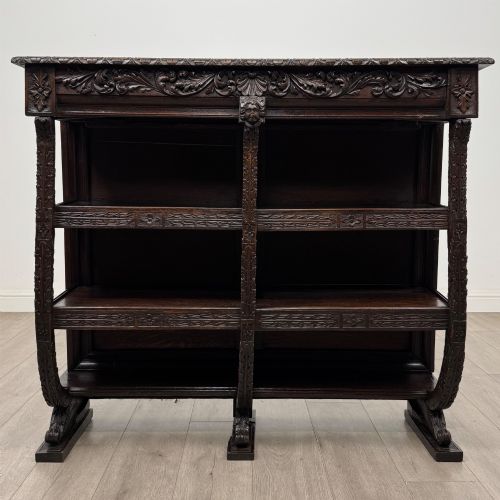
Construction methods include adjustable shelving tracks and beaded edges, alongside ebonised finishes and carved elements like green man motifs. Structural designs range from angled and stepped configurations to standard upright bookcases.
Keep watch for the occasional ebonised green man peering out from the carving.
What varies in quality
Quality rests in the selection of timber, such as figured mahogany, golden oak, or rich rosewood, and the precision of the joinery. Finer examples display crisp carving, balanced proportions, and integrated decorative elements like Neoclassical Empire details or Aesthetic Movement styling.
The sophistication of internal mechanisms, including functional adjustable shelf supports and clean interior timber surfaces, separates standard utility pieces from more ambitious cabinet work.
heals
The Low Open Shelving Unit Glossary
- Open bookcase
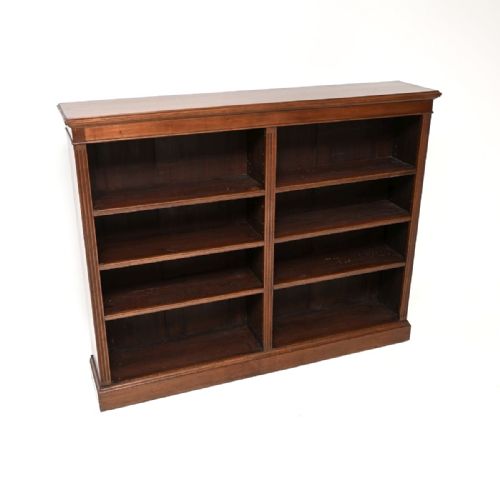
- A piece of furniture designed for storing books without doors enclosing the front compartments. This format provides immediate access to the contents.
- Adjustable shelves
- Shelves resting on supports that allow the vertical intervals between them to change. This arrangement accommodates books and objects of varying heights.
- Inlaid mahogany
- Mahogany timber decorated with contrasting wood veneers set flush into the surface. This technique creates geometric or floral patterns.
- Ebonised
- Wood treated with a dark finish to resemble ebony. It appears frequently on Victorian carved furniture.
- Arts and Crafts
- A design movement focusing on traditional craftsmanship and simple forms. Pieces often highlight the natural grain of oak.
Low Open Shelving Unit: Frequently Asked Questions
What periods do these pieces cover?
The selection spans the nineteenth and twentieth centuries, taking in Regency, Victorian, and Edwardian eras alongside 1920s and 1930s examples.
Craftsmen built these units through successive stylistic movements, incorporating Arts and Crafts simplicity, Art Deco geometry, and Jacobean Revival carving.
Which woods are most common?
Oak and mahogany appear most frequently across the listings, supported by walnut, rosewood, pine, and ash.
Individual pieces occasionally feature brass fittings, ormolu mounts, or ebonised surfaces to accent the primary timber.
How do adjustable shelves work?
Many low open shelving units utilise movable shelf supports set into the interior sides of the cabinet.
This system allows owners to alter the vertical spacing between shelves to suit different book sizes and display objects.
What styles can I find?
Styles range from plain utilitarian pine bookshelves to ornate Victorian carved oak and inlaid Edwardian mahogany designs.
Buyers also encounter specialised forms including waterfall bookcases, stepped units, angled cases, and Aesthetic Movement pieces.