

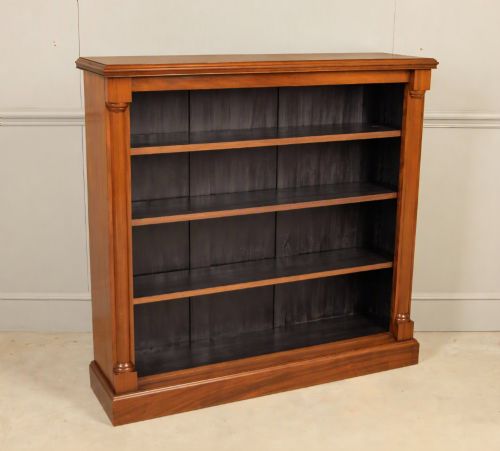
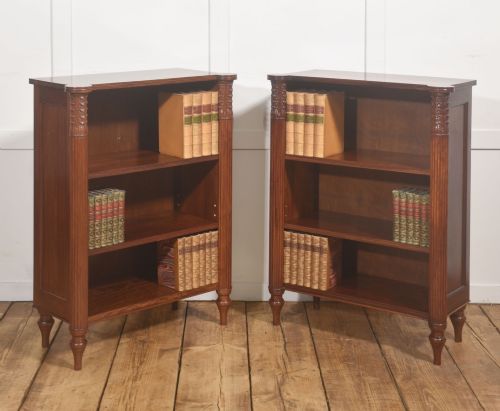
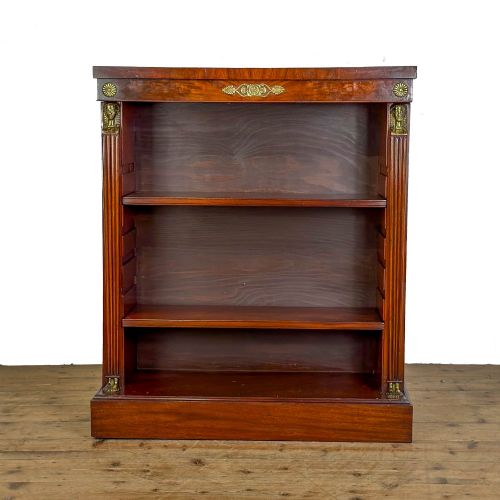

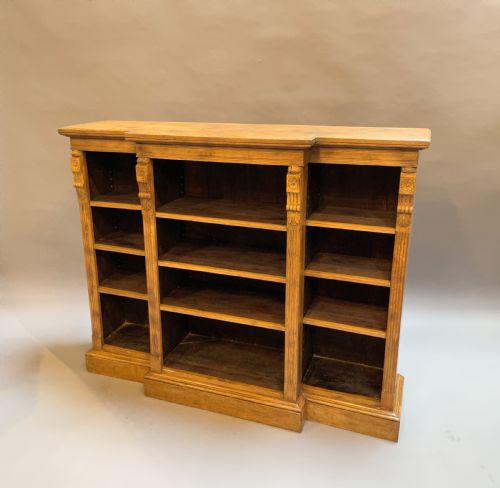

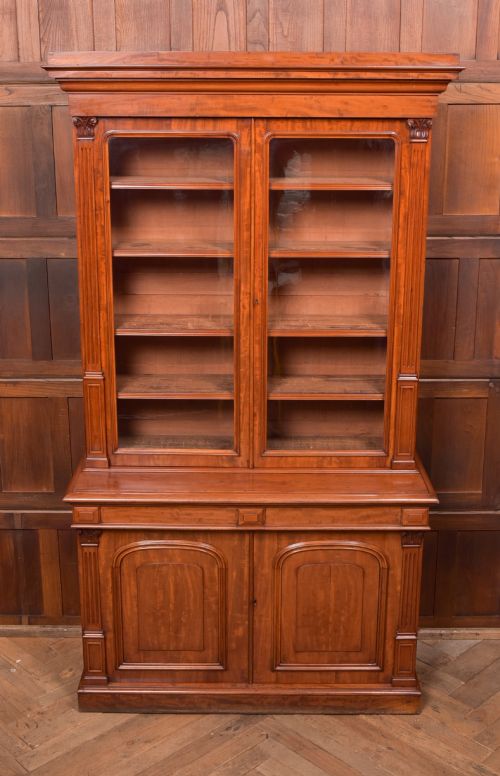


Victorian Pilaster Bookcase
These Victorian pilaster bookcase examples combine architectural timber framing with adjustable shelving, bringing nineteenth-century library craftsmanship directly into the modern room.
Victorian Pilaster Bookcase
A victorian pilaster bookcase is a timber storage piece defined by vertical column details, arriving most often from the nineteenth century in forms such as open shelf units, glazed top cabinets, and breakfront designs.
The evidence shows these pieces appearing across the Victorian era alongside Regency and 19th Century designations, shifting from simpler open library formats to glazed doors and side cabinets.
Makers and workshops constructed these bookcases in walnut, oak, mahogany, and rosewood, incorporating materials like brass, glass, pine, and patinated marble tops to suit domestic studies and large libraries.
Materials and construction methods
Cabinet makers utilised solid hardwoods including oak, walnut, and mahogany, often applying fine veneers like mahogany and rosewood over secondary timbers such as pine.
Construction techniques relied on carved detailing, structural pilasters, and adjustable shelf systems to meet the functional demands of nineteenth-century book collections.
Victorian Pilaster Bookcase Retail Price Guide 2026
Typical asking prices for victorian pilaster bookcase among the pieces listed under this phrase on Sellingantiques today, from the lower quarter to the upper quarter. They describe what is for sale here now, not the wider market.
Listings span the Victorian and Regency periods, utilising walnut, oak, mahogany, rosewood, and satinwood.
Distinctions in construction and timber
Quality separates pieces through the selection of primary timbers and the precision of the carved architectural elements, where dense walnut or figured mahogany outlasts simpler softwood carcases.
The integration of secondary materials, such as patinated marble tops and brass fittings, distinguishes standard utility library pieces from more ambitious revival designs.
The Victorian Pilaster Bookcase Glossary
- Pilaster
- A rectangular column that projects slightly from the wall or cabinet side, serving an architectural decorative function on these bookcases.
- Breakfront
- A large cabinet design where the central section projects forward from the flanking outer wings.
- Veneer
- A thin layer of superior wood adhered to a base timber surface to display rich grain patterns.
- Glazed
- Fitted with glass panels within the door frames to protect books while keeping them visible.
Victorian Pilaster Bookcase: Frequently Asked Questions
What is a Victorian pilaster bookcase?
It is a nineteenth-century library piece featuring structural vertical columns alongside adjustable shelving or glazed doors.
These units appear in woods such as oak, walnut, and mahogany across various revival styles.
How do I date these bookcases?
Dating relies on recorded periods such as Regency, 1860, 1870, 1880, and the broader Victorian and nineteenth-century designations.
Construction traits and stylistic markers like Egyptian Revival or Jacobean Revival elements further clarify the timeframe.
Are the shelves adjustable?
Many of the listed library bookcases include adjustable shelf systems designed to accommodate varying book sizes.
This adaptability was standard for nineteenth-century working libraries.
What timbers were used?
Makers constructed these pieces using walnut, oak, mahogany, rosewood, and satinwood, occasionally pairing them with softwood carcases.
Surface details often include mahogany or rosewood veneers alongside brass and glass components.