

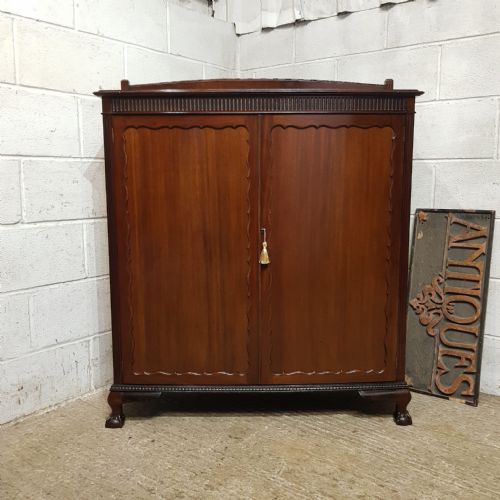
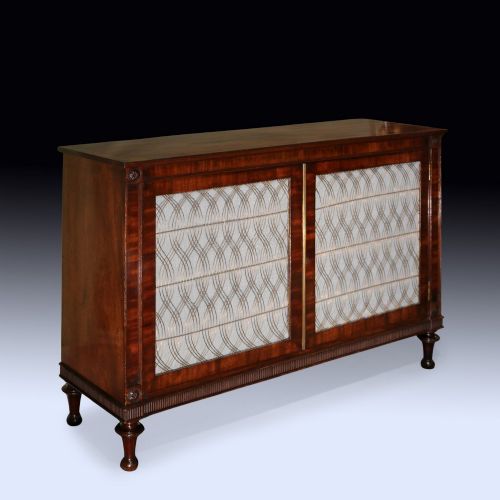
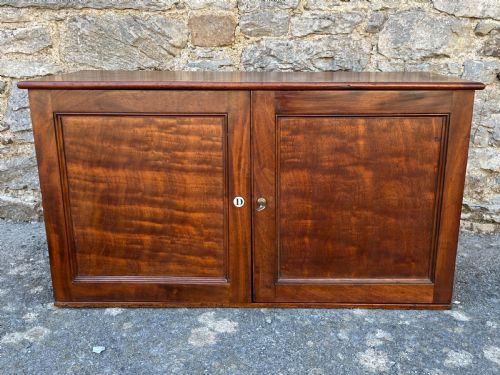


Low Mahogany Storage Cabinet
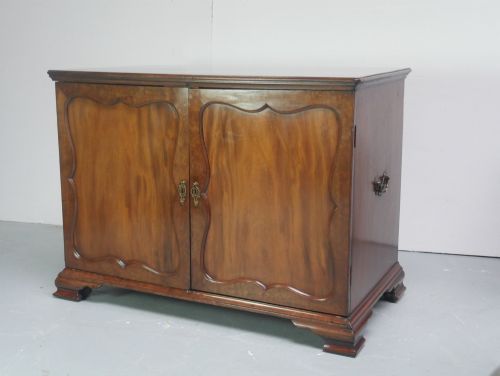
A low mahogany storage cabinet offers practical organisation beneath a handsome timber grain, spanning periods from George III to Edwardian workshops.
Low Mahogany Storage Cabinet
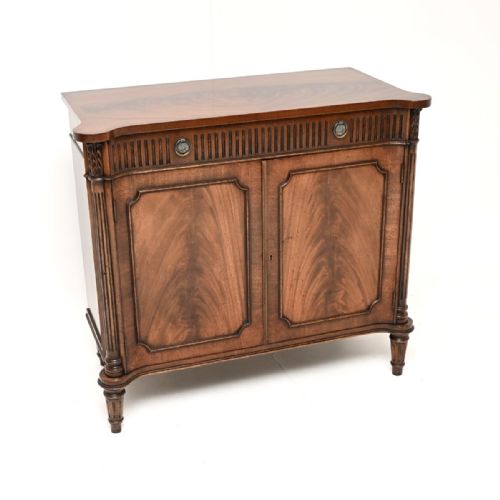
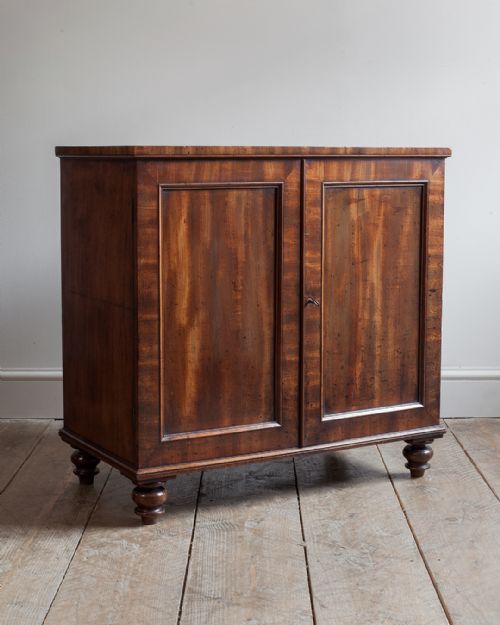
A low mahogany storage cabinet serves domestic interiors by keeping belongings concealed beneath a usable surface, taking the form of dwarf linen presses, side cabinets, and low cupboards. These pieces emerge primarily from Georgian, Regency, Victorian, and Edwardian periods, reflecting changing domestic requirements for compact storage over two centuries.
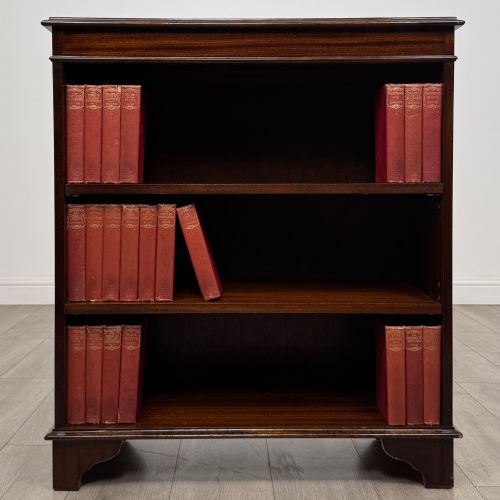
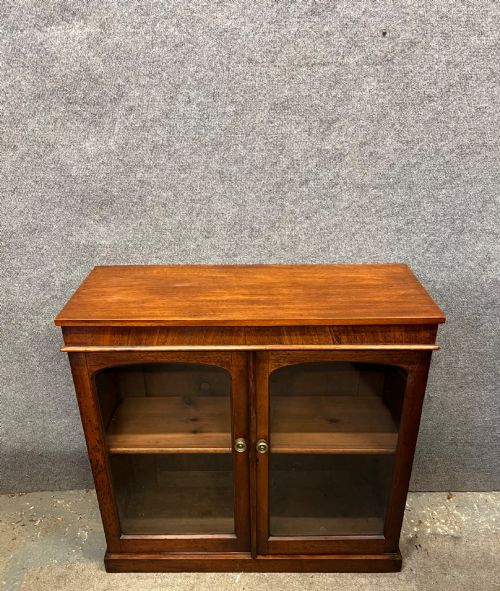
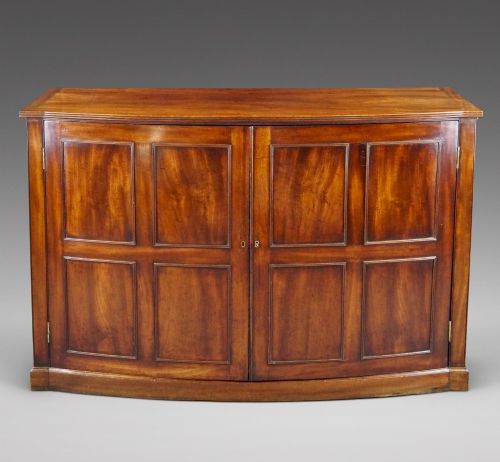
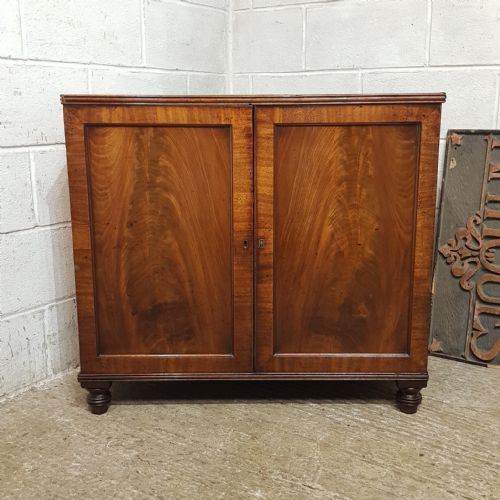
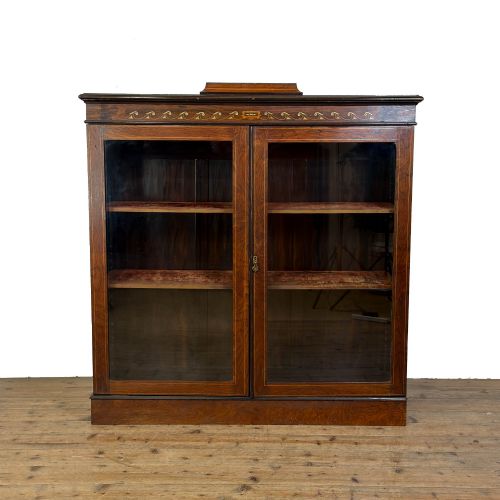
Buyers seeking this phrase encounter a high proportion of Georgian and Regency dwarf presses alongside Victorian and Edwardian side cupboards. Forms range from simple two-door units to bow-fronted designs and specialised pieces with brass grilles or open shelving.
How they were made
Cabinet makers utilised solid timber alongside flame mahogany veneer, applying boxwood inlay and brass mounts to accentuate the deep red grain. Carcasses were joined using traditional woodworking joints, while doors often integrated glass panels or brass grilles for display purposes.
Surfaces received hand-applied polish that brought out the natural figure of the wood, particularly on figured and plum pudding mahogany examples. Structural elements occasionally incorporated secondary timbers hidden within the internal shelving and drawer linings.
Current selections span Georgian, Regency, Victorian, and Edwardian eras, incorporating glass, brass, marble, and boxwood alongside solid mahogany and veneer.
What varies in quality
Quality rests upon the selection of timber figures, such as matched flame veneers or figured mahogany panels, which determine the visual impact of the piece. Superior examples display careful grain alignment across doors and drawers, alongside refined brass hardware and delicate inlay.
Construction integrity defines the upper tier, seen in the solidity of internal shelving, the smoothness of drawer operation, and the precision of the joinery. Lesser pieces rely on simpler construction without the decorative banding or finely turned legs found on workshop-attributed furniture.
Whytock and Reid of Edinburgh·The Bowman Brothers
The Low Mahogany Storage Cabinet Glossary
- Dwarf linen press
- A short storage unit originally designed for textiles, combining upper cupboard doors with lower drawers or internal shelving. These items sit lower to the ground than standard wardrobes.
- Flame mahogany veneer
- A decorative wood slicing characterised by a tongue-like flame pattern derived from specific sections of the mahogany log. Cabinet makers laid these veneers over stable secondary woods to create dramatic facades.
- Brass grille
- A metal mesh fitted into cabinet doors instead of solid wood or glass, allowing ventilation while concealing the contents. This detail appears frequently on Regency side cabinets.
Low Mahogany Storage Cabinet: Frequently Asked Questions
What is a dwarf linen press?
A dwarf linen press is a shortened version of a traditional tall wardrobe or linen storage unit, built to stand at a lower height suitable for smaller rooms.
These pieces combine enclosed cupboard space with internal shelving or drawers, offering functional storage while maintaining a compact footprint in the home.
How do I identify a Regency cabinet?
Regency cabinets often display classical architectural influences, featuring clean lines, rosewood or boxwood stringing, and occasionally brass grilles set into the door panels.
They date from the early nineteenth century and frequently utilise rich timber figures such as flame mahogany or plum pudding mahogany.
Where were low cabinets used?
These cabinets served multiple domestic rooms, functioning as sideboards in dining spaces, bookcase hybrids in libraries, and general storage units in living areas.
Their reduced height allowed the top surface to hold decorative objects or serving trays without blocking windows or wall art.
What is flame mahogany?
Flame mahogany is a highly decorative wood veneer obtained from the branch junctions of the tree, producing a distinct flickering pattern.
Cabinet makers reserved this timber for the primary focal points of a piece, such as drawer fronts and door panels, to create striking visual depth.