
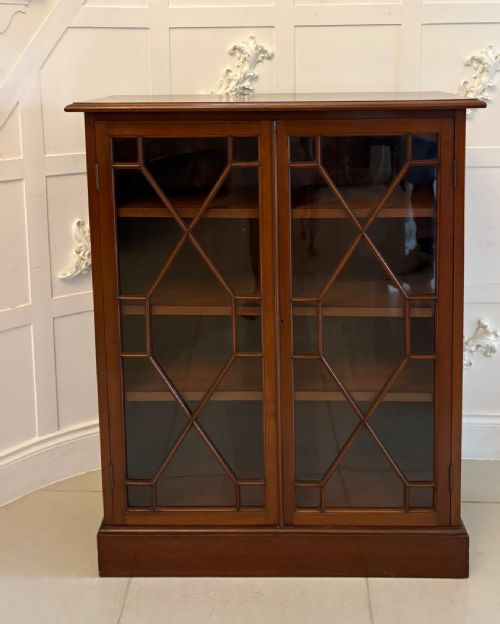
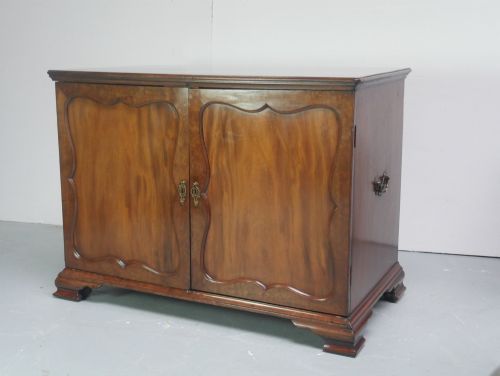
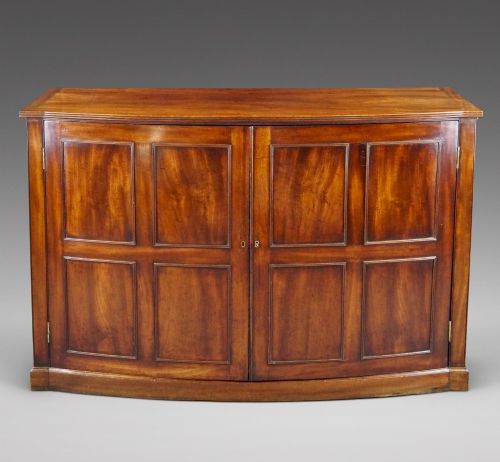


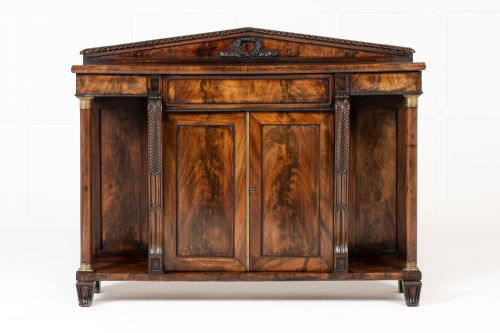

Georgian Mahogany Low Cupboard
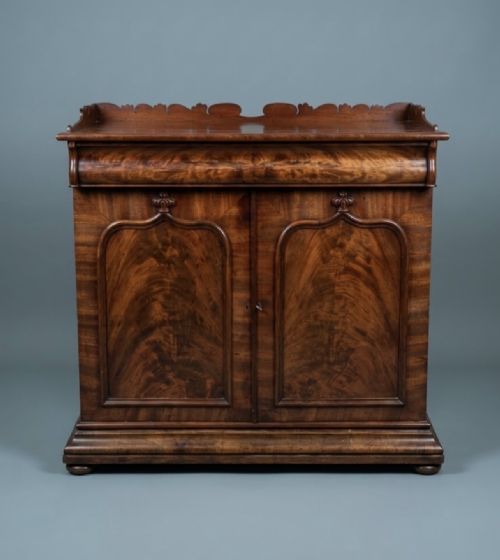
A georgian mahogany low cupboard offers a practical surface and deep interior storage, bringing rich timbers and solid joinery to a room.
Georgian Mahogany Low Cupboard
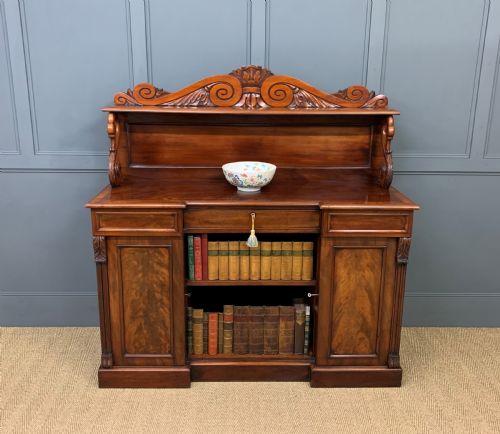
A georgian mahogany low cupboard brings together functional storage and refined timber work from the eighteenth and early nineteenth centuries. These pieces appear in forms such as side cabinets, linen presses, dwarf cupboards, and chiffonier bases.
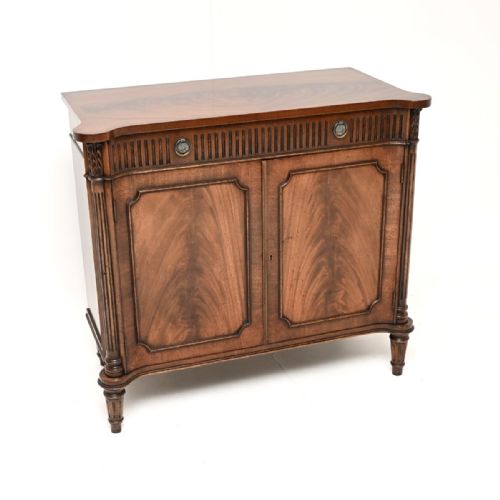
The pieces on this page span the Georgian, Regency, and William IV periods, alongside later Victorian and revival examples. Most often, a buyer encounters two-door cabinets, dwarf linen presses, and low side cabinets designed for domestic utility.
Origins stretch from the late eighteenth century through to the early twentieth century, showing influences from George III to Queen Anne Revival styles. The low proportions make them particularly adaptable for modern rooms needing surface space and enclosed storage.
How they were made
Makers built these cabinets primarily using solid mahogany and flame mahogany veneer, often enhanced by contrasting satinwood banding or brass hardware. Timber selection dictated the character of the piece, with figured grains chosen for prominent doors and panels.
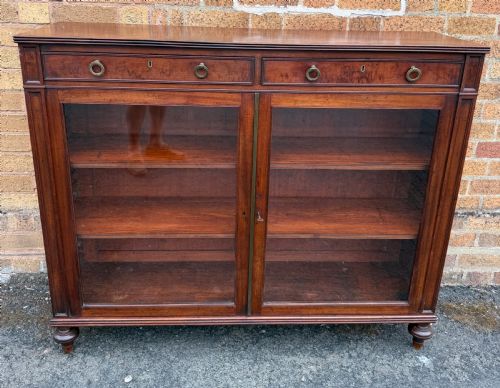
Interior construction frequently incorporated oak or pine for drawer linings and internal shelving, joined with traditional dovetailing. Glazed doors appeared on bookcase variations, while silk or fabric panels sometimes lined specialised display spaces.
Some dwarf presses hide shallow internal drawers behind their lower doors, once used for storing stiff gentlemen's cravats.
What varies in quality
The quality of a piece rests heavily on the selection of the timber and the handling of the veneer. Plain solid boards sit at one end, while deeply figured flame mahogany and crisp inlay sit at the other.
Proportion and execution define the finer examples, particularly where doors close flush and internal drawers retain their original brass pulls. Untidy alterations or mismatched timber replacements alter the integrity of the piece.
Gillows
The Georgian Mahogany Low Cupboard Glossary
- Flame mahogany
- A veneer cut from the fork of the mahogany tree to create a distinctive, swirling flame-like pattern. It was prized for principal door panels and drawer fronts.
- Dwarf
- A term used historically to describe a piece of furniture built lower to the ground than standard proportions. These items offer substantial storage without dominating the height of a room.
- Press cupboard
- A tall or low piece featuring upper doors enclosing shelves or linen slides, often sitting above a base section fitted with drawers. They were essential for storing folded textiles.
- Secretaire
- A cabinet incorporating a pull-down writing drawer fitted with small pigeonholes and letter compartments. It combines desk functionality with enclosed cupboard storage.
- Chiffonier
- A compact sideboard or low cabinet developed during the Regency period, often featuring shelves or a low superstructure above enclosed doors.
Georgian Mahogany Low Cupboard: Frequently Asked Questions
What is a low cupboard used for?
These cabinets provide concealed storage for household items while offering a sturdy top surface for lamps or display objects.
Their reduced height allows them to sit comfortably beneath windows or along hallways without blocking natural light.
How do I identify a Georgian piece?
Look for dense mahogany timbers, hand-cut dovetails on internal drawers, and understated classical proportions typical of the eighteenth century.
Secondary woods like oak and pine often line the interiors of authentic period examples.
What is flame mahogany?
Flame mahogany is a highly figured veneer sliced from where branches join the main trunk of the tree.
Cabinetmakers reserved this dramatic grain pattern for the most prominent exterior surfaces.
Are these cupboards suitable for small rooms?
The low profile and compact footprints make these cabinets ideal for rooms where floor space is limited.
They deliver generous internal storage without the visual heaviness of a full-height wardrobe or bookcase.