


Low Mahogany Bench
A low mahogany bench brings timeless proportion to a room, offering adaptable seating or surface space crafted in rich dark timber.
Low Mahogany Bench
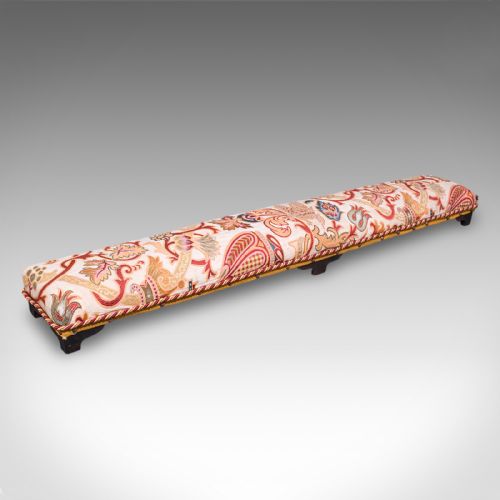
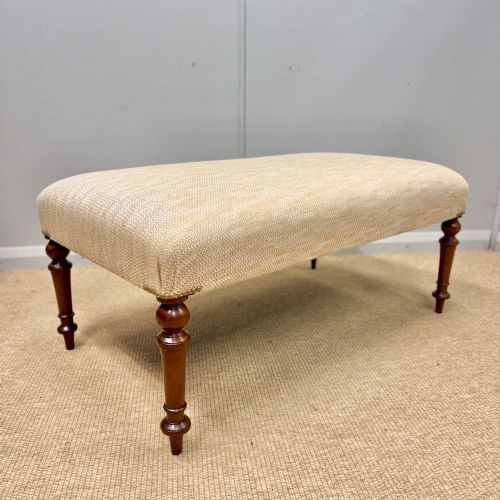
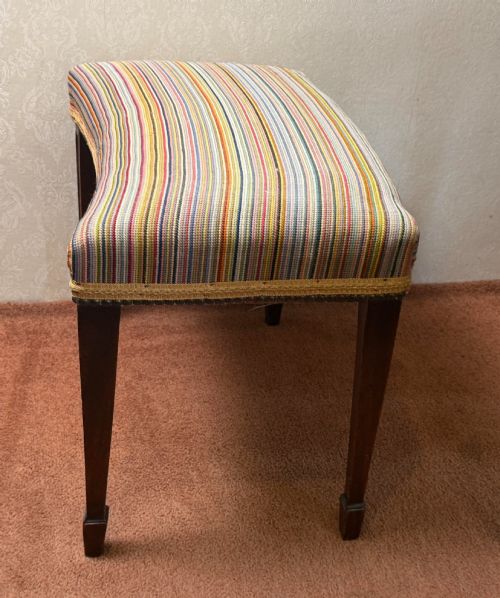
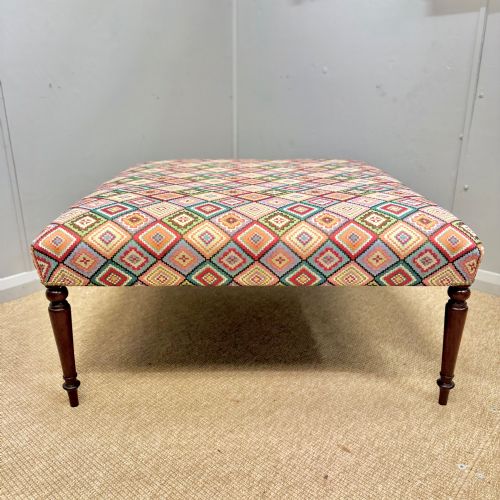
When you search for a low mahogany bench, you encounter a versatile form that spans centuries of British cabinet-making, frequently taking the shape of a footstool, dressing stool, or ottoman. These items function equally well as fireside rests, coffee tables, or low seating across various period interiors.
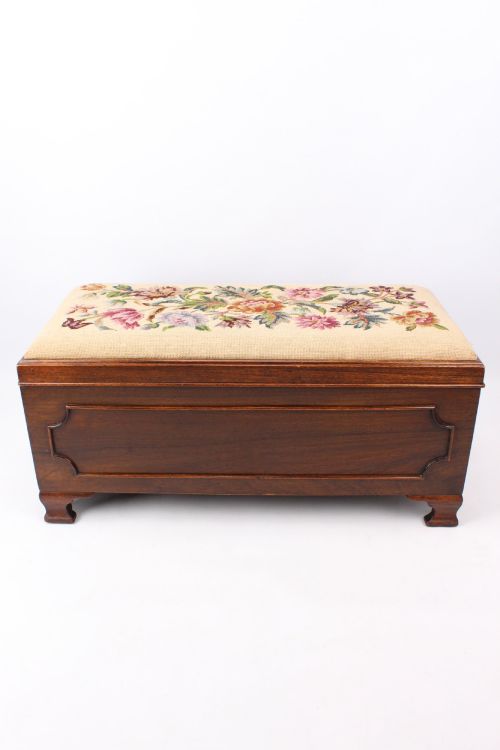
The pieces on this page heavily feature Victorian and 19th-century examples alongside earlier 18th-century designs and later 1920s reinterpretations. You find them framed in solid mahogany with diverse seating surfaces ranging from upholstered wool and tapestry to leather and caning.
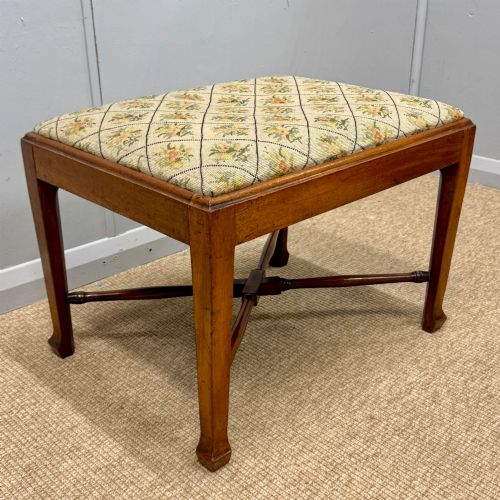
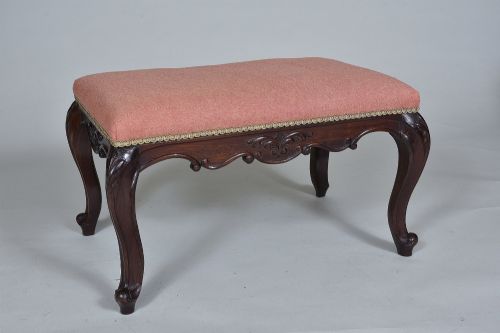
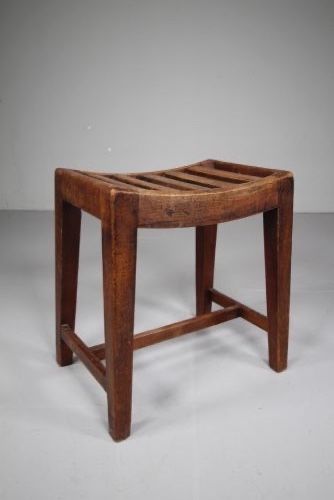
Object types stretch from traditional footstools and ottomans to low dressing tables and long benches. Many incorporate specific period details such as square tapering legs, cabriole legs, cross stretchers, and brass castors.
What varies in quality
The refinement of the timber carving and the crispness of stylistic details dictate the distinction between standard production and superior craftsmanship. Finer examples display hand-carved motifs, balanced proportions, and well-executed joinery that withstands heavy daily use.
The integrity of the frame construction and the quality of the secondary materials, such as original brass castors or period-appropriate upholstery fabric, influence the overall character and authenticity of the piece.
Several pieces are designated specifically as carriage stools, ready for bumpy historical road trips.
Waring and Gillows·Gillows
The Low Mahogany Bench Glossary
- Cabriole leg
- A furniture leg that curves outward and then tapers inward, finishing in a pad or foot, popular in eighteenth-century and Victorian revival designs.
- Cross stretcher
- Wooden bracing members connecting the legs beneath a stool or bench to provide structural rigidity and visual grounding.
- Needlework seat
- A top surface worked in yarn or thread canvas embroidery, frequently seen on nineteenth-century and early twentieth-century footstools.
- Caned top
- A woven seat panel constructed from split rattan or cane, offering lightweight flexibility within a wooden mahogany frame.
Low Mahogany Bench: Frequently Asked Questions
How were low mahogany benches used historically?
These pieces served multiple domestic functions, acting as footstools by the hearth, dressing table seats in bedrooms, and occasional seating in halls and parlours.
Their modest height made them practical companions to larger chairs and beds, providing comfort and easy repositioning.
How do I style a low mahogany bench today?
You can position a low mahogany bench at the foot of a bed, beside a fireplace, or beneath a window as a subtle resting place.
Fitted with a leather or wooden top, they also function effectively as low coffee tables in sitting rooms.
What maintenance does mahogany require?
Mahogany benefits from occasional treatment with appropriate furniture wax to nourish the grain and preserve its deep reddish-brown colour.
Keep upholstered surfaces clean according to their specific textile type, avoiding excessive direct sunlight to prevent fading.