

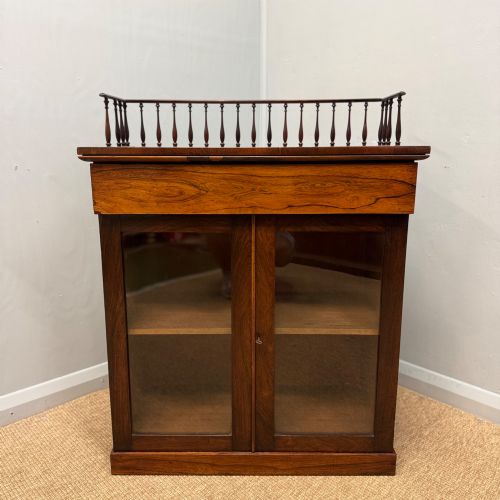
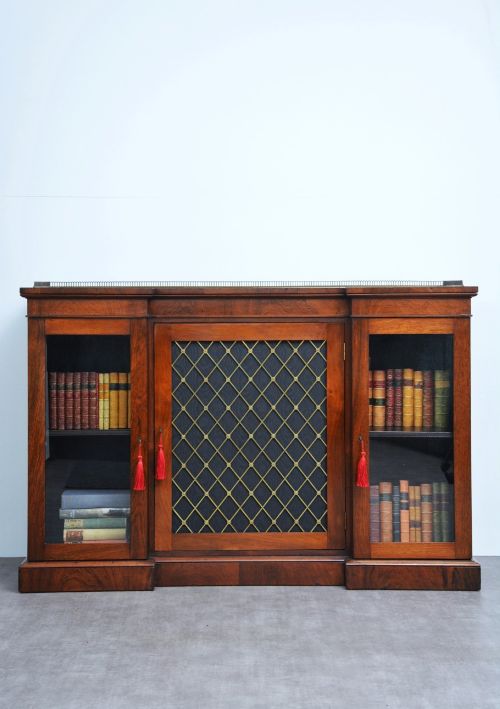
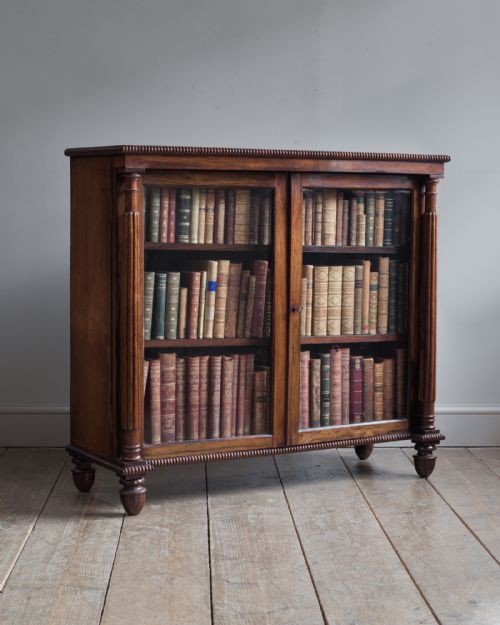
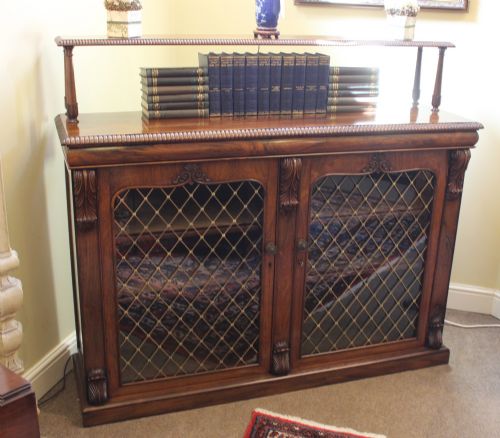





Low Glazed Rosewood Bookcase
A low glazed rosewood bookcase brings warmth and display space to a room, offering rich timber grain and protected shelving for a collection.
Low Glazed Rosewood Bookcase
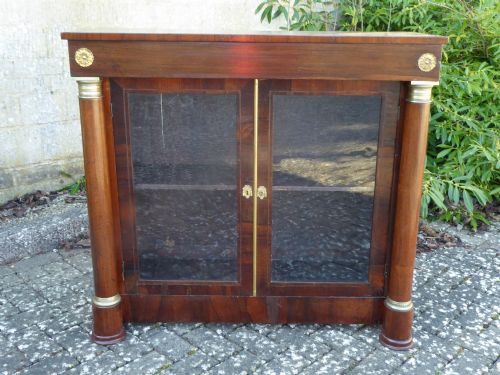
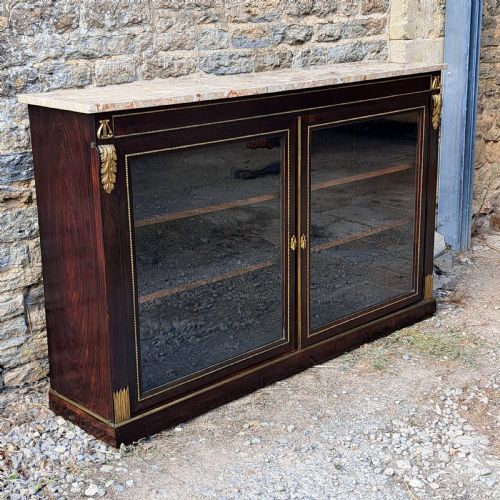
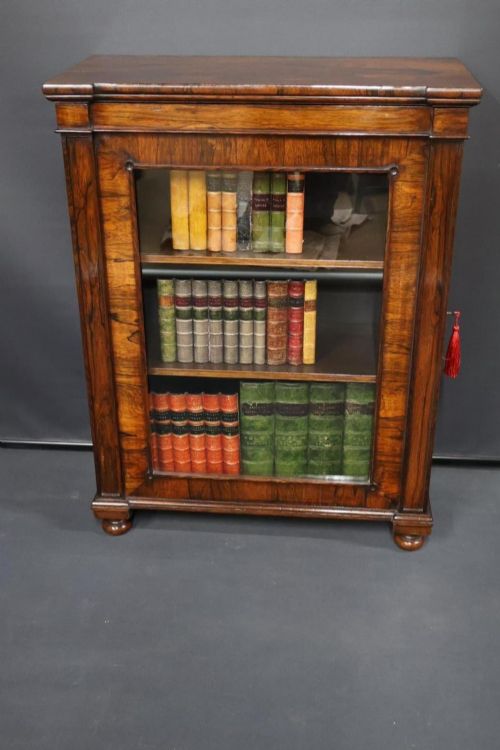
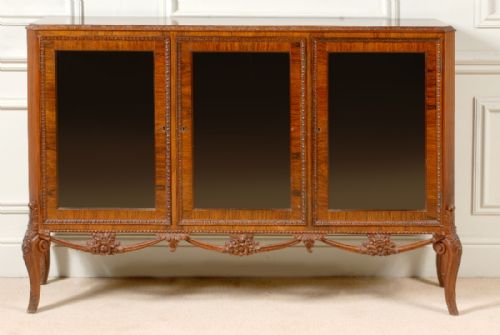
A low glazed rosewood bookcase sits low to the ground and combines glass-fronted storage with the rich, dark tones of rosewood timber. These pieces range across the Regency, Victorian, and Georgian periods, appearing alongside related forms such as side cabinets, chiffoniers, and credenzas.
The version most commonly met on this page is a Regency or Victorian design, often featuring two doors with glazed panels. Cabinet makers also built these forms with marble tops, brass inlay, or barley twist columns to suit formal interiors.
Buyers choose a low glazed rosewood bookcase to display books or decorative objects while keeping them free from dust behind glass doors. The compact height allows the top surface to hold lamps, clocks, or further ornaments without blocking wall art.
How they were made
Cabinet makers built these low glazed rosewood bookcase examples using dense rosewood veneers applied to solid framing timbers, often selected for strong grain figures. Workshops enhanced the dark wood surfaces with boxwood inlay, brass stringing, and gilt metal mounts.
Glazing techniques involved individual panes of glass held within wooden framework to protect the contents while maintaining visibility. Selected pieces incorporate additional materials like white marble tops, mirrored backs, and turned barley twist columns.
Low Glazed Rosewood Bookcase Retail Price Guide 2026
Typical asking prices for low glazed rosewood bookcase among the pieces listed under this phrase on Sellingantiques today, from the lower quarter to the upper quarter. They describe what is for sale here now, not the wider market.
Listings span the 19th Century, Regency, Victorian, Georgian, and 1930 periods, using rosewood, glass, brass, mirror, marble, and boxwood inlay.
What varies in quality
Quality in a low glazed rosewood bookcase reveals itself through the selection and matching of the timber veneer across the doors and frontage. Finer pieces demonstrate precise boxwood inlay, neat brass details, and well-proportioned architectural cornices.
Construction standards differ between standard production items and pieces ordered for grander homes, visible in the thickness of the glass, the weight of the brass fittings, and the stability of the internal shelving.
The Low Glazed Rosewood Bookcase Glossary
- Rosewood
- A dense, heavily figured tropical hardwood prized for its dark purple-brown colour and contrasting black grain lines. It was widely utilised during the Regency and Victorian eras for high-status cabinet work.
- Breakfront
- A furniture design where the central section projects forward from the flanking wings. This architectural feature creates visual depth on larger side cabinets and bookcases.
- Credenza
- A low dining-room or drawing-room cabinet used for serving or display, typically featuring cupboards and sometimes glass panels. Victorian versions often incorporated mirrored backs and turned columns.
- Chiffonier
- A compact sideboard or cabinet developed in the early nineteenth century, usually featuring enclosed lower cupboards beneath open shelves or a glazed upper section.
- Pier cabinet
- A narrow cabinet designed to fit against the wall space between windows. Regency examples in rosewood often stood low to the ground with glazed doors.
Low Glazed Rosewood Bookcase: Frequently Asked Questions
Where should I place a low bookcase?
These cabinets suit living rooms, studies, or hallways where tall furniture might overwhelm the floor plan. The low height keeps sightlines open across the room.
Position the piece away from direct sunlight and heat sources to protect the rosewood veneer from fading or drying out over time.
How do I identify Regency pieces?
Regency furniture dates roughly from the early nineteenth century and often displays classical restraint, clean proportions, and fine brass inlay. Look for architectural lines and restrained use of ornamentation.
Later Victorian interpretations tend to be heavier, sometimes incorporating barley twist columns, shaped cornices, or more elaborate carving around the glass doors.
Can these hold heavy books?
The interior wooden shelves accommodate standard octavo volumes and general reading material quite safely. Check the thickness of the timber boards supporting the shelf spans.
Avoid overloading single shelves with massive folios or textbooks unless the internal supports have been reinforced or replaced by a restorer.
What is Rio rosewood?
Rio rosewood refers to Brazilian rosewood, known for its strong aroma when fresh and highly decorative dark grain patterns. Strict regulations now govern the international trade of this specific timber.
Pieces identified with Rio rosewood timbers typically date from the earlier nineteenth century when supplies were more readily imported into British workshops.