
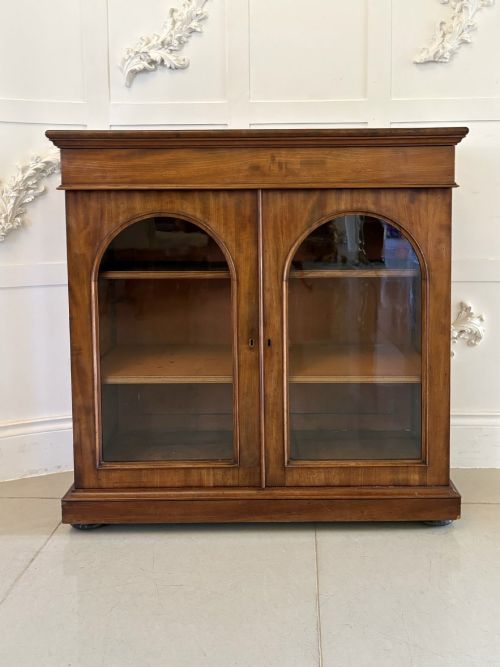
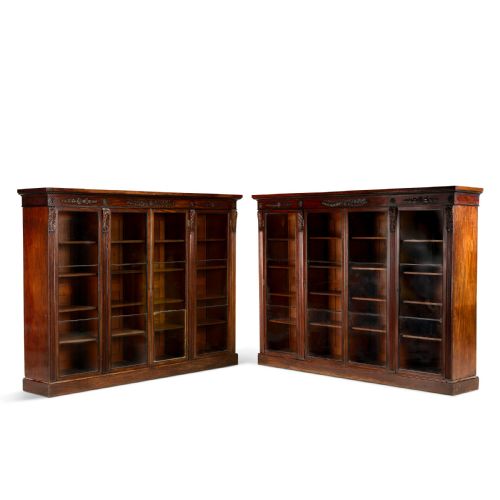
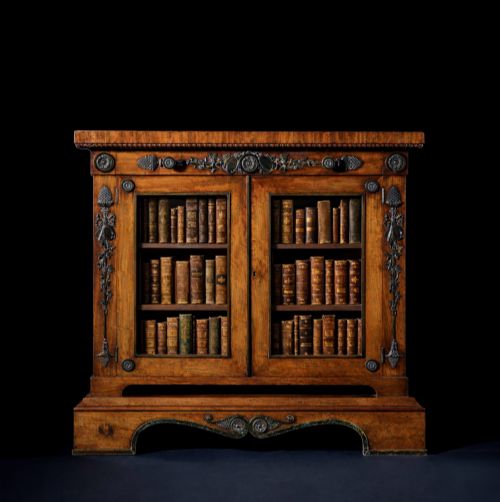
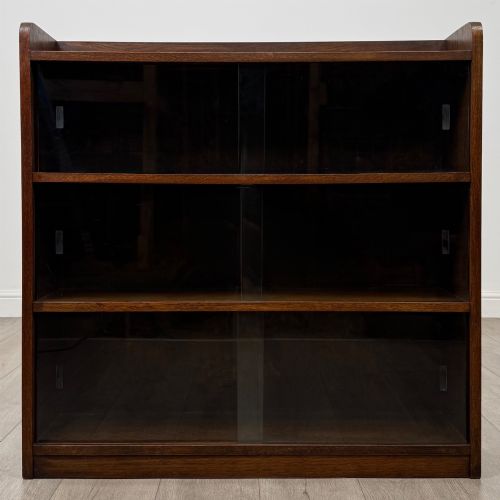
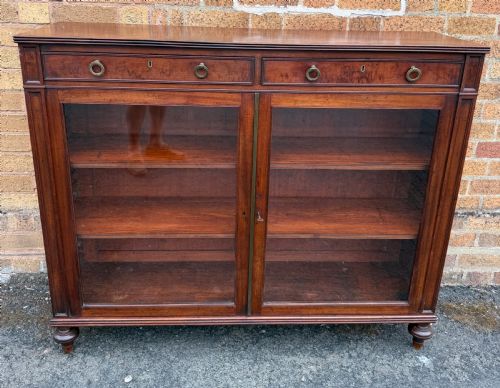
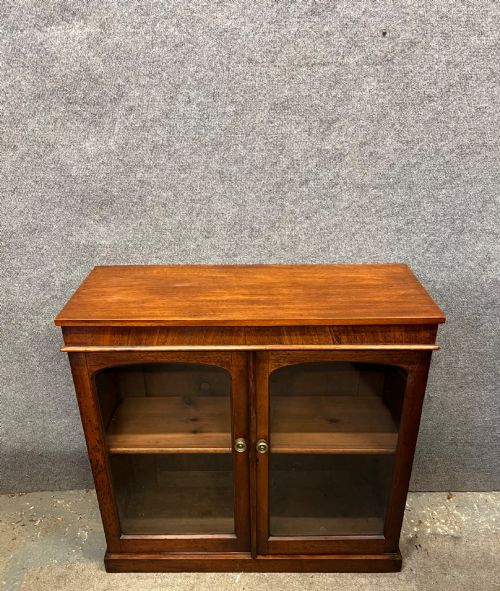
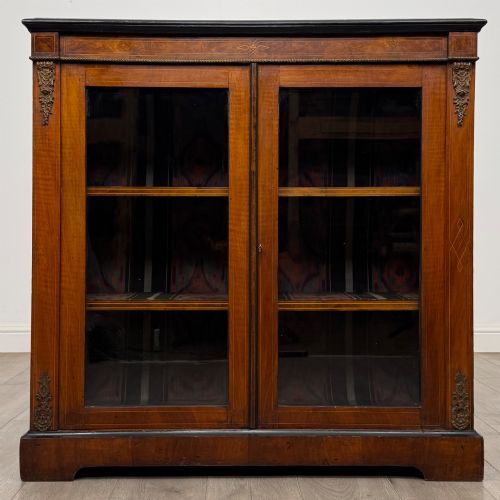
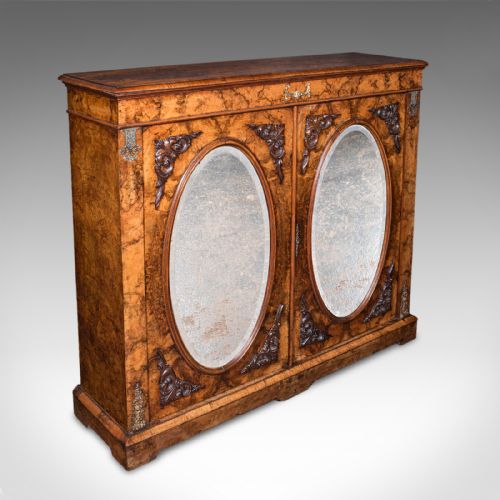
Low Glazed Display Cabinet
A low glazed display cabinet brings formal glass-fronted storage to domestic rooms, using compact proportions to hold books and cherished objects.
Low Glazed Display Cabinet
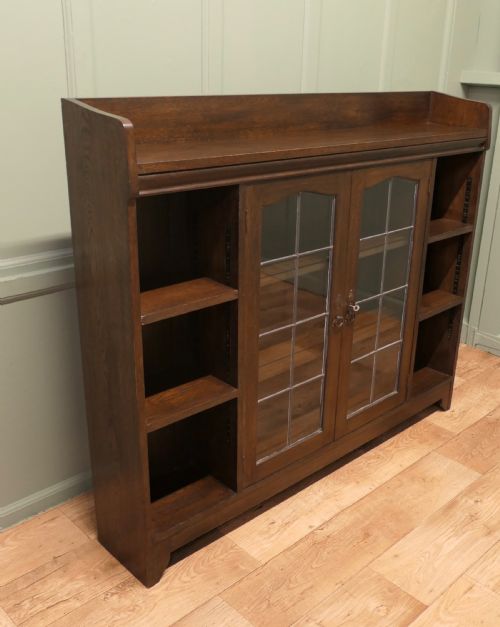
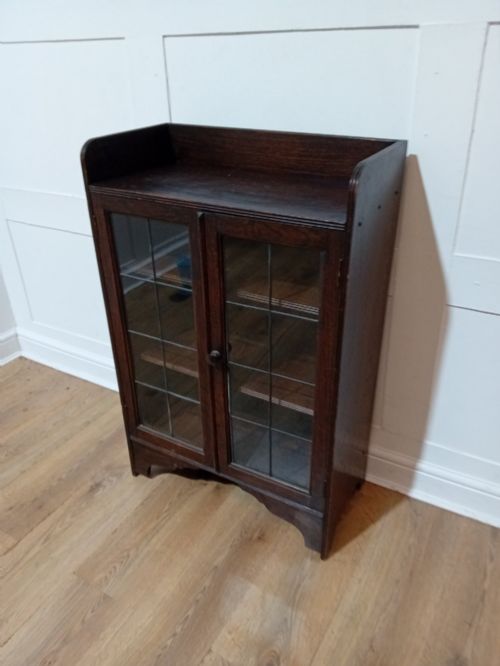
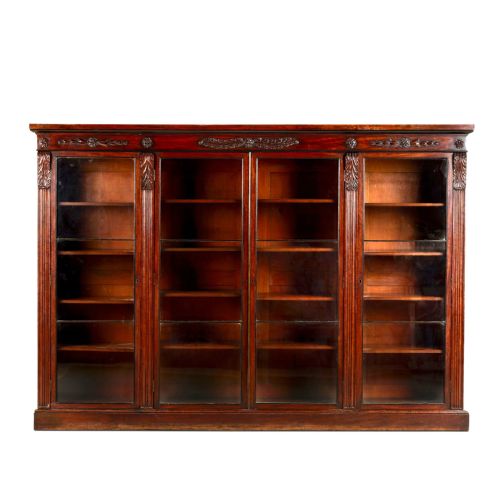
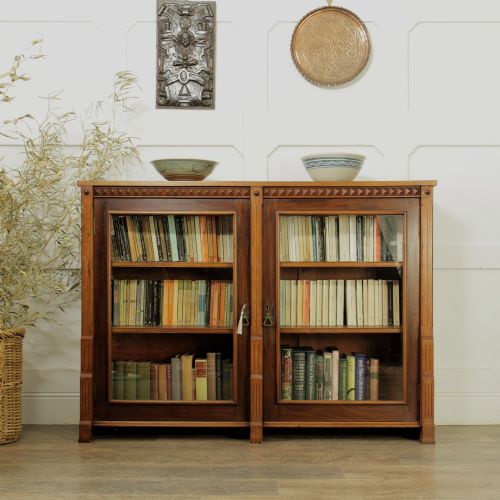
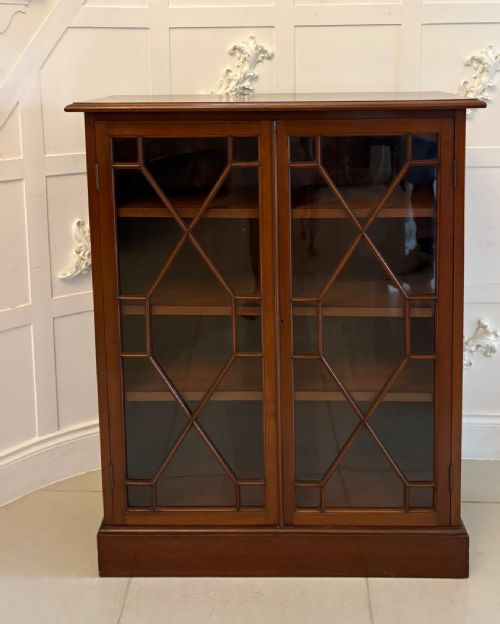
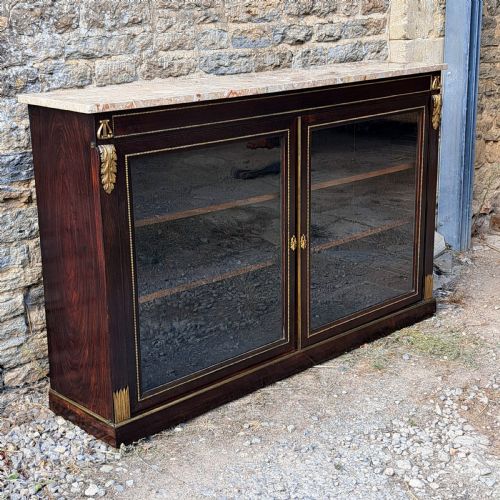
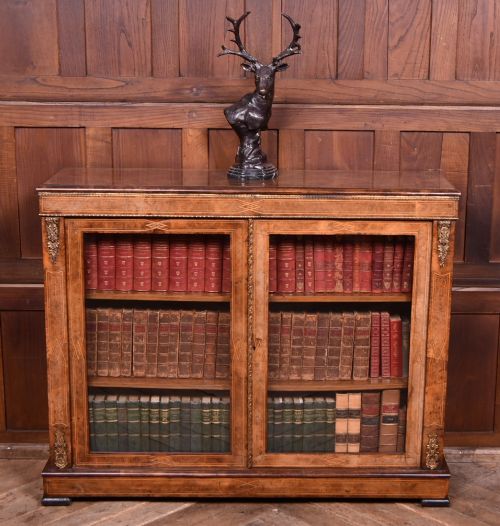
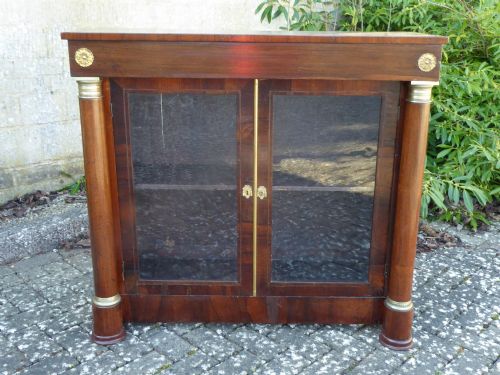
When searching for a low glazed display cabinet, a buyer encounters pieces designed to sit lower than traditional floor-to-ceiling library shelving, keeping sightlines open across a room. These items appear primarily across Victorian, Regency, and Edwardian periods, taking forms such as pier cabinets, side cabinets, and dwarf bookcases.
The versions most commonly met on this page combine glazed doors with timber carcases, often configured as single units, pairs, or breakfront designs. Makers constructed these low cabinets to house personal libraries and display collections without dominating smaller domestic interiors.
Materials and construction
Cabinetmakers utilised hardwoods such as mahogany, walnut, burr walnut, rosewood, and oak for the structural carcases and exterior surfaces. Timber selection governed the visual weight of each piece, with figured grains and veneers adding decorative pattern to the flat panels and door frames.
Glass panels were fitted into wooden doors or secured with brass framing, occasionally complemented by ormolu mounts, brass inlay, and mirrored backs. Interior storage was typically arranged using adjustable wooden shelves behind the glazed enclosures.
Listings span Victorian, Regency, and Edwardian periods, featuring timbers like mahogany, walnut, rosewood, and oak configured as pier cabinets, bookcases, and side cabinets.
Variations in quality
Quality in these cabinets rests upon timber selection and the precision of cabinetmaking details, such as figured mahogany or burr walnut veneers matched across symmetrical door panels. Superior examples demonstrate refined proportions, careful joinery, and intact original glass.
The integration of decorative elements like brass inlay, bronze mounts, and fine astragal glazing bars separates standard utilitarian storage from finely finished cabinetwork. Original surfaces and well-preserved internal shelving also distinguish the finest specimens from altered pieces.
The Low Glazed Display Cabinet Glossary
- Pier cabinet
- A low cabinet designed specifically to stand against the wall space between windows. These narrow pieces typically feature a single glazed door and compact proportions.
- Astragal glazing
- Wooden or brass framing bars that divide a glass door into smaller panes. These delicate mouldings define the visual pattern of the window front.
- Breakfront
- A cabinet design where the central section projects forward from the flanking wings. This configuration adds architectural depth to larger bookcase forms.
- Ormolu
- Gilt bronze mounts applied as decorative ornaments to furniture carcases. This technique appeared frequently on Regency pieces.
- Burr walnut
- Timber taken from walnut tree growths, yielding highly figured, swirling grain patterns. Cabinetmakers used these veneers on high-status surfaces.
Low Glazed Display Cabinet: Frequently Asked Questions
Where should I place a low glazed display cabinet?
These cabinets suit living rooms, studies, and hallways where full-height bookcases would overwhelm the wall space. Their lower profile maintains open sightlines and allows surfaces above to hold decorative objects.
Because they combine glazed protection with accessible height, they work well for housing both active reading collections and delicate display items within everyday reach.
How do I identify a Regency period cabinet?
Regency cabinets often display classical architectural restraint, utilising rosewood or mahogany timbers enhanced by brass inlay, bronze mounts, or simple astragal glazing. Proportions tend to remain neat and restrained.
Examining the construction methods, secondary timbers, and surface patination helps confirm the early nineteenth-century origin of these specific pieces.
Can the shelves inside be adjusted?
Many examples incorporate adjustable wooden shelving behind the glazed doors, allowing the interior height to accommodate varying book sizes or display objects. Original systems often use traditional wooden rack-and-pinion supports or metal pins.
Checking the interior reveals whether the shelving configuration remains in its original state or has been altered during later domestic use.
How should I care for antique walnut and mahogany surfaces?
Maintenance involves regular dusting with a soft, dry cloth and avoiding placement near direct heat sources or strong sunlight that can dry out old timbers. Polishing should occur infrequently using traditional wax formulations.
Protecting the original polish and veneer from excessive moisture preserves the depth of colour and historical character of the wood.