
Glazed Door Sideboard
A glazed door sideboard brings together timber cabinetry and transparent glass display, offering practical storage alongside visible presentation.
Glazed Door Sideboard
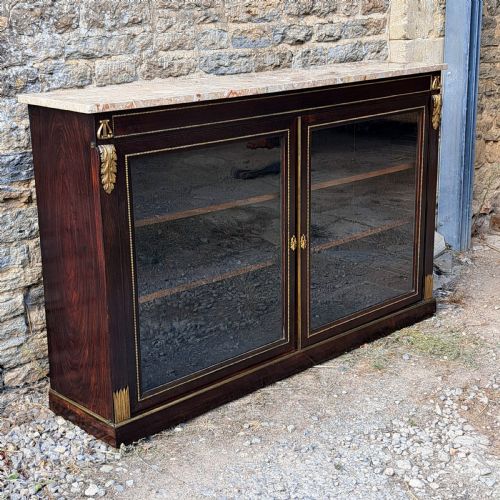
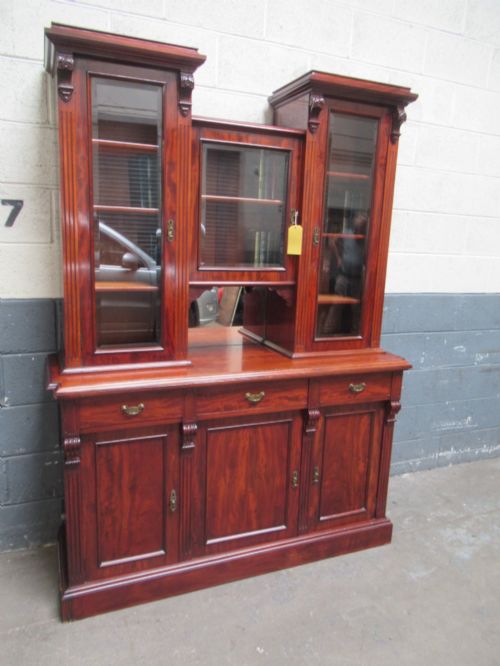
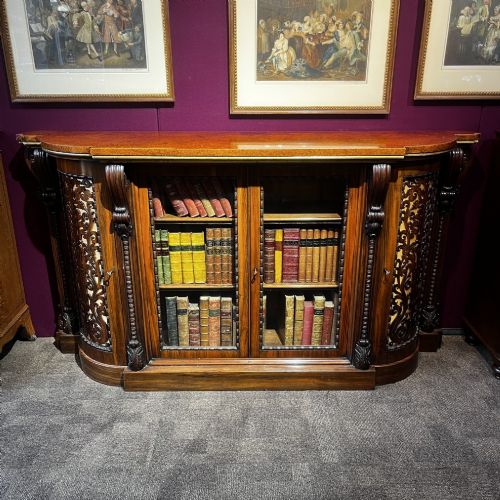
A glazed door sideboard encompasses a variety of timber storage furniture equipped with glass panels, ranging from credenzas and side cabinets to bookcases and dressers. These pieces emerge predominantly from the nineteenth century, spanning Regency, Victorian, and Edwardian periods.
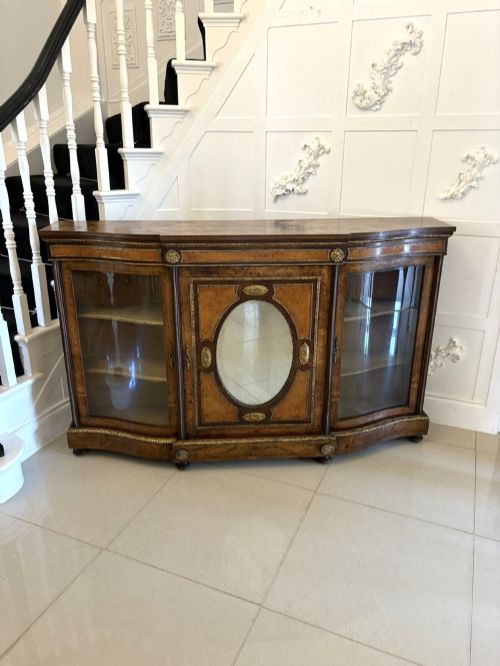
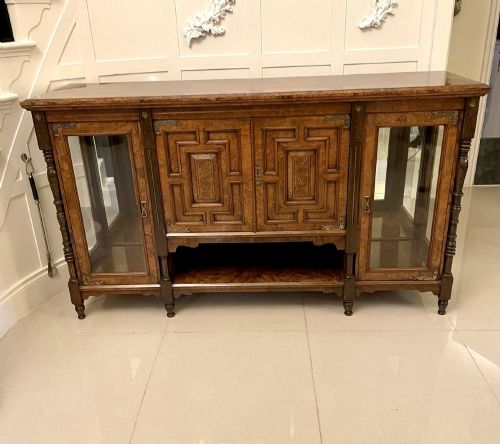
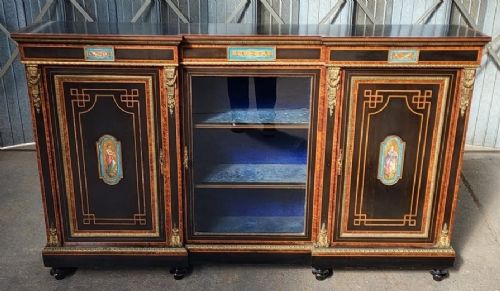
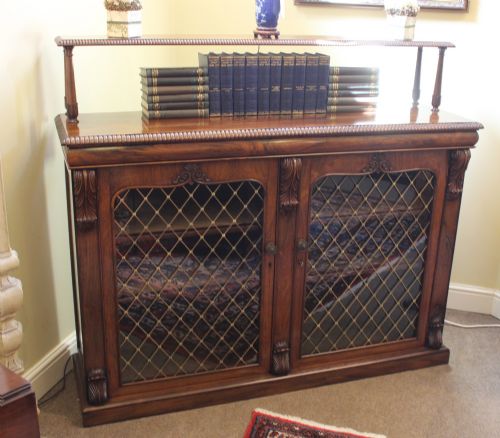
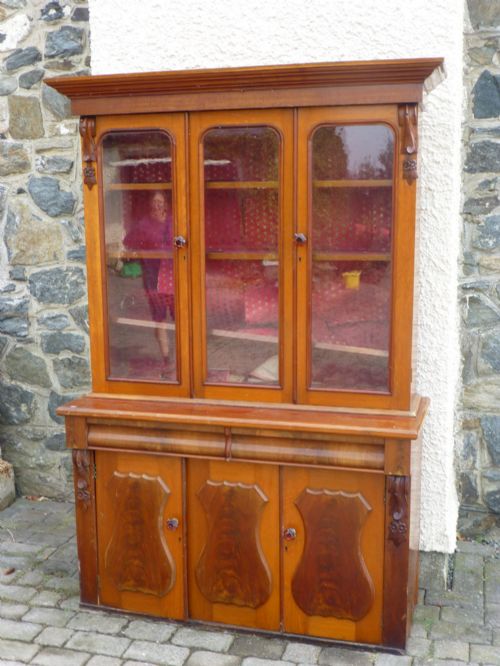
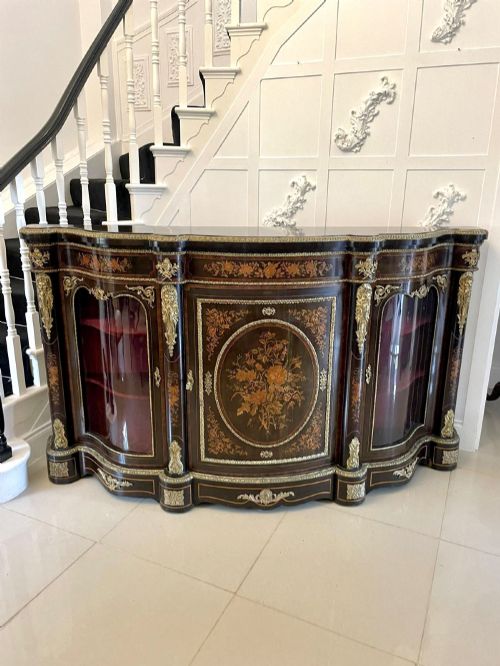
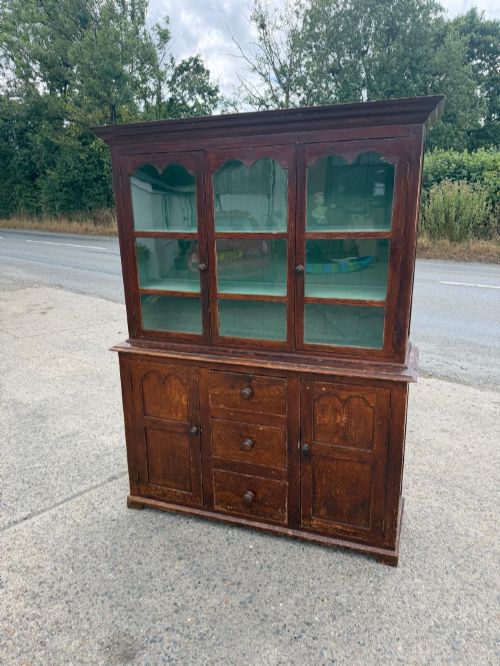
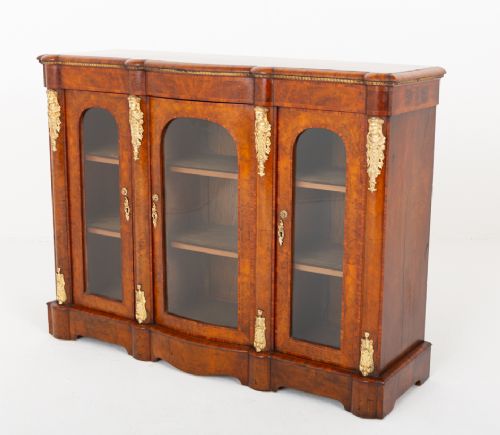
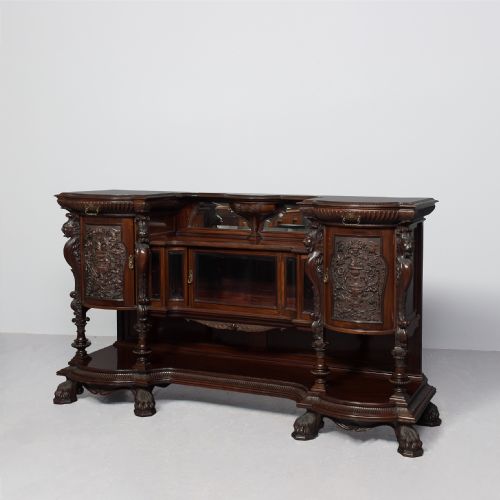
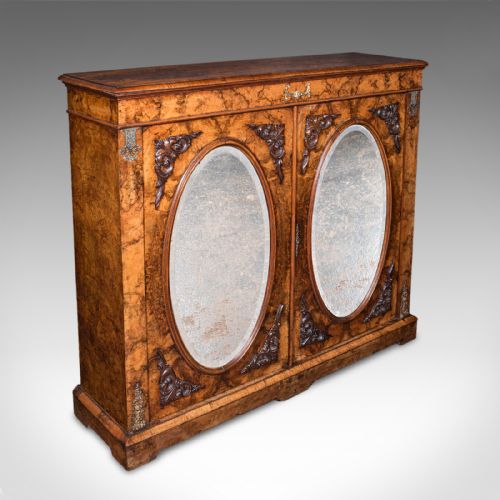
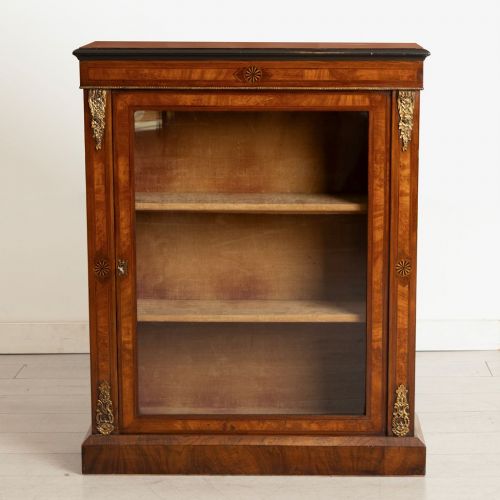
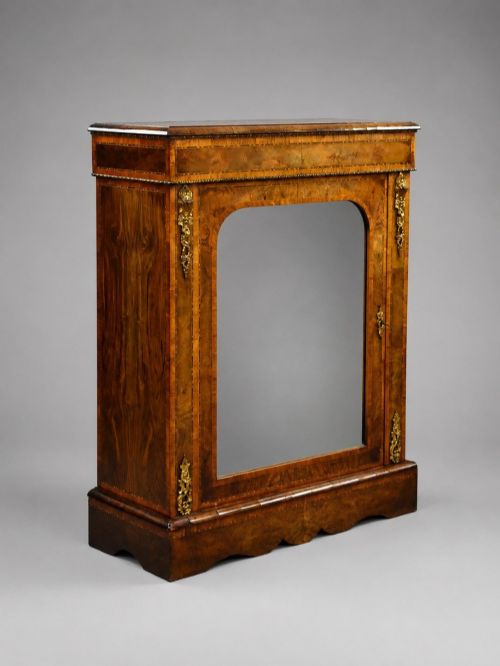
The most common examples on this page are Victorian burr walnut and mahogany credenzas and side cabinets featuring glass doors. Alongside these, buyers find oak dressers, rosewood chiffoniers, and ebonised display cabinets.
Origins stretch across English workshops and Welsh vernacular furniture makers, utilising timber framing to support transparent or leaded glass fronts.
Materials and construction
Makers construct these cabinets using structural timbers such as mahogany, oak, and walnut, frequently applying burr walnut, rosewood, and amboyna veneers to visible surfaces. Marquetry inlay, brass hardware, and ormolu mounts supplement the primary woodwork.
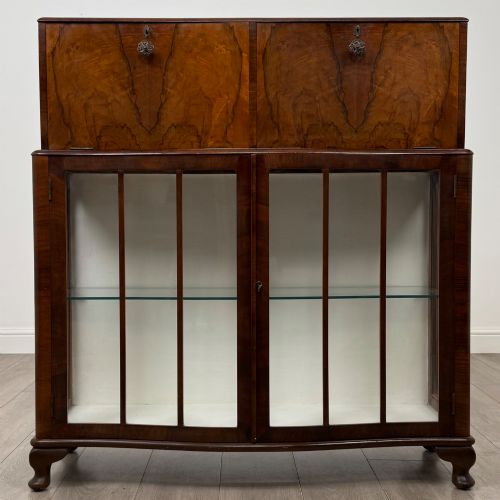
Glass panels are fitted into wooden frames for doors on credenzas, bookcases, and side cabinets, sometimes paired with mirror-backs or internal shelving. Joinery methods rely on traditional framing to support the weight of timber bodies and glass inserts.
Some nineteenth-century cabinet makers hid felt-lined compartments behind glazed doors for storing delicate glassware away from clumsy fingers.
Judging execution
Quality separates through the precision of timber selection and the complexity of decorative enrichment. Pieces featuring finely figured burr walnut veneers, elaborate floral marquetry, and chased ormolu mounts sit at the upper end of the range.
Construction rigour distinguishes finer cabinets, evident in the seamless alignment of serpentine shaped doors and the integration of brass mounts. Simpler pine or oak pieces demonstrate straightforward vernacular carpentry rather than intricate cabinet-making.
Liberty & Co.
The Glazed Door Sideboard Glossary
- Credenza
- A low cabinet, frequently fitted with glass doors, designed for display and storage in nineteenth-century reception rooms.
- Ormolu
- Gilded bronze mounts applied as decorative ornamentation to the corners and borders of furniture.
- Marquetry
- Inlaid wood veneers arranged in pictorial or geometric patterns across the surface of a cabinet.
- Chiffonier
- A compact sideboard or low cabinet equipped with shelves or enclosed storage below.
- Burr walnut
- Timber taken from walnut tree growths, prized for its swirling grain patterns used in cabinet veneers.
Glazed Door Sideboard: Frequently Asked Questions
Where were glazed door sideboards used?
These cabinets served primarily in nineteenth-century dining rooms, morning rooms, and drawing rooms for storing and displaying household possessions.
Their glass doors allowed owners to exhibit porcelain and books while keeping dust away from the interior contents.
How do I identify a Victorian credenza?
Victorian credenzas typically present a low profile in burr walnut or ebonised wood, often incorporating curved glass doors and brass ormolu mounts.
Many examples from this era feature marquetry inlay and internal shelving designed specifically for display.
What is the difference between a credenza and a sideboard?
A credenza sits lower to the ground and traditionally incorporates glass doors for display purposes rather than heavy timber food storage.
Sideboards often lean towards practical dining room utility with larger solid cupboards and drawers.
How do I care for antique veneer?
Antique veneers require stable indoor humidity away from direct sunlight and heat sources to prevent timber shrinkage and lifting.
Applying microcrystalline wax periodically helps nourish the wood surface without damaging historical finishes.